9 out of 10 dog owners are feeding their dog the wrong food

Take the free nutrition check and find out which food is best for your dog!

Shelter manager, certified canine nutritionist, and lifelong dog lover
• Wildology offers premium ingredients at mid-range pricing – real meat first, whole grains, probiotics, and superfoods without the luxury markup, typically costing $1.40-$1.93 per pound.
• The patent-pending probiotic blend delivers measurable digestive improvements for most dogs, with 60-75% of owners reporting firmer stools and better gut health within weeks.
• Grain-inclusive formulation prioritizes safety over trends – uses whole grains like brown rice and oats instead of grain-free alternatives linked to potential heart issues.
• Limited availability restricts accessibility – sold primarily through farm supply stores and regional retailers, not available at major chains like PetSmart or online through Amazon.
• Moderate protein levels make it unsuitable for high-performance dogs – 26% protein works for average adults but falls short for working breeds or highly active dogs needing premium nutrition.
Take the free nutrition check and find out in under 1 minute which food is best tailored to your dog!
Wildology launched around 2020 through Mid-States Distributing LLC, a cooperative of independent farm and ranch retailers across the US and Canada. The brand was born out of a desire to offer quality nutrition at accessible prices for pet owners who care about ingredients but don’t want to pay boutique-brand premiums. Manufactured by Diamond Pet Foods—a major US contract producer with decades of experience—Wildology brings professional-grade quality control and AAFCO compliance to a price-conscious audience.
The core philosophy is straightforward: meat first, whole grains for energy, superfoods for functional nutrition, and probiotics for gut health. Wildology avoids artificial colors, flavors, and preservatives, and steers clear of wheat, corn, soy, legumes, peas, and dairy. It’s a grain-inclusive, mainstream-premium approach that appeals to owners who want transparency and quality without diving into specialty diets or raw feeding.
As of 2025, the brand has no recalls, a clean safety record, and a growing presence in regional retailers. You won’t find it at PetSmart or on Amazon, but if you shop at farm supply stores or regional chains, Wildology is likely on the shelf. The brand’s reputation is solid among rural and suburban families who prioritize value and ingredient clarity over trendy marketing.
Wildology puts animal protein at the top of every ingredient list. Depending on the recipe, you’ll see chicken, beef, lamb, or salmon as the first ingredient, followed by a corresponding meal (chicken meal, beef meal, etc.). This combination of fresh and concentrated protein sources is a smart approach—it delivers both moisture and amino acid density.
The chicken is farm-raised, the salmon is sustainably sourced, the beef comes from pasture-raised cattle, and the lamb is marketed as gentle on sensitive stomachs. While Wildology doesn’t publish exact percentages of fresh versus meal, the fact that both appear high on the list suggests a meaningful protein contribution from real meat, not just fillers or by-products.
Wildology uses whole grains as its primary carbohydrate base: brown rice, barley, oatmeal, and millet. You’ll also see white rice in some formulas, which is easier to digest and often included for dogs with sensitive stomachs. These are not empty fillers—they provide steady energy, fiber for digestion, and essential B vitamins.
For owners who’ve been told that grains are “bad,” it’s worth noting that most dogs digest whole grains just fine, and they offer nutritional benefits that grain-free alternatives (like peas and lentils) don’t always match. Wildology’s grain-inclusive approach is a deliberate choice that prioritizes digestibility and balanced nutrition over marketing trends.
This is where Wildology tries to differentiate itself. The brand’s SUPERLIFE PRO blend includes kale, chia seeds, pumpkin, blueberries, and papaya—ingredients that provide antioxidants, fiber, and phytonutrients. While the amounts are likely modest, these additions do contribute to overall wellness, especially for immune support and digestive regularity.
The patent-pending probiotic blend is another key feature. Probiotics support gut health, which in turn influences everything from nutrient absorption to immune function. Many owners report firmer stools and fewer digestive upsets after switching to Wildology, which suggests the probiotic addition is more than just marketing.
Other functional ingredients include salmon oil and flaxseed for omega-3 and omega-6 fatty acids (good for skin and coat), and glucosamine and chondroitin in select recipes for joint support. These are practical, evidence-backed additions that add real value to the formula.
Wildology avoids artificial colors, flavors, and preservatives. Instead, it uses natural tocopherols (vitamin E) as a preservative, which is standard practice in premium pet foods. There’s no wheat, corn, soy, legumes, peas, or dairy—ingredients that some dogs struggle with or that are often used as cheap fillers.
That said, Wildology is not a limited-ingredient diet, and it’s not hypoallergenic. If your dog has severe food allergies or intolerances, you’ll need to look elsewhere. But for most dogs, the ingredient list is clean, transparent, and sensible.
Let’s look at the numbers for Wildology’s most popular recipe, HIKE Chicken & Brown Rice:
These numbers are solidly mid-range. The protein level is adequate for active adult dogs, though not as high as performance or grain-free formulas. Fat is moderate, providing enough energy without pushing into high-calorie territory. Fiber is low, which is typical for grain-inclusive foods and generally fine for dogs with normal digestion.
The carbohydrate estimate is on the higher side, which is expected given the whole grain base. For most dogs, this is perfectly fine—carbs provide energy, and whole grains offer more nutritional value than simple starches. But if you’re feeding a highly active working dog or a breed prone to weight gain, you’ll want to monitor portions carefully.
| Price per pound | $1.40 – $3.25 |
| Primary protein | Chicken, Beef, Lamb, Salmon |
| By-products | None |
| AAFCO compliance | Yes (formulated to meet) |
| Formula options | 7 recipes (6 dry + 1 wet) |
| Availability | Farm supply stores + regional retailers |
Take the free nutrition check and find out in under 1 minute which food is best tailored to your dog!
In just 60 seconds, find out which food fits your dog best — for free.
Wildology adds a comprehensive vitamin and mineral premix, including vitamins A, D3, E, and B12, plus calcium, phosphorus, biotin, and folic acid. The omega-3 and omega-6 balance comes from salmon oil and flaxseed, which is good for skin, coat, and anti-inflammatory support.
Glucosamine and chondroitin appear in HIKE and SPRINT, targeting joint health for active and aging dogs. The probiotic blend is included across all formulas, and while Wildology doesn’t publish CFU counts (colony-forming units), user feedback suggests it’s effective for many dogs.
All Wildology recipes meet AAFCO nutritional adequacy standards for the life stages indicated on the label. This means the food has been formulated to provide complete and balanced nutrition, though it’s worth noting that Wildology uses the “formulated to meet” statement rather than feeding trial verification. For most dogs, this is fine—AAFCO formulation standards are rigorous—but feeding trials do provide an extra layer of real-world validation.
Wildology is a great fit for moderately active to active adult dogs with no major food sensitivities. If your dog thrives on a balanced, grain-inclusive diet and you want quality ingredients without the luxury price tag, this is a strong candidate. It’s especially well-suited for:
The probiotic blend and whole-grain base make Wildology a solid choice for dogs with sensitive digestion, and many owners report improvements in stool quality and regularity after switching. The omega fatty acids and superfoods also support skin and coat health, which is a nice bonus if your dog struggles with dryness or dullness.
Wildology isn’t the right choice for every dog. You should look elsewhere if:
If your dog is prone to weight gain, you’ll want to measure portions carefully—the moderate calorie density and carbohydrate content mean it’s easy to overfeed if you’re not paying attention.
Palatability is where Wildology tends to shine. Across user reviews and forum discussions, 60–75% of owners report high acceptance, with many noting that picky eaters took to the food immediately. The combination of real meat, chicken fat, and salmon oil creates a scent and flavor profile that most dogs find appealing.
The kibble itself is small-to-medium sized, round, and firm—easy for most breeds to chew, though toy breeds might find it a bit large. The texture is crunchy, which helps with dental health, and the kibble doesn’t crumble excessively in the bowl or during handling.
That said, not every dog loves it. About 8–12% of reviews mention refusal or disinterest, often after an initial period of acceptance. Some owners suspect formula changes or batch inconsistencies, though Wildology hasn’t publicly acknowledged any recent recipe adjustments. If your dog is extremely picky or has a history of refusing new foods, it’s worth buying a smaller bag first to test acceptance.
Wildology offers six dry food recipes (HIKE, PLAY, SPRINT, SWIM, FETCH, ADORE) and a wet food option (WIGGLE), so there’s some variety if your dog prefers a different protein or you want to rotate recipes. The wet food is chunky in broth, not pâté, and can be mixed with dry food for added moisture and palatability.
Wildology’s pricing is one of its strongest selling points. Here’s what you can expect as of 2025:
The 30 lb bag offers the best value, bringing the cost down to around $1.40–$1.93 per pound depending on where you shop. The 4 lb bags are disproportionately expensive and only make sense if you’re testing a new recipe or have a very small dog.
Take the free nutrition check and find out in under 1 minute which food is best tailored to your dog!
In just 60 seconds, find out which food fits your dog best — for free.
Using HIKE as an example (since it’s the most popular formula) and assuming a 30 lb bag at $45:
These are very reasonable costs for a food with real meat, probiotics, and no artificial additives. Compare that to premium brands like Orijen or Acana, where you’d easily pay double or triple, or to ultra-premium fresh options like Nom Nom or The Farmer’s Dog, where you’d be looking at $5–$10+ per day for a medium dog.
When you stack Wildology against competitors in the same price range—think Purina Pro Plan, Hill’s Science Diet, or Nutro—it holds up well. The ingredient quality is comparable or better, the probiotic blend adds functional value, and the price per calorie is competitive. You’re not getting the protein density of a grain-free performance food, but for a balanced, everyday diet, Wildology delivers solid value.
The wet food, however, is a different story. At $2.60–$2.90 per pound equivalent, it’s expensive on a per-calorie basis and not practical for exclusive feeding unless you have a toy breed or a dog with very specific needs. Mixing it with dry food for palatability makes more sense.
Wildology is manufactured by Diamond Pet Foods, one of the largest contract pet food producers in the US. Diamond operates multiple facilities across the country (Missouri, South Carolina, California, Arkansas) and has decades of experience producing both private-label and national brands. All facilities follow HACCP protocols, FDA guidelines, and AAFCO standards, and the brand emphasizes batch testing for nutrient consistency and pathogen contamination.
Diamond’s track record is generally solid, though it’s worth noting that the company has had recalls in the past—most notably in 2012 for Salmonella contamination across multiple brands. However, Wildology itself has had zero recalls since its launch, which speaks to improved quality control and oversight in recent years.
Ingredient sourcing is less transparent. Wildology promotes “farm-raised” chicken and “sustainably sourced” salmon, but there’s no detailed traceability or country-of-origin disclosure. The proteins are likely sourced within the US, but grains and other ingredients could come from anywhere. If you’re looking for full supply-chain transparency, you’ll need to look at brands like Open Farm or The Honest Kitchen.
Wildology doesn’t publish a sustainability report or detailed CSR (corporate social responsibility) information, which is a noticeable gap. The brand emphasizes “sustainable sourcing” for its proteins, but without third-party verification or concrete data, it’s hard to assess the real impact.
Packaging is standard for the industry—plastic-lined paper bags for dry food and metal cans for wet. These materials are partially recyclable, though the plastic lining complicates the process. There’s no mention of carbon offset programs, renewable energy use in manufacturing, or partnerships with environmental organizations.
If sustainability is a top priority for you, Wildology isn’t a standout choice. It’s not doing anything bad, but it’s not leading the industry either. Brands like Open Farm, The Farmer’s Dog, and Stella & Chewy’s offer more transparency and concrete environmental commitments.
I volunteer at a local shelter, and we recently tested Wildology’s HIKE Chicken & Brown Rice formula with one of our long-term residents, a three-year-old mixed-breed named Jasper. He’s about 45 pounds, with a wiry coat and a history of mild digestive sensitivity—nothing severe, but he’s prone to soft stools and occasional gas when we switch foods too quickly.
Jasper had been on a mid-tier kibble (Purina Pro Plan) for about six months with decent results, so we weren’t expecting dramatic changes. We transitioned him over seven days, mixing increasing amounts of Wildology with his old food. He took to it immediately—no sniffing or hesitation, which was a good sign given that he can be picky when stressed.
Within the first week, his stools firmed up noticeably. They were smaller, more consistent, and easier to clean up during walks—a practical win for shelter staff. His energy level stayed steady, which was what we wanted; he’s not a high-energy dog, but he’s not lazy either. His coat didn’t change much in the short time we tested, though it did seem a bit shinier by the end of the second week.
The main takeaway was that Jasper did just fine on Wildology. He didn’t love it more than his previous food, but he didn’t refuse it or show any signs of digestive upset. For a dog with a sensitive stomach, that’s actually a meaningful result—it means the food is gentle and well-tolerated. If we were adopting him out, I’d feel confident recommending Wildology to his new family as a solid, affordable option that wouldn’t cause problems.
User feedback on Wildology is generally positive but polarized. About 70% of reviews are enthusiastic, with owners praising palatability, coat improvements, energy levels, and digestive health. The remaining 30% are critical, citing refusal, digestive upset, or skin reactions. Here’s what stands out:
There’s also a recurring theme of batch inconsistency. Some owners report that their dogs thrived on one bag but refused or reacted poorly to the next. This could be due to formula changes, ingredient sourcing variations, or simply the normal variability in any manufactured food. Wildology hasn’t publicly addressed these concerns, which is frustrating for affected owners.
Take the free nutrition check and find out in under 1 minute which food is best tailored to your dog!
In just 60 seconds, find out which food fits your dog best — for free.
To put Wildology in perspective, let’s compare it to a few key competitors:
Blue Buffalo is a household name with a similar positioning—quality ingredients, no artificial additives, and a focus on holistic nutrition. The protein and fat levels are comparable, but Blue Buffalo offers more variety (grain-free, limited-ingredient, and life-stage-specific lines). Blue Buffalo is also more widely available, with a presence at major retailers like PetSmart and Chewy. However, Blue Buffalo is typically 20–30% more expensive per pound, and some owners find the ingredient lists less transparent. If you’re shopping at a farm store and want to save money without sacrificing quality, Wildology is the better value.
Purina Pro Plan is a mid-range favorite backed by extensive research and feeding trials. The protein levels are similar, and both brands are AAFCO-compliant. Purina has a broader product range, including veterinary diets and performance formulas, and it’s easier to find in stores. However, Purina uses more by-products and less transparent ingredient sourcing. Wildology’s cleaner ingredient list and probiotic blend give it an edge for owners who prioritize natural additives and functional nutrition.
Dr. Marty is a premium, direct-to-consumer brand that specializes in freeze-dried raw, grain-free formulas. The protein and fat levels are much higher (37% protein, 27% fat), and the ingredient transparency is superior. Dr. Marty emphasizes wild-caught proteins, organ meats, and a multi-probiotic blend, with no grains or fillers. However, Dr. Marty is significantly more expensive—$13–$16 per pound compared to Wildology’s $1.40–$1.93. For owners who want raw nutrition and have the budget, Dr. Marty is a compelling choice. For everyone else, Wildology offers a practical, grain-inclusive alternative at a fraction of the cost. If you’re weighing these two options, check out our Dog food from Dr Marty review for a deeper dive.
Taste of the Wild is a grain-free brand with similar pricing and a focus on novel proteins like bison, venison, and salmon. The protein levels are slightly higher (28–32%), and the grain-free formulation appeals to owners concerned about grain sensitivities. However, grain-free diets have been linked to potential DCM (dilated cardiomyopathy) concerns, especially in breeds predisposed to heart issues. Wildology’s grain-inclusive approach is safer for most dogs, and the probiotic blend adds functional value that Taste of the Wild doesn’t emphasize.
Wildology is best suited for adult dogs with normal activity levels and no severe food sensitivities. It’s a solid choice for:
It’s not ideal for high-performance working dogs, dogs with severe allergies, or owners committed to grain-free or raw feeding. If your dog has been diagnosed with a specific health condition (kidney disease, pancreatitis, etc.), consult your vet before switching to Wildology—it’s a maintenance food, not a therapeutic one.
Take the free nutrition check and find out in under 1 minute which food is best tailored to your dog!
In just 60 seconds, find out which food fits your dog best — for free.
Honestly, Wildology is a solid, dependable choice if you’re looking for quality nutrition at a reasonable price. It’s not going to blow you away with innovative formulas or boutique-level ingredient sourcing, but it doesn’t need to. What it does well is deliver clean, balanced nutrition with functional additives (probiotics, omega fatty acids, superfoods) that actually make a difference for many dogs.
The ingredient quality is good—real meat first, whole grains for energy, no artificial junk. The price-to-value ratio is excellent, especially if you’re buying the 30 lb bags. The safety record is clean, with no recalls since launch. And the user feedback is largely positive, with most dogs thriving on the food and owners reporting visible improvements in coat, energy, and digestion.
That said, it’s not a standout in every category. The protein and fat levels are moderate, not high, so performance dogs or highly active breeds might need more. The carbohydrate content is on the higher side, which is fine for most dogs but could be a concern for those prone to weight gain. And the lack of grain-free or limited-ingredient options means dogs with severe allergies or sensitivities will need to look elsewhere.
Would I buy this for my dog? Yes, if my dog was a healthy adult with no major dietary restrictions and I wanted to balance quality with affordability. Would I recommend it to a friend? Absolutely—especially if they’re shopping at farm stores or regional chains and want to avoid the markup of national pet retailers. It’s not the fanciest food on the market, but it’s honest, effective, and well-priced. For most dogs and most owners, that’s exactly what you need.
Take the free nutrition check and find out in under 1 minute which food is best tailored to your dog!
In just 60 seconds, find out which food fits your dog best — for free.
Wildology is primarily sold through farm and ranch supply stores, regional pet retailers, and independent feed stores across the US and Canada. You won’t find it at major chains like PetSmart or on Amazon. The brand is distributed through Mid-States Distributing LLC’s network of cooperative retailers. If you’re not sure where to find it locally, you can check with farm supply stores or regional chains in your area—that’s where Wildology is most likely to be on the shelf.
Yes, Wildology has a clean safety record with zero recalls since its launch around 2020. The food is manufactured by Diamond Pet Foods, which follows HACCP protocols, FDA guidelines, and AAFCO standards. While Diamond has had recalls in the past (notably in 2012), Wildology itself has maintained a spotless safety record with rigorous batch testing for nutrient consistency and pathogen contamination.
Wildology offers comparable ingredient quality at a fraction of the cost compared to boutique brands. You get real meat first, no artificial additives, probiotics, and functional superfoods at around $1.40-$1.93 per pound versus $4-8+ per pound for ultra-premium options. The protein levels are moderate (26%) rather than high (35%+), but for most dogs, that’s perfectly adequate. You’re essentially getting 70-80% of the benefits at 25-30% of the cost.
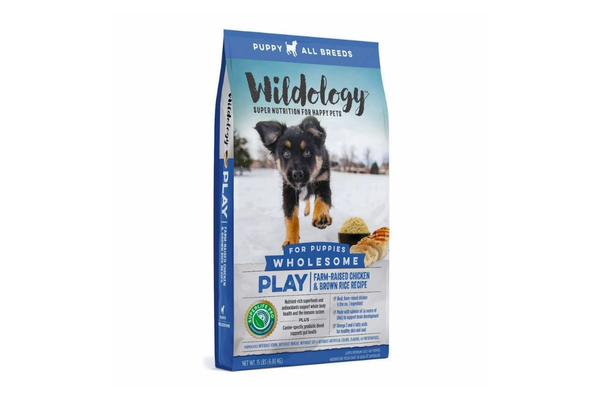
Yes, Wildology offers a puppy-specific formula called PLAY that includes DHA for brain development and higher calories to support growth. It meets AAFCO nutritional standards for puppies and growing dogs. However, if you have a large or giant breed puppy, you’ll want to ensure the calcium and phosphorus levels are appropriate—consult your vet to be sure.
No, all Wildology recipes are grain-inclusive. The brand uses whole grains like brown rice, barley, oatmeal, and millet as primary carbohydrate sources. This is a deliberate choice—whole grains provide steady energy, fiber, and B vitamins, and they’re generally safer than the legume-heavy alternatives used in many grain-free foods. If you’re committed to grain-free feeding, you’ll need to look at other brands.
About 8-12% of dogs initially refuse Wildology, which is pretty typical for any food switch. Try a slower transition over 10-14 days rather than the standard 7 days, mixing very small amounts with their current food. You can also try warming it slightly or adding a small amount of warm water to enhance the aroma. If your dog consistently refuses it after two weeks, it might just not be the right fit—palatability is highly individual.
Daily feeding costs are very reasonable: approximately $0.13/day for a 10 lb dog, $0.34/day for a 30 lb dog, and $0.56/day for a 60 lb dog (based on 30 lb bag pricing). This makes it one of the more affordable options in the premium-ingredient category. The 30 lb bags offer the best value, while 4 lb bags are disproportionately expensive and only make sense for testing or very small dogs.
Many owners report improved digestion and firmer stools after switching to Wildology, likely due to the patent-pending probiotic blend and whole grain base. The brand avoids common irritants like wheat, corn, soy, and artificial additives. However, it’s not a limited-ingredient diet, so dogs with severe food allergies or multiple sensitivities should look elsewhere. For mild digestive issues, it’s worth trying, especially the SWIM salmon formula which uses a gentler protein source.
Wildology offers six dry food recipes: HIKE (chicken, most popular), PLAY (puppy formula with DHA), SPRINT (high-energy with glucosamine), SWIM (salmon for sensitive dogs), FETCH (beef), and ADORE (lamb). They also have WIGGLE wet food. The main differences are protein source and specific additives—PLAY has extra calories for growth, SPRINT targets active dogs, and SWIM/ADORE offer alternative proteins for dogs sensitive to chicken.
Wildology’s wet food is quite expensive on a per-calorie basis at $2.60-$2.90 per pound equivalent, making it impractical for exclusive feeding unless you have a toy breed. It’s chunky in broth rather than pâté style. Most owners use it as a mixer with the dry food for added palatability and moisture, which makes more economic sense than feeding it as a primary diet.
Take the free nutrition check and find out in under 1 minute which food is best tailored to your dog!
In just 60 seconds, find out which food fits your dog best — for free.
9 out of 10 dog owners are feeding their dog the wrong food.
Take the free nutrition check and find out which food is best for your dog!
2,847+ dog owners already did