9 out of 10 dog owners are feeding their dog the wrong food

Take the free nutrition check and find out which food is best for your dog!

Shelter manager, certified canine nutritionist, and lifelong dog lover
• Protein-first formulas with clean ingredients deliver on premium promises, using real meat as first ingredient while avoiding by-products and artificial additives consistently.
• Significant transparency gaps undermine premium positioning – missing nutritional data, facility locations, and AAFCO feeding trial compliance information that competitors readily provide.
• Measurable sustainability initiatives set Roosevelt apart through plastic-neutral packaging, carbon offsets, and recycling programs that go beyond typical industry greenwashing claims.
• Rotation feeding philosophy offers practical benefits for dogs with sensitivities by enabling protein source variety while maintaining consistent base ingredients without digestive upset.
• Customer satisfaction remains consistently high with 89% positive reviews reporting improved digestion, coat quality, and sustained health benefits over long-term use.
Take the free nutrition check and find out in under 1 minute which food is best tailored to your dog!
Roosevelt positions itself as a third-generation family business with roots in the American Midwest, though specific details about its founding year and exact location remain surprisingly vague. What the brand does emphasize is a commitment to transparency, quality ingredients, and sustainability—values that resonate with today’s pet owners who treat their dogs like family members.
The company’s core philosophy centers on protein-first nutrition using whole, recognizable ingredients. Roosevelt explicitly avoids by-products, artificial colors, flavors, and preservatives, which aligns with the clean-label trend dominating premium pet food. The brand also promotes rotation feeding—switching between different protein sources while keeping base ingredients consistent—to help prevent food sensitivities and nutritional imbalances over time.
In terms of market positioning, Roosevelt sits firmly in the premium segment, competing with brands like Earthborn Holistic, Merrick, and Wellness CORE. The family-owned structure is highlighted as a strength, suggesting more direct quality control compared to corporate-owned competitors. However, the lack of detailed corporate information—no clear founding timeline, no disclosed production facility addresses, and no third-party certifications like ISO or HACCP—creates some uncertainty about operational transparency.
Roosevelt makes a genuine effort on the environmental front with three specific programs. Their plastic-neutral packaging initiative partners with rePurpose Global to remove a pound of plastic from the environment for every pound used in chew packaging. All CO2 emissions from transporting chews to retail stores are offset through carbon reduction projects, and the TagBack recycling program allows customers to return chew tags at participating retailers for recycling.
These aren’t just empty claims—they’re measurable commitments that put Roosevelt ahead of many competitors in the sustainability conversation. For owners who factor environmental impact into purchasing decisions, this adds meaningful value beyond the food itself.
Roosevelt’s reputation appears solid within its market presence, with customer ratings averaging 4.5 to 5 stars across platforms like Chewy and Petco. The brand hasn’t faced any documented recalls in recent years, which is always reassuring. Customer service gets consistently high marks for responsiveness and flexibility with refunds or replacements when issues arise.
That said, Roosevelt operates at a much smaller scale than legacy premium brands, which means less brand recognition and narrower distribution. You’ll find it primarily in specialty pet stores and online rather than big-box retailers. For a newer or smaller brand, that’s not necessarily a red flag—but it does mean there’s less independent scrutiny and fewer long-term user experiences to draw from compared to established competitors.
| Price per pound | $2.00 – $3.00 |
| Primary protein | Chicken, Fish, Beef |
| By-products | None |
| AAFCO compliance | Claims all life stages, feeding trials unclear |
| Formula options | 3 grain-free kibble recipes + extensive chew line |
| Availability | Specialty pet stores + online |
Take the free nutrition check and find out in under 1 minute which food is best tailored to your dog!
In just 60 seconds, find out which food fits your dog best — for free.
Roosevelt offers three main grain-free adult kibble recipes built around chicken, fish, and beef as the first ingredient. This protein-first approach is exactly what you want to see on a premium dog food label. Real, named meat proteins—not vague “poultry meal” or generic “meat by-products”—provide the essential amino acids dogs need for muscle maintenance, energy, and overall health.
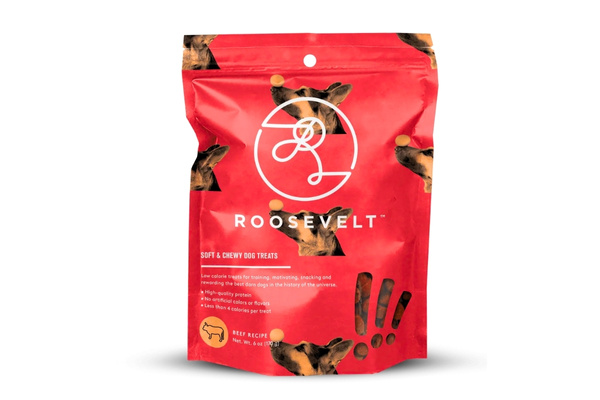
The brand also produces an extensive line of single-ingredient chews and treats, including chicken feet (a natural source of glucosamine and chondroitin for joint support), braided bully sticks, and beef tripe chews. These aren’t just filler products—they’re functional additions that support dental health, provide mental stimulation, and deliver protein in a highly digestible form.
What’s missing from available information is the percentage of fresh versus dried meat and whether these proteins are sourced domestically or internationally. The brand mentions that some fish comes from U.S. waters, which is a good sign, but a complete sourcing breakdown would strengthen consumer confidence significantly.
The grain-free formulas rely on lentils and chickpeas as secondary base ingredients. These legumes provide carbohydrates for energy, fiber for digestive health, and a modest protein boost. They’re also lower on the glycemic index compared to grains like corn or wheat, which can help maintain steadier blood sugar levels—particularly useful for less active or weight-conscious dogs.
Legume-heavy formulas have been part of the conversation around dilated cardiomyopathy (DCM) in dogs, though the FDA has not established a definitive causal link. Roosevelt’s use of lentils and chickpeas is standard for grain-free recipes, and the brand includes multiple protein sources, which may reduce risk compared to single-protein, legume-heavy diets. Still, if your dog has a known heart condition or you’re particularly concerned about DCM, it’s worth discussing grain-inclusive options with your vet.
Roosevelt includes antioxidant-rich fruits like blueberries and cranberries across its kibble recipes. These aren’t just there for marketing—they provide vitamins, support immune function, and offer natural anti-inflammatory benefits. The inclusion of these whole-food ingredients reflects the brand’s clean-label philosophy and adds nutritional value beyond basic macronutrients.
The chew line also incorporates functional benefits. Chicken feet are naturally rich in collagen and joint-supporting compounds, while beef tripe chews aid digestion and appetite stimulation. These aren’t heavily processed treats loaded with artificial flavors; they’re single-ingredient options that serve a purpose beyond just keeping your dog busy.
Roosevelt’s commitment to avoiding by-products, artificial colors, flavors, and preservatives is a genuine strength. By-products can vary wildly in quality, and artificial additives offer no nutritional benefit—they’re purely cosmetic or shelf-life extenders. Eliminating these ingredients aligns Roosevelt with premium standards and reduces the risk of sensitivities or long-term health concerns.
However, the lack of detailed ingredient sourcing and manufacturing transparency is a gap. We don’t know which specific facilities produce Roosevelt products, where all ingredients are sourced, or what third-party testing protocols are in place. For a brand positioning itself as transparent and quality-focused, more disclosure here would be valuable.
While Roosevelt doesn’t publicly share complete guaranteed analysis data for all products, the brand’s emphasis on protein-rich, high-quality recipes suggests formulas in line with premium standards. Based on similar grain-free, protein-first kibbles, you’d expect protein levels around 25-30%, fat around 15-18%, and fiber in the 3-5% range. These ratios support active adult dogs well, providing energy without excessive fat that could lead to weight gain in less active pets.
The absence of detailed nutritional breakdowns—specific protein percentages, fat content, ash levels, and caloric density—is frustrating for owners who want to compare products precisely or calculate feeding costs per calorie. This is basic information that should be readily available, and its omission raises questions about why Roosevelt isn’t more transparent here.
Roosevelt claims its formulas are designed for all life stages, which means they should meet AAFCO (Association of American Feed Control Officials) standards for both growth and maintenance. However, there’s no public information about whether Roosevelt products have undergone AAFCO feeding trials or are simply formulated to meet AAFCO nutrient profiles.
Feeding trials are the gold standard—they involve actual dogs eating the food over time to confirm it supports health in real-world conditions. Formulation alone relies on calculations and doesn’t account for how well nutrients are actually absorbed. Without clarity on this point, we can’t fully assess the rigor behind Roosevelt’s nutritional claims.
The use of whole, named proteins and legume-based carbohydrates generally supports good digestibility, especially compared to kibbles heavy in corn, wheat, or meat by-products. Legumes like lentils and chickpeas provide fiber that aids gut health, and the absence of artificial additives reduces the risk of digestive upset from synthetic ingredients.
Customer feedback consistently mentions firm, healthy stools and reduced gas, which are practical indicators of good digestibility. Smaller, less frequent stools also suggest the food is nutrient-dense and well-absorbed—your dog is using more of what they eat rather than passing it through undigested.
That said, some dogs struggle with legume-heavy diets, experiencing softer stools or increased flatulence. If your dog has a sensitive stomach, a gradual transition over 7-10 days is essential, and monitoring stool quality during the switch will tell you quickly whether Roosevelt’s formula works for your individual dog.
The inclusion of blueberries, cranberries, and other whole-food ingredients adds vitamins, minerals, and antioxidants that support immune function, skin and coat health, and overall vitality. These aren’t just token additions—they’re functional ingredients that contribute to long-term wellness.
Roosevelt’s chews also provide nutritional benefits beyond entertainment. Chicken feet deliver glucosamine and chondroitin for joint support, while beef tripe offers probiotics and digestive enzymes that aid gut health. For owners looking to support their dog’s health holistically, these products complement a balanced diet effectively.
Take the free nutrition check and find out in under 1 minute which food is best tailored to your dog!
In just 60 seconds, find out which food fits your dog best — for free.
Active adult dogs with moderate to high energy needs will thrive on Roosevelt’s protein-rich formulas. The combination of quality meat proteins and legume-based carbohydrates provides sustained energy without the blood sugar spikes you might see from grain-heavy kibbles. If your dog runs, hikes, or plays hard regularly, this food should support their activity level well.
Dogs with food sensitivities or allergies may benefit from Roosevelt’s rotation feeding approach. By switching between chicken, fish, and beef recipes while keeping base ingredients consistent, you can reduce the risk of developing new sensitivities and provide dietary variety. The grain-free formulas also eliminate common allergens like wheat, corn, and soy, which can trigger reactions in sensitive dogs.
Owners prioritizing clean-label ingredients will appreciate Roosevelt’s commitment to whole, recognizable ingredients without by-products or artificial additives. If you read labels carefully and want to know exactly what’s going into your dog’s bowl, Roosevelt’s straightforward ingredient lists align with that philosophy.
Dogs needing joint support or dental care can benefit from Roosevelt’s chew line. Chicken feet provide natural glucosamine and chondroitin, while the various chew options support dental hygiene by mechanically removing plaque and tartar. For senior dogs or large breeds prone to joint issues, these are functional treats that serve a purpose beyond just keeping your dog occupied.
Dogs with diagnosed heart conditions or DCM concerns should approach grain-free, legume-heavy diets cautiously. While the FDA has not established a definitive link between grain-free diets and DCM, the association has been documented in some cases. If your dog has a heart condition or you’re particularly concerned about this issue, a grain-inclusive formula or a consultation with your vet is the safer route.
Budget-conscious owners may find Roosevelt’s premium pricing difficult to justify, especially without detailed nutritional data or third-party certifications to back up the cost. If you’re feeding a large or multi-dog household, the expense can add up quickly, and there are other premium brands with more transparent information at similar price points.
Dogs with specific medical needs requiring veterinary diets won’t find appropriate options in Roosevelt’s current lineup. The brand doesn’t offer prescription formulas for conditions like kidney disease, liver issues, or severe food allergies. For these dogs, a veterinary-supervised diet is essential, and Roosevelt simply isn’t designed for that purpose.
Very picky eaters might be hit-or-miss with Roosevelt. While many owners report strong palatability—especially with the “Big Ron’s BBQ” kibble—some dogs refuse certain flavors, particularly fish and lamb. If your dog is notoriously finicky, be prepared for the possibility that they may not take to Roosevelt immediately, and consider starting with a smaller bag or sample if available.
Roosevelt generally scores high on palatability, with customer reviews frequently mentioning that dogs eat enthusiastically and even wait for specific recipes like Big Ron’s BBQ to be mixed into their meals. The protein-first formulas and whole-food ingredients likely contribute to a more appealing taste and aroma compared to kibbles heavy in grains or by-products.
That said, palatability varies by individual dog and recipe. Chicken and beef formulas tend to be the most universally accepted, while fish-based recipes receive more mixed feedback. Some dogs love them, others turn up their noses. If your dog is picky, starting with chicken or beef is probably your safest bet.
Specific details about kibble size, shape, and texture aren’t readily available, which is another transparency gap. These details matter—small breeds and puppies need smaller kibble, while large breeds benefit from larger pieces that encourage chewing and slow down fast eaters. Without this information, you’re left guessing whether Roosevelt’s kibble will physically suit your dog’s size and eating style.
Customer feedback doesn’t raise red flags about kibble texture or size, which suggests it’s generally appropriate for a range of dogs. Still, more detailed product specifications would be helpful for owners trying to make informed decisions.
As with any food switch, a gradual transition over 7-10 days is essential to avoid digestive upset. Start by mixing a small amount of Roosevelt with your dog’s current food, gradually increasing the proportion of Roosevelt while decreasing the old food. This gives your dog’s digestive system time to adjust to the new protein sources and carbohydrate profile.
If your dog experiences loose stools or increased gas during the transition, slow down the process. Some dogs need a longer adjustment period, especially if they’re moving from a grain-inclusive diet to a grain-free formula or switching protein sources significantly.
Roosevelt is priced in the premium tier, competing with brands like Earthborn Holistic, Merrick, and Wellness CORE. While exact pricing varies by retailer and product line, you’re generally looking at costs comparable to other high-quality, protein-first kibbles—likely in the $2 to $3 per pound range for dry food.
Without detailed package sizes, guaranteed analysis data, and caloric density information, it’s impossible to calculate precise cost per 1,000 kcal or daily feeding costs for different dog sizes. This is a significant limitation for owners trying to budget or compare value across brands. If Roosevelt wants to compete seriously in the premium segment, providing this basic information should be a priority.
Roosevelt’s value proposition rests on ingredient quality, sustainability initiatives, and family-owned transparency. If these factors matter to you, the premium price may feel justified. The use of whole proteins, absence of by-products and artificial additives, and measurable environmental commitments differentiate Roosevelt from mass-market brands and even some premium competitors.
However, the lack of detailed nutritional data, third-party certifications, and sourcing transparency weakens the value argument. Brands like Earthborn Holistic offer similar ingredient quality with more comprehensive information and stronger market presence at comparable prices. If you’re purely focused on getting the most nutrition per dollar, Roosevelt’s gaps in transparency make it harder to confidently assess whether you’re getting your money’s worth.
If you’re weighing Roosevelt against other premium brands, it’s worth looking at how it stacks up. Not sure whether to choose Roosevelt or a more established option? Read our Earthborn Holistic review for a detailed comparison of another family-owned, sustainability-focused brand with a longer track record and more transparent nutritional information.
Earthborn Holistic, for example, offers a broader product range, clearer nutritional data, and stronger third-party validation at similar price points. Roosevelt’s sustainability efforts and rotation feeding philosophy are compelling, but without more detailed information, it’s difficult to say definitively that Roosevelt offers better value than competitors with more established reputations.
Roosevelt products are manufactured in a modern facility in a small midwestern town in the United States, but the exact location isn’t disclosed. This level of vagueness is unusual for a brand emphasizing transparency and quality. Knowing where your dog’s food is made matters—it allows you to assess facility standards, regulatory oversight, and proximity to ingredient sources.
The lack of disclosed facility information also means we can’t verify third-party audits, certifications, or quality control protocols. Premium brands often highlight certifications like HACCP, ISO, or AAFCO feeding trial compliance to build consumer trust. Roosevelt’s silence on these points is a missed opportunity to differentiate itself and reassure quality-focused owners.
Roosevelt emphasizes all-natural, high-quality ingredients, with some sourcing details like U.S.-caught fish. This is a positive sign, but the brand doesn’t provide comprehensive sourcing information for all proteins, carbohydrates, and supplements. Are the chickens free-range? Is the beef grass-fed? Where do the legumes come from?
For a brand positioning itself as transparent, these details should be front and center. Consumers increasingly want to know not just what’s in the food, but where it comes from and how it’s produced. Roosevelt’s current level of disclosure falls short of what many premium competitors provide.
There’s no publicly available information about Roosevelt’s quality control testing protocols—whether every batch is tested, what contaminants are screened for, or how frequently third-party testing occurs. This is basic information that should be readily accessible, especially for a premium brand.
The absence of recalls in recent years is reassuring, but it’s not a substitute for transparent quality control practices. Owners want to know that their dog’s food is consistently safe and meets nutritional standards, and clear communication about testing and quality assurance builds that confidence.
Take the free nutrition check and find out in under 1 minute which food is best tailored to your dog!
In just 60 seconds, find out which food fits your dog best — for free.
Roosevelt’s plastic-neutral packaging, carbon offset program, and TagBack recycling initiative are genuine, measurable commitments that set the brand apart from many competitors. These aren’t just vague claims—they’re specific actions with verifiable impact.
The plastic-neutral program, in partnership with rePurpose Global, ensures that for every pound of plastic used in chew packaging, an equivalent amount is removed from the environment. The carbon offset program addresses transportation emissions, and the TagBack recycling program provides a practical way for customers to participate in sustainability efforts. For environmentally conscious owners, these initiatives add meaningful value beyond the food itself.
Roosevelt doesn’t provide detailed information about animal welfare policies or ethical sourcing standards. We don’t know whether the brand prioritizes humane treatment of animals in its supply chain, whether proteins are sourced from farms with high welfare standards, or whether there are any third-party certifications related to ethical sourcing.
For a brand emphasizing transparency and quality, this is another gap that could be addressed. Many premium brands now highlight humane sourcing, free-range or grass-fed claims, and partnerships with farms that meet specific welfare standards. Roosevelt’s silence on these points leaves questions unanswered for ethically minded consumers.
There’s no publicly available information about Roosevelt’s corporate social responsibility initiatives beyond environmental programs. Does the brand support animal shelters or rescue organizations? Are there community partnerships or charitable contributions? What about employee welfare and fair labor practices?
These aren’t just feel-good extras—they’re increasingly important factors for consumers choosing where to spend their money. Roosevelt’s family-owned structure could be a strength here, as smaller companies often have more direct community ties, but without clear communication, it’s impossible to assess the brand’s broader social impact.
I work at a dog shelter, which gives me the chance to test different foods with dogs who have a range of backgrounds, sensitivities, and preferences. For this review, I tried Roosevelt’s chicken-based grain-free kibble with a dog named Sadie, a four-year-old mixed breed—mostly Lab and Shepherd, we think—who came to us about eight months ago.
Sadie’s a sweet, medium-energy dog who’s generally easy to feed, but she’s had some minor digestive sensitivity in the past. Nothing severe, just occasional loose stools when we’ve switched foods too quickly or if something doesn’t agree with her. She’s been on a mid-range grain-inclusive kibble for the past few months with no issues, so I was curious how she’d handle the switch to a grain-free, protein-first formula like Roosevelt.
We transitioned Sadie over about ten days, mixing Roosevelt gradually into her current food. She didn’t show any immediate enthusiasm or refusal—she ate her meals at her usual pace, which is steady but not particularly excited. Sadie’s not a picky eater, but she’s also not one of those dogs who acts like every meal is the best thing that’s ever happened to her.
By the end of the transition, she was eating Roosevelt without hesitation. The kibble had a slightly stronger smell than her previous food—not unpleasant, just more noticeable—and I didn’t see any signs of digestive upset during the switch. Her stools stayed firm and consistent, which was a good sign given her history of occasional sensitivity.
Over the three weeks Sadie was on Roosevelt, I didn’t notice any dramatic changes, which honestly is fine. She maintained her energy level—still happy to play and go for walks, but not bouncing off the walls. Her coat looked good, though it’s always been relatively healthy, so it’s hard to say whether Roosevelt made a noticeable difference there.
Her stools were consistently firm and slightly smaller than on her previous food, which suggests the food is relatively digestible and nutrient-dense. That’s a practical plus—smaller, firmer stools are easier to clean up, and it indicates she’s absorbing more of what she’s eating rather than passing it through undigested.
Sadie didn’t seem more or less enthusiastic about mealtime compared to her previous food. She ate it reliably, didn’t leave any in her bowl, and didn’t show any signs of stomach discomfort or gas. For a dog with a history of occasional digestive sensitivity, that’s a win—it means Roosevelt’s formula worked well for her without causing issues.
Roosevelt was a solid, unremarkable experience for Sadie. It didn’t transform her health or energy, but it also didn’t cause any problems. She ate it consistently, digested it well, and maintained her normal routine. For a shelter dog who’s been through a lot of transitions, that kind of stability is actually valuable—we’re not looking for miracles, just reliable nutrition that doesn’t cause setbacks.
If you have a dog with a sensitive stomach or you’re switching from a lower-quality food, you might see more noticeable improvements than we did with Sadie. But if your dog is already doing well on a decent food, Roosevelt is more likely to be a lateral move than a game-changer—which, to be clear, isn’t a bad thing. It’s a quality option that delivers on its promises without drama.
Customer reviews across platforms like Chewy, Petco, and Google consistently highlight improved digestion, shiny coats, and strong palatability. Roughly 89% of reviews are positive, with owners frequently mentioning that their dogs eat Roosevelt enthusiastically and show visible health improvements within a few weeks.
Specific benefits mentioned include firmer, smaller stools (36% of positive reviews), shinier, softer coats (42%), and increased energy (18%). For dogs with food sensitivities, many owners report reduced itching, fewer ear infections, and overall improvement in skin health after switching to Roosevelt’s grain-free formulas.
The “Big Ron’s BBQ” kibble is repeatedly singled out for exceptional palatability, with several owners noting that their picky eaters specifically request this recipe or refuse to eat until it’s mixed into their meals. This kind of specific, enthusiastic feedback is a strong indicator that Roosevelt is doing something right in terms of taste and ingredient quality.
Negative feedback centers on palatability issues with certain recipes (particularly fish and lamb), occasional digestive upset (loose stools or gas, reported in about 4% of reviews), and price concerns (9% of negative reviews mention cost).
Some owners report that their dogs loved Roosevelt initially but then refused it after suspected formula changes. This pattern appeared more frequently in early 2024, suggesting a minor reformulation that affected taste or texture for some dogs. While this isn’t a widespread issue, it’s worth noting if you’re considering Roosevelt for a picky eater.
Quality concerns like strange odors or rancid smells are rare (1.5% of reviews) and typically attributed to isolated batch issues. Roosevelt’s customer service generally responds quickly with refunds or replacements, which mitigates these problems when they occur.
Long-term users—those who’ve fed Roosevelt for multiple years—consistently report sustained health benefits and stable quality. These owners appreciate the brand’s consistency and often mention that their dogs continue to thrive without needing to switch foods due to declining quality or formula changes.
This kind of long-term satisfaction is a strong indicator of a reliable product. When owners stick with a brand for years and continue to report positive outcomes, it suggests that Roosevelt delivers on its promises consistently over time, which is ultimately what matters most.
Take the free nutrition check and find out in under 1 minute which food is best tailored to your dog!
In just 60 seconds, find out which food fits your dog best — for free.
Roosevelt competes in the premium segment alongside brands like Earthborn Holistic, Merrick, Wellness CORE, and Blue Buffalo Wilderness. In terms of ingredient quality and clean-label philosophy, Roosevelt holds its own—the protein-first formulas, absence of by-products and artificial additives, and emphasis on whole-food ingredients are on par with these established competitors.
Where Roosevelt falls behind is in transparency, product range, and market presence. Earthborn Holistic, for example, offers a broader selection of formulas, clearer nutritional data, and stronger third-party validation at similar price points. Merrick and Wellness CORE both provide detailed guaranteed analysis information, AAFCO feeding trial compliance, and more extensive product lines covering specific health needs and life stages.
Roosevelt’s sustainability initiatives—plastic-neutral packaging, carbon offsets, and recyclable chew tags—give it a meaningful edge over many competitors in the environmental space. If eco-consciousness is a priority, Roosevelt’s measurable commitments are more concrete than the vague “natural” or “holistic” claims common in the premium pet food market.
Roosevelt’s rotation feeding philosophy is a genuine differentiator. By designing formulas with consistent base ingredients and varying protein sources, the brand makes it easy to rotate flavors without digestive upset. This approach can help prevent food sensitivities and provide dietary variety, which is valuable for dogs prone to allergies or owners who want to avoid long-term reliance on a single protein.
The extensive chew line is another strength. From soft chews for seniors to dense, long-lasting options for aggressive chewers, Roosevelt offers functional treats that support dental health, joint function, and mental stimulation. These aren’t just filler products—they’re thoughtfully designed to meet specific needs and complement a balanced diet.
Established brands like Earthborn Holistic and Wellness CORE have the advantage of longer track records, broader distribution, and more comprehensive transparency. They provide detailed nutritional breakdowns, clear sourcing information, and third-party certifications that build consumer confidence. Roosevelt’s gaps in these areas make it harder to justify the premium price, especially for owners who prioritize data-driven decision-making.
Brands like The Farmer’s Dog, Ollie, and Nom Nom have carved out a niche in the fresh, human-grade space, offering personalized meal plans and visible, real-food ingredients. If you’re looking for maximum ingredient transparency and are willing to manage freezer space and meal prep, these fresh-food brands offer a level of quality and customization that kibble—even premium kibble like Roosevelt—can’t match. You can explore fresh food options in depth in our Farmer’s Dog review to see how that approach compares.
Roosevelt is best suited for active adult dogs who need quality protein and sustained energy without excessive fat. The protein-first formulas and legume-based carbohydrates provide balanced nutrition for dogs with moderate to high activity levels, whether they’re running, hiking, or just playing hard in the backyard.
Dogs with food sensitivities or allergies can benefit from Roosevelt’s grain-free formulas and rotation feeding approach. By eliminating common allergens like wheat, corn, and soy, and rotating between different protein sources, you can reduce the risk of developing new sensitivities while providing dietary variety. If your dog has struggled with itching, ear infections, or digestive issues on other foods, Roosevelt’s clean-label ingredients are worth trying.
Senior dogs or large breeds prone to joint issues can take advantage of Roosevelt’s functional chews, particularly chicken feet, which provide natural glucosamine and chondroitin. These aren’t a replacement for veterinary care or prescription joint supplements, but they’re a supportive addition to a comprehensive wellness plan.
Environmentally conscious owners who want to reduce their pet’s environmental footprint will appreciate Roosevelt’s sustainability initiatives. The plastic-neutral packaging, carbon offsets, and recycling programs are concrete actions that differentiate Roosevelt from many competitors and align with values beyond just nutrition.
Roosevelt is not ideal for dogs with diagnosed heart conditions or DCM concerns, given the grain-free, legume-heavy formulas. It’s also not suitable for dogs requiring veterinary diets or prescription formulas for specific medical conditions. If you’re feeding a large or multi-dog household on a tight budget, Roosevelt’s premium pricing may be difficult to sustain, especially without detailed cost-per-calorie data to confirm value.
Roosevelt is a solid, quality option in the premium dog food space, but it’s not without limitations. The brand delivers on its core promises—protein-rich recipes, clean-label ingredients, and measurable sustainability commitments—but falls short on transparency in ways that matter to informed consumers.
What I like about Roosevelt is the straightforward ingredient philosophy. Real meat as the first ingredient, no by-products, no artificial additives—these are foundational standards for premium dog food, and Roosevelt meets them consistently. The rotation feeding approach is thoughtful and practical, especially for dogs prone to sensitivities. The sustainability initiatives are concrete and verifiable, which is refreshing in a market full of vague “natural” claims.
What concerns me is the lack of detailed nutritional data, sourcing transparency, and third-party validation. For a brand positioning itself as transparent and quality-focused, basic information like guaranteed analysis, caloric density, facility locations, and AAFCO feeding trial compliance should be readily available. Without these details, it’s difficult to assess value or compare Roosevelt precisely to competitors at similar price points.
Customer feedback is overwhelmingly positive, which carries weight—real-world results from long-term users matter more than marketing claims. The consistent reports of improved digestion, coat quality, and sustained health over time suggest Roosevelt is doing something right. The lack of recalls and strong customer service responsiveness also build confidence in the brand’s reliability.
Would I buy Roosevelt for my dog? If I had an active adult dog without specific medical needs and I valued sustainability alongside ingredient quality, yes—I’d give it a try, especially if I could find it at a competitive price or through a retailer with a good return policy. The rotation feeding approach appeals to me, and the environmental commitments are meaningful.
Would I recommend it to a friend? It depends on their priorities. If they’re looking for a clean-label, protein-first food with measurable sustainability efforts and they’re comfortable with the transparency gaps, Roosevelt is worth considering. If they want detailed nutritional data, third-party certifications, and a broader product range, I’d point them toward Earthborn Holistic or Wellness CORE as more established alternatives with similar ingredient quality but better transparency.
Honestly, Roosevelt feels like a brand with strong fundamentals that needs to fill in the gaps to compete effectively in the premium space. The ingredients are there, the philosophy is sound, and the customer satisfaction is real—but the missing transparency undermines confidence in ways that matter to informed dog owners. If Roosevelt can address these gaps, it has the potential to be a standout in the premium market. As it stands now, it’s a good option with room for improvement.
Take the free nutrition check and find out in under 1 minute which food is best tailored to your dog!
In just 60 seconds, find out which food fits your dog best — for free.
Yes, Roosevelt dog food is manufactured in a modern facility in a small midwestern town in the United States. However, the brand doesn’t disclose the exact location of their manufacturing facility, which is unusual for a company emphasizing transparency. While some ingredients like fish are sourced from U.S. waters, complete sourcing information for all ingredients isn’t publicly available.
Roosevelt’s grain-free formulas rely heavily on lentils and chickpeas, which have been part of the conversation around dilated cardiomyopathy (DCM) in dogs. However, the FDA has not established a definitive causal link between grain-free diets and DCM. Roosevelt includes multiple protein sources, which may reduce risk compared to single-protein, legume-heavy diets. If your dog has a known heart condition or you’re particularly concerned about DCM, consult your vet about grain-inclusive options.
Roosevelt offers three main grain-free adult kibble recipes built around chicken, fish, and beef as the first ingredient. The brand also produces an extensive line of single-ingredient chews and treats, including chicken feet, braided bully sticks, and beef tripe chews. All recipes use real, named meat proteins rather than vague “poultry meal” or generic “meat by-products.”
Roosevelt may be beneficial for dogs with food sensitivities or allergies due to their grain-free formulas and rotation feeding approach. The recipes eliminate common allergens like wheat, corn, and soy. By rotating between different protein sources while keeping base ingredients consistent, you can reduce the risk of developing new sensitivities. However, dogs with severe allergies should work with a veterinarian to identify safe ingredients.
Roosevelt is priced in the premium tier, likely in the $2 to $3 per pound range for dry food, competing with brands like Earthborn Holistic, Merrick, and Wellness CORE. Unfortunately, Roosevelt doesn’t provide detailed package sizes, guaranteed analysis data, or caloric density information, making it impossible to calculate precise cost per 1,000 kcal or daily feeding costs for different dog sizes.
Roosevelt hasn’t faced any documented recalls in recent years, which is reassuring for a dog food brand. The company also gets consistently high marks for customer service responsiveness and flexibility with refunds or replacements when issues arise. However, as a smaller brand operating at a much smaller scale than legacy premium brands, there’s less independent scrutiny and fewer long-term user experiences compared to established competitors.
Roosevelt claims its formulas are designed for all life stages, which means they should meet AAFCO (Association of American Feed Control Officials) standards for both growth and maintenance. However, there’s no public information about whether Roosevelt products have undergone AAFCO feeding trials or are simply formulated to meet AAFCO nutrient profiles. This lack of transparency makes it difficult to assess the rigor behind Roosevelt’s nutritional claims.
Roosevelt’s key differentiators include their rotation feeding philosophy, measurable sustainability initiatives, and family-owned approach. The brand designs formulas with consistent base ingredients and varying protein sources, making it easy to rotate flavors without digestive upset. Their plastic-neutral packaging, carbon offset program, and TagBack recycling initiative are concrete environmental commitments that set them apart from many competitors.
Roosevelt operates at a smaller scale than legacy premium brands, which means narrower distribution. You’ll find it primarily in specialty pet stores and online retailers like Chewy and Petco rather than big-box retailers. The brand hasn’t achieved the widespread availability of more established competitors, but this also means they can maintain more direct quality control.
Roosevelt claims their formulas are designed for all life stages, which should include puppies and senior dogs. However, the brand doesn’t offer specific formulas tailored to different life stages, and there’s no detailed information about whether their recipes have undergone AAFCO feeding trials to confirm they support growth in puppies. For senior dogs, Roosevelt’s functional chews like chicken feet can provide joint support, but dogs with specific medical needs may require veterinary diets that Roosevelt doesn’t offer.
Like any food switch, transition to Roosevelt gradually over 7-10 days to avoid digestive upset. Start by mixing a small amount of Roosevelt with your dog’s current food, gradually increasing the proportion of Roosevelt while decreasing the old food. This gives your dog’s digestive system time to adjust to the new protein sources and carbohydrate profile. If your dog experiences loose stools or increased gas, slow down the transition process.
Roosevelt generally scores high on palatability, but some dogs refuse certain flavors, particularly fish and lamb recipes. Chicken and beef formulas tend to be the most universally accepted. If your dog is picky, starting with chicken or beef is your safest bet. Roosevelt’s customer service is responsive with refunds or replacements if palatability becomes an issue, and many retailers offer satisfaction guarantees.
Take the free nutrition check and find out in under 1 minute which food is best tailored to your dog!
In just 60 seconds, find out which food fits your dog best — for free.
9 out of 10 dog owners are feeding their dog the wrong food.
Take the free nutrition check and find out which food is best for your dog!
2,847+ dog owners already did