9 out of 10 dog owners are feeding their dog the wrong food

Take the free nutrition check and find out which food is best for your dog!

Shelter manager, certified canine nutritionist, and lifelong dog lover
• Exceptional protein content: Rawbble’s freeze-dried line reaches up to 58% protein on dry-matter basis, with 98% animal ingredients including meat, organs, and bone—significantly higher than most competitors like Stella & Chewy’s.
• Premium pricing limits accessibility: At $30-$38 per pound for freeze-dried formulas, feeding costs reach $6-$12 daily for medium to large dogs, making it impractical for full-meal feeding except smaller breeds.
• Outstanding palatability for problem eaters: Consistently praised by owners for transforming picky eaters into enthusiastic meal consumers, with noticeable improvements in coat quality and digestive health within weeks.
• Transparency and sourcing integrity: Uses only USDA-inspected fresh meat from USA, France, and New Zealand with strict no-China policy, avoiding meat meals and by-products entirely in freeze-dried recipes.
• Limited dietary flexibility: Exclusively grain-free lineup offers no options for owners concerned about DCM risks or seeking grain-inclusive alternatives, potentially limiting veterinary-recommended diet rotation strategies.
Take the free nutrition check and find out in under 1 minute which food is best tailored to your dog!
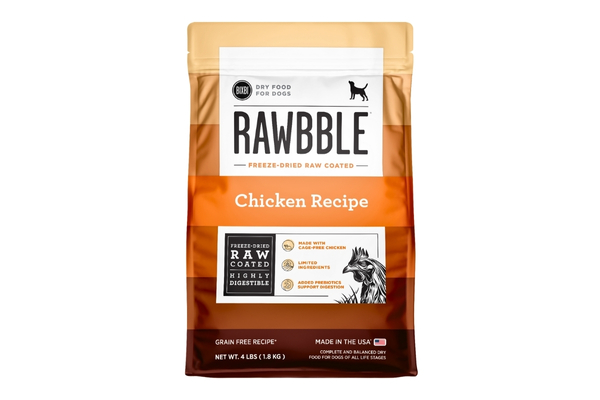
BIXBI, the company behind Rawbble, started in 2009 with a focus on functional mushroom supplements for pets. James Crouch, the founder and CEO, built the brand on a simple mission: use only real, human-grade ingredients and maintain honesty and transparency in every product. Around 2015, BIXBI expanded into dog food with the Rawbble line, centering on freeze-dried raw and dry kibble formulas that emphasize high digestibility and species-appropriate nutrition.
The brand’s core values revolve around ingredient integrity and U.S. manufacturing. Rawbble sources proteins exclusively from the USA, France, and New Zealand, with a firm “no China sourcing” policy. Production happens primarily at Barrett Petfood Innovations in Minnesota, a family-owned facility known for high-capacity, premium pet food manufacturing. BIXBI emphasizes fresh meat over rendered meals, grain-free formulations, and limited ingredient lists to support dogs with sensitivities.
In terms of market positioning, Rawbble sits firmly in the premium specialty segment. It’s not mass-market; you won’t find it at Walmart or Target. Instead, it’s available through specialty pet retailers like Chewy, Petco, and boutique shops. The brand appeals to health-conscious dog owners willing to pay more for transparency, high protein, and minimal processing. Compared to mainstream kibble brands like Blue Buffalo or Nutro, Rawbble commands a significant price premium—but it also delivers ingredient quality that’s closer to human-grade standards.
The brand’s reputation is strong among its core audience. Customer reviews consistently praise palatability, digestibility, and visible health improvements like shinier coats and firmer stools. There are no major recalls or controversies on record, which adds to its credibility. However, Rawbble remains a smaller player compared to giants like Hill’s or Royal Canin, and its higher cost limits accessibility for budget-conscious owners or those with large-breed dogs.
Rawbble’s freeze-dried line is where the brand truly differentiates itself. The primary protein sources—beef, duck, lamb, pork, chicken, and salmon—are all USDA-inspected fresh meat, not rendered meals. The brand claims up to 98% of the freeze-dried recipes consist of meat, organs, and bone, which is exceptionally high for any dog food format. This translates to protein levels ranging from 37% to 58% on a dry-matter basis, depending on the recipe.
For example, the Duck freeze-dried formula lists duck as the first ingredient, followed by duck liver, duck heart, and ground duck bone. There are no fillers, no chicken by-product meal, and no ambiguous “animal digest.” This level of transparency is rare and appreciated by owners who want to know exactly what’s going into their dog’s bowl. The dry kibble line also uses deboned meat as the first ingredient, though the overall meat percentage is lower due to the inclusion of legumes and peas as carbohydrate sources.
Rawbble is entirely grain-free, which aligns with the brand’s focus on limited-ingredient, allergy-friendly diets. The freeze-dried line includes minimal carbohydrates—mostly from pumpkin and coconut, which provide fiber and support digestive health. Estimated carbohydrate content in the freeze-dried recipes is around 3–5% on a dry-matter basis, making them suitable for dogs that thrive on low-carb, high-protein diets.
The dry kibble line uses lentils, peas, and chickpeas as the primary carbohydrate sources. These legumes provide energy and fiber, but they also contribute to the grain-free formula’s higher carbohydrate content—roughly 30–32% on a dry-matter basis. While legumes are a common substitute for grains in premium kibbles, some owners remain cautious due to the ongoing FDA investigation into a potential link between grain-free diets and dilated cardiomyopathy (DCM) in dogs. Rawbble does not address this concern directly on its website, which is a missed opportunity for transparency.
Rawbble includes salmon oil and coconut oil in most recipes, both of which provide essential fatty acids for skin, coat, and joint health. Salmon oil is rich in omega-3s (EPA and DHA), which support cognitive function and reduce inflammation. Coconut oil offers medium-chain triglycerides (MCTs), which can boost energy and aid in nutrient absorption. The freeze-dried line has fat content ranging from 28% to 36% on a dry-matter basis, which is high and appropriate for active dogs or those needing calorie-dense meals.
The ingredient lists are refreshingly short. Rawbble adds a pre-mix of vitamins and minerals to meet AAFCO standards for all life stages, including large-breed puppies. The brand uses mixed tocopherols (natural vitamin E) as a preservative, avoiding synthetic options like BHA or BHT. There’s no evidence of artificial colors, flavors, or added hormones. However, Rawbble does not include glucosamine or chondroitin for joint support, which some senior-dog formulas offer.
| Price per pound | Freeze-dried: $30 – $38, Dry kibble: $4 – $7 |
| Primary protein | Beef, Duck, Lamb, Pork, Chicken, Salmon |
| By-products | None |
| AAFCO compliance | Yes (all life stages, including large-breed puppies) |
| Formula options | 2 product lines (freeze-dried and dry kibble) |
| Availability | Specialty pet stores, Chewy, Petco (not mass-market) |
Take the free nutrition check and find out in under 1 minute which food is best tailored to your dog!
In just 60 seconds, find out which food fits your dog best — for free.
One potential concern is the reliance on legumes in the dry kibble line. Peas, lentils, and chickpeas are common in grain-free kibbles, but they’ve been flagged in the FDA’s ongoing DCM investigation. While no definitive causal link has been established, some veterinarians recommend rotating proteins and including grains if your dog tolerates them. Rawbble’s grain-free-only approach means it’s not an option for owners who want to hedge their bets with a grain-inclusive formula.
Another consideration is the high fat content in the freeze-dried line. While this is beneficial for active dogs, it may not be suitable for dogs prone to pancreatitis or those needing weight management. The caloric density of the freeze-dried recipes—around 4,600–4,700 kcal/kg—means you need to measure carefully to avoid overfeeding.
Rawbble’s nutritional profiles vary significantly between the freeze-dried and dry kibble lines. The freeze-dried recipes are protein-forward and low-carb, while the dry kibble offers a more balanced macronutrient profile suitable for everyday feeding.
For the freeze-dried Beef recipe, the guaranteed analysis shows a minimum of 45% protein and 35% fat, with a maximum of 4% fiber and 7% moisture. Converting these to a dry-matter basis (which removes moisture for a more accurate comparison), you get approximately 48% protein, 38% fat, and 4% carbohydrates. This is exceptionally high protein and fat, making it suitable for active dogs, puppies, and those needing to gain weight.
The freeze-dried Duck recipe pushes protein even higher, with 58% on a dry-matter basis. This is one of the highest protein levels I’ve seen in any dog food, freeze-dried or otherwise. The fat content is slightly lower at 32%, but still substantial. The carbohydrate content remains minimal, around 4%, which is ideal for dogs with grain sensitivities or those on ketogenic-style diets.
The dry kibble line, by contrast, offers around 28–29% protein and 15–17% fat on a dry-matter basis. Carbohydrates make up roughly 30–32%, which is typical for grain-free kibbles. These numbers are solid but not exceptional—comparable to brands like Taste of the Wild or Merrick Grain-Free. The kibble meets AAFCO standards for all life stages, meaning it’s nutritionally complete for puppies, adults, and seniors.
One standout claim is Rawbble’s 96% protein digestibility, verified by third-party testing. High digestibility means your dog absorbs more nutrients from each meal, resulting in smaller stools and better nutrient utilization. This is a tangible benefit, especially for dogs with sensitive stomachs or those recovering from illness.
Rawbble also meets AAFCO standards for large-breed puppy growth, which requires careful calcium and phosphorus ratios to prevent developmental orthopedic issues. This makes the freeze-dried line suitable for growing large-breed puppies, though the high caloric density means you’ll need to follow feeding guidelines closely to avoid overfeeding.
Rawbble’s freeze-dried line is ideal for small to medium-sized dogs and those with specific dietary needs. If your dog has food sensitivities or allergies, the single-protein recipes—Duck, Lamb, or Pork—are excellent choices. These formulas avoid common allergens like chicken, beef, and grains, making them suitable for elimination diets or long-term management of skin and digestive issues.
The high protein and fat content also make Rawbble a strong option for active dogs, working breeds, and puppies. If you have a Border Collie, Australian Shepherd, or other high-energy breed, the freeze-dried line provides the calorie density and nutrient profile to support their activity level. Puppies, especially large-breed puppies, benefit from the balanced calcium and phosphorus ratios that meet AAFCO growth standards.
For picky eaters, Rawbble scores high. The freeze-dried format is highly palatable, and many owners report that dogs who refuse other foods enthusiastically eat Rawbble. If you’ve struggled to find a food your dog will consistently eat, the Beef or Chicken & Salmon recipes are worth trying.
Rawbble’s freeze-dried line is prohibitively expensive for large-breed dogs when fed as a complete meal. A 100-pound dog could easily require $15 or more per day in freeze-dried food, which adds up to $450+ per month. While it’s an excellent topper or occasional treat, full-meal feeding at that size isn’t practical for most budgets.
Dogs prone to pancreatitis or weight issues should approach the freeze-dried line with caution. The high fat content—up to 38% on a dry-matter basis—can trigger pancreatitis in susceptible dogs or lead to unwanted weight gain if portions aren’t carefully controlled. The dry kibble line is a safer option for these dogs, though it still has moderate fat levels.
If you prefer grain-inclusive diets to mitigate potential DCM concerns, Rawbble isn’t the right fit. The brand’s entire lineup is grain-free, and there are no plans to introduce grain-inclusive options. For owners who want the flexibility of rotating between grain-free and grain-inclusive formulas, brands like Purina Pro Plan or Hill’s Science Diet offer more variety.
Take the free nutrition check and find out in under 1 minute which food is best tailored to your dog!
In just 60 seconds, find out which food fits your dog best — for free.
Palatability is where Rawbble consistently shines. Across hundreds of reviews on Chewy and specialty pet forums, the most common praise is simple: “My dog loves it.” The freeze-dried format retains the smell and taste of raw meat, which many dogs find irresistible. Owners report that even picky eaters who turn their noses up at traditional kibble will eagerly eat Rawbble.
The Pork and Duck recipes seem to be particularly popular, with multiple reviewers noting that their dogs preferred these flavors over Chicken or Beef. One owner on Chewy wrote, “After countless brands of quality dog food, all three of our rescues enjoy this food dry, right out of the bag. Pork seems to be our GSD’s favorite and constantly seeks seconds.” Another reviewer mentioned, “Our red nose pit tolerates pork better than any other protein. Rawbble in pork sprinkled on kibble entices him to eat his own food.”
The dry kibble line also receives positive feedback for palatability, though it’s less universally praised than the freeze-dried recipes. The kibble’s lighter, more porous texture—thanks to the fresh meat content—makes it easier to chew and more appealing than standard extruded kibble. However, a small percentage of dogs refuse it, particularly if they’re accustomed to higher-fat or freeze-dried diets.
Transitioning to Rawbble is generally smooth. Most owners report that their dogs adapted within a few days, with minimal digestive upset. The brand recommends a gradual transition over 7–10 days, mixing increasing amounts of Rawbble with your dog’s current food. This is standard advice, but it’s worth following, especially if your dog has a sensitive stomach.
One practical note: the freeze-dried food is very lightweight, so the recommended serving sizes can look surprisingly small. A 30-pound dog might only need about 2.75 cups of freeze-dried Beef per day, which weighs roughly 140 grams. This can be reassuring for owners worried about underfeeding, but it also means you need to measure carefully to avoid overfeeding and unnecessary expense.
Rawbble’s freeze-dried line is expensive—there’s no way around it. At roughly $30–$38 per pound, depending on the recipe and retailer, it’s among the priciest dog foods on the market. For a 30-pound dog, feeding Rawbble freeze-dried as a complete meal costs around $6 per day, or $180 per month. For a 60-pound dog, that jumps to $12 per day, or $360 per month. These numbers make full-meal feeding impractical for many households, especially those with multiple or large dogs.
However, the freeze-dried line’s ingredient quality and nutrient density justify the premium for certain use cases. If you’re feeding it as a topper to enhance palatability and add fresh protein to your dog’s kibble, the cost becomes more manageable. A small sprinkle of freeze-dried Rawbble can transform a meal, making it appealing to picky eaters or providing a nutritional boost without breaking the bank. In this context, a 12-ounce bag at $35 could last several weeks, depending on portion size.
The dry kibble line offers better value, with prices ranging from $4 to $7 per pound. For a 30-pound dog, daily feeding costs are around $1.15, or $35 per month. This is higher than mass-market kibbles like Purina or Iams, but comparable to other premium grain-free brands like Taste of the Wild or Merrick. The kibble’s use of fresh deboned meat—rather than meat meals—adds to the cost but also improves digestibility and palatability.
Compared to competitors, Rawbble’s freeze-dried line is priced similarly to Stella & Chewy’s and Primal, though it offers slightly higher protein levels in some recipes. For example, Rawbble’s Duck freeze-dried formula has 58% protein on a dry-matter basis, compared to Stella & Chewy’s Duck at around 51%. If you’re already in the freeze-dried market and prioritizing protein content, Rawbble delivers solid value. However, brands like Vital Essentials or Sojos offer lower price points with comparable quality, making them worth considering if budget is a concern.
Subscription options on Chewy and other retailers can save 10–15% on recurring orders, which helps offset the cost. Bulk buying—opting for the 26-ounce bag instead of the 4.5-ounce trial size—also improves the price per pound. Still, even with these savings, Rawbble remains a premium investment.
Rawbble is manufactured by Barrett Petfood Innovations (BPI), a family-owned facility in Brainerd, Minnesota. BPI is known for its modern production lines and focus on high-quality, fresh-ingredient pet foods. The facility opened an updated production line in recent years specifically designed to handle higher fresh meat inclusion, which aligns with Rawbble’s emphasis on fresh, not rendered, proteins.
BIXBI emphasizes that all proteins are sourced from the USA, France, or New Zealand, with a strict no-China policy. This is reassuring for owners concerned about ingredient sourcing, especially given past recalls involving Chinese-sourced ingredients in other pet food brands. The brand also claims to use USDA-inspected meat, which adds an additional layer of quality assurance.
Rawbble’s freeze-dried recipes are processed using a gentle freeze-drying method that removes moisture while preserving nutrients, enzymes, and flavor. This process avoids the high heat used in traditional kibble extrusion, which can degrade proteins and vitamins. The result is a nutrient-dense product that retains much of the nutritional profile of raw meat.
Quality control measures at BPI include batch testing for pathogens, though specific details about testing frequency or third-party audits are not publicly available. Rawbble has no major recalls on record, which suggests effective quality control and safety protocols. However, the lack of published third-party lab results or detailed traceability information is a transparency gap. Brands like Open Farm and The Honest Kitchen provide batch-level traceability and publish test results, setting a higher standard for transparency.
One minor concern is the absence of certifications like ISO 22000 or SQF (Safe Quality Food) on BIXBI’s website. While the brand likely adheres to industry standards through its manufacturing partner, explicit certification would strengthen consumer confidence.
BIXBI’s commitment to U.S. manufacturing and responsible sourcing is a positive step, but the brand’s sustainability efforts are not well-documented. There are no published sustainability goals, carbon footprint reports, or memberships in organizations like the Pet Sustainability Coalition. This is a missed opportunity, especially as more pet owners prioritize environmental impact when choosing products.
The brand’s use of fresh, whole-animal ingredients—including organs and bone—does reduce waste compared to formulas that rely solely on muscle meat. By utilizing more parts of the animal, Rawbble aligns with nose-to-tail principles, which are more sustainable and ethical. However, there’s no information about sourcing practices for individual farms or ranches, nor any certifications like Certified Humane or Animal Welfare Approved.
Packaging is another area where Rawbble could improve. The freeze-dried and dry kibble bags are resealable plastic pouches, which are convenient but not recyclable in most municipal programs. The brand does not mention compostable or biodegradable packaging, nor does it offer a take-back or recycling program. Competitors like The Farmer’s Dog and Ollie use recyclable or compostable materials, setting a higher bar for sustainability.
On the ethical side, BIXBI’s no-China sourcing policy and emphasis on transparency are positives. The brand’s founder, James Crouch, has consistently emphasized ingredient integrity and honesty, which resonates with consumers. However, without detailed sustainability reporting or third-party verification, it’s hard to assess the full scope of the brand’s environmental and ethical impact.
At the shelter where I work, we’re always looking for foods that can help dogs with various needs—whether it’s a sensitive stomach, picky eating habits, or simply a dog who needs to put on a bit of weight after a rough start. When Rawbble’s freeze-dried Pork arrived, I decided to test it with Maggie, a seven-year-old mixed-breed rescue who’d been with us for about six weeks. Maggie came in underweight and anxious, and while she’d made progress on our standard kibble, she was still a hesitant eater. Most mornings, she’d sniff her bowl, take a few bites, and walk away. We needed something to spark her interest and help her gain the weight she desperately needed.
I started by sprinkling a tablespoon of the freeze-dried Pork on top of her regular kibble. The reaction was immediate. Maggie, who usually approached her bowl with caution, walked straight over and started eating without hesitation. Her tail wagged—something we hadn’t seen much of during mealtime. Within a few days, she was finishing her meals consistently, and I gradually increased the Rawbble to about half her daily intake, mixing it with her kibble to stretch the bag and keep costs reasonable.
Over the next three weeks, the changes were noticeable. Maggie’s coat, which had been dull and patchy when she arrived, started to look shinier and healthier. Her energy picked up—she became more playful during yard time and started engaging with the other dogs. Her stools were firm and smaller than before, which made cleanup easier and suggested better digestion. Most importantly, she was eating eagerly and consistently, which meant she was finally gaining weight at a healthy pace.
There were no digestive upsets during the transition, which can sometimes happen when switching foods, especially with dogs who’ve had a rough time. Maggie seemed to tolerate the Pork recipe perfectly, and her enthusiasm at mealtime remained high throughout the test period. I did notice the freeze-dried food is very lightweight—what looks like a small amount actually packs a lot of calories, so I had to measure carefully to avoid overfeeding as she gained weight.
The only downside? The cost. For a shelter setting, feeding Rawbble as a primary meal isn’t sustainable. But as a topper or supplement, it’s incredibly effective. It gave Maggie the boost she needed to start thriving, and I’d absolutely use it again for dogs in similar situations—those who need to gain weight, regain their appetite, or simply need a little extra encouragement to eat.
Take the free nutrition check and find out in under 1 minute which food is best tailored to your dog!
In just 60 seconds, find out which food fits your dog best — for free.
Rawbble’s customer reviews are overwhelmingly positive, with most users praising palatability, digestibility, and visible health improvements. On Chewy, the freeze-dried line averages around 4.7 out of 5 stars, with roughly 85% of reviews rating it five stars. Common themes include dogs eating enthusiastically, firmer stools, shinier coats, and noticeable increases in energy.
One recurring comment is that Rawbble works well for picky eaters. Multiple reviewers mention that their dogs, who previously refused other premium brands, eagerly eat Rawbble. One owner wrote, “My dog’s picky picky and they love this brand.” Another said, “After countless brands of quality dog food, all three of our rescues enjoy this food dry, right out of the bag.”
Several users also report improvements in skin and coat quality within a few weeks of switching. One reviewer noted, “Used for five years; never had a recall, always the same quality. Switched my senior collie to Rawbble, and her coat, teeth, and energy have visibly improved.” Another mentioned, “Less shedding and softer fur after just a month.”
On the digestive side, owners frequently mention smaller, firmer stools and reduced gas. One user wrote, “Firm, healthy stools and less gas—noticeable within the first week.” Another said, “Smaller stool volume, which I attribute to better digestibility and the high meat content.”
Negative reviews are less common but worth noting. About 5% of reviewers report that their dogs refused to eat Rawbble, even after trying multiple flavors. One owner wrote, “My puppy refuses to eat this one, won’t buy this brand again.” Another mentioned, “Loved the duck version until the formula change, now less palatable.” However, these complaints are relatively rare and often tied to specific flavors—Lamb and Turkey seem to have slightly lower acceptance rates than Pork or Duck.
A small percentage of users also report digestive upset, typically loose stools or gas, during the transition period. These complaints are usually resolved by slowing down the transition or switching to a different protein. One reviewer noted, “Caused diarrhea in my dog, but switching to the Pork recipe solved the issue.”
Price complaints are common, with about 10% of reviewers mentioning that Rawbble is too expensive for regular use. One owner wrote, “Great quality, but I can’t afford to feed this full-time to my two large dogs.” Another said, “Works well as a topper, but the cost adds up quickly if you’re feeding it as a complete meal.”
Overall, the user experience data supports Rawbble’s reputation as a high-quality, palatable option for dogs with sensitivities or picky eating habits. The main trade-off is cost, which limits its accessibility for many households.
Rawbble competes directly with brands like Stella & Chewy’s, Primal, and Instinct in the freeze-dried raw segment, and with brands like Taste of the Wild and Merrick in the premium grain-free kibble market. Here’s how it stacks up:
Stella & Chewy’s is one of Rawbble’s closest competitors. Both brands offer freeze-dried raw formulas with high protein content and limited ingredients. However, Rawbble’s Duck recipe has 58% protein on a dry-matter basis, compared to Stella & Chewy’s Duck at around 51%. Rawbble also tends to be slightly less expensive per pound, making it a better value if protein content is your priority. That said, Stella & Chewy’s has a broader product line, including meal mixers and raw-coated kibble, which offers more flexibility.
Primal is another strong competitor, known for its freeze-dried nuggets and raw frozen options. Primal’s protein levels are slightly lower than Rawbble’s—typically 36–42% on a dry-matter basis—but the brand offers more variety in terms of recipes and formats. Primal also has a longer track record and slightly better retail availability. Price-wise, the two brands are comparable, though Primal’s broader distribution may make it easier to find locally.
Instinct by Nature’s Variety offers both freeze-dried and raw-coated kibble options. Instinct’s freeze-dried line has protein levels around 40–45%, which is solid but lower than Rawbble’s top recipes. Instinct is widely available in national chains like PetSmart and Petco, making it more accessible than Rawbble. However, Rawbble’s ingredient transparency and single-protein focus give it an edge for dogs with allergies or sensitivities.
In the dry kibble segment, Rawbble competes with brands like Taste of the Wild and Merrick Grain-Free. Taste of the Wild is significantly cheaper—around $2–$3 per pound—but uses meat meals rather than fresh deboned meat. Merrick Grain-Free is closer in quality to Rawbble, with fresh meat as the first ingredient and similar protein levels (28–30%). However, Rawbble’s emphasis on transparency and no-China sourcing gives it a slight credibility advantage.
Not sure whether to choose Rawbble or a more affordable option? Read our other Dr. Pol dog food review to see how a vet-backed, budget-friendly brand compares.
Rawbble’s freeze-dried line is best suited for small to medium-sized dogs, picky eaters, and dogs with food sensitivities. The single-protein recipes—Duck, Lamb, and Pork—are excellent for elimination diets or managing allergies. The high protein and fat content also make it a strong choice for active dogs, working breeds, and puppies, including large-breed puppies who need balanced calcium and phosphorus for healthy growth.
The dry kibble line works well for adult dogs of all sizes who need a grain-free, high-protein diet but don’t require the calorie density of freeze-dried food. It’s also a practical option for owners who want the quality of fresh meat without the premium price tag of freeze-dried formulas.
Rawbble is not ideal for dogs prone to pancreatitis or weight issues, as the high fat content in the freeze-dried line can exacerbate these conditions. It’s also impractical for full-meal feeding of large-breed dogs due to cost. If you prefer grain-inclusive diets to mitigate potential DCM concerns, Rawbble isn’t the right fit, as the brand’s entire lineup is grain-free.
Take the free nutrition check and find out in under 1 minute which food is best tailored to your dog!
In just 60 seconds, find out which food fits your dog best — for free.
Rawbble is a high-quality dog food that delivers on its promises of transparency, digestibility, and nutrient density. The freeze-dried line is particularly impressive, with protein levels reaching as high as 58% and a simple, whole-animal ingredient list that’s easy to understand. The brand’s no-China sourcing policy, U.S. manufacturing, and absence of meat meals or by-products set it apart from many competitors. If you have a small to medium-sized dog with food sensitivities, a picky eater, or a puppy who needs nutrient-dense meals, Rawbble is worth the investment.
That said, the price is a significant barrier. At $30–$38 per pound for the freeze-dried line, full-meal feeding is impractical for most households, especially those with large or multiple dogs. The dry kibble offers better value, but it’s still more expensive than mainstream grain-free brands like Taste of the Wild or Merrick. If you’re on a tight budget, there are comparable options that cost less—though you may sacrifice some ingredient transparency and protein content.
The lack of grain-inclusive options is another limitation. With ongoing concerns about grain-free diets and DCM, some veterinarians recommend rotating between grain-free and grain-inclusive formulas. Rawbble doesn’t offer that flexibility, which may deter owners who want to hedge their bets. Additionally, the brand could improve its sustainability reporting and packaging practices to align with more eco-conscious competitors.
Would I buy Rawbble for my own dog? If I had a small to medium-sized dog with allergies or a picky eater who struggled with other foods, absolutely. The freeze-dried line is one of the best options on the market for those specific needs. For everyday feeding of a healthy adult dog, though, I’d likely opt for the dry kibble or use the freeze-dried as a topper to keep costs manageable. For large-breed dogs, I’d probably look at more affordable alternatives unless budget wasn’t a concern.
In summary, Rawbble is an excellent choice for the right dog and the right situation. It’s not a one-size-fits-all solution, but for owners who prioritize ingredient quality, transparency, and digestibility—and who can afford the premium—it’s a solid investment that delivers real results.
Take the free nutrition check and find out in under 1 minute which food is best tailored to your dog!
In just 60 seconds, find out which food fits your dog best — for free.
Feeding costs vary significantly by dog size. For a 30-pound dog, expect to spend around $6 per day or $180 per month on freeze-dried Rawbble as a complete meal. For a 60-pound dog, costs jump to approximately $12 per day or $360 per month. These high costs make full-meal feeding impractical for large dogs, but using it as a topper or supplement becomes more affordable—a small sprinkle can last weeks and dramatically improve palatability.
Yes, Rawbble is excellent for dogs with food sensitivities. The freeze-dried line offers single-protein recipes like Duck, Lamb, and Pork that avoid common allergens including chicken, beef, corn, soy, and wheat. The ingredient lists are refreshingly short—often just meat, organs, bone, and minimal additions like pumpkin or coconut. This makes it ideal for elimination diets or long-term management of skin and digestive issues.
Absolutely. Rawbble meets AAFCO standards for large-breed puppy growth, with carefully balanced calcium and phosphorus ratios to prevent developmental orthopedic issues. However, the high caloric density means you’ll need to measure portions carefully to avoid overfeeding. The freeze-dried recipes contain 4,600–4,700 kcal/kg, so even small amounts provide substantial nutrition for growing puppies.
Rawbble is entirely grain-free, using legumes like peas, lentils, and chickpeas in the dry kibble line. While the FDA investigation into DCM hasn’t established a definitive causal link, some veterinarians recommend rotating between grain-free and grain-inclusive diets. Unfortunately, Rawbble doesn’t offer grain-inclusive options, so if this concerns you, you’ll need to look at other brands or rotate with grain-inclusive formulas from different manufacturers.
Follow a gradual 7-10 day transition, mixing increasing amounts of Rawbble with your dog’s current food. Start with 75% old food and 25% Rawbble for the first 2-3 days, then move to 50/50, then 25% old food and 75% Rawbble, before switching completely. Most dogs adapt smoothly with minimal digestive upset, but take it slower if your dog has a sensitive stomach.
Rawbble freeze-dried food is safe to feed directly from the bag—no rehydration required. Many dogs actually prefer the crunchy texture when fed dry. However, you can add warm water if you prefer a softer consistency or if your dog drinks little water. Adding moisture also increases the volume, which can help with portion control and make meals more filling.
The premium price reflects ingredient quality and processing methods. Rawbble uses fresh, USDA-inspected meat rather than rendered meals, sources exclusively from the USA, France, and New Zealand, and claims up to 98% animal ingredients in freeze-dried recipes. The gentle freeze-drying process preserves nutrients without high heat, and the 96% protein digestibility means your dog absorbs more nutrition from each meal, potentially requiring smaller portions.
Yes, using Rawbble as a topper is an excellent strategy to manage costs while still providing benefits. A tablespoon sprinkled over regular kibble can dramatically improve palatability, add fresh protein, and provide a nutritional boost. This approach makes a 12-ounce bag last several weeks instead of days, bringing the cost down to a reasonable level while still giving your dog the taste and nutrition benefits.
No, Rawbble has no major recalls or controversies on record, which adds to its credibility in the premium pet food market. The brand is manufactured at Barrett Petfood Innovations in Minnesota, uses USDA-inspected ingredients, and maintains strict quality control protocols. However, the brand could improve transparency by publishing third-party lab results or detailed batch traceability information like some competitors do.
Based on customer reviews, Pork and Duck recipes seem to be the most popular among dogs. Multiple owners report that even picky eaters who refuse other proteins eagerly eat these flavors. The Duck recipe is particularly impressive nutritionally, with 58% protein on a dry-matter basis. Lamb and Turkey tend to have slightly lower acceptance rates, so if you’re trying Rawbble for the first time with a picky eater, Pork or Duck might be your best bet.
Take the free nutrition check and find out in under 1 minute which food is best tailored to your dog!
In just 60 seconds, find out which food fits your dog best — for free.
9 out of 10 dog owners are feeding their dog the wrong food.
Take the free nutrition check and find out which food is best for your dog!
2,847+ dog owners already did