9 out of 10 dog owners are feeding their dog the wrong food

Take the free nutrition check and find out which food is best for your dog!

Shelter manager, certified canine nutritionist, and lifelong dog lover
• USDA organic certification since 2003 makes Organix a pioneer in certified organic pet food, with free-range proteins and no Chinese ingredients sourcing.
• Moderate nutrition profile (29% protein, 17% fat) suits adult dogs with sensitivities but falls short for high-performance or working dogs needing maximum energy.
• Premium pricing at $3-5 per pound reflects organic certification costs, making it comparable to Blue Buffalo but significantly more expensive than Diamond Naturals.
• Clean safety record with no major recalls and consistent 4-4.5 star ratings demonstrate reliable quality control and broad customer satisfaction over time.
• Subtle but noticeable improvements in coat shine, stool firmness, and digestive health reported by users, though benefits aren’t dramatic for already healthy dogs.
Take the free nutrition check and find out in under 1 minute which food is best tailored to your dog!
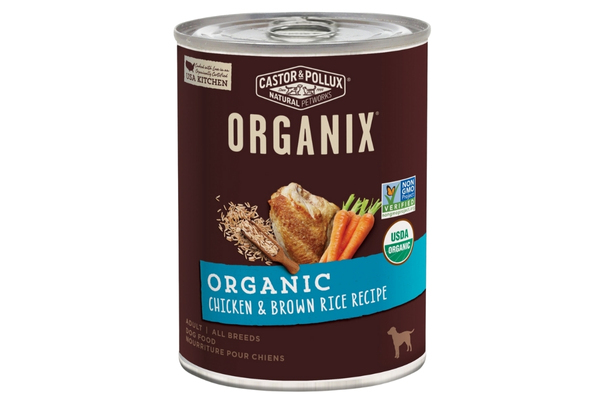
Organix was born in 2000 when founders Brian Connolly and Shelley Gunton decided the pet food industry needed a certified organic option that didn’t compromise on quality or transparency. After years distributing premium brands like Iams in Asia and North America, they launched Castor & Pollux PetWorks in Oregon, introducing the Organix line in 2003 as the first major USDA organic certified dog food in the United States. The brand’s core philosophy centers on responsibly sourced, organic ingredients—free-range chicken, non-GMO produce, and no artificial preservatives or fillers—paired with rigorous quality standards that go beyond typical kibble manufacturing.
In 2012, Merrick Pet Care acquired Castor & Pollux and moved production to Amarillo, Texas, but the brand’s commitment to organic certification and ingredient integrity remained intact. Today, Organix holds the distinction of being America’s #1 organic pet food brand, with all recipes meeting USDA National Organic Program standards and manufactured in certified U.S. facilities. The company emphasizes transparency, listing every ingredient clearly on packaging and website, and claims a “responsibly sourced ingredient supply chain” that avoids Chinese ingredients entirely. While detailed supply chain audits and third-party traceability reports aren’t publicly available, the brand’s long-standing certifications and absence of major recalls suggest a reliable operation.
Organix positions itself in the premium segment, targeting health-conscious dog owners who prioritize ingredient quality and are willing to pay more for organic certification. The brand’s reputation is solid—consistently earning 4 to 4.5 out of 5 stars on platforms like Chewy and DogFoodAdvisor—and it’s widely available at major retailers including PetSmart, Petco, Whole Foods, and online through Chewy and Amazon. The company’s mission statement, “To create pet food made with integrity,” reflects a philosophy that resonates with owners looking for a step up from conventional kibble without diving into raw or ultra-premium specialty diets.
| Price per pound | $3.00 – $5.00 |
| Primary protein | Organic chicken, Organic turkey |
| By-products | None |
| AAFCO compliance | Yes (all life stages) |
| Formula options | Grain-inclusive and grain-free recipes |
| Availability | PetSmart, Petco, Whole Foods, Chewy, Amazon |
Take the free nutrition check and find out in under 1 minute which food is best tailored to your dog!
In just 60 seconds, find out which food fits your dog best — for free.
Organix recipes typically feature organic chicken or turkey as the first ingredient, followed by chicken meal or turkey meal. This combination is smart: the whole meat provides moisture and palatability, while the meal—a concentrated protein source with most water removed—delivers the bulk of the protein content. In the Organic Chicken & Oatmeal recipe, for example, you’ll see organic chicken, chicken meal, and then a blend of whole grains. The use of named meat meals (chicken meal, not generic “poultry meal”) is a positive sign, indicating a clear, traceable protein source rather than mystery by-products.
The brand’s commitment to USDA organic and free-range chicken means the birds are raised without antibiotics or growth hormones, and have access to outdoor space—standards that matter if you’re concerned about farming practices. However, the exact farms and suppliers aren’t disclosed publicly, so full traceability is limited to the organic certification itself. Protein levels across Organix dry recipes generally range from 26% to 32%, which is respectable for a premium kibble and sufficient for most adult dogs, though performance or working dogs might benefit from even higher protein formulas.
Organix offers both grain-inclusive and grain-free options, giving you flexibility based on your dog’s needs. The grain-inclusive recipes feature wholesome carbs like organic oatmeal, barley, and brown rice—ingredients that provide steady energy, fiber for digestion, and a lower glycemic response compared to simple starches. These grains are organic, meaning they’re grown without synthetic pesticides or GMOs, which aligns with the brand’s overall philosophy.
On the grain-free side, Organix uses sweet potatoes, peas, and pea protein as primary carbohydrate sources. Sweet potatoes are nutrient-dense and well-tolerated by most dogs, but peas and pea protein have drawn some scrutiny. Peas can cause digestive upset in sensitive dogs—gas, bloating, or loose stools—and pea protein is a plant-based protein that some brands use to boost protein percentages without adding more meat. While not inherently bad, it’s worth noting if your dog has a history of food sensitivities. Overall, carbohydrate content hovers around 40-46%, which is typical for kibble and provides the binding and energy dogs need without excessive fillers.
Fat content in Organix recipes ranges from 15% to 18%, sourced primarily from chicken fat and organic flaxseed. Chicken fat is a high-quality, palatable fat that provides essential fatty acids for skin, coat, and cellular health, while flaxseed adds omega-3s (specifically ALA) and fiber. The brand also incorporates organic coconut oil in some recipes, which offers medium-chain triglycerides that can support energy metabolism and coat shine.
Organix leans heavily into superfood blends—organic blueberries, cranberries, and various vegetables—to provide antioxidants, vitamins, and phytonutrients. These ingredients are more than marketing fluff; blueberries and cranberries contain compounds that support urinary tract health and immune function. That said, the amounts are relatively small, so while they add nutritional value, they’re not miracle workers. The brand also includes prebiotics and probiotics in some formulas to support gut health, which is a welcome addition for dogs prone to digestive issues.
One ingredient that occasionally raises eyebrows is pea protein, as mentioned earlier. It’s not dangerous, but it’s a lower-quality protein compared to animal sources and can contribute to digestive discomfort in some dogs. Beyond that, Organix avoids the usual suspects—no artificial colors, flavors, or preservatives, no corn, wheat, or soy fillers, and no ingredients sourced from China. The brand uses natural preservatives like mixed tocopherols (vitamin E) to maintain freshness.
Overall, the ingredient list is clean and transparent. You won’t find vague terms like “animal by-products” or “meat and bone meal.” Every component is named and sourced with organic standards in mind, which builds trust. The main trade-off is that organic certification and quality sourcing come at a cost, reflected in the price per pound.
Organix recipes deliver a balanced macronutrient profile that meets AAFCO standards for all life stages, though some formulas are tailored specifically for adults. Taking the Organic Chicken & Oatmeal as a reference, the guaranteed analysis shows 29% protein, 17% fat, and approximately 46% carbohydrates on a dry matter basis. This ratio is well-suited for moderately active adult dogs, providing enough protein for muscle maintenance, fat for energy and coat health, and carbs for sustained activity without excess calories.
For dogs with higher energy demands—think working breeds, highly active pets, or those in colder climates—the protein and fat levels are adequate but not exceptional. Brands focused on performance nutrition often push protein closer to 35% and fat to 20% or more. Conversely, for sedentary or senior dogs, Organix’s moderate fat content helps prevent unwanted weight gain while still delivering essential nutrients.
Caloric density varies by recipe, but most Organix dry foods clock in around 380-390 kcal per cup. This is moderate for kibble—not as calorie-dense as high-performance formulas, but more concentrated than budget brands that rely heavily on fillers. In practical terms, a 50-pound active dog might need around 3 to 3.5 cups per day, depending on metabolism and activity level. The brand provides clear feeding guidelines on packaging, but as always, you’ll want to adjust based on your dog’s body condition and energy levels.
One benefit of moderate caloric density is that it allows for generous portion sizes without overfeeding, which can be psychologically satisfying for dogs (and owners) who like to see a fuller bowl. It also makes it easier to mix in fresh toppers, wet food, or supplements without throwing off daily calorie targets.
Beyond the big three macronutrients, Organix includes a solid lineup of vitamins and minerals—vitamin A for vision and immune health, vitamin E as an antioxidant, B vitamins for metabolism, and chelated minerals like zinc and copper for better absorption. The superfood blends contribute additional antioxidants and phytonutrients, which support cellular health and may reduce inflammation over time.
The inclusion of omega-3 and omega-6 fatty acids from flaxseed and chicken fat supports skin and coat quality, joint health, and cognitive function. While flaxseed provides ALA (a plant-based omega-3), it’s less bioavailable than the EPA and DHA found in fish oil. If your dog has specific joint or inflammatory concerns, supplementing with fish oil alongside Organix could be beneficial.
Organix also adds glucosamine and chondroitin in some formulas, particularly those marketed toward senior dogs, to support joint health and mobility. The amounts are modest compared to therapeutic joint supplements, so think of them as preventive maintenance rather than treatment for advanced arthritis.
Take the free nutrition check and find out in under 1 minute which food is best tailored to your dog!
In just 60 seconds, find out which food fits your dog best — for free.
Organix shines for adult dogs with mild sensitivities or owners who prioritize organic, non-GMO ingredients. If your dog has shown signs of digestive upset or skin issues on conventional kibble—think itchy paws, dull coat, or inconsistent stools—the clean ingredient list and absence of artificial additives can make a noticeable difference. The grain-inclusive recipes are particularly good for dogs who do well with whole grains, offering steady energy and fiber without the potential pitfalls of grain-free diets.
The brand is also a solid choice for small to medium-sized dogs with moderate activity levels. The kibble size is manageable, the caloric density is appropriate, and the flavor profiles (primarily chicken and turkey) are broadly appealing. If you’re the type of owner who reads labels, researches sourcing, and wants to feel confident about what you’re feeding, Organix delivers peace of mind without requiring a degree in nutrition to decode the ingredient list.
For dogs prone to food allergies or intolerances, the grain-free options can help, though they’re not true limited-ingredient diets. If your dog has confirmed allergies to chicken or turkey, you’ll need to look elsewhere, as those are the primary proteins across the line.
Organix isn’t the best fit for high-performance or working dogs who need maximum protein and fat for sustained energy. While the formulas are nutritionally complete, the protein and fat levels are moderate, and you’d likely need to feed larger portions or supplement with additional calories to meet the demands of intense activity.
Similarly, large and giant breed puppies require carefully balanced calcium and phosphorus ratios to support healthy bone growth, and while Organix meets AAFCO standards, it’s not specifically formulated for large breed development. If you have a Great Dane or Mastiff puppy, a breed-specific formula with tighter calcium/phosphorus control is a safer bet.
Dogs with severe protein allergies or chronic digestive disorders may struggle with the inclusion of pea protein and multiple carbohydrate sources. In those cases, a true limited-ingredient diet or veterinary prescription food is more appropriate. Additionally, if budget is a primary concern, Organix’s premium pricing may not align with your needs, especially if you have multiple large dogs to feed.
Organix offers a focused lineup of flavors centered on chicken and turkey, with occasional beef or salmon options depending on the specific product line. The recipes are formulated to be palatable without relying on artificial flavor enhancers, and most dogs seem to enjoy the taste right out of the bag. The use of whole meat and chicken fat as primary ingredients contributes to a savory aroma that appeals to dogs, and the inclusion of organic vegetables and superfoods adds subtle flavor complexity.
For picky eaters, the brand has a decent track record. Many owners report that dogs who turned their noses up at other premium kibbles took to Organix without hesitation, likely due to the natural meat content and absence of overly processed fillers. That said, taste acceptance is always individual—some dogs will love it, others may be indifferent, and a small minority might reject it entirely. The good news is that most retailers and online platforms have generous return or satisfaction guarantee policies, so you can try it with minimal risk.
The kibble itself is medium-sized and moderately crunchy, suitable for most breeds and jaw sizes. It’s not rock-hard, so senior dogs or those with dental issues can usually manage it without difficulty, though soaking it in warm water or broth can make it easier to chew if needed. The texture also provides some mechanical cleaning action on teeth, which is a small bonus for dental health, though it’s no substitute for regular brushing or dental chews.
For small breeds or toy dogs, the kibble size is generally appropriate, but if you have a Chihuahua or Yorkshire Terrier, you might want to check the specific product line to ensure it’s not too large. Conversely, large breeds can crunch through the kibble without issue, though they may prefer a larger bite size for satisfaction.
Transitioning to Organix typically goes smoothly, especially if you follow the standard 7- to 10-day gradual switch by mixing increasing amounts of the new food with the old. The organic ingredients and inclusion of prebiotics and probiotics support digestive health, and many owners report firmer stools and less gas after the transition period. However, the presence of peas and pea protein can cause temporary digestive upset in sensitive dogs—bloating, softer stools, or increased gas—particularly during the first week or two. If this happens, slowing down the transition or choosing a grain-inclusive recipe with less pea content can help.
Once acclimated, most dogs maintain consistent digestion on Organix, with smaller, firmer stools compared to lower-quality kibbles that contain more filler. This is a practical benefit for owners: less cleanup, less odor, and a sign that your dog is digesting and absorbing nutrients efficiently.
Organix sits firmly in the premium price range, typically costing between $3 and $5 per pound for dry food, depending on the specific recipe and retailer. For a 50-pound dog eating around 3 cups per day, you’re looking at roughly $80 to $120 per month, which is significantly higher than mid-range brands like Purina ONE or Diamond Naturals, but comparable to other organic or high-end options like Blue Buffalo or Wellness Core.
Canned and wet food options are even pricier, with individual cans or pouches often running $2.50 to $3.50 each. If you’re feeding wet food exclusively or as a significant portion of the diet, costs can climb quickly, especially for larger dogs. A mixed feeding approach—combining Organix dry kibble with occasional wet food or fresh toppers—can help balance quality and budget without compromising nutrition.
The question is whether the premium price delivers genuine value compared to alternatives. In my opinion, yes—if organic certification, ingredient transparency, and non-GMO sourcing matter to you. The USDA organic seal isn’t just marketing; it represents stricter standards for how ingredients are grown and processed, and that comes with higher costs at every stage of production. You’re also paying for the absence of artificial preservatives, fillers, and Chinese-sourced ingredients, which adds to the peace of mind.
That said, if your dog does well on a mid-range grain-inclusive kibble without sensitivities, the jump to Organix may not yield dramatic differences in health or coat quality. The benefits are often more subtle—steadier digestion, slightly shinier coat, perhaps a bit more vitality—rather than transformative. For dogs with sensitivities or owners who prioritize organic for ethical or health reasons, the value is clear. For budget-conscious households or those with large breeds, the cost can be a barrier, and exploring grain-inclusive options from brands like Diamond Naturals or even mixing Organix with a more affordable kibble can stretch your dollar without sacrificing too much quality.
Many online retailers, including Chewy and Amazon, offer subscription discounts that can shave 5-10% off the regular price and provide free shipping. Buying larger bag sizes (e.g., 15-pound bags instead of 4-pound) also lowers the per-pound cost. If you’re committed to Organix long-term, these strategies can make the premium pricing more manageable. Just be mindful of expiration dates and storage—organic kibble without synthetic preservatives has a shorter shelf life, so only buy what your dog can consume within a few months.
Take the free nutrition check and find out in under 1 minute which food is best tailored to your dog!
In just 60 seconds, find out which food fits your dog best — for free.
Organix dog food is manufactured in Amarillo, Texas, at facilities operated by Merrick Pet Care following the 2012 acquisition. The production site is certified for organic manufacturing, meaning it meets USDA standards for handling and processing organic ingredients. All recipes are made in the United States, and the brand explicitly states that no ingredients are sourced from China, which addresses a common concern among pet owners following past contamination scandals in imported pet food ingredients.
While the brand emphasizes quality controls and “rigorous requirements,” specific details about third-party audits, HACCP certification, or ISO standards aren’t publicly disclosed. This lack of transparency is a minor red flag—many top-tier brands publish detailed quality assurance information, and the absence of that data makes it harder to independently verify claims. That said, the brand’s long history, USDA organic certification, and absence of major recalls suggest that production standards are solid, even if they’re not fully documented for public review.
Organix claims a “responsibly sourced ingredient supply chain” with organic certification as the backbone. The primary proteins—free-range chicken and turkey—are USDA organic, meaning they’re raised without antibiotics, growth hormones, or GMO feed. Fruits, vegetables, and grains are also certified organic, avoiding synthetic pesticides and fertilizers.
However, the brand doesn’t publish detailed information about specific suppliers, farm locations, or third-party supply chain audits. For owners who want full farm-to-bowl traceability, this is a gap. You’re essentially trusting the USDA organic certification and the brand’s reputation rather than having access to granular sourcing data. This is common in the industry, but brands like The Honest Kitchen and Stella & Chewy’s go further with transparency, so there’s room for improvement.
Organix has a clean safety record with no major recalls reported in recent years. This is a strong point in its favor, especially compared to brands that have faced multiple recalls for contamination or formulation issues. The absence of recalls suggests effective quality control and ingredient testing, though it’s worth noting that lack of recalls doesn’t guarantee perfection—it just means nothing serious enough to trigger a public recall has been detected.
The brand’s commitment to organic standards and U.S. manufacturing reduces the risk of contamination from imported ingredients, which have historically been a source of safety issues in the pet food industry. Overall, Organix’s safety track record is reassuring and supports its reputation as a reliable premium brand.
Organix’s commitment to organic farming practices inherently supports environmental sustainability. Organic agriculture avoids synthetic pesticides and fertilizers, which reduces soil and water contamination, and often promotes biodiversity and healthier ecosystems. The use of free-range chicken and turkey also aligns with higher animal welfare standards, giving the birds access to outdoor space and more natural living conditions compared to conventional factory farming.
That said, the brand doesn’t publish a formal sustainability report or carbon footprint analysis, so it’s difficult to assess the full environmental impact of production, packaging, and distribution. Packaging is standard for the industry—plastic bags with some recyclable components—but there’s no indication of significant investment in compostable or reduced-plastic alternatives. For owners who prioritize sustainability, this is an area where Organix could improve transparency and innovation.
The brand’s use of USDA organic and free-range proteins is a clear ethical win. Organic certification requires that animals have access to the outdoors and are raised without antibiotics or growth hormones, which aligns with humane farming practices. The absence of animal testing in product development is also implied, as the company positions itself as animal welfare-oriented, though no formal policy document is publicly available.
Organix doesn’t claim any third-party certifications like Certified Humane or Animal Welfare Approved, which would provide additional verification of ethical sourcing. For owners who want the highest assurance of humane treatment, this is something to consider, though the organic certification itself is a meaningful standard.
Under Merrick Pet Care’s ownership, Organix benefits from the resources and stability of a larger corporate structure, but there’s limited public information about CSR initiatives, charitable giving, or labor practices. The brand’s mission to create pet food “with integrity” suggests a values-driven approach, but without published reports or third-party transparency ratings, it’s hard to assess how that translates into practice beyond ingredient sourcing.
Overall, Organix earns points for organic certification and humane protein sourcing, but there’s room for improvement in sustainability reporting and broader ethical transparency. If you’re looking for a brand with detailed CSR commitments, you might want to explore options like The Honest Kitchen or Stella & Chewy’s, which publish more comprehensive sustainability and sourcing information.
At the shelter where I work, we tested Organix Organic Chicken & Oatmeal with a dog named Baxter, a five-year-old mixed breed (likely Lab and Beagle) who came to us after being surrendered by an owner who could no longer care for him. Baxter is a sweet, easygoing guy with a healthy appetite and no major health issues, though his coat was a bit dull and his stools were on the softer side when he first arrived—likely due to stress and inconsistent feeding on his previous diet. We wanted to see if switching to a premium organic kibble would make any noticeable difference, so we transitioned him to Organix over the course of a week.
Baxter took to Organix right away. The first time we mixed it with his old food, he sniffed the bowl, wagged his tail, and dove in without hesitation. The kibble has a savory aroma—you can actually smell the chicken—and Baxter seemed to appreciate the change. We followed a gradual transition, starting with 25% Organix and increasing over seven days, and he had no digestive upset during the switch. His appetite remained strong, and he consistently licked his bowl clean, which was a good sign.
After about two weeks on Organix, we started noticing subtle improvements. Baxter’s coat became noticeably shinier and felt softer to the touch—less dry and more lustrous, which was a pleasant surprise. His stools also firmed up and became more consistent, smaller in volume and easier to pick up during walks. This is a practical benefit that makes a difference in daily care, especially in a shelter setting where we’re managing multiple dogs.
Energy-wise, Baxter seemed about the same—he was already a moderately active dog who enjoyed playtime and walks, and that didn’t change much. He didn’t suddenly become a marathon runner, but he also didn’t lose any of his playful energy. His weight stayed stable, which was ideal since he didn’t need to gain or lose. Overall, the changes were modest but positive, and they reinforced the idea that a clean, quality ingredient list can make a difference even for dogs without major health issues.
From a practical standpoint, feeding Baxter Organix was straightforward. The kibble size was easy for him to crunch, and he never left food behind or showed any signs of pickiness. The smaller, firmer stools were a definite win for cleanup, and the improved coat quality was something staff and potential adopters commented on. It’s those little details—like a shinier coat and consistent digestion—that can make a dog more appealing to adopters and signal that they’re in good health.
Baxter didn’t have any dramatic transformation, and honestly, that’s okay. He was a healthy dog to begin with, so the fact that Organix supported his baseline health and made small improvements in coat and digestion was exactly what we hoped for. If your dog is similar—generally healthy but could use a quality boost—Organix is likely to deliver the same kind of subtle, positive results.
Take the free nutrition check and find out in under 1 minute which food is best tailored to your dog!
In just 60 seconds, find out which food fits your dog best — for free.
Across platforms like Chewy, Amazon, and DogFoodAdvisor, Organix consistently earns 4 to 4.5 out of 5 stars, with owners praising the brand for its organic ingredients, palatability, and effectiveness for dogs with sensitivities. Common themes in positive reviews include dogs with sensitive stomachs finally finding a food that doesn’t cause gas or loose stools, picky eaters enjoying the taste, and noticeable improvements in coat shine and energy levels after a few weeks.
One reviewer on Chewy wrote, “My dog loves this food. It’s very healthy, and he loves it! Littleman has food allergies and allergies in general. He has a sensitive tummy and this food does the trick.” Another noted, “All four of my little dogs like it and I like that it’s organic.” These testimonials reflect the brand’s strength in addressing mild digestive sensitivities and providing a clean ingredient list that owners feel good about.
Owners also appreciate the smaller, firmer stools that result from better nutrient absorption, which makes cleanup easier and signals improved digestion. The organic certification and transparency around ingredient sourcing are frequently cited as reasons for choosing Organix over other premium brands, with many owners feeling that the price is justified by the quality and peace of mind.
On the flip side, some owners report issues with gas and bloating, particularly during the transition period or in dogs sensitive to peas and pea protein. A few reviews mention inconsistent batches—kibble that smells different or causes digestive upset despite being the same recipe—though these reports are relatively rare and may reflect storage or handling issues rather than manufacturing problems.
Price is another common complaint. Several reviewers note that while they appreciate the quality, the cost is a stretch for their budget, especially when feeding larger dogs or multiple pets. One owner mentioned, “It’s pricey, but I think it’s worth it for my dog’s health,” capturing the trade-off many face.
A small number of dogs simply don’t like the taste or refuse to eat Organix after an initial period of acceptance. This is uncommon but worth noting—taste preferences are individual, and what works for one dog may not work for another. Most retailers offer satisfaction guarantees, so if your dog turns their nose up, you’re not stuck with a full bag.
Many owners report sticking with Organix long-term, citing consistent quality and the absence of digestive issues or health declines over months or years of feeding. The brand’s subscription options and availability at major retailers make it easy to maintain a routine, and the lack of formula changes or recalls contributes to owner confidence. Overall, the user experience is positive, with the main trade-offs being price and occasional digestive sensitivity to pea-based ingredients.
Blue Buffalo is a well-known premium brand with a broad product range, including grain-free, grain-inclusive, and veterinary diets. Both brands offer high-quality ingredients and AAFCO compliance, but Organix has the edge in organic certification—Blue Buffalo’s LifeSource Bits are a unique feature, but they’re not organic. Blue Buffalo’s protein levels are slightly lower on average (24-30%), and the brand has a more extensive recall history, though none recent. Price-wise, they’re comparable, with Blue Buffalo sometimes running a bit cheaper. If organic certification is a priority, Organix wins; if you want more variety and availability, Blue Buffalo is a solid alternative.
Wellness Core is a premium grain-free brand known for high protein (32-34%) and quality sourcing. It’s a strong competitor in the performance and active dog segment, with robust protein and fat levels that exceed Organix. However, Wellness Core isn’t organic, and its grain-free focus may not suit all dogs, especially given ongoing research into grain-free diets and dilated cardiomyopathy (DCM). Organix’s grain-inclusive options offer a safer choice for owners concerned about grain-free risks. Price is similar, with Wellness Core slightly more expensive per pound in some markets. If your dog is highly active and you’re not worried about organic, Wellness Core is a great option; for organic certification and grain-inclusive balance, Organix is the better pick.
Joy dog food, produced by Hi-Standard since 1945, is a value-premium brand with a strong reputation in the working dog and performance segments. Joy offers higher protein (29-30%) and fat (18-19%) compared to Organix, making it a better fit for high-energy or working dogs. However, Joy uses meat by-product meals in some formulas and includes menadione, which has drawn minor controversy among ingredient-conscious owners. Joy is also more affordable, typically $2-$3 per pound, making it a budget-friendly alternative to Organix’s $3-$5 range.
The key difference is organic certification—Organix is USDA organic, while Joy focuses on performance and affordability without organic claims. If you have a working or highly active dog and budget is a concern, Joy dog food is a strong choice. If you prioritize organic ingredients and are willing to pay more, Organix is the clear winner. Both brands have solid safety records and loyal customer bases, so the decision comes down to your priorities: performance and value (Joy) or organic certification and transparency (Organix).
Diamond Naturals is a mid-range, value-premium brand with good nutritional profiles (26-30% protein, 15-17% fat) and AAFCO compliance. It’s significantly cheaper than Organix, often running $1.50-$3 per pound, making it an attractive option for budget-conscious owners. However, Diamond Naturals isn’t organic, and it has had recalls in the past, though none recent. Ingredient quality is decent but not as transparent or premium as Organix.
If cost is a major factor and your dog doesn’t have sensitivities, Diamond Naturals is a solid everyday kibble. If you want organic certification, cleaner ingredients, and higher transparency, Organix is worth the extra investment.
Organix is best suited for adult dogs with mild sensitivities or owners who prioritize organic, non-GMO ingredients. The grain-inclusive recipes are ideal for dogs who tolerate grains well and benefit from the steady energy and fiber they provide, while the grain-free options work for dogs with grain allergies or intolerances. Small to medium-sized dogs with moderate activity levels will find the caloric density and kibble size appropriate, and the clean ingredient list makes it a safe choice for dogs prone to digestive upset or skin issues on conventional kibble.
The brand is also a good fit for health-conscious owners who want transparency and quality without diving into raw or ultra-premium specialty diets. If you’re the type who reads labels, researches sourcing, and values organic certification, Organix delivers peace of mind and consistent quality.
Organix is not ideal for high-performance or working dogs who need maximum protein and fat for sustained energy. The moderate macronutrient levels are sufficient for everyday activity but may fall short for intense work or endurance sports. Similarly, large and giant breed puppies need carefully balanced calcium and phosphorus for healthy bone growth, and while Organix meets AAFCO standards, it’s not specifically formulated for large breed development. Dogs with severe protein allergies or chronic digestive disorders may also struggle with the inclusion of pea protein and multiple carbohydrate sources, in which case a limited-ingredient or veterinary diet is more appropriate.
Yes, Organix is a good dog food—especially if you value organic certification, ingredient transparency, and a clean label. The brand delivers on its promises: USDA organic ingredients, no artificial preservatives or fillers, and a solid nutritional profile that meets AAFCO standards. The use of named meat sources, whole grains (in grain-inclusive recipes), and superfood blends adds genuine nutritional value, and the absence of major recalls or safety issues speaks to reliable quality control.
That said, “good” doesn’t mean “best for everyone.” The premium price is a real consideration, and if your dog does well on a mid-range kibble without sensitivities, the jump to Organix may not yield dramatic differences. The benefits are often subtle—steadier digestion, shinier coat, smaller stools—rather than transformative. For dogs with mild sensitivities or owners who prioritize organic for ethical or health reasons, the value is clear. For budget-conscious households or those with large, high-energy dogs, the cost can be a barrier, and exploring alternatives like The Farmer’s Dog (if you want fresh, human-grade) or Joy (if you want performance at a lower price) may make more sense.
Would I buy this for my dog? If I had a dog with sensitivities or I was committed to organic feeding, absolutely. The ingredient quality, transparency, and safety record make it a trustworthy choice. If I had a high-energy working dog or a tight budget, I’d probably look elsewhere—there are better performance formulas and more affordable options that still deliver quality. Would I recommend it to a friend? Yes, with the caveat that they should assess their dog’s specific needs and their own budget. Organix is a solid premium option, but it’s not a one-size-fits-all solution.
In a crowded market full of marketing hype and vague claims, Organix stands out for doing what it says it will: providing certified organic, transparently sourced, nutritionally complete dog food that supports everyday health. It’s not revolutionary, and it’s not cheap, but it’s reliable, ethical, and effective. For many dogs and owners, that’s exactly what matters most.
Take the free nutrition check and find out in under 1 minute which food is best tailored to your dog!
In just 60 seconds, find out which food fits your dog best — for free.
Yes, Organix is USDA certified organic, which means all ingredients meet strict standards for how they’re grown and processed. The chicken and turkey are raised without antibiotics or growth hormones, have access to outdoor space, and are fed organic feed. Fruits, vegetables, and grains are grown without synthetic pesticides, fertilizers, or GMOs. This certification isn’t just marketing—it represents genuine oversight and higher farming standards, though it does come at a premium price.
Organix typically costs between $3 and $5 per pound for dry food, putting it in the premium price range alongside brands like Blue Buffalo and Wellness. For a 50-pound dog, you’re looking at roughly $80 to $120 per month. While it’s significantly more expensive than mid-range options, the organic certification and quality sourcing justify the cost for many owners. Subscription discounts and bulk buying can help reduce the per-pound price.
Organix can help with mild sensitivities thanks to its clean ingredient list and absence of artificial additives, but it’s not a true limited-ingredient diet. The grain-free options may benefit dogs with grain intolerances, and the organic ingredients can reduce exposure to pesticides and chemicals that might cause reactions. However, if your dog has confirmed allergies to chicken or turkey (the primary proteins), you’ll need to look elsewhere, as these are featured across the product line.
Most Organix recipes meet AAFCO standards for all life stages, making them suitable for puppies, adults, and seniors. However, large and giant breed puppies need carefully balanced calcium and phosphorus ratios for healthy bone development, and Organix isn’t specifically formulated for large breed growth. For senior dogs, the moderate protein and fat levels are appropriate, and some formulas include glucosamine and chondroitin for joint support, though these amounts are more preventive than therapeutic.
Pea protein is a plant-based protein that helps boost overall protein percentages in the food. While it’s not inherently dangerous, it’s lower quality than animal proteins and can cause digestive upset in some sensitive dogs—think gas, bloating, or loose stools. It’s particularly common in grain-free formulas. If your dog experiences these issues, the grain-inclusive recipes with less pea content might be a better option, or you could transition more slowly to allow their system to adjust.
Organix is a high-quality kibble with organic certification, but it’s still processed food that’s been cooked and dried. Fresh or raw diets offer minimally processed nutrition but require more preparation, cost significantly more, and carry food safety considerations. Organix is a good middle ground—higher quality than conventional kibble with organic benefits, but more convenient and affordable than fresh food. If you want to upgrade from regular kibble without the complexity of raw feeding, Organix is an excellent choice.
Organix has a clean safety record with no major recalls reported in recent years. This is particularly impressive given the brand’s long history since 2003. The commitment to U.S. manufacturing and avoiding Chinese ingredients reduces contamination risks, and the organic certification adds another layer of quality oversight. While no brand is guaranteed recall-free forever, Organix’s track record is reassuring and supports its reputation as a reliable premium option.
The grain-inclusive recipes feature organic oatmeal, barley, and brown rice, which provide steady energy, fiber, and are generally well-tolerated. The grain-free options use sweet potatoes, peas, and pea protein as primary carb sources. Given recent research linking some grain-free diets to heart issues (DCM), the grain-inclusive recipes are considered safer for most dogs unless your pet has a confirmed grain allergy. Both meet the same nutritional standards, so the choice depends on your dog’s specific needs and sensitivities.
Yes, many owners successfully mix Organix with a more affordable kibble to balance quality and budget. This works especially well for large dogs or multi-pet households where full premium feeding gets expensive. Just ensure both foods have similar protein and fat levels, transition gradually when introducing the mix, and maintain consistent ratios so your dog’s digestion stays stable. This approach lets you provide some organic benefits without the full premium cost.
Most dogs show initial improvements within 2 to 4 weeks of switching to Organix. You’ll typically notice firmer, smaller stools within the first week or two as digestion improves. Coat shine and softness usually become apparent around the 3-4 week mark, as it takes time for new nutrition to reflect in hair growth. Energy levels and overall vitality may take 4-6 weeks to stabilize. Remember to transition gradually over 7-10 days to avoid digestive upset and give the new food time to work.
Take the free nutrition check and find out in under 1 minute which food is best tailored to your dog!
In just 60 seconds, find out which food fits your dog best — for free.
9 out of 10 dog owners are feeding their dog the wrong food.
Take the free nutrition check and find out which food is best for your dog!
2,847+ dog owners already did