9 out of 10 dog owners are feeding their dog the wrong food

Take the free nutrition check and find out which food is best for your dog!

Shelter manager, certified canine nutritionist, and lifelong dog lover
• Mars-owned natural brand with nearly century-long heritage offers recognizable ingredients and no artificial additives, positioning itself as premium kibble without prescription prices.
• Strong palatability but inconsistent formula changes create acceptance issues for some dogs, with recent ingredient adjustments causing refusal and digestive upset in certain cases.
• Above-average recall frequency with four incidents in past decade, including salmonella and mycotoxin contamination, despite improved Mars Petcare quality controls and facility investments.
• Higher carbohydrate content (42-51%) than grain-free competitors makes it unsuitable for low-carb diets, though protein quality and life-stage formulations meet mainstream needs effectively.
• Lacks independent feeding trials and clinical validation compared to Science Diet or Royal Canin, relying on internal research rather than peer-reviewed studies for nutritional claims.
Take the free nutrition check and find out in under 1 minute which food is best tailored to your dog!
Nutro Products was founded in 1926 by Herben Serois as a fox food business in Industry, California. The Saleen brothers acquired the company in 1933, registered the “Nutro” trademark in 1936, and gradually shifted focus to dog nutrition. Over the decades, Nutro changed hands several times—from the Saleen family to Ed Brown in 1975, then through various owners until Mars, Incorporated acquired the brand in 2007. That acquisition brought financial stability, expanded research and development investment, and broader distribution, while the brand’s headquarters moved to Franklin, Tennessee.
Today, Nutro operates as a fully owned subsidiary of Mars Petcare, with manufacturing facilities in Victorville, California, and Nashville, Tennessee. The company employs around 200 people and generates approximately $41 million in annual revenue. Despite its corporate backing, Nutro has maintained its core positioning as a natural, premium pet food brand that emphasizes whole-food ingredients, non-GMO proteins, and the exclusion of artificial preservatives, flavors, and colors.
Nutro’s mission centers on the phrase “Feed Clean,” which translates to using real, recognizable ingredients and avoiding common fillers like corn, wheat, and soy. The brand also commits to no chicken by-product meal, a selling point that resonates with owners who scrutinize ingredient labels. Nutro’s product lines—Natural Choice, Ultra, Limited Ingredient Diet, and the recently launched So Simple—are designed to address different life stages, breed sizes, and sensitivities, all while maintaining that natural ingredient philosophy.
In the market, Nutro sits in the premium to mid-range segment, priced above budget brands like Pedigree and Beneful but below ultra-premium options like Orijen or fresh-food services. It competes directly with Blue Buffalo, Wellness, and Merrick, brands that similarly emphasize holistic nutrition and ingredient transparency. Nutro’s wide availability in major retailers—PetSmart, Petco, Walmart, Target, Amazon, and Chewy—gives it a distribution advantage over some specialty brands, making it accessible for a broad audience.
Nutro enjoys a generally positive reputation among mainstream dog owners, with consumer ratings averaging between 4.5 and 4.7 out of 5 on platforms like Chewy and Amazon. Dog owners frequently praise the brand for visible improvements in coat shine, stool quality, and energy levels. However, the brand has faced some criticism over the years, particularly around formula changes and recalls.
In the past decade, Nutro has had four recalls—two Class I (serious) and two Class II (moderate)—for issues including salmonella contamination, elevated vitamin D levels, foreign objects, and mycotoxins. While the company has responded with enhanced supplier screening and increased batch testing, the recall frequency is slightly above the industry average. Mars Petcare’s investment in an $87 million innovation center signals a commitment to improving quality controls, but gaps remain in publicly available transparency around ingredient traceability and third-party lab verification.
Another point of concern is Nutro’s declining market share, which has dropped by approximately 1.5% over the past five years. This trend suggests increasing competition from fresh-food brands and other holistic options, as well as potential challenges in retaining customer loyalty amid formula adjustments and rising prices.
| Price per pound | $2.20 – $4.50 |
| Primary protein | Chicken, Lamb, Beef, Salmon, Duck, Venison |
| By-products | No chicken by-product meal |
| AAFCO compliance | Yes (formulated to meet standards) |
| Formula options | 4 product lines (Natural Choice, Ultra, Limited Ingredient Diet, So Simple) |
| Availability | PetSmart, Petco, Walmart, Target, Amazon, Chewy |
Take the free nutrition check and find out in under 1 minute which food is best tailored to your dog!
In just 60 seconds, find out which food fits your dog best — for free.
When you open a bag of Nutro, you’ll see real meat or fish listed as the first ingredient in most formulas—chicken, lamb, beef, salmon, or duck, depending on the line. This is a good sign, as it indicates a focus on animal protein rather than plant-based fillers. Nutro avoids chicken by-product meal, which is often a low-quality protein source made from rendered parts, and instead uses named meat meals like chicken meal or lamb meal when concentrated protein is needed.
Nutro’s protein sources vary by product line. Natural Choice typically features chicken, lamb, or beef as the primary protein, while Ultra adds a trio of proteins—chicken, lamb, and salmon—to create what the brand calls a “superfood” profile. Limited Ingredient Diet formulas use single proteins like salmon, venison, or duck to minimize allergy triggers. The So Simple line, launched in 2024, emphasizes recognizable proteins with minimal processing.
The quality of these proteins is generally above average for commercial dog food. Nutro claims to source from trusted suppliers and avoids artificial growth hormones, though specific farm-level traceability is not publicly disclosed. This lack of transparency is a common gap in the pet food industry, but it’s worth noting for owners who prioritize knowing exactly where their dog’s food comes from.
Carbohydrates in Nutro formulas come primarily from brown rice, oatmeal, sweet potato, and lentils. Brown rice is a whole grain that provides steady energy and fiber, while sweet potato and lentils are used in grain-free options. Some formulas include peas, which have been scrutinized in recent years due to potential links to canine dilated cardiomyopathy (DCM), though the FDA has not established a definitive causal relationship.
Nutro’s grain-inclusive formulas tend to have higher carbohydrate content—around 45–51% on a dry matter basis—which is typical for kibble but may be higher than some owners prefer. The grain-free options replace grains with legumes, which can be a concern for dogs with specific sensitivities or those at risk for DCM, particularly certain large breeds like Golden Retrievers and Dobermans.
One ingredient that appears in some Nutro formulas is beet pulp, a fiber source that’s effective for digestive health but often criticized by ingredient purists who view it as a filler. In reality, beet pulp is a moderately fermentable fiber that can support gut health and stool quality, so its presence isn’t necessarily a red flag—it depends on your philosophy toward dog food ingredients.
Nutro also uses natural flavors in many recipes, a vague term that can include a wide range of palatability enhancers derived from animal or plant sources. While these are not inherently harmful, the lack of specificity can be frustrating for owners who want complete transparency. Mixed tocopherols (vitamin E) serve as natural preservatives, which is a positive compared to synthetic options like BHA or BHT.
Recent formula changes have removed brewer’s rice from some lines, a move that was met with mixed reactions. Brewer’s rice is a by-product of rice milling and is often seen as a lower-quality carbohydrate, so its removal was intended as an upgrade. However, some dogs experienced digestive upset or refused the new formula, illustrating how even well-intentioned changes can backfire.
Nutro formulas include a standard suite of vitamins and minerals—vitamins A, D, E, selenium, zinc, and copper—to meet AAFCO nutritional profiles. Omega-3 and omega-6 fatty acids are added for skin and coat health, though the ratios are not optimized for therapeutic benefit. Some senior formulas include glucosamine and chondroitin for joint support, but the dosages are generally not high enough to have a meaningful clinical impact.
The Ultra line features a “superfood” blend that includes chia seeds, coconut, kale, and blueberries, which are rich in antioxidants and micronutrients. While these additions sound impressive, the quantities are likely too small to deliver significant health benefits on their own. They do, however, contribute to the brand’s holistic image and may offer marginal nutritional value.
Probiotics like Enterococcus faecium and prebiotics such as chicory root appear in some formulas, though again, the dosages are not at therapeutic levels. If your dog has serious digestive issues, you’ll likely need a dedicated probiotic supplement rather than relying on what’s in the kibble.
Nutro’s nutritional profiles are formulated to meet AAFCO standards for all life stages, which means the food provides complete and balanced nutrition for puppies, adults, and seniors. However, it’s important to note that most Nutro products are formulated to meet AAFCO profiles rather than tested via feeding trials. Feeding trials are considered the gold standard for validating nutritional adequacy, so the lack of this testing is a minor drawback.
Protein content in Nutro dry food ranges from 22% to 34% on an as-fed basis, depending on the formula. The Ultra line tends to be on the higher end, while Natural Choice and Limited Ingredient Diet formulas fall in the mid-range. On a dry matter basis, protein levels are competitive with other premium brands, though they don’t reach the ultra-high levels of grain-free, meat-heavy brands like Orijen.
Fat content averages 12% to 18%, which provides sufficient energy for most dogs. Fat is also important for the absorption of fat-soluble vitamins (A, D, E, K) and contributes to palatability. The fatty acid profile includes omega-3 and omega-6, though the specific ratios are not published, and the omega-3 content is generally lower than in fish-based diets.
Fiber levels are around 3.5% to 5%, which is typical for commercial kibble and supports healthy digestion and stool formation. The inclusion of beet pulp and other fiber sources helps regulate transit time and can be beneficial for dogs prone to loose stools.
Carbohydrate content, calculated by subtraction, falls between 42% and 51% on a dry matter basis. This is relatively high compared to grain-free or raw diets, but it’s standard for kibble and provides the energy needed for active dogs. If you’re looking for a low-carb diet, Nutro may not be the best fit, and you might want to explore options like fresh food or high-protein grain-free formulas.
Caloric density ranges from 3,200 to 3,850 kcal/kg, or roughly 320 to 430 kcal per cup, depending on the formula. This is moderate to moderately high, meaning most dogs will require reasonable portion sizes to maintain a healthy weight. For example, a 30-pound adult dog might need around 1 to 1.5 cups per day, depending on activity level.
Nutro includes a comprehensive vitamin and mineral package to meet NRC (National Research Council) guidelines. The addition of antioxidants like vitamin E, vitamin C, and selenium supports immune function, while zinc and copper contribute to skin and coat health. The Ultra line’s superfood blend adds marginal amounts of phytonutrients, though the practical impact is likely minimal.
For senior dogs, formulas with glucosamine and chondroitin aim to support joint health, but the amounts are generally below therapeutic levels. If your dog has arthritis or mobility issues, a dedicated joint supplement is a better choice.
Nutro is a solid choice for adult dogs with no specific health issues who need balanced, everyday nutrition. The Natural Choice line works well for most breeds and sizes, offering recipes tailored to small, medium, and large breeds. If your dog has a sensitive stomach or mild food sensitivities, the Limited Ingredient Diet line can help minimize triggers without requiring a prescription.
For owners who want a grain-inclusive diet, Nutro’s brown rice and oatmeal formulas provide steady energy and are less controversial than grain-free options. If you’re looking for a kibble with recognizable ingredients and a holistic image, Nutro ticks those boxes without breaking the bank.
The Ultra line is a good fit for active dogs and large breeds that need higher protein and energy density. The trio of proteins and superfood blend appeal to owners who want a bit more nutritional variety, and the formulas are designed to support muscle maintenance and overall vitality.
If your dog has severe food allergies or diagnosed gastrointestinal disease, Nutro’s over-the-counter options may not be sufficient. In those cases, a veterinary prescription diet like Royal Canin Ultamino—which uses hydrolyzed protein to minimize allergic reactions—is a more appropriate choice. Dog food from Ultamino is specifically formulated for dogs with extreme sensitivities, offering a level of ingredient simplification and clinical backing that Nutro cannot match.
Nutro is also not ideal for dogs that need ultra-low carbohydrate diets, such as those with diabetes or obesity. The carbohydrate content in most Nutro formulas is moderate to high, which may not align with strict dietary management plans. For those cases, fresh food services or specialized veterinary diets are better options.
Finally, if you’re on a tight budget, Nutro’s premium pricing may be a stretch. While it’s more affordable than fresh food or ultra-premium kibble, it’s still pricier than mainstream brands like Purina ONE or Iams. If cost is a primary concern, you might find better value in a mid-range brand with similar nutritional profiles.
Take the free nutrition check and find out in under 1 minute which food is best tailored to your dog!
In just 60 seconds, find out which food fits your dog best — for free.
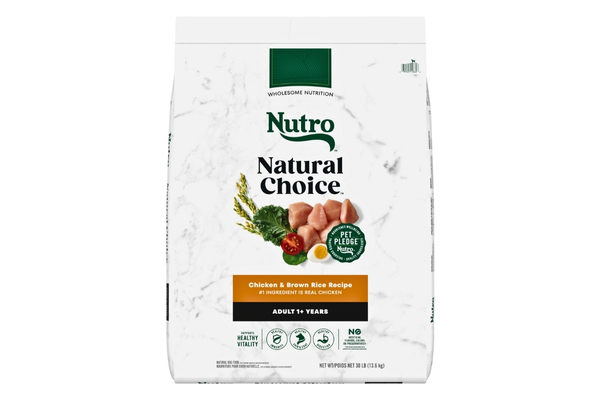
Palatability is one of Nutro’s strengths, with the majority of reviews praising how much dogs enjoy the food. The chicken and brown rice formula is particularly popular, and many owners report that even picky eaters take to Nutro with enthusiasm. The natural flavors and real meat content contribute to strong acceptance rates, and the kibble texture is crunchy enough to be satisfying without being too hard for smaller dogs.
However, palatability can vary by formula. The lamb and rice recipe is well-received for dogs with sensitive stomachs, while the salmon formulas tend to have a stronger odor that some dogs find more appealing than others. The grain-free options, particularly those with duck or venison, have received more mixed feedback, with some dogs refusing the food after an initial trial period.
A recurring complaint in recent reviews involves formula changes that led to dogs refusing the food. Nutro has made subtle ingredient adjustments over the past few years, including the removal of brewer’s rice and the addition of superfoods in the Ultra line. While these changes were intended as improvements, some dogs experienced digestive upset or simply didn’t like the new taste.
If you’re switching to Nutro or trying a new formula, it’s important to transition gradually over 7 to 10 days, mixing increasing amounts of the new food with the old. This helps minimize digestive issues and gives your dog time to adjust to the new flavor and texture.
Nutro’s pricing positions it in the premium to mid-range segment, with costs ranging from $2.20 to $4.50 per pound for dry food, depending on the line and package size. Natural Choice is the most affordable, while Ultra and Limited Ingredient Diet formulas command a higher price due to their specialized ingredients and targeted nutrition.
For a 30-pound dog, daily feeding costs on Nutro Natural Choice are approximately $0.96 per day, or around $29 per month. This is comparable to Blue Buffalo and Wellness, though slightly higher than mid-range brands like Purina ONE ($0.60/day) and Iams ($0.55/day). Fresh food services like The Farmer’s Dog or Ollie can cost $6 to $8 per day for the same dog, making Nutro a more budget-friendly option for owners who want quality without the premium price tag of fresh food.
If you’re feeding a larger dog, costs scale up significantly. A 60-pound dog on Nutro Ultra might cost around $1.88 per day, or roughly $56 per month. For a 100-pound dog, you’re looking at $2.90 per day, or about $87 per month. While this is still more affordable than fresh food, it’s noticeably higher than budget kibble.
The value proposition of Nutro depends on what you prioritize. If ingredient transparency, natural formulation, and holistic nutrition are important to you, Nutro delivers solid value. The quality of ingredients is above average, and the brand’s commitment to avoiding artificial additives and chicken by-product meal is meaningful for health-conscious owners.
However, if you’re looking for the absolute best nutritional density or the lowest carbohydrate content, Nutro may not offer the best value. Brands like Orijen or Acana provide higher protein and lower carbs, though at a significantly higher price. On the other hand, if you’re primarily concerned with cost, mid-range brands like Purina ONE or Diamond Naturals offer adequate nutrition at a lower price point.
One area where Nutro falls short is scientific validation. The lack of independent, peer-reviewed feeding trials and the reliance on internal, non-peer-reviewed research means you’re taking the brand’s word for the benefits. Competitors like Hill’s Science Diet and Royal Canin invest heavily in clinical research and feeding trials, which may justify their higher prices for some owners.
Nutro manufactures its dog food in company-owned facilities in the United States, specifically in Victorville, California, and Nashville, Tennessee. This domestic production is a positive, as it allows for more consistent oversight and adherence to U.S. regulatory standards compared to brands that outsource manufacturing overseas.
Mars Petcare has invested heavily in quality controls, including frequent batch testing for microbiological contamination, nutritional content, heavy metals, mycotoxins, and pesticide residues. Every batch is tested before distribution, and some testing is performed by third-party labs, though the extent of third-party verification is not fully disclosed.
Nutro holds certifications for HACCP, ISO 22000, BRC Global Standard, SQF, and GMP, which are important food safety and quality management standards. These certifications indicate that the company follows rigorous protocols to minimize contamination risks and ensure product consistency.
As mentioned earlier, Nutro has had four recalls in the past decade, which is slightly above the industry average. The most serious were the 2016 salmonella contamination and the 2022 mycotoxin incident, both of which resulted in illnesses and one death each. Mars Petcare responded with voluntary recalls, timely communication, and enhanced supplier screening.
Post-recall, the company has implemented improved batch testing and production protocols, and there have been no major incidents since 2022. However, the frequency of recalls and the fact that some issues stemmed from supplier contamination suggest that there’s still room for improvement in supply chain oversight.
Nutro provides batch traceability, meaning each product can be traced back to a specific production date and facility. This is important for rapid identification and removal of affected products in the event of a recall. However, ingredient-level traceability—knowing exactly which farm or supplier provided the chicken or lamb—is not publicly available, which is a common gap in the pet food industry.
Nutro has made some commitments to sustainability, but the specifics are limited. The brand emphasizes non-GMO ingredients and natural sourcing, and Mars Petcare has broader sustainability goals, including reducing environmental footprint and transitioning to recyclable packaging. However, Nutro-specific progress reports and metrics are not publicly disclosed.
In recent years, Nutro launched the Greater Ground program, which partners with growers to improve soil health and sustainable farming practices. This initiative is a positive step toward more responsible ingredient sourcing, though the scale and impact of the program are not fully detailed in public communications.
Nutro’s packaging is primarily multi-layer plastic and foil, which is not fully recyclable in most municipal programs. While the brand has made some claims about working toward more sustainable packaging, there’s no clear timeline or published data on progress. For owners who prioritize environmental impact, this is an area where Nutro lags behind brands that have committed to compostable or fully recyclable packaging.
Nutro does not have a publicly available animal welfare or animal testing policy. Mars Petcare as a whole has faced scrutiny over animal testing practices, though the company has stated that it conducts research in accordance with ethical guidelines. If animal testing is a concern for you, it’s worth reaching out to the company directly for more information, as this is a significant gap in transparency.
I work at a local dog shelter, where we have the opportunity to test different foods with dogs who come through our doors. For this review, I tried Nutro Natural Choice Adult Chicken & Brown Rice with Maggie, a three-year-old mixed-breed dog who arrived at the shelter after being surrendered by her previous owner due to a family move. Maggie is about 40 pounds, with a lean build and a calm, easygoing temperament. She didn’t have any major health issues, though her coat was a bit dull when she first came in, and her stools were on the softer side—not diarrhea, but not as firm as we’d like.
When I first opened the bag of Nutro, Maggie was immediately interested. She came over and sniffed the kibble, which had a pleasant, meaty aroma without being overpowering. I transitioned her gradually over about a week, mixing increasing amounts of Nutro with her previous food, which was a generic shelter brand. She didn’t hesitate to eat the new food, and there were no signs of digestive upset during the transition.
Maggie took to Nutro right away. She’s not a particularly picky eater, but she definitely seemed to enjoy the food more than her previous kibble. She ate her meals enthusiastically, licking the bowl clean each time, and didn’t show any signs of boredom or refusal over the two weeks she was on it before being adopted.
Within a few days, I noticed that Maggie’s stools became firmer and more consistent. This was a positive change, as softer stools can be a sign of digestive stress or low-quality ingredients. Her coat also started to look a bit shinier, though this could have been partly due to the improved care and regular grooming she was receiving at the shelter.
In terms of energy, Maggie didn’t show a dramatic change—she was already a moderately active dog—but she seemed steady and content on the food. There were no signs of itching, scratching, or other allergic reactions, which is always a good sign when introducing a new diet.
From a practical standpoint, Nutro was easy to work with. The kibble size was appropriate for Maggie’s mouth, and she didn’t have any trouble chewing or swallowing. The portion sizes recommended on the bag were accurate—she maintained a healthy weight without needing adjustments. Overall, it was a smooth and uneventful experience, which is exactly what you want when feeding a dog.
Take the free nutrition check and find out in under 1 minute which food is best tailored to your dog!
In just 60 seconds, find out which food fits your dog best — for free.
Consumer feedback on Nutro is generally positive, with average ratings of 4.5 to 4.7 out of 5 stars on platforms like Chewy, Amazon, and Petco. The most common praise centers on improved coat shine, firmer stools, and increased energy. Many owners report that their dogs love the taste, especially the chicken and brown rice formula, and that even picky eaters take to Nutro with enthusiasm.
One owner wrote: “She’s become way more energetic and her coat is shinier than ever… her breakouts have diminished. Plus, she actually loves the taste of this food. It’s a win in all aspects!” Another shared: “I have 4 dogs who took to this food with a great liking… No digestive upset during transition. They eat less and have less of the need to defecate… Highly recommend.”
These testimonials highlight the practical benefits that many owners experience: smaller, firmer stools are easier to clean up, and a shinier coat is a visible sign of good nutrition. For dogs with mild sensitivities, the Limited Ingredient Diet line has been particularly well-received, with owners noting fewer allergic reactions and improved skin health.
On the flip side, some owners have reported issues with palatability after formula changes. One reviewer noted: “Used to love it, now refuses the new version, and had diarrhea a few times since the switch.” Another mentioned: “Just received a bag that smelled like mold—never happened before, but customer service replaced it quickly.”
Digestive problems, such as diarrhea or vomiting, appear in about 4-5% of reviews, which is relatively low but still notable. Some dogs have also experienced increased itching or scratching, which may be related to specific proteins or other ingredients. If your dog has a history of food sensitivities, it’s worth monitoring closely during the transition period.
A recurring theme in negative reviews is the price, with some owners feeling that Nutro is too expensive for the quality offered. One reviewer wrote: “Too expensive for quality—switched to Science Diet and saw no difference.” This sentiment is more common among budget-conscious owners, particularly those shopping at mass retailers like Walmart or Target.
Nutro competes primarily with brands like Blue Buffalo, Wellness, and Merrick in the premium natural segment, and with Purina ONE and Iams in the mid-range mainstream segment. In terms of ingredient quality and formulation philosophy, Nutro is comparable to Blue Buffalo, with both brands emphasizing natural ingredients, no artificial additives, and life-stage-specific nutrition. However, Blue Buffalo tends to have slightly higher protein levels and a more extensive product range, including raw and wet food options.
Compared to Hill’s Science Diet and Royal Canin, Nutro falls short in scientific validation. Hill’s and Royal Canin invest heavily in feeding trials, clinical research, and veterinary endorsements, which justifies their higher prices for many owners. If your dog has specific health issues—such as kidney disease, obesity, or severe allergies—a veterinary diet is a more appropriate choice than Nutro’s over-the-counter formulas.
For owners considering fresh food services like The Farmer’s Dog, Ollie, or Nom Nom, the comparison is different. Fresh food offers higher digestibility, lower carbohydrate content, and more visible ingredient quality, but at a significantly higher cost—often 3 to 5 times the price of Nutro. If budget is a concern, Nutro is a solid middle ground that delivers better-than-average nutrition without the premium price tag of fresh food.
In the grain-free segment, brands like Orijen and Acana provide ultra-high protein and low carbohydrate formulas, but they’re also much more expensive—often $4 to $6 per pound. Nutro’s grain-free options are more affordable, though they don’t reach the same protein density or ingredient quality as these ultra-premium brands.
Take the free nutrition check and find out in under 1 minute which food is best tailored to your dog!
In just 60 seconds, find out which food fits your dog best — for free.
Nutro is suitable for a wide range of dogs, but it works best for adult dogs with no specific health issues who need balanced, everyday nutrition. The Natural Choice line is a good fit for most breeds and sizes, offering formulas tailored to small, medium, and large breeds. If your dog has a sensitive stomach or mild food sensitivities, the Limited Ingredient Diet line can help minimize triggers without requiring a prescription.
For puppies, Nutro offers life-stage-specific formulas with higher protein and fat to support growth and development. These formulas meet AAFCO standards for growth, making them appropriate for puppies and pregnant or nursing dogs. However, if your puppy has specific health concerns or is a large breed at risk for developmental orthopedic disease, consult your vet about whether Nutro’s calcium and phosphorus levels are appropriate.
For senior dogs, Nutro provides formulas with added glucosamine and chondroitin for joint support, as well as adjusted protein and fat levels to account for reduced activity. These formulas are a good choice for older dogs who need to maintain muscle mass and manage weight without overloading on calories.
Nutro is not ideal for dogs with severe food allergies, diagnosed gastrointestinal disease, or other medical conditions that require veterinary prescription diets. In those cases, a specialized formula like Royal Canin Ultamino or Hill’s Prescription Diet is a more appropriate choice.
So, is Nutro good? In my opinion, it’s a solid, above-average choice for most dogs, but it’s not perfect. The brand delivers on its promise of natural ingredients, no artificial additives, and recognizable proteins, which is meaningful for owners who scrutinize labels and want to avoid fillers and by-products. The palatability is strong, with most dogs enjoying the food and many owners reporting visible improvements in coat shine, stool quality, and energy.
However, there are some areas where Nutro falls short. The lack of independent, peer-reviewed feeding trials is a significant gap, especially when compared to brands like Hill’s or Royal Canin that invest heavily in clinical research. The recall history is slightly above average, and while Mars Petcare has responded with improved quality controls, the frequency of issues suggests that supply chain oversight could be better. The carbohydrate content is also on the higher side, which may not be ideal for dogs that need low-carb diets.
From a value perspective, Nutro sits in a reasonable middle ground. It’s more expensive than budget brands, but you’re getting better ingredient quality and formulation transparency. It’s more affordable than ultra-premium kibble or fresh food, but you’re not getting the same level of nutritional density or scientific validation. If you’re looking for a premium natural kibble at a mid-range price, Nutro is a smart choice. If you need the absolute best for a dog with specific health issues, or if you’re on a tight budget, there are better options.
Would I buy this for my dog? Yes, if I had a healthy adult dog with no special dietary needs and I wanted a kibble with natural ingredients and solid palatability. Would I recommend it to a friend? Yes, with the caveat that they should monitor their dog during the transition and be prepared to switch if formula changes or palatability issues arise. Honestly, Nutro is a dependable, middle-of-the-road option—not the best, but not bad either. For many dog owners, that’s exactly what they need.
Take the free nutrition check and find out in under 1 minute which food is best tailored to your dog!
In just 60 seconds, find out which food fits your dog best — for free.
Yes, Nutro manufactures its dog food in company-owned facilities in the United States, specifically in Victorville, California, and Nashville, Tennessee. This domestic production allows for consistent oversight and adherence to U.S. regulatory standards, which is a positive aspect of the brand’s quality control.
Nutro has had four recalls in the past decade for issues including salmonella contamination, elevated vitamin D levels, foreign objects, and mycotoxins. The most recent serious recall was in 2022 for mycotoxin contamination. While Mars Petcare has responded with enhanced quality controls and improved batch testing, the recall frequency is slightly above the industry average.
This is likely due to formula changes that Nutro has made over recent years, including removing ingredients like brewer’s rice and adding superfood blends. While these changes were intended as improvements, some dogs experienced digestive upset or simply didn’t like the new taste. If this happens, try transitioning gradually to a new formula or contact customer service about the specific batch.
Nutro’s Limited Ingredient Diet line can help dogs with mild food sensitivities by using single protein sources like salmon, venison, or duck. However, for dogs with severe food allergies or diagnosed gastrointestinal disease, Nutro’s over-the-counter options may not be sufficient. In those cases, a veterinary prescription diet with hydrolyzed proteins would be more appropriate.
For a 30-pound dog, daily feeding costs on Nutro Natural Choice are approximately $0.96 per day, or around $29 per month. This is comparable to Blue Buffalo and Wellness, but higher than mid-range brands like Purina ONE ($0.60/day). Fresh food services can cost $6 to $8 per day for the same dog, making Nutro a more budget-friendly premium option.
No, most Nutro products are formulated to meet AAFCO profiles rather than tested via feeding trials. Feeding trials are considered the gold standard for validating nutritional adequacy, so this is a minor drawback compared to brands like Hill’s Science Diet and Royal Canin that invest heavily in clinical research and feeding trials.
Nutro’s carbohydrate content falls between 42% and 51% on a dry matter basis, which is relatively high compared to grain-free or raw diets but standard for kibble. If you’re looking for a low-carb diet for a diabetic or obese dog, Nutro may not be the best fit, and you might want to explore fresh food services or specialized veterinary diets instead.
Nutro offers several lines: Natural Choice is the most affordable with standard natural ingredients; Ultra features higher protein and a “superfood” blend; Limited Ingredient Diet uses single proteins for sensitive dogs; and So Simple emphasizes minimal processing. Each line is designed for different needs and budgets while maintaining the brand’s natural ingredient philosophy.
Yes, Nutro offers life-stage-specific formulas for puppies with higher protein and fat to support growth and development. These formulas meet AAFCO standards for growth, making them appropriate for puppies and pregnant or nursing dogs. However, if your puppy is a large breed at risk for developmental issues, consult your vet about whether the calcium and phosphorus levels are appropriate.
Digestive problems like diarrhea or vomiting appear in about 4-5% of reviews, which is relatively low but still notable. This can happen due to individual sensitivities to specific proteins, too-rapid food transitions, or occasionally quality control issues. If your dog has a history of food sensitivities, monitor closely during any transition period and switch gradually over 7 to 10 days.
If ingredient transparency, natural formulation, and avoiding artificial additives are important to you, Nutro delivers solid value. The quality of ingredients is above average, and the brand’s commitment to real meat as the first ingredient and no chicken by-product meal is meaningful. However, if you’re primarily concerned with cost and your dog does well on budget food, mid-range brands like Purina ONE offer adequate nutrition at a lower price point.
Nutro’s grain-free options replace grains with legumes like peas, which have been scrutinized due to potential links to canine dilated cardiomyopathy (DCM). While the FDA has not established a definitive causal relationship, this may be a concern for certain large breeds like Golden Retrievers and Dobermans that are predisposed to DCM. If you’re concerned, stick with Nutro’s grain-inclusive formulas.
Take the free nutrition check and find out in under 1 minute which food is best tailored to your dog!
In just 60 seconds, find out which food fits your dog best — for free.
9 out of 10 dog owners are feeding their dog the wrong food.
Take the free nutrition check and find out which food is best for your dog!
2,847+ dog owners already did