9 out of 10 dog owners are feeding their dog the wrong food

Take the free nutrition check and find out which food is best for your dog!


Shelter manager, certified canine nutritionist, and lifelong dog lover
• Freeze-dried beef nugs mixed into kibble create exceptional palatability, with 66% of reviews mentioning dogs “love” the food, making it ideal for picky eaters.
• Limited two-recipe lineup (Chicken & Barley, Salmon & Brown Rice) simplifies choice but restricts options for dogs with allergies or specialized dietary needs.
• Premium pricing at $4.70 per pound puts monthly costs around $180-300 for medium-large dogs, competing directly with more established brands offering greater variety.
• Multiple animal proteins in each formula (chicken, beef, fish) prevent use for dogs with specific protein allergies, despite clean ingredient lists and probiotics.
• Lacks manufacturing transparency and sourcing details compared to competitors, with no disclosed facilities or ingredient origins despite premium positioning and veterinary oversight.
Take the free nutrition check and find out in under 1 minute which food is best tailored to your dog!
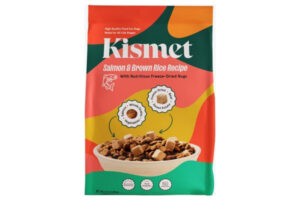
Kismet launched nationwide on Chewy in December 2024 with a clear message: modern dog families deserve transparent, high-quality nutrition without the confusion of endless product lines. The brand offers just two dry kibble recipes—Chicken & Barley and Salmon & Brown Rice—alongside a handful of treats, all developed with board-certified veterinary nutritionists and featuring freeze-dried “nugs” mixed into the kibble for extra flavor and nutrition. It’s a focused approach in a crowded market, and while that simplicity appeals to some owners, it also means fewer options if your dog has specific dietary needs.
What immediately stands out is the ingredient transparency. Both kibble formulas list real meat as the first ingredient, followed by meat meal for concentrated protein, then whole grains, vegetables, and superfoods like kale, carrots, and blueberries. There are no animal by-products, corn, wheat, soy, or artificial preservatives—hallmarks of a premium recipe. The addition of prebiotics and probiotics for digestive health is a thoughtful touch, especially for dogs with sensitive stomachs or owners looking to support gut health proactively.
Yet Kismet’s streamlined range is both a strength and a limitation. If you’re searching for grain-free, limited-ingredient, or condition-specific formulas—say, for weight management, joint support, or severe allergies—you won’t find them here. The brand is clearly targeting healthy, all-life-stage dogs whose owners prioritize ingredient quality and digestibility over specialized nutrition. For many dogs, that’s perfectly adequate, but it does mean Kismet isn’t a one-stop solution for every household.
| Price per pound | $4.70 |
| Primary protein | Chicken, Salmon |
| By-products | None |
| AAFCO compliance | Yes (formulated, no feeding trials) |
| Formula options | 2 kibble recipes + treats |
| Availability | Chewy + nationwide online |
Take the free nutrition check and find out in under 1 minute which food is best tailored to your dog!
In just 60 seconds, find out which food fits your dog best — for free.
Kismet was founded in 2024 by Chrissy Teigen, John Legend, and CEO Mathé Young Mosny, with Dr. Kwane Stewart—a board-certified veterinarian and 2023 CNN Hero of the Year—serving as Chief Veterinary Officer. The brand’s mission centers on creating a pet lifestyle company “for pets and their people,” emphasizing real ingredients, modern convenience, and community engagement. Kismet positions itself as a premium alternative to both traditional kibble and ultra-processed foods, aiming to bridge the gap between fresh-cooked meals and everyday practicality.
The company’s core values are clear: transparency, quality, and a personal connection to the dogs they serve. Teigen and Legend, both dog owners themselves, have spoken publicly about wanting a brand that reflects how they feed their own pets—no fillers, no guesswork, just straightforward nutrition. The involvement of Dr. Stewart adds veterinary credibility, and the brand donates a portion of every sale to Project Street Vet and Paws for Life, organizations that provide veterinary care to underserved animals and support animal welfare broadly.
Kismet’s market positioning is distinctly premium. The brand doesn’t compete on price; instead, it emphasizes ingredient sourcing, veterinary oversight, and a curated product lineup. This approach appeals to owners who are willing to pay more for peace of mind and who value the simplicity of a small, focused range over the overwhelming choice of brands with dozens of formulas. The rapid expansion to Chewy and the planned rollout of additional products in early 2025 suggest the brand is gaining traction, though it’s still very much in its early growth phase.
As a brand launched less than a year ago, Kismet’s track record is limited. There have been no recalls, no FDA warnings, and no major controversies as of October 2025. User reviews on Chewy and pet forums are generally positive, with owners praising ingredient quality, palatability, and visible health improvements in their dogs. However, the brand’s transparency leaves something to be desired: there’s no public disclosure of manufacturing facilities, co-packers, or detailed sourcing information, which may concern owners who prioritize full supply chain visibility.
The celebrity backing is a double-edged sword. On one hand, Teigen and Legend’s involvement has generated significant buzz and helped Kismet reach a wide audience quickly. On the other hand, some skeptics wonder whether the brand can maintain its quality and values as it scales, or whether the founders’ personal connection will translate into long-term operational excellence. For now, the veterinary involvement and positive early feedback suggest Kismet is more than just a vanity project, but only time will tell how the brand evolves.
Kismet’s ingredient philosophy is straightforward: real animal proteins first, followed by wholesome carbohydrates, vegetables, and functional supplements. Both kibble recipes—Chicken & Barley and Salmon & Brown Rice—share a similar structure, with variations in the primary protein source and accompanying grains. Let’s break down what’s actually in the bag.
The Chicken & Barley recipe lists chicken as the first ingredient, followed by chicken meal and turkey meal. Chicken provides moisture and palatability, while chicken meal and turkey meal are concentrated protein sources with much of the water removed, delivering more protein per pound than whole meat. This combination is typical of high-quality kibble and ensures a robust protein content of 28% on a dry matter basis.
The Salmon & Brown Rice formula starts with salmon, followed by fish meal and chicken meal. The inclusion of chicken meal in a salmon recipe is worth noting—if your dog has a poultry allergy, this formula isn’t suitable, despite the “salmon” name. Fish meal is an excellent source of omega-3 fatty acids, supporting skin, coat, and joint health, but the presence of multiple animal proteins means this isn’t a limited-ingredient diet.
Both recipes also feature freeze-dried beef nugs mixed into the kibble. These nugs add flavor, texture, and a nutritional boost, but they introduce beef as a third protein source. For dogs with beef sensitivities, this could be a concern, and it’s something the brand doesn’t highlight prominently on packaging or marketing materials.
Kismet is grain-inclusive, with barley in the chicken recipe and brown rice in the salmon formula. Both grains are digestible, nutrient-dense sources of energy and fiber, and they’re far from the “cheap fillers” some grain-free advocates claim. Barley is particularly rich in soluble fiber, which can support digestive health, while brown rice is a gentle, easily tolerated carbohydrate for most dogs.
Beyond grains, both recipes include sweet potatoes, carrots, apples, cranberries, blueberries, and kale—a mix of superfoods that provide vitamins, antioxidants, and additional fiber. These ingredients are more about adding nutritional value and visual appeal than serving as primary energy sources, but they do contribute to the overall quality of the formula.
Fat content sits at 16% on a dry matter basis, which is moderate for an all-life-stage formula. The primary fat source is chicken fat (in the Chicken & Barley recipe) or a combination of fish and poultry fats (in the Salmon & Brown Rice). Chicken fat is highly digestible and palatable, and it’s preserved with mixed tocopherols (vitamin E), a natural preservative.
The inclusion of salmon oil in both recipes is a positive. Salmon oil is rich in omega-3 fatty acids (EPA and DHA), which support skin, coat, brain, and joint health. The omega-6 to omega-3 ratio isn’t explicitly listed, but the combination of poultry fat and fish oil should provide a balanced profile.
Kismet adds prebiotics and probiotics to support digestive health—a feature that’s becoming standard in premium foods but is still worth highlighting. Probiotics like Lactobacillus and Bifidobacterium strains can help maintain a healthy gut microbiome, which is linked to immune function, nutrient absorption, and even behavior.
The recipes also include a full spectrum of vitamins and minerals, from vitamin A and D to zinc, selenium, and manganese. These are essential for overall health, and their inclusion ensures the food meets AAFCO standards for all life stages. The use of chelated minerals (like zinc proteinate) is a nice touch, as these forms are generally more bioavailable than inorganic mineral salts.
There are no animal by-products, corn, wheat, soy, or artificial preservatives in Kismet’s kibble—a clean slate that aligns with premium positioning. However, the presence of multiple animal proteins (poultry, fish, and beef) in each formula means this isn’t suitable for dogs with specific protein allergies. The brand doesn’t offer a limited-ingredient or hypoallergenic line, which is a gap for owners managing food sensitivities.
Another consideration is the lack of novel proteins like duck, venison, or lamb. If your dog has already developed sensitivities to chicken, beef, or fish, Kismet won’t offer a solution. The brand’s streamlined approach means fewer options for dogs with complex dietary needs.
Finally, while the ingredient list is transparent, there’s no detailed sourcing information. We know the food is made in the USA, but the brand doesn’t disclose where specific ingredients come from or whether they’re sourced from single suppliers or multiple regions. For owners who prioritize traceability, this lack of detail may be frustrating.
Kismet’s nutritional profile is designed to meet AAFCO standards for all life stages, meaning both recipes are suitable for puppies, adults, and seniors. The guaranteed analysis shows 28% protein and 16% fat on an as-fed basis, which translates to roughly 32% protein and 18% fat on a dry matter basis—solid numbers for a premium all-life-stage food.
At 32% dry matter protein, Kismet sits comfortably in the upper-mid range for kibble. This level is appropriate for active dogs, growing puppies, and most adults, though it’s not as high as some performance or large-breed puppy formulas (which can reach 35–40%). The protein comes from multiple animal sources—chicken, turkey, salmon, fish meal, and beef—providing a diverse amino acid profile.
The use of meat meals (chicken meal, fish meal) is a positive. Meals are rendered to remove most of the moisture, concentrating the protein and making them a more efficient protein source than whole meat. Some owners worry about the rendering process, but meals from reputable suppliers are nutritious and digestible. The inclusion of whole meat as the first ingredient ensures palatability and moisture, while the meals provide protein density.
At 18% dry matter fat, Kismet provides moderate energy density—suitable for most dogs but not ideal for extremely active or working dogs, who may benefit from higher fat levels (20–25%). For average household pets, this fat level supports healthy skin and coat, provides essential fatty acids, and delivers sufficient calories without promoting excessive weight gain.
The caloric density isn’t explicitly listed on Kismet’s website, but based on the guaranteed analysis and typical kibble formulations, it likely falls around 3,600–3,800 kcal/kg. This is moderate, making portion control straightforward for most dogs. If your dog is highly active or tends to burn calories quickly, you may need to feed slightly larger portions or supplement with high-calorie treats.
Carbohydrates aren’t listed on the guaranteed analysis (they never are), but we can estimate them by subtracting protein, fat, moisture, and ash from 100%. For Kismet, carbohydrates likely make up around 45–50% of the dry matter. This is typical for grain-inclusive kibble and is well within the range most dogs tolerate without issue.
The carbs come from barley, brown rice, sweet potatoes, and vegetables—all digestible, nutrient-dense sources. There’s no corn, wheat, or soy, which are often criticized (sometimes unfairly) as cheap fillers. The fiber content is moderate, supporting healthy digestion and stool quality without causing excessive bulk.
Kismet’s recipes include a full spectrum of vitamins and minerals, meeting AAFCO minimums for all life stages. Key nutrients include calcium and phosphorus for bone health (important for growing puppies and large breeds), vitamin A for vision and immune function, vitamin D for calcium absorption, and B vitamins for energy metabolism.
The use of chelated minerals (like zinc proteinate and copper proteinate) is a positive. Chelation binds minerals to amino acids, improving absorption and bioavailability compared to inorganic forms like zinc oxide. This is a small but meaningful detail that reflects attention to quality.
Both Kismet formulas are formulated to meet AAFCO nutrient profiles for all life stages, meaning they’ve been tested or calculated to provide complete and balanced nutrition for growth (puppies) and maintenance (adults and seniors). This is a baseline requirement for any dog food sold in the US, but it’s worth confirming that Kismet meets it.
However, Kismet does not appear to have undergone AAFCO feeding trials, which are more rigorous than formulation alone. Feeding trials involve feeding the food to real dogs over several months and monitoring health markers to ensure the food performs as intended. While formulation alone is sufficient for most dogs, feeding trials provide an extra layer of confidence, especially for puppies and large breeds.
Take the free nutrition check and find out in under 1 minute which food is best tailored to your dog!
In just 60 seconds, find out which food fits your dog best — for free.
Kismet’s all-life-stage formulas are designed to be versatile, but that doesn’t mean they’re ideal for every dog. Let’s break down who this food is best suited for and where it falls short.
Healthy adult dogs are Kismet’s sweet spot. If your dog doesn’t have specific health issues, allergies, or extreme activity levels, either the Chicken & Barley or Salmon & Brown Rice formula should work well. The moderate protein and fat levels support everyday energy and maintenance, while the added probiotics and superfoods offer a nutritional edge over basic kibble.
Puppies can eat Kismet, as both formulas meet AAFCO standards for growth. The protein and fat levels are adequate for most breeds, though large-breed puppies (those expected to weigh over 50 pounds as adults) may benefit from a formula with controlled calcium and phosphorus to support proper bone development. Kismet doesn’t disclose exact calcium and phosphorus levels, which is a minor concern for large-breed puppy owners.
Senior dogs can also thrive on Kismet, provided they don’t have specific health conditions requiring a specialized diet. The moderate protein and fat levels are appropriate for older dogs with reduced activity, and the probiotics may support aging digestive systems. However, if your senior dog has kidney disease, joint issues, or cognitive decline, a prescription or condition-specific formula would be a better fit.
Dogs with mild digestive sensitivities may do well on Kismet, thanks to the prebiotics, probiotics, and absence of common irritants like corn, wheat, and soy. Many user reviews mention improvements in stool quality and reduced gas, suggesting the formula is gentle on the gut. However, if your dog has severe sensitivities or inflammatory bowel disease, you’ll likely need a prescription hydrolyzed or limited-ingredient diet.
Dogs with specific protein allergies should avoid Kismet. Both formulas contain multiple animal proteins—chicken, turkey, salmon, fish, and beef—making it impossible to isolate a single protein source. If your dog is allergic to poultry, for example, even the Salmon & Brown Rice recipe won’t work due to the chicken meal and beef nugs.
Grain-free advocates won’t find what they’re looking for here. Kismet is unapologetically grain-inclusive, with barley and brown rice as primary carbohydrate sources. While there’s no scientific consensus that grain-free diets are healthier (and some evidence linking grain-free foods to DCM in certain breeds), owners who prefer grain-free for personal or perceived health reasons will need to look elsewhere.
Dogs with severe health conditions—such as kidney disease, liver disease, pancreatitis, or obesity—require specialized nutrition that Kismet doesn’t offer. The brand has no prescription or condition-specific lines, so you’ll need to work with your vet to find an appropriate therapeutic diet.
Extremely active or working dogs may find Kismet’s fat and calorie levels a bit low. With 18% dry matter fat and an estimated 3,600–3,800 kcal/kg, Kismet is best suited for moderate activity levels. If your dog is a high-performance athlete, you may need to supplement with additional calories or choose a higher-fat formula.
Palatability is where Kismet really shines in user reviews. The inclusion of freeze-dried beef nugs mixed into the kibble is a clever move, adding a burst of flavor and texture that many dogs find irresistible. Roughly 66% of Chewy reviews mention that their dog “loves” the food, with several noting success with previously picky eaters.
Kismet offers just two kibble flavors—Chicken & Barley and Salmon & Brown Rice—which is both a strength and a limitation. The simplicity makes it easy to choose, but if your dog gets bored or you want to rotate proteins regularly, you’re limited. The brand does encourage rotation between the two recipes, which can help prevent flavor fatigue and provide a broader nutrient profile over time.
The freeze-dried nugs are the same in both formulas (beef), which means the primary flavor difference comes from the base protein (chicken vs. salmon) and the grain (barley vs. brown rice). Some dogs have a strong preference for one over the other, while others happily eat both.
In Chewy reviews, the Chicken & Barley formula has a slight edge in palatability, with fewer reports of refusal. The Salmon & Brown Rice is also well-received, though a small number of dogs seem less enthusiastic about the fish flavor. This is typical—some dogs simply prefer poultry over fish, or vice versa.
About 7% of reviews mention that their dog won’t eat Kismet, with a few noting that their dog initially loved it but later refused. This is a common pattern with any food and can be due to flavor fatigue, a change in the dog’s health or preferences, or even a subtle batch variation. It’s not a red flag specific to Kismet, but it’s worth being aware of.
The kibble size and texture aren’t detailed in official materials, but user photos suggest the kibble is small to medium-sized, suitable for most breeds. The freeze-dried nugs are visibly mixed in, and many owners note that their dogs pick out the nugs first before finishing the kibble—a sign that the nugs are doing their job as a palatability enhancer.
Kismet is priced firmly in the premium segment. A 9-pound bag retails for around $49.99, and a 19-pound bag for approximately $89.99, though exact pricing can vary by retailer and subscription discounts. That works out to roughly $4.70 per pound, which is significantly higher than mid-tier brands like Purina Pro Plan ($2–$3/lb) or Blue Buffalo ($3–$4/lb), and comparable to other premium brands like Open Farm or The Farmer’s Dog kibble.
For a 30-pound dog eating roughly 2 cups per day, a 19-pound bag would last about 12–14 days, putting the monthly cost around $180–$200. For a 50-pound dog, expect to spend $250–$300 per month. These are rough estimates, as actual feeding amounts depend on your dog’s metabolism, activity level, and body condition, but they give a sense of the financial commitment.
Compared to fresh-cooked subscription services like The Farmer’s Dog or Nom Nom, Kismet is less expensive—fresh services can run $300–$500+ per month for medium to large dogs. Compared to mid-tier kibble, Kismet is notably pricier, but the ingredient quality and added features (freeze-dried nugs, probiotics) justify some of the markup.
Is Kismet worth the premium price? That depends on your priorities. If you value ingredient transparency, real animal proteins, and added functional ingredients like probiotics, Kismet delivers solid quality for the cost. The freeze-dried nugs are a unique touch that genuinely enhances palatability, and the grain-inclusive formulas are well-balanced and digestible.
However, Kismet doesn’t offer the customization or variety of some competitors. Brands like Open Farm provide multiple protein options (including novel proteins like wild boar and pollock), grain-free variants, and more transparent sourcing. If you’re paying premium prices, you might expect more flexibility, especially if your dog has specific dietary needs.
For owners who want a simple, high-quality kibble without the hassle of fresh food or the confusion of a sprawling product line, Kismet offers good value. For those seeking maximum variety, specialized formulas, or the absolute best bang for their buck, there are more cost-effective or feature-rich options available. If you’re curious about other premium brands and how they compare, check out our Heritage Ranch dog food review for a different perspective on quality and value.
Kismet is made in the USA, which is a baseline expectation for premium brands. However, the company doesn’t disclose the specific manufacturing facilities, co-packers, or production processes used, which is a transparency gap compared to brands like Open Farm or The Honest Kitchen that provide detailed facility information.
The brand states that its recipes are developed with board-certified veterinary nutritionists and meet AAFCO standards for all life stages. This is reassuring, but without details on manufacturing protocols—such as HACCP (Hazard Analysis and Critical Control Points) certification, third-party audits, or quality testing frequency—it’s hard to assess the rigor of Kismet’s quality control.
There have been no recalls as of October 2025, which is a positive sign, though the brand is still very new. Recalls often take time to surface, especially for smaller brands with limited distribution. The absence of recalls so far suggests competent production, but it’s too early to draw firm conclusions about long-term consistency.
Kismet emphasizes “the best natural ingredients” and “real animal proteins,” but specifics on sourcing are sparse. We know the food is made in the USA, but we don’t know where the chicken, salmon, or vegetables come from, whether ingredients are single-sourced or regionally diverse, or how the brand ensures ethical and sustainable sourcing.
For owners who prioritize traceability, this lack of detail is frustrating. Brands like The Farmer’s Dog and Nom Nom provide farm-to-bowl transparency, listing suppliers and sourcing regions. Kismet’s approach is more traditional—trust the brand name and veterinary oversight rather than verifying every ingredient’s origin.
A small number of Chewy reviews mention receiving bags with short expiration dates (e.g., a 19-pound bag delivered with only one month until expiration), which suggests potential inventory management issues. Other reviews note variations in the number of freeze-dried nugs per bag, which could indicate inconsistent mixing or quality control.
These are minor concerns, but they’re worth monitoring as the brand scales. Consistent batch quality is a hallmark of mature brands, and Kismet’s rapid growth may present challenges in maintaining uniformity across production runs.
Kismet’s approach to sustainability and ethics is limited in public disclosure. The brand donates a portion of every sale to Project Street Vet and Paws for Life, which is a meaningful commitment to animal welfare, but there’s no detailed information on environmental impact, packaging sustainability, or carbon footprint reduction.
Kismet’s kibble comes in standard plastic bags, which are typical for the industry but not particularly eco-friendly. There’s no mention of recyclable, compostable, or biodegradable packaging, and no information on whether the brand is working toward more sustainable materials. For owners who prioritize environmental impact, this is a missed opportunity.
The brand emphasizes real animal proteins and no animal by-products, which suggests a commitment to quality, but there’s no explicit statement on humane sourcing, cage-free poultry, wild-caught fish, or grass-fed beef. Without third-party certifications (like Certified Humane or Global Animal Partnership), it’s hard to verify the ethical standards of Kismet’s supply chain.
The charitable partnerships with Project Street Vet and Paws for Life are genuine and impactful, providing veterinary care to pets of people experiencing homelessness and supporting animal rehabilitation. This is a positive differentiator and reflects a values-driven approach to business.
However, Kismet doesn’t publish CSR reports, sustainability goals, or transparency scores, which are increasingly expected of premium brands. For owners who want to support companies with clear environmental and social commitments, the lack of detailed reporting is a drawback.
Take the free nutrition check and find out in under 1 minute which food is best tailored to your dog!
In just 60 seconds, find out which food fits your dog best — for free.
I work at a local dog shelter, and we’re always looking for high-quality foods to test with our residents—dogs who often come to us with uncertain dietary histories and varying levels of pickiness. For this review, I tested Kismet’s Chicken & Barley with Freeze-Dried Nugs with a dog named Mabel, a four-year-old mixed-breed (we think she’s part beagle, part something scrappy and stubborn) who’s been with us for about two months.
Mabel came to the shelter underweight and with a dull, patchy coat that suggested poor nutrition or stress. She’s a picky eater—not uncommon for shelter dogs—and had been cycling through a few different foods without much enthusiasm. She’d eat enough to get by, but there was no tail-wagging excitement at mealtimes, and she’d often leave half her bowl untouched. We were curious whether a premium food like Kismet, with its freeze-dried nugs and quality ingredients, might pique her interest.
When I opened the bag, the freeze-dried nugs were immediately visible, mixed throughout the kibble. The food smelled pleasant—more like real chicken than the generic “kibble smell” you get from budget brands. Mabel noticed right away. She sniffed the bowl intently before diving in, which was already a good sign.
We transitioned her gradually over five days, mixing Kismet with her previous food. By day three, she was eating her full portions without hesitation, and by day five, she was licking the bowl clean. The freeze-dried nugs seemed to be the star of the show—she’d pick those out first, then finish the kibble. It was clear the added flavor and texture made a difference.
Over the two weeks we tested Kismet with Mabel, her enthusiasm at mealtimes was consistent. She’d hear the kibble bag crinkle and come running, which was a big change from her previous indifference. She never refused a meal and never left food in her bowl, which is exactly what we were hoping for.
The kibble size was appropriate for her—she’s about 35 pounds—and she had no trouble chewing or digesting it. The texture of the freeze-dried nugs seemed to add variety, and I noticed she’d sometimes crunch them separately before going back to the regular kibble. It was a small thing, but it made mealtime feel more engaging for her.
Within a week, we started noticing subtle improvements in Mabel’s overall condition. Her coat looked a bit shinier, and the patchy areas seemed to be filling in, though it’s hard to say how much of that was the food versus reduced stress from settling into shelter life. Her stools were firm and consistent—no diarrhea, no excessive gas—which is always a relief when switching foods.
Energy-wise, Mabel seemed more alert and playful. She’s always been friendly, but after a week on Kismet, she was more engaged during walks and more interested in playing with other dogs in the yard. Again, this could be a combination of factors, but it’s the kind of change that makes you feel like the food is doing its job.
From a practical standpoint, Kismet was easy to work with. The kibble didn’t crumble excessively, and the freeze-dried nugs didn’t make a mess. Portion control was straightforward—the feeding guidelines on the bag were accurate for Mabel’s weight and activity level, and she maintained a healthy body condition throughout the test.
The only minor observation was that the number of freeze-dried nugs seemed to vary slightly from serving to serving—some scoops had more, others fewer. It wasn’t a big deal, but it’s something I noticed. Overall, though, Mabel’s response to Kismet was exactly what we hoped for: improved appetite, better coat condition, and steady energy.
User feedback on Kismet is largely positive, with about 73% of reviews expressing satisfaction and notable improvements in their dogs. Common themes include enhanced palatability, shinier coats, firmer stools, and increased energy. Many owners mention that their picky eaters finally found a food they enjoy, and several report success after struggling with other premium brands.
One recurring comment is that dogs “devour” Kismet, with the freeze-dried nugs often cited as the main attraction. Owners of dogs with mild digestive sensitivities report improvements in stool quality and reduced gas, attributing it to the probiotics and clean ingredient list. Coat and skin improvements are mentioned in about 12% of reviews, with timelines ranging from three to eight weeks.
The Chicken & Barley formula tends to receive slightly more enthusiastic reviews than the Salmon & Brown Rice, though both are well-regarded. Some owners rotate between the two to provide variety, and most report that their dogs accept both flavors equally.
About 7% of reviews mention that their dog refuses to eat Kismet, with a few noting that their dog initially loved it but later lost interest. This is a common issue with any food and isn’t unique to Kismet, but it’s worth being aware of if you have a particularly finicky eater.
A small number of reviews mention digestive upset—diarrhea, vomiting, or excessive gas—particularly during the transition period. This underscores the importance of gradually introducing any new food, especially for dogs with sensitive stomachs. A few users also report allergic reactions, such as itching or ear infections, likely due to the multiple animal proteins in each formula.
Price is a frequent complaint, with about 14% of reviews noting that Kismet is expensive for what you get. Some owners feel the quality justifies the cost, while others believe there are better values available at similar price points. Concerns about short expiration dates and inconsistent freeze-dried nug counts also appear in a handful of reviews, suggesting potential quality control or inventory management issues.
Kismet occupies a unique niche in the premium dog food market: it’s more affordable than fresh-cooked subscription services but pricier than most traditional kibble. Let’s see how it stacks up against key competitors.
The Farmer’s Dog offers fresh, human-grade meals delivered frozen, with personalized portions based on your dog’s profile. It’s significantly more expensive—often $300–$500+ per month for medium to large dogs—but provides maximum ingredient transparency, digestibility, and customization. Kismet is a more convenient and affordable alternative if you want premium ingredients without the hassle of freezer space and meal prep. However, The Farmer’s Dog edges ahead in overall quality and personalization. For a deeper dive, read our full Farmer’s Dog review.
Blue Buffalo is a well-established premium brand with a wide range of formulas, including grain-free, limited-ingredient, and life-stage-specific options. It’s priced lower than Kismet (around $3–$4/lb) and offers more variety. However, Blue Buffalo has had multiple recalls over the years, and some formulas rely heavily on plant-based proteins like pea protein. Kismet’s focus on real animal proteins and freeze-dried nugs gives it an edge in palatability and ingredient quality, though Blue Buffalo wins on variety and affordability.
Open Farm is a direct competitor in the premium kibble space, offering transparent sourcing, multiple protein options (including novel proteins like wild boar), and both grain-inclusive and grain-free formulas. Open Farm is similarly priced to Kismet and provides more variety and traceability, with detailed information on ingredient origins. Kismet’s freeze-dried nugs are a unique feature, but Open Farm’s broader range and commitment to sustainability make it a strong alternative for owners who prioritize those factors.
Heritage Ranch is a budget-friendly option sold exclusively at H-E-B stores in Texas. It’s significantly cheaper than Kismet (around $1.50–$2/lb) and offers both grain-inclusive and grain-free formulas. However, Heritage Ranch lacks the premium positioning, ingredient transparency, and added features (like freeze-dried nugs and probiotics) that Kismet provides. If budget is your top priority and you live in Texas, Heritage Ranch is worth considering, but Kismet delivers better overall quality and palatability.
Take the free nutrition check and find out in under 1 minute which food is best tailored to your dog!
In just 60 seconds, find out which food fits your dog best — for free.
Kismet is best suited for healthy, all-life-stage dogs whose owners prioritize ingredient quality, digestibility, and palatability. The moderate protein and fat levels make it appropriate for puppies, adults, and seniors with average activity levels, and the added probiotics support digestive health for dogs with mild sensitivities.
The food works well for picky eaters, thanks to the freeze-dried beef nugs and real animal proteins. It’s also a good choice for owners who want a streamlined, grain-inclusive formula without the confusion of dozens of product lines. If you’re looking for a premium kibble that’s easy to choose, delivers consistent quality, and appeals to most dogs, Kismet is a solid option.
However, Kismet is not ideal for dogs with specific protein allergies, grain-free preferences, or specialized health needs (weight management, joint support, kidney disease, etc.). The presence of multiple animal proteins in each formula limits its usefulness for dogs with food sensitivities, and the lack of variety means you can’t tailor the food to specific life stages or activity levels beyond the all-life-stage baseline.
Kismet is a well-executed premium kibble that delivers on its core promises: real animal proteins, clean ingredients, and enhanced palatability through freeze-dried nugs. The grain-inclusive formulas are well-balanced, meet AAFCO standards for all life stages, and include thoughtful additions like prebiotics and probiotics. For healthy dogs with average activity levels and no specific dietary restrictions, Kismet offers solid quality and a noticeable step up from mid-tier kibble.
That said, the brand’s streamlined approach is both a strength and a limitation. The two-recipe lineup makes choosing easy, but it also means fewer options for dogs with allergies, grain-free preferences, or specialized health needs. The lack of transparency around sourcing and manufacturing is a missed opportunity for a brand positioning itself as premium, and the price point—while justified by ingredient quality—puts Kismet in direct competition with more established brands that offer greater variety and traceability.
Would I buy Kismet for my dog? If I had a healthy adult dog with no specific dietary restrictions and wanted a convenient, high-quality kibble with proven palatability, yes. The freeze-dried nugs are a genuine differentiator, and the ingredient list is cleaner than most kibble at this price point. However, if my dog had food allergies, I was committed to grain-free feeding, or I wanted maximum variety and customization, I’d look elsewhere—brands like Open Farm, The Farmer’s Dog, or even Nom Nom would better meet those needs.
For owners who value simplicity, quality, and palatability over variety and specialized formulas, Kismet is worth trying. It’s a modern, thoughtfully designed food that should work well for most dogs, and the positive user feedback suggests it delivers on its promises. Just be aware of its limitations, and make sure your dog’s needs align with what Kismet offers before committing to the premium price tag.
Take the free nutrition check and find out in under 1 minute which food is best tailored to your dog!
In just 60 seconds, find out which food fits your dog best — for free.
Kismet delivers solid quality for the price, with real animal proteins, freeze-dried nugs for palatability, and clean ingredients like prebiotics and probiotics. At roughly $4.70 per pound, it’s expensive compared to mid-tier brands but more affordable than fresh-cooked services. Whether it’s worth it depends on your priorities—if you value ingredient transparency and enhanced palatability without the hassle of fresh food, Kismet offers good value. However, if you’re looking for maximum variety or specialized formulas, other brands may provide better bang for your buck.
Yes, both Kismet formulas are formulated to meet AAFCO standards for all life stages, including growth (puppies). The protein and fat levels are adequate for most breeds. However, large-breed puppies (expected to weigh over 50 pounds as adults) may benefit from formulas with controlled calcium and phosphorus levels, and Kismet doesn’t disclose these exact mineral ratios. For most puppies, Kismet should work fine, but consult your vet if you have a large-breed puppy with specific growth requirements.
The freeze-dried beef nugs mixed into Kismet’s kibble serve as both a palatability enhancer and a nutritional boost. They add flavor, texture, and concentrated protein, making mealtime more engaging for dogs. Many user reviews specifically mention that their dogs pick out the nugs first, and several picky eaters have shown improved appetite thanks to this feature. It’s a unique differentiator that genuinely seems to work for enhancing food acceptance.
No, Kismet is not suitable for dogs with specific protein allergies. Both formulas contain multiple animal proteins—chicken, turkey, salmon, fish meal, and beef from the freeze-dried nugs. Even the Salmon & Brown Rice recipe contains chicken meal, so it’s not appropriate for dogs with poultry allergies. If your dog has food sensitivities, you’ll need a limited-ingredient diet or novel protein formula, which Kismet doesn’t offer.
Kismet is unapologetically grain-inclusive, featuring barley and brown rice as primary carbohydrate sources. The brand doesn’t offer grain-free options, so if you prefer grain-free feeding for personal reasons or your dog has grain sensitivities, Kismet won’t work. However, the grains used (barley and brown rice) are digestible, nutrient-dense sources that most dogs tolerate well, and there’s no scientific consensus that grain-free diets are healthier for most dogs.
Kismet is made in the USA and developed with board-certified veterinary nutritionists. However, the brand doesn’t disclose specific manufacturing facilities, co-packers, or detailed sourcing information. While the food meets AAFCO standards and there have been no recalls as of late 2024, the lack of transparency around manufacturing details may concern owners who prioritize full supply chain visibility.
Yes, senior dogs can thrive on Kismet as long as they don’t have specific health conditions requiring specialized nutrition. The moderate protein and fat levels are appropriate for older dogs with reduced activity, and the probiotics may support aging digestive systems. However, if your senior dog has kidney disease, joint issues, or other health conditions, a prescription or condition-specific formula would be more appropriate than Kismet’s all-life-stage approach.
Like any food change, transition to Kismet gradually over 5-7 days to avoid digestive upset. Start by mixing 25% Kismet with 75% of your dog’s current food for 2-3 days, then move to 50/50, then 75% Kismet/25% old food, before switching completely. This is especially important for dogs with sensitive stomachs. Some user reviews mention digestive issues during transition, so take your time and monitor your dog’s response.
Kismet is available on Chewy, which offers auto-delivery subscriptions with discounts for regular shipments. This can help manage the premium pricing and ensure you don’t run out of food. The brand launched nationwide on Chewy in December 2024, making it widely accessible. Check Chewy’s subscription options for the best pricing and delivery frequency that works for your household.
While most dogs love Kismet thanks to the freeze-dried nugs and real meat proteins, about 7% of user reviews mention dogs refusing the food. If your dog doesn’t take to Kismet, most retailers have return policies—Chewy, for example, typically accepts returns of pet food even if opened. Given the premium price, it’s worth checking the return policy before purchasing, especially if you have a particularly picky eater.
Take the free nutrition check and find out in under 1 minute which food is best tailored to your dog!
In just 60 seconds, find out which food fits your dog best — for free.
9 out of 10 dog owners are feeding their dog the wrong food.
Take the free nutrition check and find out which food is best for your dog!
2,847+ dog owners already did