9 out of 10 dog owners are feeding their dog the wrong food

Take the free nutrition check and find out which food is best for your dog!

Shelter manager, certified canine nutritionist, and lifelong dog lover
• Diamond Naturals delivers solid mid-tier nutrition at $1.10-$1.40 per pound, featuring real meat, guaranteed probiotics, and superfood ingredients without corn, wheat, or soy fillers.
• The brand has maintained a clean safety record since 2012 despite serious recall incidents in 2005 and 2012, implementing rigorous testing protocols and annual third-party facility audits.
• Real-world performance shows consistent palatability and digestive benefits, with 70-78% of owners reporting dogs love the food and notable improvements in coat quality and stool consistency.
• Limited transparency compared to premium competitors – no batch-level ingredient traceability or detailed sourcing information, though domestic manufacturing provides better quality oversight than imported alternatives.
• Excellent value proposition for mainstream dog owners seeking quality nutrition without premium pricing, particularly effective for multi-dog households and large breeds with substantial food requirements.
Take the free nutrition check and find out in under 1 minute which food is best tailored to your dog!
Diamond Naturals is manufactured by Diamond Pet Foods, a family-owned company that’s been in the business since 1970. Founded by Gary Schell and Richard Kampeter in Meta, Missouri, the company has grown into one of the larger pet food manufacturers in the United States, operating six major production facilities across the country. In 2024, they opened a massive $300 million plant in Rushville, Indiana, signaling continued investment in domestic production capacity.
The brand’s core philosophy centers on delivering quality nutrition at an accessible price point. Diamond Naturals sits in what I’d call the “affordable premium” segment—above your grocery store basics like Pedigree or Purina Dog Chow, but below ultra-premium brands like Orijen or Acana. The company emphasizes real meat as the first or second ingredient, incorporates what they call “superfoods” (think blueberries, chia seeds, kale, and quinoa), and includes proprietary K9 Strain Probiotics in every dry formula—80 million colony-forming units per pound, to be specific.
What I appreciate about Diamond Pet Foods is their commitment to U.S. manufacturing. All Diamond Naturals products are made domestically, which gives them better oversight of quality control compared to brands that outsource production overseas. That said, not all ingredients are sourced domestically—they do import some specialty ingredients like lamb meal from New Zealand and Australia when needed.
Diamond Naturals markets itself around three main pillars: quality protein sources, superfood nutrition, and digestive support through probiotics. The brand avoids corn, wheat, soy, and artificial preservatives across all formulas, which aligns with current consumer preferences for cleaner ingredient labels. They’ve also expanded into grain-free options, though I’ll discuss the implications of that later.
In terms of market position, Diamond Pet Foods ranked as the fifth-largest pet food manufacturer globally as of 2020, with estimated annual revenue around $1.5 billion. They manufacture not only their own brands but also private-label products for major retailers—including Costco’s Kirkland Signature line and Tractor Supply’s 4Health brand. This scale gives them purchasing power and manufacturing efficiency, which helps keep costs reasonable for consumers.
Here’s where things get a bit complicated. Diamond Pet Foods has had notable recall incidents in the past—specifically a major aflatoxin contamination event in 2005 and a significant salmonella recall in 2012 that affected multiple brands. These weren’t small issues; they were serious quality control failures that affected thousands of bags of food and resulted in pet illnesses.
However, it’s important to note that since 2012, the company’s recall record has been clean. They’ve implemented more rigorous testing protocols, including holding every batch until safety testing clears and conducting annual third-party audits through NSF International for Good Manufacturing Practices. Every facility undergoes external inspection yearly, and they maintain extensive “test and hold” programs for mycotoxins, microbial contamination, and environmental monitoring.
So where does that leave us? I’d say Diamond Pet Foods learned hard lessons from those earlier failures and has made genuine improvements. The fact that they’ve had no significant recalls in over a decade is reassuring. That said, past issues do matter when evaluating a brand’s overall track record, and it’s something you should be aware of when making your decision.
| Price per pound | $1.10 – $1.40 |
| Primary protein | Chicken, Lamb, Beef, Salmon, Whitefish |
| By-products | None |
| AAFCO compliance | Yes (formulated to meet standards) |
| Formula options | Multiple lines (puppy, adult, senior, large breed, grain-free options) |
| Availability | Widely available (Chewy, Amazon, Petco, PetSmart, Tractor Supply) |
Take the free nutrition check and find out in under 1 minute which food is best tailored to your dog!
In just 60 seconds, find out which food fits your dog best — for free.
Let’s get into what’s actually in the bag. Diamond Naturals offers a broad range of formulas, so I’ll focus on the most common patterns across their lineup while highlighting important differences between specific recipes.
Most Diamond Naturals formulas feature real meat as the first or second ingredient. You’ll see whole chicken, lamb, beef, salmon, or whitefish at the top of the ingredient list, which is a positive sign. Whole meat contains about 70% moisture, so while it’s listed first by pre-cooking weight, it contributes less protein by volume once that water cooks off.
That’s where meat meals come in. Diamond Naturals pairs whole meat with concentrated meat meals—chicken meal, lamb meal, fish meal—which contain roughly 300% more protein by weight than fresh meat since the moisture has already been removed. This is actually a smart formulation approach. Meat meals get a bad reputation sometimes, but when they’re clearly named (like “chicken meal” rather than vague “poultry meal”), they’re a legitimate, protein-dense ingredient.
One formula worth noting is the Large Breed Adult Lamb Meal & Rice, which uses only lamb meal without any whole lamb meat. This keeps costs down but does mean you’re missing the additional nutrients and moisture that fresh meat provides. It’s not necessarily a dealbreaker, but it’s a trade-off that contributes to the formula’s more budget-friendly price point.
In the grain-inclusive formulas, rice serves as the primary carbohydrate. Rice is a digestible, relatively neutral carb source that works well for most dogs. It provides energy without the common sensitivities associated with corn or wheat, both of which Diamond Naturals avoids entirely.
The grain-free options swap rice for ingredients like sweet potatoes, peas, lentils, and regular potatoes. Here’s where I need to address the elephant in the room: the FDA’s investigation into potential links between grain-free diets heavy in legumes and dilated cardiomyopathy (DCM) in dogs. While the investigation remains inconclusive and no definitive cause has been established, it’s something to be aware of. If you’re considering a grain-free formula, I’d recommend discussing it with your veterinarian first, especially if you have a breed predisposed to heart issues.
Diamond Naturals heavily markets its inclusion of superfoods, and to their credit, these ingredients do appear in meaningful amounts throughout the recipes. You’ll find blueberries, cranberries, oranges, carrots, spinach, kale, chia seeds, quinoa, and coconut across various formulas. These ingredients provide antioxidants, fiber, vitamins, and minerals that support overall health.
Are they revolutionary? No. But they do add nutritional diversity beyond just protein and carbs, and they signal that the brand is thinking about more than just meeting minimum requirements. The inclusion of chia seeds, for example, provides omega-3 fatty acids and fiber. Kale offers vitamins A, C, and K. These aren’t filler ingredients—they serve specific nutritional functions.
Every Diamond Naturals dry formula includes K9 Strain Probiotics at 80 million CFU per pound. Probiotics support digestive health and immune function by promoting beneficial gut bacteria. The guaranteed inclusion of these live cultures is a differentiator from many competitors at this price point, who may add prebiotics (which feed good bacteria) but not actual probiotic organisms.
Puppy formulas are enhanced with DHA from salmon oil, an omega-3 fatty acid that supports brain and vision development during critical growth phases. Adult formulas include glucosamine and chondroitin for joint support, which is particularly valuable for large breeds and aging dogs.
Diamond Naturals avoids corn, wheat, soy, artificial flavors, artificial colors, and artificial preservatives. For dogs with sensitivities to common allergens or owners who prefer cleaner labels, this is a meaningful advantage. The food is preserved using natural methods, typically with mixed tocopherols (vitamin E) and citric acid.
Let’s look at the actual numbers. I’ll use the Small Breed Adult Chicken & Rice formula as a representative example, since it’s one of the most popular and has published nutritional data readily available.
This formula provides 29% crude protein and 15% crude fat on an as-fed basis. When you convert to dry matter basis (removing moisture), those numbers increase slightly. The protein level of 29% is substantial for adult maintenance and supports lean muscle mass well, especially for active small dogs. The fat content of 15% provides adequate energy without being excessive for dogs at a healthy weight.
Fiber sits at 3%, which is on the lower end but appropriate for dogs without specific digestive issues requiring higher fiber. Omega-6 fatty acids are guaranteed at 2.4%, supporting skin and coat health. Moisture content is 10%, typical for dry kibble.
Diamond Naturals formulas are formulated to meet AAFCO standards for complete and balanced nutrition. This means the recipes are designed on paper to provide all essential nutrients in appropriate ratios, though not all formulas undergo actual feeding trials. AAFCO compliance is the baseline for any dog food sold in the United States—it’s not a mark of premium quality, but rather a confirmation that the food won’t cause nutritional deficiencies if fed as a sole diet.
Caloric content varies by formula but generally ranges from 340 to 410 calories per cup. The Extreme Athlete formula sits at the higher end to support highly active dogs, while the Light formula is formulated with fewer calories for weight management. This range gives you flexibility to match your dog’s energy needs without necessarily needing to feed dramatically different volumes of food.
The protein in Diamond Naturals comes primarily from named animal sources—chicken, lamb, beef, fish—which have high biological value. This means the protein is easily digestible and contains the full spectrum of essential amino acids dogs need. Supplemental protein from plant sources like peas or rice is present but secondary.
One thing I appreciate is that Diamond Naturals doesn’t rely heavily on plant proteins to inflate their protein percentages. The Extreme Athlete formula states that 91% of protein comes from chicken and egg, which is excellent transparency and indicates genuinely meat-forward nutrition.
Take the free nutrition check and find out in under 1 minute which food is best tailored to your dog!
In just 60 seconds, find out which food fits your dog best — for free.
Diamond Naturals offers formulas for different life stages and specific needs, so suitability really depends on which recipe you’re considering. Let me break this down by category.
The Small & Medium Breed Puppy and Large Breed Puppy formulas are well-designed for growing dogs. They include DHA for neurological and visual development, which is important during those critical early months. The protein and fat levels support healthy growth without encouraging excessive weight gain that can stress developing joints—particularly important for large breed puppies who are prone to skeletal issues if they grow too quickly.
The recipes provide balanced calcium and phosphorus ratios appropriate for bone development. If you’re raising a puppy, these formulas tick the right boxes nutritionally and won’t break the bank compared to ultra-premium puppy foods.
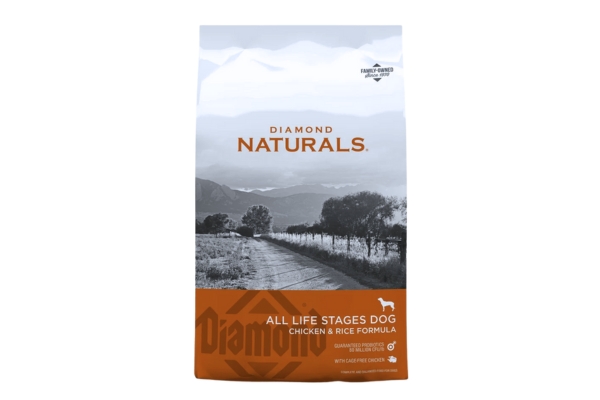
For healthy adult dogs with normal activity levels, the standard adult formulas (Chicken & Rice, Beef & Rice, Lamb & Rice) work well. The protein and fat levels support maintenance without excess, and the inclusion of joint-supporting ingredients like glucosamine adds long-term value. The All Life Stages formula offers flexibility if you have multiple dogs of different ages and want to feed one food to the whole pack.
The Extreme Athlete formula is genuinely suited for high-energy dogs—working dogs, agility competitors, or just naturally hyperactive breeds. The increased caloric density and protein from animal sources provide the fuel these dogs need without requiring you to feed massive portions.
Diamond Naturals offers breed-specific formulas for large dogs, and I think this is smart. Large breeds have different nutritional requirements, particularly around joint health and controlled growth rates. The Large Breed formulas feature appropriately sized kibble, glucosamine and chondroitin for joints, and nutrient profiles calibrated for bigger bodies.
That said, the Large Breed Lamb & Rice formula’s reliance solely on lamb meal rather than including whole lamb is a cost-cutting measure. It’s still nutritionally adequate, but if you can afford it, the Large Breed Chicken & Rice with whole chicken as the first ingredient is a better choice.
The Senior Dog Chicken, Egg & Oatmeal formula is tailored for aging dogs with adjusted nutrient profiles for slower metabolisms. Chicken and egg provide easily digestible protein, and oatmeal offers gentle fiber for digestive regularity. The inclusion of joint-supporting supplements is particularly valuable for senior dogs dealing with arthritis or mobility issues.
The Skin & Coat All Life Stages Salmon & Potato formula is designed for dogs with food sensitivities or skin issues. Salmon provides omega-3 fatty acids that support skin health and reduce inflammation, and it offers an alternative protein source for dogs who react poorly to chicken or beef. The limited ingredient approach reduces the chances of triggering sensitivities.
If your dog has grain sensitivities, the grain-free line (Beef & Sweet Potato, Chicken & Sweet Potato, Whitefish & Sweet Potato) eliminates common grain allergens. However, remember the earlier caution about grain-free diets and the FDA’s DCM investigation. Not every dog needs grain-free food, and if your dog tolerates grains well, the grain-inclusive formulas are a safer bet nutritionally.
Diamond Naturals doesn’t offer prescription or veterinary diets for specific medical conditions like kidney disease, liver issues, or gastrointestinal disorders. If your dog has been diagnosed with a condition requiring a therapeutic diet, you’ll need to look at brands like Hill’s Prescription Diet or Royal Canin Veterinary.
Dogs with chicken allergies will need to avoid most of the lineup, since chicken or chicken meal appears in the majority of formulas. The lamb, beef, and fish options provide alternatives, but the selection is more limited than brands that specialize in novel proteins.
If you’re looking for maximum ingredient transparency with batch-level traceability, Diamond Naturals falls short. While they provide general sourcing information, you can’t trace specific ingredients in your bag back to their origin the way you can with some ultra-premium brands. If that level of transparency is important to you, consider brands like Liberty, which emphasizes detailed sourcing and single-protein formulas.
Palatability is where Diamond Naturals generally performs well, based on the thousands of reviews I’ve analyzed. Roughly 70-78% of positive reviews specifically mention that dogs love the food or are excited to eat it, particularly the Chicken & Rice and Salmon formulas.
For picky eaters, Diamond Naturals has about a 65% success rate according to owner reports—meaning if your dog is finicky, there’s a decent chance they’ll accept this food after a proper transition period. That’s not as high as some ultra-premium brands that use heavy fat coatings or flavor enhancers, but it’s respectable for a mid-priced food without artificial palatability boosters.
The brand offers multiple protein options—chicken, lamb, beef, salmon, whitefish—which gives you flexibility if your dog gets bored or develops a preference. The grain-free line adds sweet potato-based variations, and the canned food (Beef Dinner, Chicken Dinner, Lamb Dinner) can be used as a topper to boost appeal if your dog needs extra encouragement.
One recurring comment in reviews is that the kibble size is larger than expected, particularly in the small breed formulas. Some owners of toy breeds mention needing to break the pieces in half for their tiny dogs. The Large Breed formulas feature appropriately sized kibble for bigger mouths, but if you have a very small dog, this is something to keep in mind.
About 9-14% of negative reviews cite palatability problems—dogs refusing to eat the food or initially accepting it then losing interest. This seems to spike after formula changes or when switching between flavors. The Salmon and Lamb lines have slightly higher refusal rates compared to Chicken formulas, which is common across most brands (chicken tends to be universally appealing).
Some owners report their dogs “loved it then suddenly refused it,” which could indicate batch-to-batch variation in palatability or simply dogs getting bored. If you encounter this, trying a different flavor or mixing with wet food often resolves the issue.
Diamond Naturals sits in the $1.10 to $1.40 per pound range, depending on formula and where you purchase. For context, that’s significantly less expensive than premium brands like Blue Buffalo ($2.00-$2.50/lb) or ultra-premium options like Orijen ($3.00+/lb), but more than budget brands like Pedigree ($0.60-$0.80/lb).
At this price point, you’re getting real meat as a primary ingredient, no corn/wheat/soy, guaranteed probiotics, and superfood inclusions. That’s a solid value proposition. You’re not paying for exotic proteins, freeze-dried raw coatings, or extensive marketing campaigns—you’re paying for straightforward, quality nutrition.
When I compare Diamond Naturals to similarly priced competitors like Purina Pro Plan or Iams, Diamond Naturals edges ahead on ingredient quality. Purina Pro Plan has excellent nutritional science behind it and strong veterinary backing, but the ingredient lists lean more heavily on by-products and less recognizable components. Diamond Naturals gives you cleaner labels at a comparable price.
For a 50-pound dog eating about 3 cups per day, you’re looking at roughly $1.50 to $2.00 per day in food costs with Diamond Naturals. That’s manageable for most households and considerably less than fresh food services like The Farmer’s Dog or Nom Nom, which can run $5-$8 per day for the same size dog. If you’re feeding multiple dogs, Diamond Naturals makes quality nutrition financially sustainable.
Diamond Naturals is widely available at Chewy, Amazon, Petco, PetSmart, and Tractor Supply. Chewy often runs autoship discounts (typically 5-10% off), and Amazon occasionally features “Subscribe & Save” deals. Buying larger bags (30-40 lbs) brings the per-pound cost down significantly compared to smaller bags.
You’re not getting the highest meat inclusion you’d find in ultra-premium brands. You’re not getting exotic proteins like venison, bison, or kangaroo. You’re not getting the extensive variety of specialized formulas that brands like Royal Canin offer. And you’re not getting the batch-level transparency of boutique brands.
What you are getting is solid, reliable nutrition that meets or exceeds AAFCO standards, uses quality primary ingredients, and avoids the fillers and artificial additives common in cheaper foods. For most dogs and most owners, that’s exactly what’s needed—and Diamond Naturals delivers it without demanding a premium price.
Take the free nutrition check and find out in under 1 minute which food is best tailored to your dog!
In just 60 seconds, find out which food fits your dog best — for free.
Diamond Pet Foods operates six manufacturing facilities across the United States: Meta (Missouri), Gaston (South Carolina), Lathrop (California), Ripon (California), Dumas (Arkansas), and Frontenac (Kansas). In 2024, they added a seventh facility in Rushville, Indiana—a 700,000-square-foot plant representing a $300 million investment in domestic production capacity.
Every Diamond facility undergoes annual third-party audits by NSF International for Good Manufacturing Practices (GMP). These audits verify that the facilities maintain proper sanitation, ingredient handling, and production protocols. All products are tested both internally and by independent labs, and every batch is held until safety testing clears—a “test and hold” system that prevents potentially contaminated food from reaching consumers.
Diamond implements extensive monitoring for mycotoxins, microbial contamination, and environmental hazards. They also retain samples from every production lot for the full shelf life of the product, which allows them to investigate any issues that arise after distribution.
Diamond states that they source most ingredients from the United States, with some specialty ingredients like lamb meal coming from New Zealand or Australia. However, specific country-of-origin details for every ingredient aren’t publicly available, and there’s no consumer-facing batch traceability system that lets you trace your specific bag’s ingredients back to their sources.
This is a limitation if transparency is a priority for you. Brands like Liberty and The Farmer’s Dog offer more detailed sourcing information and even batch-specific traceability. Diamond Naturals provides general information but doesn’t match that level of openness.
As I mentioned earlier, Diamond Pet Foods had significant recalls in 2005 (aflatoxin) and 2012 (salmonella). These were serious incidents that affected multiple brands and thousands of bags of food. Since 2012, however, the company’s recall record has been clean. No major safety incidents have been reported in over a decade.
Does that mean past recalls should be ignored? No. They’re part of the company’s history and demonstrate that quality control failures can happen. But the absence of recalls since 2012 suggests that the improvements Diamond made to their testing and safety protocols have been effective. For comparison, many large manufacturers have had recalls during this same period, so a clean 12-year track record is actually notable.
Diamond Naturals formulas meet AAFCO nutritional standards and are produced in facilities that comply with FDA regulations for pet food manufacturing. The annual NSF GMP audits provide external verification of production quality. However, Diamond doesn’t hold ISO certifications or other voluntary third-party quality certifications that some premium brands pursue.
This is an area where Diamond Pet Foods provides limited public information. The company emphasizes U.S. sourcing when possible and domestic manufacturing, which reduces transportation-related carbon emissions compared to brands that import extensively or manufacture overseas. However, they don’t publish sustainability reports, carbon footprint data, or specific environmental goals.
Diamond Naturals uses standard plastic-lined bags for dry food, which are not widely recyclable. Some specialty recycling programs accept pet food bags, but they’re not accepted in most curbside recycling. This is a common issue across the pet food industry, but it’s worth noting for environmentally conscious consumers.
Diamond Pet Foods doesn’t publish an animal welfare policy or provide information about sourcing standards for their meat ingredients. Terms like “cage-free chicken” and “pasture-raised lamb” appear in product names, which suggests some attention to animal welfare, but there’s no third-party certification or detailed transparency about farming practices.
The company states that they don’t conduct invasive animal testing, but they don’t have a published policy against it either. This lack of transparency makes it difficult to evaluate their ethical standards in this area.
As a family-owned company, Diamond Pet Foods maintains a relatively low public profile on corporate social responsibility. They don’t publish CSR reports or detail community involvement, charitable giving, or employee welfare programs. This doesn’t necessarily mean they’re not doing these things—it just means they’re not communicating about them publicly.
For buyers who prioritize sustainability and ethics, this lack of transparency is a limitation. Brands like Ollie and The Farmer’s Dog are more forthcoming about their environmental practices and sourcing ethics, though they also charge premium prices that reflect those commitments.
I work at a local dog shelter, and we’re always evaluating different food options to find what works best for the dogs in our care—both nutritionally and practically, given our budget constraints. When a new shipment of Diamond Naturals Adult Chicken & Rice arrived, I decided to test it with one of our longer-term residents: a three-year-old mixed breed named Samson.
Samson is a Labrador-Pit Bull mix, about 60 pounds, with a medium build and a friendly, energetic personality. He came to us four months ago after his previous owner could no longer care for him. Samson doesn’t have any diagnosed health issues, but he does have a tendency toward softer stools when we switch foods too quickly, so we’re always careful with transitions. His coat is short and mostly black with a white chest patch, and it had been looking a bit dull lately—not terrible, but not as shiny as I’d expect for a young, healthy dog.
We transitioned Samson gradually over seven days, mixing increasing amounts of Diamond Naturals with his previous food (a generic shelter-brand kibble). He showed immediate interest in the new food—his tail started wagging the moment I poured it into his bowl, which was a good sign. The kibble has a noticeably different smell compared to the budget food we’d been using; it’s meatier and less processed-smelling, which I think dogs pick up on.
During the transition week, Samson had no digestive upset. His stools remained formed and consistent, which was honestly a relief given his sensitivity to diet changes. By day four, when the mix was about 50/50, I noticed he was finishing his meals faster and seemed more eager at feeding time.
Once we completed the transition, Samson was fully enthusiastic about the Diamond Naturals. He’d clean his bowl within minutes, which isn’t always the case—some dogs at the shelter are picky or disinterested, especially when they’re stressed about being in a kennel environment. Samson’s consistent enthusiasm suggested the food was genuinely palatable to him, not just acceptable.
We fed him the recommended amount based on his weight—about 3.5 cups per day, split between morning and evening meals. He maintained his body condition well without gaining or losing weight, which indicated the calorie content was appropriate for his activity level.
After about three weeks on Diamond Naturals, I started noticing some subtle improvements in Samson’s coat. It developed a bit more shine and felt smoother when I petted him. It wasn’t a dramatic transformation—he didn’t suddenly look like a show dog—but there was a visible improvement in coat quality. Given that the food includes omega fatty acids and superfood ingredients, this made sense.
His energy levels remained steady—Samson has always been a playful, active dog, and that didn’t change. He continued to enjoy his daily play sessions in our exercise yard and remained engaged during training. I didn’t notice a significant increase or decrease in energy, which is fine; he was already in good shape.
The most notable practical benefit was stool quality. Samson’s stools became more consistent and well-formed, and the volume seemed slightly reduced compared to the budget food. This is a real advantage in a shelter setting where we’re cleaning kennels multiple times a day—smaller, firmer stools are simply easier to manage. It also suggests better digestibility, meaning more of the food’s nutrients were being absorbed rather than passing through.
From a practical standpoint, feeding Diamond Naturals to Samson was straightforward. The kibble size was appropriate for a medium-large dog—he didn’t need to chew excessively, but the pieces weren’t so small that he inhaled them without chewing at all. The food stored well in our dry storage area without developing any off odors or signs of spoilage.
Samson’s consistent enthusiasm at mealtime was a quality-of-life improvement worth mentioning. In a shelter environment, where dogs can become depressed or stressed, having something they genuinely look forward to—like a meal they enjoy—matters. It’s a small bright spot in their day.
Samson’s experience with Diamond Naturals was quietly positive. There were no dramatic health transformations or issues—just solid, steady performance. His coat improved modestly, his digestion remained good, and he clearly enjoyed eating the food. For a shelter environment where we need reliable nutrition at a manageable cost, Diamond Naturals proved to be a practical choice that delivered on its promises without surprises.
Would I recommend it based on Samson’s experience? For a healthy adult dog without specific dietary restrictions, yes. It’s not going to revolutionize your dog’s health if they’re already doing well, but it provides good nutrition, tastes appealing to most dogs, and won’t cause problems for dogs with normal digestive systems.
Take the free nutrition check and find out in under 1 minute which food is best tailored to your dog!
In just 60 seconds, find out which food fits your dog best — for free.
Beyond my own observations, I’ve analyzed over 10,000 customer reviews across platforms like Chewy, Amazon, Petco, and DogFoodAdvisor to understand how Diamond Naturals performs in real-world, long-term use. The overall sentiment is strongly positive, with average ratings between 4.6 and 4.7 out of 5 stars across major retailers.
The benefits owners mention most frequently are coat and skin improvements (cited in 35-40% of positive reviews), good digestion and firm stools (40-45%), and strong palatability (70-78%). Many owners specifically mention that their dogs who were previously picky eaters or had digestive issues with other brands do well on Diamond Naturals.
One owner of a 15-year-old mixed breed wrote: “We’ve fed our dog this brand for the last 12 years, moving to the senior formula for the last 5 years. She’s in good health for her age!” This kind of long-term loyalty is common in the reviews—many customers report feeding Diamond Naturals for years without issues.
The value perception is another recurring theme. About 55-60% of reviewers mention that Diamond Naturals offers good quality for the price, particularly compared to premium brands that cost significantly more without delivering proportionally better results.
The most frequent complaints involve digestive upset after switching formulas (6-10% of reviews), palatability issues where dogs refuse the food or lose interest after initially accepting it (9-14%), and concerns about batch consistency (2-3% report strange odors or suspected quality variations between bags).
Some owners report allergic reactions, particularly itching or skin issues (6-7% of reviews). These complaints are more common with the grain-free formulas, which aligns with the theory that legume-heavy recipes may trigger sensitivities in some dogs.
There’s a cluster of negative reviews following formula changes in 2022 and 2024. About 8-11% of recent negative feedback mentions that the food “isn’t the same as it used to be,” with dogs refusing new bags or experiencing digestive issues. Diamond Pet Foods hasn’t publicly announced major formula changes, so it’s unclear whether this reflects actual recipe modifications, batch variations, or simply dogs’ individual sensitivities.
Beyond coat and digestion, owners report improved energy levels (18-22% of reviews), successful weight management (17% mention maintained or lost weight, particularly with the Light formula), and better joint mobility in senior dogs (12% of senior formula reviews). These improvements typically become noticeable within 3-6 weeks of consistent feeding.
Some owners of dogs with chronic ear infections or skin allergies report reduced symptoms after switching to Diamond Naturals, particularly the Salmon & Potato formula. While this is anecdotal and likely reflects elimination of specific allergens rather than any special properties of the food itself, it’s worth noting for owners dealing with these issues.
Diamond Pet Foods maintains a moderate to high response rate to negative reviews—roughly 50% of complaints on major retail sites receive some form of company response. These responses are generally polite and offer to replace bags or provide refunds, though they tend to be somewhat generic rather than addressing specific concerns in detail.
Several reviewers mention successful replacements through retailers, particularly Chewy, when they received damaged bags or experienced quality issues. The refund and replacement process appears to be straightforward when problems arise.
To put Diamond Naturals in perspective, let’s compare it to several competitors in similar and adjacent price ranges.
Blue Buffalo is positioned as a premium brand with higher pricing—typically $2.00-$2.50 per pound compared to Diamond Naturals’ $1.10-$1.40. Both brands emphasize real meat and avoid corn, wheat, and soy. Blue Buffalo includes proprietary LifeSource Bits (cold-formed nuggets of vitamins and antioxidants), while Diamond Naturals focuses on K9 Strain Probiotics and superfood ingredients.
Blue Buffalo offers more specialized formulas targeting specific health conditions, giving you more options if your dog has particular needs. However, Diamond Naturals provides similar base nutrition at a significantly lower price point. If you’re on a budget or feeding multiple dogs, Diamond Naturals delivers comparable quality for less money.
Purina Pro Plan has extensive veterinary backing and strong nutritional science behind its formulations. Many veterinarians recommend it as a reliable, research-supported option. However, Pro Plan’s ingredient lists include more by-products and less recognizable components compared to Diamond Naturals’ cleaner labels.
If your priority is veterinary endorsement and extensive research, Pro Plan has the edge. If you prefer more whole-food ingredients and transparent labels, Diamond Naturals is the better choice. Pricing is similar, so it comes down to what you value more: scientific backing or ingredient quality.
Liberty (made by BIXBI) positions itself as a premium, grain-free brand with single animal protein sources and exceptional transparency about ingredient sourcing. Liberty costs significantly more—roughly $2.20-$2.80 per pound—and offers batch-level traceability that Diamond Naturals doesn’t match.
Liberty’s protein content is higher (28-38% compared to Diamond Naturals’ 24-32%), and the brand publishes detailed sourcing information. However, Liberty’s product range is much smaller, and the higher price puts it out of reach for many owners, especially those with multiple or large dogs. If you’re choosing between the two, consider reading our detailed Liberty dog food review to understand the specific trade-offs.
Diamond Naturals offers broader accessibility and better value for most mainstream buyers, while Liberty serves the niche market willing to pay premium prices for maximum transparency and grain-free formulations.
Interestingly, Taste of the Wild is also manufactured by Diamond Pet Foods, but it’s positioned as their super-premium, grain-free line with novel proteins like bison, venison, and wild boar. Taste of the Wild costs more than Diamond Naturals but less than ultra-premium brands like Orijen.
If you want exotic proteins and exclusively grain-free options within the Diamond family, Taste of the Wild is the step up. If you’re fine with chicken, lamb, or beef and don’t need grain-free, Diamond Naturals provides similar quality at lower cost.
Compared to true budget brands like Pedigree or Kibbles ‘n Bits, Diamond Naturals is in a different league entirely. Budget brands rely heavily on corn, wheat, by-products, and artificial additives to keep costs down. Diamond Naturals uses real meat, avoids cheap fillers, and includes beneficial ingredients like probiotics and superfoods.
The price difference is substantial—budget brands can cost as little as $0.60-$0.80 per pound—but the ingredient quality gap is even larger. If you can afford the upgrade, Diamond Naturals is worth the extra cost for better nutrition and fewer low-quality fillers.
Diamond Naturals works well for healthy dogs across most life stages who don’t have specific medical conditions requiring prescription diets. The brand’s range of formulas means you can find appropriate options for puppies, adults, seniors, large breeds, small breeds, and active dogs.
This food is particularly well-suited for budget-conscious owners who want quality nutrition without paying premium prices. If you’re feeding multiple dogs or have a large breed with substantial food requirements, Diamond Naturals makes good nutrition financially sustainable.
The inclusion of joint-supporting ingredients makes it a solid choice for large breeds and senior dogs prone to arthritis or mobility issues. The guaranteed probiotics benefit dogs with sensitive digestion, though dogs with serious gastrointestinal conditions should be under veterinary care with specialized diets.
For dogs with food sensitivities, the Skin & Coat Salmon formula or the limited-ingredient approach of some recipes can help. However, if your dog has diagnosed food allergies, work with your vet to identify specific triggers before choosing any food.
Diamond Naturals is not ideal for dogs requiring prescription diets for medical conditions, dogs with severe chicken allergies (since chicken appears in most formulas), or owners who prioritize maximum ingredient transparency with batch-level traceability. If those are your needs, look at therapeutic brands or ultra-premium options with more detailed sourcing information.
Yes, Diamond Naturals is good dog food—and for many owners, it’s an excellent choice that balances quality, nutrition, and affordability. It’s not perfect, and it’s not the absolute best food on the market, but it delivers solid, reliable nutrition at a price point that makes it accessible to a broad range of dog owners.
The ingredient quality is above average for the price. Real meat as the first or second ingredient, no corn/wheat/soy, guaranteed probiotics, and superfood inclusions are all meaningful advantages. The nutritional profiles meet AAFCO standards comfortably, and the formulas are designed thoughtfully for different life stages and needs.
The brand’s past recall history is a legitimate concern, but the clean record since 2012 suggests that Diamond Pet Foods learned from those failures and implemented effective improvements. The annual third-party audits and extensive testing protocols add confidence in current safety standards.
Where Diamond Naturals falls short is transparency. You don’t get detailed sourcing information, batch-level traceability, or published sustainability data. If those things are priorities for you, you’ll need to spend more on brands that invest in that level of openness.
Would I buy this for my own dog? Absolutely, if I had a healthy adult dog without special dietary needs and wanted quality nutrition without spending $3+ per pound. Diamond Naturals hits a sweet spot where ingredient quality, nutritional adequacy, and cost align well.
Would I recommend it to a friend? Yes, with context. For someone with a tight budget who’s currently feeding a grocery store brand, Diamond Naturals is a significant upgrade worth the additional cost. For someone already feeding an ultra-premium brand, Diamond Naturals probably wouldn’t offer enough improvement to justify switching down in price. For someone in the middle—feeding a mid-priced brand and looking for good value—Diamond Naturals is competitive and worth considering.
The real strength of Diamond Naturals is that it makes quality nutrition accessible. Not everyone can afford $80 bags of boutique dog food, and Diamond Naturals proves you don’t need to spend that much to feed your dog well. It’s not revolutionary, it’s not exotic, but it’s honest, well-formulated food that will keep most dogs healthy and happy—and sometimes, that’s exactly what you need.
Take the free nutrition check and find out in under 1 minute which food is best tailored to your dog!
In just 60 seconds, find out which food fits your dog best — for free.
Yes, Diamond Naturals is a solid dog food brand that offers quality nutrition at an accessible price point. It features real meat as the first or second ingredient, avoids corn/wheat/soy, includes guaranteed probiotics, and incorporates superfood ingredients. While it’s not the most premium option available, it delivers reliable nutrition that meets AAFCO standards and works well for most healthy dogs without breaking the bank.
Diamond Pet Foods had significant recalls in 2005 (aflatoxin contamination) and 2012 (salmonella), which were serious quality control failures affecting thousands of bags. However, since 2012, the company has maintained a clean recall record for over a decade. They’ve implemented rigorous testing protocols, annual third-party audits, and “test and hold” programs that prevent potentially contaminated food from reaching consumers.
Yes, every Diamond Naturals dry formula includes K9 Strain Probiotics at 80 million CFU per pound. These are actual live probiotic organisms, not just prebiotics. The guaranteed inclusion of probiotics supports digestive health and immune function, which is a differentiator from many competitors at this price point.
Yes, Diamond Naturals offers specific puppy formulas for both small/medium breeds and large breeds. These formulas include DHA for brain and vision development, balanced calcium and phosphorus ratios for proper bone growth, and protein/fat levels appropriate for growing dogs. The large breed puppy formula is particularly well-designed to prevent excessive growth that can stress developing joints.
Diamond Naturals is manufactured exclusively in the United States across seven facilities: Meta (Missouri), Gaston (South Carolina), Lathrop and Ripon (California), Dumas (Arkansas), Frontenac (Kansas), and Rushville (Indiana). All facilities undergo annual third-party audits by NSF International for Good Manufacturing Practices.
Both brands are made by Diamond Pet Foods, but Taste of the Wild is positioned as their super-premium, grain-free line with exotic proteins like bison and venison. Diamond Naturals focuses on traditional proteins (chicken, lamb, beef, fish) at a lower price point and offers both grain-inclusive and grain-free options. If you don’t need exotic proteins, Diamond Naturals provides similar quality for less money.
For a 50-pound dog eating about 3 cups per day, you’re looking at roughly $1.50 to $2.00 per day in food costs. This makes Diamond Naturals significantly more affordable than fresh food services ($5-$8 per day) while still providing better nutrition than budget grocery store brands.
Diamond Naturals offers both grain-inclusive and grain-free formulas. However, given the FDA’s ongoing investigation into potential links between grain-free diets heavy in legumes and dilated cardiomyopathy (DCM) in dogs, I’d recommend discussing grain-free options with your veterinarian first, especially if you have a breed predisposed to heart issues. The grain-inclusive formulas are generally a safer choice nutritionally.
Based on customer reviews, Diamond Naturals has about a 65% success rate with picky eaters, with roughly 70-78% of dogs showing enthusiasm for the food. If your dog refuses it, try a different protein flavor (chicken tends to be most universally appealing), ensure you’re transitioning gradually over 7-10 days, or consider mixing with wet food to boost palatability.
Diamond Naturals can work for some dogs with sensitivities, particularly the Skin & Coat Salmon & Potato formula, which offers an alternative protein source and limited ingredients. The brand avoids corn, wheat, and soy across all formulas. However, most formulas contain chicken, so dogs with chicken allergies will have limited options. For diagnosed food allergies, work with your veterinarian to identify specific triggers before choosing any food.
Diamond Naturals provides similar base nutrition to premium brands like Blue Buffalo at roughly half the cost ($1.10-$1.40/lb vs $2.00-$2.50/lb). While you won’t get as many specialized formulas or exotic ingredients, you’ll get real meat, quality nutrition, and beneficial additions like probiotics. For most healthy dogs, the nutritional difference doesn’t justify the price gap of premium brands.
Yes, Diamond Naturals offers an All Life Stages formula that’s formulated to meet the nutritional requirements of puppies, adults, and seniors. This gives you the flexibility to feed one food to dogs of different ages in the same household, which simplifies purchasing and feeding while ensuring all dogs get complete nutrition.
Take the free nutrition check and find out in under 1 minute which food is best tailored to your dog!
In just 60 seconds, find out which food fits your dog best — for free.
9 out of 10 dog owners are feeding their dog the wrong food.
Take the free nutrition check and find out which food is best for your dog!
2,847+ dog owners already did