9 out of 10 dog owners are feeding their dog the wrong food

Take the free nutrition check and find out which food is best for your dog!

Shelter manager, certified canine nutritionist, and lifelong dog lover
• Only mainstream brand with full USDA organic certification across flagship Organix line, delivering verified ingredient standards that competitors like Blue Buffalo and Wellness don’t match.
• Consistently improves digestion and coat quality in dogs with sensitivities, with owners reporting firmer stools, shinier coats, and reduced itching within 2-3 weeks.
• Premium pricing creates significant budget barriers at $3.80-$5.50 per pound, costing $58-115 monthly for medium to large dogs compared to $35-65 for mid-tier alternatives.
• Clean recall history and transparent sourcing from family-owned US farms provides reliability, with no safety incidents since 2012 Merrick acquisition and company-owned manufacturing facilities.
• Best suited for specific situations rather than universal use—dogs with food allergies, small breeds, and health-conscious owners benefit most, while multi-dog households may find costs prohibitive.
Take the free nutrition check and find out in under 1 minute which food is best tailored to your dog!
Castor & Pollux entered the pet food scene in 2000 with a clear mission: bring organic, trustworthy nutrition to dogs without the synthetic additives and questionable fillers that dominated the market at the time. Founded by Brian Connolly and Shelley Gunton in Oregon, the brand made history in 2003 by launching Organix, the first USDA-certified organic complete pet food line available nationwide. That wasn’t just a marketing gimmick—it meant meeting strict federal standards for ingredient sourcing, processing, and labeling that most pet food companies didn’t even attempt.
In 2012, Castor & Pollux was acquired by Merrick Pet Care, a Texas-based company known for its own premium formulas. Operations were consolidated in Merrick’s facilities in Hereford, Texas, but the brand’s core philosophy stayed intact: organic ingredients you can trace, no by-products or artificial preservatives, and transparency in what goes into every bag and can. Today, Castor & Pollux operates under the Nestlé Purina umbrella (Merrick’s parent company), which gives it access to robust quality control and distribution networks while maintaining its niche positioning as a leader in organic pet nutrition.
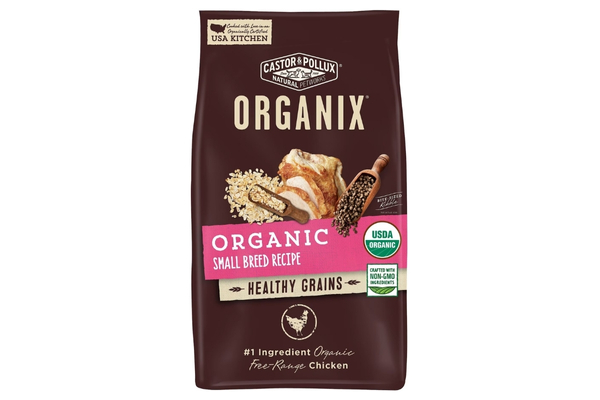
The brand’s product lineup centers on three main lines. Organix remains the flagship, offering USDA-certified organic recipes in grain-free and grain-inclusive formats for puppies, adults, and seniors. Pristine, launched around 2017, focuses on responsibly sourced proteins—grass-fed beef, free-range chicken—paired with organic produce, though it doesn’t carry the full USDA organic seal. The older Natural Ultramix line, which blended organic and conventional ingredients, has been phased out in most US markets. All formulas meet AAFCO nutritional standards, and the brand emphasizes sustainable sourcing from family-owned US suppliers whenever possible.
What sets Castor & Pollux apart in a crowded premium market is its commitment to ingredient transparency. You won’t find vague terms like “meat meal” or “animal digest” on their labels—proteins are named and sourced, carbohydrates are organic sweet potatoes or oats, and added nutrients come from recognizable sources like flaxseed and coconut oil. The brand also avoids the artificial colors, flavors, and preservatives common in budget foods, which appeals to owners who scrutinize labels as carefully for their dogs as they do for themselves.
That said, this level of quality comes with a premium price tag. Castor & Pollux isn’t competing with Pedigree or Purina Dog Chow on cost—it’s positioned alongside brands like Blue Buffalo, Wellness, and Merrick’s own lines, where per-pound prices hover in the $3.50 to $5.50 range. For many owners, especially those dealing with food sensitivities or seeking cleaner ingredient lists, that investment makes sense. For others on tighter budgets or feeding multiple large dogs, it’s a harder sell.
The brand’s reputation is generally strong among natural-focused pet owners and holistic veterinarians. It earns high marks on review sites like DogFoodAdvisor (4 to 5 stars for most Organix recipes) and maintains solid ratings on Chewy and Amazon, where thousands of verified buyers report improvements in coat quality, digestion, and energy. Importantly, Castor & Pollux has had no recalls under current ownership, which speaks to consistent quality control—a reassuring detail in an industry where even respected brands occasionally stumble.
| Price per pound | $3.60 – $5.50 |
| Primary protein | Organic chicken, Turkey, Grass-fed beef, Wild-caught salmon, Lamb |
| By-products | None |
| AAFCO compliance | Yes (all life stages) |
| Formula options | 3 product lines (Organix, Pristine, wet food options) |
| Availability | Nationwide (Chewy, Amazon, Petco, PetSmart) |
Take the free nutrition check and find out in under 1 minute which food is best tailored to your dog!
In just 60 seconds, find out which food fits your dog best — for free.
Ingredient labels can be confusing, but Castor & Pollux makes it relatively easy to see what you’re paying for. The first ingredient in nearly every Organix recipe is a named protein source—organic chicken, organic turkey, or in some Pristine formulas, grass-fed beef or wild-caught salmon. That’s a good start, because the first five ingredients make up the bulk of the food by weight, and you want real meat (or fish) leading the list, not corn or wheat.
In the Organix Chicken & Sweet Potato recipe, for example, the top ingredients are organic chicken, organic chicken meal, and organic dried peas. The use of both whole chicken and chicken meal is smart—whole chicken adds moisture and flavor, while chicken meal is a concentrated protein source with most of the water removed, boosting the overall protein percentage. Organic certification here means the chickens were raised without antibiotics, growth hormones, or genetically modified feed, and processed without synthetic pesticides.
The Pristine Grass-Fed Beef formula follows a similar pattern: grass-fed beef, beef meal, and chicken meal as the top three. Grass-fed beef is a selling point for owners concerned about sustainability and animal welfare, and it also tends to have a different fatty acid profile—higher in omega-3s—compared to conventional grain-fed beef. The inclusion of chicken meal alongside beef helps round out the amino acid profile and keeps costs slightly more manageable than using beef alone.
Castor & Pollux leans heavily on organic sweet potatoes, peas, and chickpeas in its grain-free recipes, and organic oatmeal in grain-inclusive options. Sweet potatoes are a solid carbohydrate choice—they’re digestible, nutrient-dense, and provide steady energy without the rapid blood sugar spikes you’d get from corn or white rice. Oatmeal, used in the Chicken & Oatmeal formula, is a whole grain that’s gentle on digestion and a good source of soluble fiber, which can help with stool quality.
The grain-free formulas rely on peas and chickpeas not just for carbs, but also to bump up protein percentages. That’s a common practice across premium brands, but it’s worth noting that legume-based proteins aren’t as bioavailable as animal proteins—your dog’s body absorbs and uses chicken protein more efficiently than pea protein. It’s not a dealbreaker, especially since the recipes still lead with real meat, but it does mean the headline protein percentage (say, 26%) isn’t entirely from animal sources.
Castor & Pollux includes a handful of trendy but genuinely useful additions: organic flaxseed for omega-3 fatty acids, organic coconut oil for medium-chain triglycerides and coat health, organic blueberries for antioxidants, and organic chia seeds in some recipes. These ingredients sound good on a label, and in moderate amounts they do contribute to overall nutrition—flaxseed, for instance, supports skin and coat health, while blueberries provide vitamin C and phytonutrients that may help with cellular health.
That said, these superfoods appear in relatively small quantities (usually toward the end of the ingredient list), so their impact is more incremental than transformative. They’re a nice bonus, not the reason to choose this food, but they do signal that the brand is thinking beyond basic nutrition and aiming for a more holistic formula.
Just as important as what’s included is what Castor & Pollux leaves out. You won’t find meat by-products—ambiguous terms that can include anything from organs to feathers—artificial colors, flavors, or preservatives, or corn, wheat, and soy as primary fillers. The brand also avoids synthetic fertilizers and pesticides in its organic ingredients, which matters if you’re concerned about long-term exposure to chemical residues.
Preservation is handled with natural methods: mixed tocopherols (vitamin E) and citric acid are the go-to antioxidants, which are effective but do mean the food has a shorter shelf life once opened compared to kibbles preserved with synthetic additives like BHA or BHT. Store it in a cool, dry place and use it within six weeks of opening the bag.
A few ingredients warrant a closer look. Peas and pea protein appear in several recipes, and while they’re not inherently bad, they’ve been flagged in discussions around dilated cardiomyopathy (DCM)—a heart condition linked in some studies to grain-free diets high in legumes. The FDA investigated this connection starting in 2018, and while the research is still ongoing and no definitive cause has been established, it’s something to be aware of if you’re feeding a grain-free formula long-term. If your dog has no grain sensitivities, the grain-inclusive Chicken & Oatmeal recipe sidesteps this concern entirely.
Some recipes also include garlic in very small amounts, listed as “organic dehydrated garlic.” Garlic in large quantities is toxic to dogs, but the trace amounts used here—well below any harmful threshold—are intended as a natural flea deterrent and immune support. It’s generally considered safe at these levels, but if your dog has a known sensitivity or you’re simply uncomfortable with it, it’s worth checking the ingredient list carefully.
A food can have great ingredients and still fall short if the nutritional ratios are off. Castor & Pollux formulas are designed to meet AAFCO standards for either “growth and reproduction” (puppies and pregnant/nursing dogs) or “maintenance” (adult dogs), which means they provide the minimum levels of protein, fat, vitamins, and minerals required for health. Most Organix and Pristine recipes are formulated for “all life stages,” which is convenient if you have dogs of different ages in the same household.
Protein levels in Castor & Pollux dry foods range from 26% to 32% on an as-fed basis, which translates to roughly 30% to 36% on a dry matter basis (once you account for moisture). That’s solid for a premium dog food—higher than budget brands like Pedigree (around 21% protein) and comparable to other natural brands like Blue Buffalo or Wellness. The Pristine Grass-Fed Beef formula hits 30% protein, while the Organix Chicken & Sweet Potato sits at 26%. Both are more than adequate for active adult dogs, and the higher-protein Pristine recipes are a good fit for working dogs or those with higher energy needs.
Fat content ranges from 12% to 20%, with most formulas landing around 15%. Fat is important for energy, coat health, and absorption of fat-soluble vitamins, and these levels are appropriate for most dogs. The Organix Senior formula dials fat down to 12%, which makes sense for older, less active dogs who need fewer calories to maintain a healthy weight. If your dog is highly active or tends to run lean, you might prefer one of the higher-fat options like Pristine or a grain-free Organix recipe.
Carbohydrate content isn’t listed directly on pet food labels, but you can estimate it by subtracting protein, fat, moisture, and ash from 100%. For Castor & Pollux, that puts most recipes in the 38% to 43% carbohydrate range on an as-fed basis. That’s higher than some ultra-premium or raw-inspired brands, but it’s typical for kibble and not a concern unless your dog has specific metabolic issues like diabetes.
Fiber sits at 3.5% to 4.5%, which is moderate and should support healthy digestion and stool quality. The inclusion of both soluble fiber (from oats and sweet potatoes) and insoluble fiber (from peas and vegetables) helps keep things moving smoothly through the digestive tract.
Castor & Pollux includes omega-3 and omega-6 fatty acids from flaxseed, fish oil, and chicken fat. While the exact ratios aren’t published, the presence of both types is important—omega-6s support skin barrier function, while omega-3s have anti-inflammatory properties that benefit joints, skin, and overall immune health. The brand also adds chelated minerals like zinc proteinate and copper proteinate, which are more bioavailable (easier for your dog to absorb) than inorganic mineral salts.
Vitamin supplementation is standard: you’ll see added vitamins A, D3, E, and B-complex, along with taurine in some recipes. Taurine is an amino acid that’s especially important for heart health, and while it’s naturally present in meat, some brands add extra as a precaution, particularly in grain-free formulas.
Most Castor & Pollux dry foods deliver 3,300 to 3,600 kcal per kilogram, or roughly 400 to 440 calories per cup. That’s about average for premium kibble. A 50-pound active adult dog would typically eat around 2.5 to 3 cups per day, depending on activity level and metabolism, which translates to a daily feeding cost of roughly $2.80 to $3.80 based on current prices. Wet foods are much less calorie-dense (around 1,200 kcal/kg), so you’d need to feed significantly more volume—and spend more—if you’re using canned food as the primary diet.
Take the free nutrition check and find out in under 1 minute which food is best tailored to your dog!
In just 60 seconds, find out which food fits your dog best — for free.
Not every dog needs organic ingredients or grain-free formulas, and not every owner wants to pay premium prices. Castor & Pollux works best for specific situations where its strengths align with your dog’s needs.
Dogs with food sensitivities or allergies are a natural match for this brand. The grain-free Organix recipes eliminate common triggers like wheat, corn, and soy, while the clean ingredient lists make it easier to identify and avoid specific allergens. If your dog has been scratching, licking paws, or dealing with ear infections tied to diet, switching to a limited-ingredient, organic formula can sometimes make a real difference. The Pristine line offers additional protein variety—grass-fed beef, wild-caught salmon, lamb—which is helpful if chicken or turkey are the culprits.
Small breed dogs have higher metabolic rates and smaller stomachs, so calorie-dense, nutrient-rich food is important. The Organix Small Breed formula is specifically tailored with smaller kibble size and appropriate calorie levels, and the premium ingredients mean you’re feeding less volume for the same nutrition. That’s a practical advantage when your dog can only eat a cup or two per day.
Puppies can do well on the Organix Puppy formulas, which are formulated for growth and meet AAFCO standards for all life stages. The higher protein and fat content support rapid development, and the organic ingredients reduce exposure to pesticides and additives during a critical growth period. Just be sure to follow feeding guidelines carefully—overfeeding can lead to too-rapid growth in large breeds, which increases the risk of joint problems.
Owners who prioritize organic and sustainable sourcing are the core audience. If you’re already buying organic produce for yourself and want the same standards for your dog, Castor & Pollux delivers on that promise with USDA certification. The transparency around ingredient sourcing and the absence of by-products or artificial additives align with a holistic, health-conscious approach to pet care.
Large breed households or multi-dog homes may find the cost prohibitive. Feeding two or three big dogs on a $4-per-pound food adds up quickly, and while the quality is there, the budget math doesn’t always work. In those cases, a mid-tier brand with solid ingredients but lower prices—or mixing Castor & Pollux with a more affordable option—might be more sustainable.
Dogs with no dietary issues don’t necessarily need organic or grain-free food. If your dog thrives on a conventional kibble with no signs of allergies, digestive trouble, or low energy, spending extra for organic certification may not deliver noticeable benefits. The premium is justified when you’re solving a problem or seeking specific ingredient standards, but not every dog requires that level of specialization.
Picky eaters are hit-or-miss. Castor & Pollux gets good palatability scores overall, but it’s not a flavor powerhouse like some brands that use more fat or flavor enhancers. Some dogs take to it immediately, while others need a slow transition or mixing with a more enticing food. If you’ve got a notoriously finicky dog, the brand’s return policies and smaller bag sizes (4-pound and 10-pound options) let you test without committing to a 30-pound bag.
Dogs with heart conditions or at risk for DCM should avoid the grain-free recipes unless specifically recommended by your vet. The link between grain-free diets high in legumes and dilated cardiomyopathy is still being studied, but if your dog is a breed predisposed to DCM (like Golden Retrievers, Dobermans, or Cocker Spaniels), the grain-inclusive Chicken & Oatmeal formula is a safer bet.
Ingredients and nutrition facts matter, but so does the day-to-day reality of opening the bag, scooping kibble, and watching your dog eat. Castor & Pollux performs well in most practical categories, though there are a few quirks worth mentioning.
Most dogs eat Castor & Pollux without hesitation. The kibble has a mild, slightly savory smell—not as pungent as some high-fat formulas, but more appealing than bland budget foods. Dogs that are used to richer, greasier kibbles may need a few days to adjust, but the transition is usually smooth if you follow the standard 7- to 10-day gradual switch (mixing increasing amounts of the new food with the old).
The Organix Butcher & Bushel wet foods are particularly well-received. They have a recognizable, meaty appearance—you can actually see chunks of turkey or chicken—and the smell is closer to human food than the processed odor of some canned options. Mixing a spoonful of wet food with dry kibble is a reliable way to boost palatability for picky eaters or dogs transitioning from another brand.
One of the most common positive reports from owners is improved stool quality—firmer, smaller, and less frequent bowel movements. That’s a sign of better digestibility: when your dog absorbs more of the nutrients, there’s less waste coming out the other end. The absence of fillers like corn and wheat, combined with high-quality proteins and moderate fiber, seems to work well for most dogs’ digestive systems.
Some dogs experience temporary loose stools or gas during the transition period, especially when switching from a grain-heavy food to a grain-free formula. That’s normal and usually resolves within a week or two as the gut microbiome adjusts. If digestive upset persists, slowing down the transition or trying the grain-inclusive Chicken & Oatmeal recipe can help.
Owners frequently mention shinier coats and healthier skin within a few weeks of switching to Castor & Pollux. The omega fatty acids from flaxseed and fish oil, combined with high-quality proteins, support coat health from the inside out. Dogs with dull, flaky coats or minor itching often see noticeable improvement, though it takes at least a month to see the full effect as the hair growth cycle turns over.
Energy levels tend to stay steady rather than spiking. The moderate carbohydrate content and quality protein sources provide sustained energy without the hyperactivity you sometimes see with high-sugar or low-quality foods. For active dogs, that’s a good thing—they have the stamina for long walks or play sessions without crashing afterward.
The kibble is medium-sized and fairly standard in shape—round or slightly irregular. It’s not especially hard or crunchy, which some small dogs and seniors appreciate, but it’s firm enough to provide some dental benefit through chewing. The Small Breed formula uses smaller kibble pieces that are easier for toy breeds to handle.
One minor complaint from a handful of owners is that the kibble can be a bit dusty or crumbly at the bottom of the bag, especially in larger sizes. That’s not uncommon with natural foods that don’t use as many binding agents, but it’s worth noting if you’re particular about mess.
Castor & Pollux uses resealable paper bags with a plastic liner, which is better for the environment than fully plastic packaging but not quite as airtight. Store the bag in a cool, dry place and consider using an airtight container if you’re buying the larger 18-pound or 24-pound sizes. The natural preservatives (tocopherols and citric acid) work well, but they don’t have the long shelf life of synthetic preservatives, so aim to use the food within six weeks of opening.
The wet food comes in aluminum cans, which are recyclable. The cans are standard 12.7 to 13.2 ounces, and the food stays fresh in the fridge for a couple of days after opening if you cover it.
Premium dog food costs more for a reason, but that doesn’t automatically mean it’s a good value. With Castor & Pollux, you’re paying for USDA organic certification, named protein sources, and transparent sourcing—all of which have real costs behind them. Whether that’s worth it depends on your priorities and your dog’s needs.
At current prices (October 2025), a 10-pound bag of Organix Chicken & Sweet Potato runs around $40 on Chewy, or about $4 per pound. An 18-pound bag drops the per-pound cost to around $3.85. For a 30-pound active dog, you’re looking at roughly $1.95 per day, or about $58 per month. A 60-pound dog would cost closer to $115 per month. That’s significantly more than mid-tier brands like Purina Pro Plan ($1.30 to $1.80 per day for a similar-sized dog) and roughly double the cost of budget options like Pedigree.
The Pristine line is slightly more affordable—around $3.70 per pound for the Grass-Fed Beef formula—but still firmly in the premium category. Wet food is even pricier per calorie: a 12-pack of Organix Butcher & Bushel cans costs about $45, or roughly $3.75 per can. If you’re using wet food as the primary diet, costs can easily exceed $150 per month for a medium-sized dog.
The premium buys you ingredient quality and peace of mind. The organic certification means no synthetic pesticides, antibiotics, or growth hormones in the meat and produce. The named proteins (organic chicken, grass-fed beef) are more digestible and nutritionally dense than by-products or generic “meat meal.” And the absence of artificial preservatives, colors, and flavors reduces your dog’s exposure to additives that have raised health concerns in some studies.
For dogs with food sensitivities or chronic health issues—itchy skin, ear infections, digestive trouble—switching to a cleaner diet like Castor & Pollux can sometimes reduce vet visits and medication costs, which offsets the higher food price. If you’re spending $80 a month on allergy meds and ear cleaners, investing an extra $40 in better food might actually save money in the long run.
Castor & Pollux sits in a similar price range to Blue Buffalo, Wellness, and Merrick, but it’s the only one with full USDA organic certification across its flagship line. Blue Buffalo uses natural ingredients but isn’t certified organic, and while Wellness offers some organic options, the selection is smaller. If organic certification is a priority, Castor & Pollux is your best mainstream option.
Compared to ultra-premium brands like Orijen or Acana, Castor & Pollux is less expensive and less protein-dense. Orijen formulas often hit 38% to 40% protein with more meat inclusions, but they also cost $5 to $7 per pound. If you want the highest possible meat content, those brands edge ahead, but if you want organic certification and balanced nutrition at a slightly lower price, Castor & Pollux is competitive.
Chewy’s Autoship program saves you 5% to 10% on recurring orders, which brings the effective price down to around $3.60 to $3.80 per pound for Organix. Amazon Subscribe & Save offers similar discounts. Buying larger bags (18-pound or 24-pound) also reduces the per-pound cost, though you’ll need to make sure you can use it within six weeks to maintain freshness.
Petco and PetSmart occasionally run promotions—buy two, get one free, or points-based loyalty rewards—but these are less predictable than subscription discounts. If you’re committed to the brand, setting up a subscription is the most reliable way to lower costs.
Take the free nutrition check and find out in under 1 minute which food is best tailored to your dog!
In just 60 seconds, find out which food fits your dog best — for free.
Manufacturing transparency is a selling point for Castor & Pollux. After the 2012 acquisition by Merrick Pet Care, production was consolidated in Merrick’s facilities in Hereford, Texas. These are company-owned plants, not third-party co-packers, which gives the brand more control over quality and consistency. The facilities produce multiple Merrick-owned brands, including Merrick itself and Whole Earth Farms, which allows for economies of scale without sacrificing standards.
Castor & Pollux emphasizes ingredient traceability—you can theoretically trace the organic chicken or sweet potatoes back to the farm. The brand works with family-owned US suppliers for many ingredients, though some items like fish or certain produce may come from international sources that meet USDA organic standards. The organic certification itself requires rigorous documentation and regular audits, which adds a layer of oversight beyond standard pet food regulations.
The manufacturing process includes batch testing for pathogens like Salmonella and E. coli, as well as checks for nutrient levels to ensure the formula matches the guaranteed analysis on the label. While Castor & Pollux doesn’t publicly share detailed HACCP or ISO certification information, the Merrick facilities are subject to FDA and state inspections, and the brand’s clean recall history suggests effective quality control.
Castor & Pollux has had no recalls since the Merrick acquisition in 2012. That’s a strong track record in an industry where even well-regarded brands occasionally face contamination issues or formulation errors. The lack of recalls doesn’t guarantee future perfection, but it’s a reassuring sign of consistent manufacturing practices and ingredient sourcing.
If sustainability and ethics factor into your buying decisions, Castor & Pollux has a few things going for it, though the picture isn’t perfect.
The USDA organic certification isn’t just about avoiding pesticides—it also requires practices that support soil health, biodiversity, and animal welfare. Organic farming typically uses less synthetic fertilizer and promotes crop rotation, which can reduce environmental impact over time. The grass-fed beef in the Pristine line comes from cattle raised on pasture, which is generally more sustainable than feedlot beef, though the brand doesn’t publish detailed carbon footprint data.
Castor & Pollux sources from family-owned US farms where possible, which supports smaller-scale agriculture and reduces transportation emissions compared to international sourcing. That said, some ingredients—like fish or certain fruits—may still come from outside the US, and the brand doesn’t provide a full breakdown of sourcing geography.
The kibble comes in paper bags with a plastic liner, which is a step up from fully plastic packaging but not fully recyclable in most curbside programs. The paper portion is recyclable, but the plastic liner typically isn’t, so you’ll need to separate them or dispose of the bag as trash. The brand hasn’t made major public commitments to compostable or fully recyclable packaging, which is an area where competitors like The Honest Kitchen (with compostable boxes) are ahead.
The wet food uses aluminum cans, which are widely recyclable and have a lower environmental footprint than plastic pouches or trays. That’s a plus if you’re using canned food regularly.
The organic certification requires that chickens and turkeys be raised without antibiotics or growth hormones, with access to outdoor space, though the specific standards for “outdoor access” can vary. The grass-fed beef in Pristine comes from cattle raised on pasture, which is generally considered more humane than confined feedlot operations. Castor & Pollux doesn’t publish third-party animal welfare audits or certifications (like Certified Humane or Animal Welfare Approved), so the level of detail is limited, but the baseline standards are higher than conventional meat production.
As part of Nestlé Purina (via Merrick), Castor & Pollux benefits from and is subject to Nestlé’s broader sustainability initiatives, which include commitments to reduce greenhouse gas emissions, improve water use, and source ingredients responsibly. However, Nestlé as a whole has faced criticism on various environmental and labor issues over the years, and it’s unclear how much of those corporate-level goals trickle down to individual brands like Castor & Pollux. The brand itself doesn’t publish standalone sustainability reports or detailed CSR disclosures.
I work with a local dog shelter, and we periodically test different foods with dogs in our care to see how they respond in real-world conditions. For this review, I tried Castor & Pollux Organix Chicken & Sweet Potato with a dog named Biscuit, a three-year-old mixed breed (likely Beagle and Terrier) who came to us with a history of mild skin issues and a tendency toward soft stools on lower-quality foods.
Biscuit isn’t a picky eater, but he’s also not the type to inhale anything you put in front of him. He’ll sniff, consider, and then decide. When we first switched him from the shelter’s standard kibble to Castor & Pollux, he showed mild interest but not the immediate enthusiasm we sometimes see with fattier, more aromatic foods. He ate his full portion without hesitation, though, and didn’t leave any behind.
Over the course of about three weeks, a few things became noticeable. His stools firmed up within the first week—less volume, more consistent shape, easier to clean up during walks. That was a practical win for both Biscuit and the volunteers handling him. His coat, which had been a bit dull and flaky around the shoulders, started to look shinier and feel softer by the end of week two. The flakiness didn’t disappear entirely, but it was noticeably reduced.
Energy-wise, Biscuit stayed pretty much the same—he’s always been a moderately active dog who enjoys a good walk but isn’t hyperactive. We didn’t see a dramatic shift in behavior or stamina, which is fine; consistency is more important than a sudden spike in energy. He seemed comfortable and satisfied after meals, with no signs of bloating, gas, or discomfort.
The one minor issue was that Biscuit seemed to lose a bit of interest toward the end of the three weeks. He still ate his meals, but with slightly less enthusiasm than at the start. That’s not uncommon with any single-flavor food fed over time, and it’s something you could address by rotating proteins or mixing in a bit of wet food for variety.
Overall, Biscuit did well on Castor & Pollux. It wasn’t a dramatic transformation, but it checked the boxes: better digestion, healthier coat, no adverse reactions. For a dog with mild sensitivities, that’s exactly what you want—steady, reliable improvement without complications.
Aggregating feedback from Chewy, Amazon, DogFoodAdvisor, and other platforms gives a clearer picture of how Castor & Pollux performs across a wide range of dogs and situations.
Improved digestion and stool quality is the most frequently mentioned benefit. Owners consistently report firmer, smaller, less odorous stools, often within the first week or two. Dogs with sensitive stomachs or chronic diarrhea on other foods seem to do particularly well.
Shinier coats and healthier skin come up in around 40% to 50% of positive reviews. Owners note softer fur, less flaking, and reduced itching, especially in dogs with mild allergies or dry skin. The omega fatty acids and high-quality proteins seem to deliver real results over time.
Allergy relief is another strong point. Dogs with food sensitivities—often tied to corn, wheat, or chicken by-products—show noticeable improvement after switching to Organix grain-free formulas. Fewer ear infections, less paw licking, and reduced scratching are common reports.
Palatability gets solid marks, though not universally. Most dogs eat the food willingly, and some owners say their picky eaters finally found a food they enjoy. The wet food, in particular, is praised for its meaty appearance and smell.
Price is the number one complaint. Many owners acknowledge the quality but struggle with the cost, especially for larger dogs or multi-dog households. Some report switching to a less expensive brand or mixing Castor & Pollux with a cheaper option to stretch the budget.
Palatability issues do come up occasionally—some dogs refuse to eat it or lose interest after a few weeks. This seems more common with the dry food than the wet, and it’s not a majority complaint, but it’s worth noting if you have a notoriously finicky dog.
Digestive upset during transition is mentioned by a small percentage of owners. Loose stools, gas, or vomiting during the switch-over period is usually temporary and resolves once the transition is complete, but a few dogs seem to struggle more than others. Slowing down the transition or trying a different protein can help.
Inconsistent batches is a rare but recurring complaint. A handful of owners report that certain bags seemed stale, overly dusty, or caused their dog to refuse the food, even though previous bags were fine. This could be a storage or handling issue rather than a manufacturing problem, but it’s something to watch for.
One owner on Chewy wrote: “My Golden Retriever had chronic ear infections and itchy skin for years. After switching to Organix Chicken & Sweet Potato, the infections stopped, and her coat looks better than ever. It’s expensive, but it’s worth it to avoid vet bills and see her comfortable.”
Another on Amazon: “Our rescue dog came to us with terrible digestion—loose stools, gas, the works. We tried four different foods before landing on Castor & Pollux. Within two weeks, his stools were normal, and he’s been thriving ever since.”
A DogFoodAdvisor commenter noted: “The ingredient list looks great, but my dog just wouldn’t eat it. I tried mixing it with wet food and gradually transitioning, but after two weeks he was still picking around it. Ended up donating the bag to a shelter.”
Another on Chewy: “I love the idea of organic, but the price is just too high for my two large dogs. I’d need to spend over $200 a month, which isn’t realistic for us. We’re back on Blue Buffalo, which is still decent but more affordable.”
Take the free nutrition check and find out in under 1 minute which food is best tailored to your dog!
In just 60 seconds, find out which food fits your dog best — for free.
Castor & Pollux occupies a specific niche in the premium dog food market, and understanding where it fits relative to competitors helps clarify when it’s the right choice.
Blue Buffalo is probably the closest mainstream competitor. Both brands target health-conscious owners, emphasize natural ingredients, and avoid by-products and artificial additives. Blue Buffalo has a wider product range—more protein options, more life-stage formulas, and a broader retail presence. Castor & Pollux, however, is the only one with full USDA organic certification across its flagship line. If organic certification matters to you, Castor & Pollux wins. If you want more variety or slightly lower prices, Blue Buffalo edges ahead.
Wellness is another natural brand with a strong reputation. It offers some organic options, but the selection is smaller than Castor & Pollux’s Organix line. Wellness formulas tend to be slightly higher in protein and fat, which appeals to active dogs, and the brand has a well-regarded grain-free line. Pricing is similar, so the choice often comes down to whether you prioritize organic certification (Castor & Pollux) or higher protein content (Wellness).
Since Merrick owns Castor & Pollux, there’s some overlap in manufacturing and quality standards. Merrick’s regular line is less expensive and doesn’t carry organic certification, but it still uses named proteins and avoids fillers. If you like the idea of Castor & Pollux but find the price too high, Merrick is a logical step down that maintains decent quality.
Comparing Castor & Pollux to Pedigree is almost apples and oranges—they target completely different buyers. Pedigree is a budget brand with mass-market appeal, lower protein content, and the use of by-products and corn as primary ingredients. It’s roughly one-third the price of Castor & Pollux, which makes it accessible for price-sensitive households, but the ingredient quality and nutritional density are significantly lower. If you’re choosing between these two, it’s really a question of whether you’re prioritizing cost or ingredient quality.
Orijen and Acana are ultra-premium brands with extremely high protein content (38% to 44%), more meat inclusions, and a focus on “biologically appropriate” nutrition. They’re more expensive than Castor & Pollux—often $5 to $7 per pound—and don’t carry organic certification. If you want the absolute highest meat content and are willing to pay for it, those brands are ahead. If you want organic certification and balanced nutrition at a slightly lower price, Castor & Pollux is the better fit.
So, is Castor & Pollux good dog food? Yes, it is—but with some important caveats.
The brand delivers on its core promise: USDA-certified organic ingredients, transparent sourcing, and clean formulas without by-products or artificial additives. The nutritional profiles are solid, meeting AAFCO standards with protein and fat levels appropriate for most dogs. The ingredient lists are straightforward, with named proteins leading the way and functional additions like flaxseed and coconut oil rounding out the formula. The manufacturing quality is reliable, with no recalls in over a decade and production in company-owned US facilities.
For dogs with food sensitivities, allergies, or digestive issues, Castor & Pollux is a strong choice. The grain-free options eliminate common triggers, and the high-quality proteins and moderate fiber support healthy digestion. Owners consistently report improvements in coat quality, stool firmness, and overall comfort. If you’ve been dealing with chronic itching, ear infections, or soft stools, this food is worth trying.
For health-conscious owners who prioritize organic and sustainable sourcing, Castor & Pollux is one of the few mainstream brands that delivers full USDA organic certification. You’re paying a premium, but you’re getting verifiable ingredient standards and supporting more sustainable farming practices.
That said, the price is a real barrier. At $3.80 to $5.50 per pound, it’s significantly more expensive than mid-tier brands that still offer decent quality. If you’re feeding multiple large dogs or working with a tight budget, the math gets difficult. In those cases, mixing Castor & Pollux with a more affordable option, or choosing a less expensive brand with solid ingredients (like Purina Pro Plan or even Merrick’s non-organic line), might be more sustainable.
Palatability is generally good but not guaranteed. Most dogs eat it without issue, but some picky eaters lose interest or refuse it outright. The wet food tends to be more universally accepted, so if you’re dealing with a finicky dog, starting with canned food or mixing it into kibble can help.
Would I recommend Castor & Pollux? Yes, for the right situations. If your dog has food sensitivities, if you value organic certification, or if you’re simply looking for a cleaner ingredient list and are willing to pay for it, this brand is a solid choice. If your dog is doing well on a less expensive food and you don’t have specific health concerns, the premium may not be necessary. But for dogs that need it—and owners who want it—Castor & Pollux delivers quality you can trust.
Take the free nutrition check and find out in under 1 minute which food is best tailored to your dog!
In just 60 seconds, find out which food fits your dog best — for free.
Yes, the Organix line carries full USDA organic certification, which means it meets strict federal standards for ingredient sourcing, processing, and labeling. This isn’t just a marketing claim—it requires regular audits and documentation to maintain the certification. The Pristine line uses responsibly sourced ingredients but doesn’t carry the full organic seal.
The premium price reflects several factors: USDA organic certification requires more expensive farming practices, the brand uses named protein sources rather than by-products, and ingredients are sourced from family-owned US suppliers when possible. You’re also paying for transparent sourcing and the absence of artificial preservatives, colors, and fillers. At $3.80 to $5.50 per pound, it’s positioned as a premium product alongside brands like Blue Buffalo and Wellness.
The link between grain-free diets high in legumes and dilated cardiomyopathy is still being studied by the FDA, with no definitive cause established. If your dog has no grain sensitivities and you’re concerned about DCM risk, the grain-inclusive Chicken & Oatmeal formula is a safer choice. Dogs that are breeds predisposed to DCM (Golden Retrievers, Dobermans, Cocker Spaniels) should especially consider avoiding grain-free options unless recommended by a vet.
Most dogs eat it without issue, but palatability isn’t guaranteed. The kibble has a mild, slightly savory smell—not as rich or aromatic as some high-fat formulas that picky dogs prefer. The wet food tends to be more universally accepted, so mixing a spoonful of Butcher & Bushel canned food with the kibble can help boost appeal for finicky eaters.
Because Castor & Pollux uses natural preservatives (mixed tocopherols and citric acid) rather than synthetic ones, the food has a shorter shelf life once opened. Aim to use it within six weeks of opening the bag, and store it in a cool, dry place. Consider transferring it to an airtight container if you’re buying the larger 18-pound or 24-pound sizes.
Yes, the Organix Puppy formulas are specifically designed for growth and meet AAFCO standards for all life stages. The higher protein and fat content support rapid development, and the organic ingredients reduce exposure to pesticides during critical growth periods. Just follow feeding guidelines carefully to avoid overfeeding, which can cause too-rapid growth in large breeds.
No, Castor & Pollux has had no recalls since the Merrick acquisition in 2012. That’s a strong safety record in an industry where even well-regarded brands occasionally face contamination issues. The brand manufactures in company-owned facilities in Texas with batch testing for pathogens and nutrient verification.
Organix is the flagship line with full USDA organic certification across all ingredients. Pristine focuses on responsibly sourced proteins like grass-fed beef and wild-caught salmon paired with organic produce, but doesn’t carry the complete organic seal. Pristine is also slightly less expensive—around $3.70 per pound compared to $4+ for Organix.
Yes, the trace amounts of organic dehydrated garlic used in some Castor & Pollux recipes are well below any harmful threshold. These tiny quantities are intended as a natural flea deterrent and immune support. However, if your dog has a known sensitivity to garlic or you’re uncomfortable with it, check the ingredient list carefully as it’s not in every formula.
Castor & Pollux is widely available at Chewy, Amazon, Petco, and PetSmart. Chewy’s Autoship program offers 5% to 10% discounts on recurring orders, and Amazon Subscribe & Save has similar savings. Buying larger bags (18-pound or 24-pound) also reduces the per-pound cost. Occasionally, Petco and PetSmart run buy-two-get-one-free promotions, but subscription discounts are more reliable.
Take the free nutrition check and find out in under 1 minute which food is best tailored to your dog!
In just 60 seconds, find out which food fits your dog best — for free.
9 out of 10 dog owners are feeding their dog the wrong food.
Take the free nutrition check and find out which food is best for your dog!
2,847+ dog owners already did