9 out of 10 dog owners are feeding their dog the wrong food

Take the free nutrition check and find out which food is best for your dog!

Shelter manager, certified canine nutritionist, and lifelong dog lover
Take the free nutrition check and find out in under 1 minute which food is best tailored to your dog!
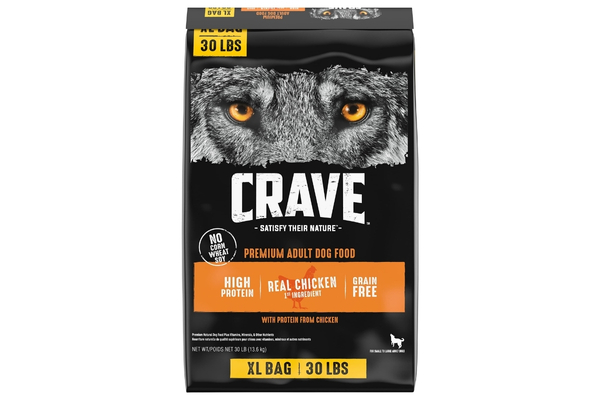
Crave entered the premium dog food market in 2017 with a straightforward pitch: dogs are carnivores at heart, and they need protein-rich diets that honor their ancestral roots. Owned by Mars Petcare, one of the largest pet food manufacturers in the world, Crave positions itself as a high-protein, grain-free option that’s accessible without the boutique price tag of brands like Orijen or Acana.
Crave’s brand identity centers on a few core promises. Every recipe lists real meat or fish as the first ingredient, with protein levels hovering around 34-39% in dry formulas and roughly 12% in wet. The brand avoids chicken by-product meal, corn, wheat, soy protein, and all artificial flavors or preservatives. It’s a grain-free lineup through and through, leaning heavily on peas, lentils, and chickpeas as carbohydrate sources.
The company doesn’t position itself as a boutique or ultra-transparent brand. You won’t find detailed sourcing maps or farm-to-bowl stories on the packaging. What you get is a mid-tier premium product with wide distribution—available at Chewy, Amazon, PetSmart, Petco, Walmart, and Target—making it convenient for most dog owners to pick up or have delivered. Mars backs the brand with decades of manufacturing experience, though specific details about which facilities produce Crave or where ingredients are sourced remain largely undisclosed.
Mars Petcare has been in the pet food business since the mid-20th century, acquiring Kal Kan Foods in the 1960s and launching major brands like Whiskas and Pedigree over the years. The Crave name itself has historical roots—Mars used it for a cat food line in the 1980s before consolidating it under the Whiskas brand. Reviving the name in 2017 signaled a strategic move into the high-protein, grain-free segment, which was gaining traction with health-conscious pet owners.
Crave launched with a focused portfolio: four dry dog food recipes (Beef, Chicken, Lamb, White Fish & Salmon) and three wet paté options (Chicken, Beef, Turkey). There are no puppy, senior, breed-specific, or veterinary lines—just adult maintenance formulas for all sizes. This simplicity is both a strength and a limitation, depending on what you’re looking for.
The brand’s reputation is solid but not exceptional. It hasn’t faced recalls as of October 2025, which is a meaningful plus. Customer reviews across major retailers consistently rate Crave around 4.5 to 4.6 out of 5 stars, with praise for palatability, coat shine, and energy levels. However, there’s also a steady trickle of complaints about digestive upset, batch inconsistencies, and dogs losing interest after a few months.
Let’s talk about what’s actually in the bag. Crave’s ingredient lists start strong with named animal proteins—chicken, beef, lamb, whitefish, or salmon—right at the top. This is followed by meat meals, which are concentrated protein sources that boost the overall protein percentage. For example, the Chicken recipe lists chicken as the first ingredient, then pork meal and chicken meal.
The use of real meat plus meal is a common strategy in premium kibble. Fresh meat contains a lot of moisture, so its weight drops significantly after cooking. Meals are already rendered and concentrated, meaning they contribute more protein per pound in the finished product. This combo helps Crave hit those impressive 34-39% protein numbers.
That said, not all protein in Crave comes from animals. The formulas rely heavily on pea protein, split peas, lentils, and chickpeas. These plant-based proteins and starches are grain-free alternatives to corn or wheat, but they’re not as biologically available to dogs as meat-based proteins. Some dogs digest them fine; others experience gas, bloating, or loose stools. This is a trade-off inherent to most grain-free kibbles.
Crave’s carbohydrate profile is typical of the grain-free category: peas, lentils, chickpeas, and tapioca. These ingredients provide energy and help bind the kibble, but they also push the carbohydrate content to around 29-30% on a dry matter basis. For an active dog, that’s manageable. For a less active or overweight dog, it might contribute to weight gain if portions aren’t carefully controlled.
One thing to note: the kibble size is on the larger side, around 11mm. Small breed dogs or seniors with dental issues may struggle with it. Crave doesn’t offer a small-breed-specific formula, which is a gap in the lineup.
Fat content sits between 17-20% depending on the recipe. The primary fat source is chicken fat, preserved with mixed tocopherols (a natural form of vitamin E). Chicken fat is a high-quality, palatable source of energy and essential fatty acids. However, if your dog has a true poultry allergy, this is a dealbreaker—chicken fat or chicken meal shows up in every Crave recipe, even the fish-based ones.
Fish oil is also included, which contributes omega-3 fatty acids for skin, coat, and joint health. Unfortunately, Crave doesn’t list guaranteed omega-3 or omega-6 levels on the packaging, so you’re trusting the formulation without hard numbers.
Crave includes a standard vitamin and mineral premix to meet AAFCO nutritional standards. You’ll see chelated minerals, which are more bioavailable than inorganic forms. There are no probiotics, prebiotics, glucosamine, or chondroitin listed, which means this isn’t a formula targeting digestive health or joint support specifically. For an active adult dog without special needs, that’s fine. For a senior or a dog with joint issues, you’d need to supplement separately.
The food uses mixed tocopherols as a natural preservative, avoiding artificial options like BHA or BHT. That’s a positive, though it does mean the food has a shorter shelf life once opened compared to kibbles with synthetic preservatives.
A few ingredients raise eyebrows in some circles. Beet pulp appears in the ingredient list—it’s a fiber source that helps with stool quality, but some owners prefer to avoid it due to concerns about sugar content (though most sugar is removed during processing). Guar gum is used as a thickener in wet formulas; it’s generally safe but can cause digestive upset in sensitive dogs.
The bigger conversation is around grain-free diets and dilated cardiomyopathy (DCM). The FDA has been investigating a potential link between grain-free foods—especially those high in peas, lentils, and potatoes—and DCM in dogs. As of 2025, the research is inconclusive, and no definitive cause has been established. Crave hasn’t been specifically implicated in DCM cases, and there are no recalls related to this issue. Still, if you’re feeding a grain-free diet long-term, it’s worth discussing with your vet and considering periodic cardiac screenings, especially for breeds predisposed to heart issues.
| Price per pound | $1.86 – $2.25 |
| Primary protein | Chicken, Beef, Lamb, White Fish, Salmon |
| By-products | No chicken by-product meal |
| AAFCO compliance | Yes (formulation method) |
| Formula options | 4 dry recipes + 3 wet recipes (adult only) |
| Availability | Wide distribution (Chewy, Amazon, PetSmart, Petco, Walmart, Target) |
Take the free nutrition check and find out in under 1 minute which food is best tailored to your dog!
In just 60 seconds, find out which food fits your dog best — for free.
Crave’s dry formulas deliver 34% minimum crude protein and 17% minimum crude fat as guaranteed on the label. When you calculate on a dry matter basis (removing moisture), those numbers jump to around 39% protein and 19% fat. That’s genuinely high compared to many mainstream kibbles, which often sit in the 25-30% protein range.
Here’s what the typical Crave dry formula looks like on a dry matter basis:
The protein-to-fat ratio is favorable for active dogs. The fat provides concentrated energy, and the protein supports muscle maintenance and repair. Carbohydrates are moderate, which is expected given the grain-free formulation.
For wet food, protein drops to around 12% as-fed, with moisture content around 78%. On a dry matter basis, wet formulas are also protein-rich, but the caloric density is much lower than kibble. This makes wet food expensive to feed as a sole diet but useful as a topper or for picky eaters.
Crave states its formulas meet AAFCO nutritional standards for adult maintenance. This is the baseline for commercial dog food in the U.S. However, AAFCO compliance can be achieved two ways: formulation or feeding trials. Formulation means the recipe is calculated to meet standards on paper. Feeding trials mean the food was actually fed to dogs under controlled conditions to verify safety and adequacy.
Crave does not publicly disclose whether its formulas have undergone feeding trials. Without that transparency, you’re relying on the formulation method, which is weaker evidence of real-world performance. Brands like Royal Canin and Hill’s routinely publish feeding trial data; Crave does not.
Crave dry food provides roughly 3,690 kcal/kg or about 1,675 kcal/lb. For a 60-pound active dog needing around 1,500 calories per day, that works out to just under a pound of food daily. For a 30-pound dog, it’s closer to half a pound. These are calorie-dense formulas, which is great for working dogs or highly active pets but requires careful portioning for less active or overweight dogs.
Crave is designed for adult dogs of all sizes, but in practice, it works best for specific types of dogs.
Palatability is one of Crave’s strongest selling points. Across hundreds of user reviews, the overwhelming majority of dogs eat Crave enthusiastically. The beef and chicken recipes are particularly popular, with many owners reporting that even picky eaters clean their bowls consistently.
Crave offers four dry flavors: Beef, Chicken, Lamb, and White Fish & Salmon. The wet line includes Chicken Paté, Beef Paté, and Turkey Paté. That’s not a huge variety compared to brands with a dozen or more options, but it’s enough for most dogs. If your dog gets bored easily, you can rotate between flavors without switching brands entirely.
The White Fish & Salmon recipe is less popular than the meat-based options, likely because many dogs simply prefer poultry or red meat. However, it’s a useful alternative if you’re trying to avoid some of the more common proteins—just remember it still contains chicken fat.
Most dogs transition to Crave without issue if you follow the standard 7-10 day gradual switch. Mix a small amount of Crave with the current food, then slowly increase the ratio over a week and a half. This helps the digestive system adjust, especially given the high protein and legume content.
That said, there are occasional reports of dogs refusing the food after a few weeks or months. This could be due to batch variation, formula changes (though none are officially documented), or simply a dog’s changing preferences. It’s not a widespread issue, but it’s worth noting.
The kibble is round and about 11mm in diameter—larger than many mainstream brands. For medium to large dogs, this is fine. For small breeds or dogs with dental problems, it can be a challenge. Some owners report their small dogs swallowing pieces whole, which isn’t ideal for digestion or dental health.
The texture is standard for dry kibble—moderately hard and crunchy. It’s not as dense as some high-end kibbles, but it’s not soft or crumbly either. Dogs with strong jaws and healthy teeth have no trouble with it.
Take the free nutrition check and find out in under 1 minute which food is best tailored to your dog!
In just 60 seconds, find out which food fits your dog best — for free.
Crave sits in the mid-tier premium range. A 4-pound bag runs around $9, a 12-pound bag about $25, and a 22-pound bag roughly $40. That works out to $1.86 to $2.25 per pound, depending on the size you buy. Wet food costs about $2.39 per 12.5-ounce can.
For a 30-pound dog eating about 900 calories daily, you’re looking at roughly $16 per month for dry food. A 60-pound dog needing 1,500 calories would cost around $28 per month. A 100-pound dog could run $45 or more. These estimates assume you’re buying the 22-pound bag for the best per-pound price.
Wet food is significantly more expensive per calorie—around $8 to $9 per 1,000 kcal compared to $3.10 to $3.35 for dry. Feeding wet as a sole diet isn’t cost-effective for most people, but using it as a topper or occasional treat is reasonable.
Compared to brands like Blue Buffalo Wilderness or Merrick, Crave is slightly cheaper while delivering similar protein and fat levels. Compared to boutique brands like Orijen or Acana, Crave is notably more affordable—Orijen can run $3 to $4 per pound. On the flip side, grocery store brands like Purina Pro Plan or Nutro are often $0.50 to $1 less per pound than Crave, though they typically offer lower protein levels and may include grains.
If you’re looking for high protein and grain-free nutrition without paying boutique prices, Crave delivers solid value. If you’re on a tight budget or your dog doesn’t need ultra-high protein, there are cheaper options that still meet nutritional standards. Curious about another mid-range option? Check out our Dog food from Bil Jac review for a digestibility-focused alternative.
Most major retailers offer 5-10% off for auto-ship subscriptions. Buying the 22-pound bag gives you the best per-pound price, and stacking a subscription discount can bring the cost down further. If you have multiple dogs or a large breed, this adds up over time.
Crave is manufactured by Mars Petcare, which operates multiple production facilities across the United States. However, the company does not publicly disclose which specific plants produce Crave or where individual ingredients are sourced. This lack of transparency is common among large manufacturers but stands in contrast to brands that emphasize farm-to-bowl traceability.
Mars maintains internal quality control standards across its facilities, but specific details about Crave’s quality assurance protocols—testing frequency, microbiological screening, heavy metal monitoring—are not available to consumers. There are no publicly listed certifications like HACCP, ISO 22000, or SQF for Crave production.
On the positive side, Crave has no recalls on record as of October 2025. No Salmonella, Listeria, vitamin D toxicity, or foreign object contaminations have been reported. This is a meaningful safety indicator, though the absence of recalls doesn’t substitute for proactive transparency about testing and quality control.
Crave states that it uses real meat and fish, but the company doesn’t provide details about where these proteins come from or whether they’re sourced domestically or internationally. The same goes for vegetables, legumes, and supplements. For owners who prioritize knowing where every ingredient originates, this is a frustration.
Mars, Inc. has corporate-level sustainability initiatives, but specific information about Crave’s environmental impact is limited. The brand does not publish data on carbon footprint, water usage, or waste reduction tied to Crave production.
Crave dry food comes in plastic poly bags, which are not widely recyclable. Wet food is packaged in metal cans, which are recyclable in most areas. The company has not made public commitments to switch to more sustainable packaging materials or reduce plastic use.
There’s no public information about Crave’s animal welfare standards for sourcing meat and fish. Mars Petcare has faced scrutiny in the past regarding animal testing for product development, but specific policies about Crave’s formulation and whether feeding trials were conducted are not disclosed.
Mars, Inc. runs broader corporate responsibility programs, but there are no Crave-specific initiatives related to community engagement, charitable giving, or social impact that are publicly documented.
At the shelter where I work, we tested Crave with a dog named Benny, a three-year-old mixed breed—part Border Collie, part something with a lot of energy and opinions. Benny came to us after his previous owner couldn’t keep up with his activity level. He’s a healthy, high-energy dog with no known allergies or sensitivities, but he’d been on a rotation of different foods before arriving, so we were curious how he’d respond to something more protein-focused.
Benny’s transition to Crave was smooth. We mixed it gradually with his previous food over about ten days, and he didn’t skip a beat. No digestive upset, no hesitation at the bowl. If anything, he seemed more interested in mealtimes than he had been—tail wagging, nose to the ground as soon as the bowl hit the floor.
Benny ate Crave enthusiastically every single day. We started him on the Chicken recipe, and he cleaned his bowl within a few minutes at every feeding. There was no pickiness, no leaving kibble behind. For a dog who’d been through a few food changes in a short time, that consistency was reassuring.
After about three weeks on Crave, Benny’s coat looked noticeably shinier. His energy level, which was already high, seemed steadier throughout the day—less of the manic spikes and crashes we’d seen before. His stools were firm and consistent, which made cleanup easier and gave us confidence that his digestion was on track.
We didn’t notice dramatic changes in behavior or health, but that’s not necessarily a bad thing. Benny was already a healthy dog. What stood out was the consistency—no upset stomach, no skin issues, no fluctuations in energy or appetite. For a shelter environment where we’re managing multiple dogs with varying needs, that reliability matters.
Feeding Crave was straightforward. The kibble didn’t crumble or create a lot of dust, and Benny’s smaller, firmer stools meant less cleanup during yard time. For staff and volunteers, that’s a practical benefit that shouldn’t be underestimated. The food also seemed to keep Benny satisfied between meals—he wasn’t begging or scavenging the way some dogs do when they’re not getting enough nutrients or feeling full.
Across major retailers like Chewy, Amazon, PetSmart, and Petco, Crave consistently scores between 4.5 and 4.6 out of 5 stars. That’s a strong rating, especially given the volume of reviews—over 2,300 across platforms.
The most common praise centers on palatability. Dog after dog, owners report that even picky eaters dive into Crave without hesitation. Coat quality is another frequent mention—shinier, softer fur within a few weeks. Energy levels also come up often, with owners of active breeds like Border Collies, Saint Bernards, and mixed breeds noting steadier energy and enthusiasm.
Digestive improvements are a recurring theme as well. Many users report firmer, smaller stools and less gas compared to previous foods. For dogs with mild grain sensitivities, the grain-free formulation seems to help, though it’s not a hypoallergenic or limited-ingredient diet.
One owner wrote: “Monty’s coat has become so glossy; he’s practically auditioning for a doggy shampoo commercial, and his energy levels…well let’s just say our daily walks have turned into daily marathons!” Another shared: “We have 3 rescue Saint Bernard’s that are picky eaters. They have plenty of energy and no skin conditions since starting them on Crave some 2 years or so ago, even the 8 year old. Empty bowls at every feeding.”
On the flip side, roughly 10-15% of reviews are negative or neutral. The most common complaints involve digestive upset—loose stools, gas, or occasional vomiting. This seems to affect dogs with sensitive stomachs or those not properly transitioned to the new food. The high legume content (peas, lentils, chickpeas) is a likely culprit, as these ingredients can cause digestive issues in some dogs.
A smaller subset of owners report that their dogs lost interest in the food after a few weeks or months. This could be due to batch variation or simply a dog’s changing preferences. There’s also speculation about undisclosed formula changes, though nothing official has been announced.
Allergic reactions—itching, scratching, ear infections—are mentioned in about 8% of negative reviews. While Crave avoids common grains, it’s not a limited-ingredient diet, and the presence of chicken fat and chicken meal in all recipes can be problematic for dogs with poultry allergies.
Quality concerns pop up occasionally: strange odors, suspected rancidity, or inconsistent batches. These are isolated incidents, but they’re worth noting. One user wrote: “Max started losing interest in his kibble…had digestive issues as well: gas, loose stools…Took him to the vet and she thought it could be the food…switched him off Crave and he bounced right back!”
Among long-term users—those feeding Crave for a year or more—satisfaction remains high. These owners tend to emphasize the consistency of the food and the visible health benefits over time. However, there’s a slight uptick in negative reviews since late 2024, with some owners suspecting formula changes or batch inconsistencies. Crave hasn’t publicly addressed these concerns.
Take the free nutrition check and find out in under 1 minute which food is best tailored to your dog!
In just 60 seconds, find out which food fits your dog best — for free.
Crave occupies a middle ground in the premium dog food market. It’s more affordable than boutique brands like Orijen or Acana but more expensive than mainstream options like Purina Pro Plan or Nutro. Here’s how it stacks up against a few key competitors.
Blue Buffalo Wilderness is a direct competitor—grain-free, high-protein, widely available. Both brands emphasize real meat as the first ingredient and avoid artificial additives. Protein levels are similar, with Wilderness sitting around 34-38% on a dry matter basis.
The main difference is price. Blue Buffalo tends to be $0.30 to $0.50 more per pound than Crave. Blue Buffalo also offers more variety, including puppy, senior, and breed-specific formulas. If you need life-stage-specific nutrition, Blue Buffalo wins. If you’re looking for high protein at a slightly lower price, Crave is the better value.
Taste of the Wild is another grain-free, high-protein option with a focus on novel proteins like bison, venison, and wild boar. Protein levels are comparable to Crave, and the price is similar—often within $0.10 to $0.20 per pound.
Taste of the Wild offers more flavor variety and includes probiotics in its formulas, which Crave does not. If digestive health is a priority, Taste of the Wild has a slight edge. If you prefer a brand backed by a major manufacturer like Mars, Crave offers more corporate stability.
Orijen is a boutique brand emphasizing biologically appropriate nutrition and regional ingredients. Protein levels are higher than Crave—often 38-42%—and the ingredient quality is perceived as superior, with more whole prey ingredients and less reliance on legumes.
Orijen is also significantly more expensive, often $3 to $4 per pound compared to Crave’s $1.86 to $2.25. If budget is a concern, Crave delivers solid protein levels without the boutique price tag. If you want the highest ingredient quality and transparency, Orijen is worth the premium.
Purina Pro Plan is a mainstream premium brand with a wide range of formulas, including grain-free and grain-inclusive options. Protein levels are typically lower than Crave—around 26-30%—but Pro Plan offers specialized formulas for sensitive stomachs, weight management, and specific breeds.
Pro Plan is also backed by extensive research and feeding trials, which Crave lacks. If you prioritize scientific validation and veterinary partnerships, Pro Plan is a stronger choice. If you want higher protein and grain-free nutrition, Crave delivers more in those areas.
Crave is best suited for active adult dogs who thrive on high-protein, grain-free diets. If your dog is a working breed, participates in agility or other sports, or simply has above-average energy needs, Crave’s macronutrient profile supports that lifestyle. The calorie density and protein levels fuel muscle maintenance and sustained energy throughout the day.
It’s also a good fit for dogs who have done well on grain-free diets in the past and whose owners are looking for a more affordable alternative to boutique brands. The palatability is strong, so picky eaters often take to Crave without issue. Many users report visible improvements in coat quality and skin health, which suggests the fat and protein sources are working well for a significant portion of dogs.
However, Crave is not suitable for puppies. There are no puppy-specific formulas, and the nutritional needs of growing dogs differ from adults. Feeding an adult maintenance formula to a puppy could lead to developmental problems, particularly with calcium and phosphorus ratios. Similarly, there are no senior formulas, and the lack of joint-supporting ingredients like glucosamine or chondroitin is a missed opportunity for older dogs.
If your dog has a chicken allergy, Crave won’t work—every recipe contains chicken fat or chicken meal, even the fish-based formulas. If your dog has a sensitive stomach or a history of digestive issues with high-legume diets, introduce Crave gradually and monitor closely. The peas, lentils, and chickpeas can cause gas, bloating, or loose stools in some dogs.
Small breed and toy dogs may struggle with the larger kibble size. There’s no small-breed-specific formula, and some small dogs swallow the pieces whole, which isn’t ideal for digestion or dental health. If you have a small dog, consider whether the kibble size will be manageable before committing to a large bag.
Finally, if your dog requires a veterinary or prescription diet—for kidney disease, food allergies, weight management, or other medical conditions—Crave doesn’t offer therapeutic formulas. You’ll need to work with your vet to find an appropriate option.
Take the free nutrition check and find out in under 1 minute which food is best tailored to your dog!
In just 60 seconds, find out which food fits your dog best — for free.
Crave is a solid mid-tier premium dog food that delivers on its core promise: high protein, real meat as the first ingredient, and grain-free nutrition at a price point that’s more accessible than boutique brands. For active adult dogs without special dietary needs, it’s a reliable choice that consistently scores well in palatability, coat quality, and energy support.
That said, it’s not without limitations. The lack of life-stage-specific formulas—no puppy, senior, or breed-specific options—means Crave only works for a subset of dogs. The transparency around sourcing and manufacturing is minimal, which is frustrating for owners who want to know exactly where their dog’s food comes from. There’s no published feeding trial data, no independent lab testing results, and no detailed quality control information. You’re trusting Mars Petcare’s internal standards without much visibility into what those standards actually are.
The ingredient list is strong at the top but leans heavily on plant-based proteins and legumes to hit those high protein percentages. For some dogs, that’s fine. For others, it leads to digestive issues—gas, bloating, loose stools. The presence of chicken fat and chicken meal in every recipe also limits its usefulness for dogs with poultry allergies.
In terms of value, Crave sits in a sweet spot. It’s more affordable than Orijen or Acana while delivering similar protein levels, and it’s a step up from mainstream grocery store brands in terms of ingredient quality. If you’re looking for high-protein, grain-free nutrition without paying boutique prices, Crave is a reasonable option. If you need specialized formulas, transparent sourcing, or scientifically validated nutrition, there are better choices out there.
Would I buy this for my dog? If I had an active adult dog without allergies or sensitivities, yes—especially if I was looking to save a bit compared to boutique brands without sacrificing protein quality. Would I recommend it to a friend? It depends on the dog. For a healthy, active adult, sure. For a puppy, senior, or dog with specific health needs, I’d steer them toward brands with more specialized offerings.
Crave isn’t the best dog food on the market, but it’s not bad either. It’s a practical, middle-of-the-road option that works well for a specific type of dog and owner. If that matches your situation, it’s worth a shot. If not, you’ll find better-suited alternatives elsewhere.
Take the free nutrition check and find out in under 1 minute which food is best tailored to your dog!
In just 60 seconds, find out which food fits your dog best — for free.
Crave works well for active adult dogs who thrive on high-protein, grain-free diets. It’s particularly suited for working breeds or highly active pets. However, it’s not recommended for puppies, seniors, dogs with chicken allergies, or those with sensitive stomachs. The high legume content can cause digestive upset in some dogs, so monitor your pet closely during the transition period.
No, Crave only offers adult maintenance formulas. There are no puppy, senior, breed-specific, or veterinary lines available. If you have a puppy or senior dog, you’ll need to look elsewhere for age-appropriate nutrition, as feeding an adult maintenance formula to puppies could lead to developmental issues.
Unfortunately, no. Every Crave recipe contains chicken fat or chicken meal, even the fish-based formulas. If your dog has a true poultry allergy, Crave won’t be suitable. You’ll need to find a limited-ingredient diet that completely avoids chicken-derived ingredients.
Crave runs about $1.86 to $2.25 per pound depending on the bag size you buy, with the 22-pound bag offering the best value. For a 30-pound dog, expect to spend around $16 per month, while a 60-pound dog would cost roughly $28 monthly. It’s positioned as a mid-tier premium food—more expensive than grocery store brands but less costly than boutique options like Orijen.
As of October 2025, Crave has no recalls on record. There have been no reported issues with Salmonella, Listeria, vitamin D toxicity, or foreign object contaminations. This clean safety record is a positive indicator, though some users have reported batch inconsistencies in recent reviews.
Crave is a grain-free food that contains peas, lentils, and chickpeas—ingredients the FDA has been investigating in relation to dilated cardiomyopathy (DCM). However, the research remains inconclusive, and Crave hasn’t been specifically implicated in DCM cases. If you’re feeding grain-free long-term, discuss periodic cardiac screenings with your vet, especially for breeds predisposed to heart issues.
Crave dry formulas contain 34% minimum crude protein as guaranteed on the label, which translates to about 37-39% protein on a dry matter basis. This is genuinely high compared to many mainstream kibbles that typically offer 25-30% protein. The high protein content makes it suitable for active dogs with above-average energy needs.
Crave has wide distribution and is available at major retailers including Chewy, Amazon, PetSmart, Petco, Walmart, and Target. You can purchase it in-store or have it delivered. Most retailers offer 5-10% discounts for auto-ship subscriptions, which can help reduce the overall cost.
Follow a gradual 7-10 day transition. Start by mixing a small amount of Crave with your dog’s current food, then slowly increase the Crave ratio over a week and a half. This is especially important given Crave’s high protein content and legume-based carbohydrates, which can cause digestive upset if introduced too quickly.
The kibble is about 11mm in diameter, which is on the larger side. Small breed and toy dogs may struggle with this size—some owners report their small dogs swallowing pieces whole, which isn’t ideal for digestion or dental health. Crave doesn’t offer a small-breed-specific formula with appropriately sized kibble.
No, Crave formulas do not include probiotics, prebiotics, glucosamine, or chondroitin. It’s a straightforward high-protein formula without additional supplements for digestive or joint health. If your dog needs these specific benefits, you’d need to supplement separately or choose a brand that includes these ingredients.
Crave is manufactured by Mars Petcare, one of the largest pet food manufacturers in the world. Mars has been in the pet food business since the mid-20th century and owns major brands like Pedigree and Whiskas. However, the company doesn’t disclose which specific facilities produce Crave or where ingredients are sourced from.
Take the free nutrition check and find out in under 1 minute which food is best tailored to your dog!
In just 60 seconds, find out which food fits your dog best — for free.
9 out of 10 dog owners are feeding their dog the wrong food.
Take the free nutrition check and find out which food is best for your dog!
2,847+ dog owners already did