

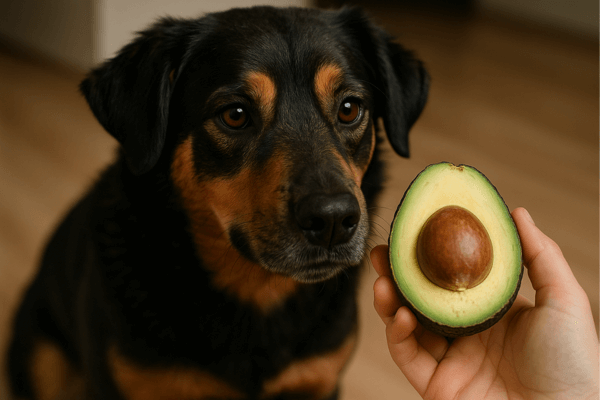
You’re standing at the fridge, slicing an avocado for your lunch. Your dog is giving you those pleading eyes. Can you share a piece? The short answer is: better not. Avocados contain persin, a substance that can be toxic to dogs. Although some sources claim that the flesh in small amounts is okay, the risks are simply too great.
Why avocados are dangerous for dogs
Persin is the culprit in avocados. This natural substance is present throughout the fruit, but especially in the pit, skin and leaves. In dogs, persin can cause vomiting, diarrhoea and respiratory problems. In severe cases, it causes fluid accumulation around the heart – not something you want to experiment with.
Additionally, avocados are very high in fat – about 18 to 30 percent fat. For dogs with sensitive stomachs or a tendency towards pancreatitis, this is truly problematic. I’ve seen too many owners returning to the vet after an “innocent” piece of avocado.
The pit poses an extra danger. It’s large enough to block airways or cause an intestinal blockage. The tough skin can also cause obstruction problems.
Small dogs are at higher risk
Small breeds like Chihuahuas are extra sensitive to persin. Their small body weight means they more quickly receive a toxic dose. I know of a case where a Chihuahua became very ill from a small piece of avocado – not worth the risk.
Puppies also react more severely to persin than adult dogs. Their developing digestive system can’t process the substance as effectively.
What to do if your dog eats avocado
Has your dog eaten avocado anyway? Stay calm but act quickly. Remove any remaining pieces from his mouth and watch him carefully. Symptoms such as vomiting, lethargy, breathing difficulties or coughing are reasons to go to the vet immediately.
Never induce vomiting unless specifically advised by the vet. If an intestinal blockage is suspected, this could actually cause more damage.
Better alternatives for healthy fats
Want to treat your dog to something healthy? There are many safer options. A piece of apple without seeds is an excellent treat. Carrots, blueberries or cucumber are also safe choices.
For healthy fats, it’s better to choose a bit of salmon oil in their food. This provides omega-3 fatty acids without the risks of avocado. Many dog foods nowadays already contain the right balance of fats.
The debate among experts
You may sometimes find conflicting information about avocados online. Some sources say that the flesh in minimal quantities is acceptable. Other experts advise against it completely. In my opinion, it’s simply not worth the risk when there are so many safe alternatives available.
The concentration of persin also differs per avocado variety and ripeness. You never know exactly how much toxic substance your dog is ingesting – a gamble I personally wouldn’t take.
Practical advice for home
Make sure avocados are kept out of reach of your dog. Throw pits and skins directly into a bin with a lid. Dogs are masters at finding “treats” in unexpected places.
Also tell children and guests not to share avocado with the dog. People who don’t have dogs often don’t know which human foods are dangerous.