

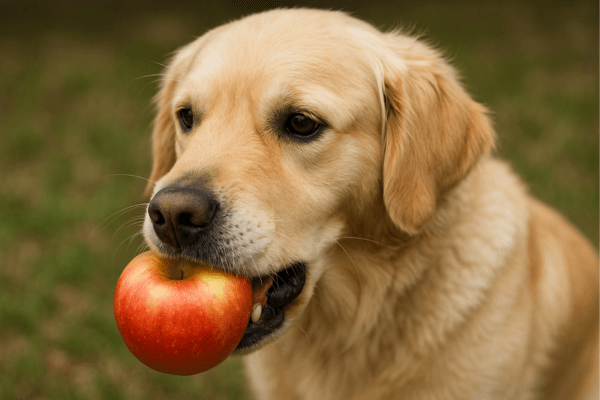
Many dog owners find themselves standing in the supermarket, wondering: can I give my dog a piece of apple? The short answer is yes, and it can actually be quite healthy! As a dog food specialist, I regularly see owners unsure about giving fruit to their four-legged friends. Let me explain exactly what you need to know about apples for dogs.
Why apples are good for your dog
Apples are packed with fibre that supports your dog’s digestion. I often notice that dogs with slower bowel movements benefit from a small piece of apple as a treat. Additionally, apples contain vitamins such as A and C, plus minerals that support the immune system.
What I personally find very useful: apples are low in calories. For dogs that need to watch their weight, this makes a perfect healthy snack. Chewing on apple also helps with dental care – the texture works as a natural toothbrush.
How to safely prepare apples
Now here’s the important part: not all parts of the apple are suitable. Always remove the core and seeds. Apple seeds contain small amounts of cyanide, and while one seed isn’t immediately dangerous, why take the risk?
Wash the apple thoroughly before giving it to your dog. Pesticides and wax coatings on the skin aren’t good for your pet. I actually always advise removing the skin, especially with non-organic apples. The flesh itself is the most valuable part.
Cut the apple into small pieces appropriate for your dog’s size. Naturally, you’d use smaller pieces for a Chihuahua than for a Golden Retriever.
Mind the quantity
Apples contain natural sugars, so moderation is key. A few slices per day are fine for most dogs, but don’t give a whole apple at once. Too much can cause diarrhoea – unfortunately, I’ve witnessed this with enthusiastic owners.
Just as with other human snacks, like raw beef, it’s wise to view apple as a treat, not a meal replacement. About 10% of your dog’s daily caloric intake can come from treats.
When to be cautious
Some dogs have a sensitive stomach or may be allergic to new foods. Always start with a small piece and observe how your dog responds. Vomiting, diarrhoea, or restless behaviour? Then apple might not be suitable for your dog.
If your dog has diabetes, consult your vet first. The natural sugars in apple can affect blood sugar levels, and you’ll want to monitor that carefully.
My practical experience
I often see that dogs love apple, especially during hot days. You can even make frozen apple pieces as a refreshing treat. Many owners tell me their dog literally runs to the kitchen as soon as they hear an apple being cut.
The beauty of apples is that they’re easy to take along during walks. Instead of processed dog biscuits, you can simply pack a container with pre-cut apple pieces. Practical and healthy.
In conclusion: apples can be a valuable addition to your dog’s diet, provided you prepare them properly and give them in moderation. If you have doubts about your specific dog’s reaction? Discuss it with your vet – they know your four-legged friend best.