9 out of 10 dog owners are feeding their dog the wrong food

Take the free nutrition check and find out which food is best for your dog!

Shelter manager, certified canine nutritionist, and lifelong dog lover
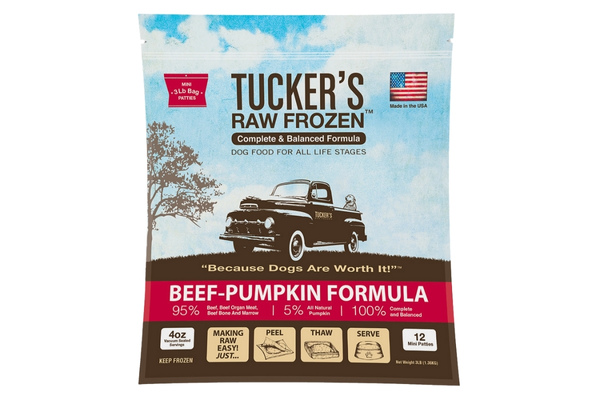
• Tucker’s uses a unique 95/5 formula with 95% meat/organs/bone and only 5% pumpkin, processed in a USDA human-grade facility with complete USA sourcing and rigorous testing protocols.
• The emulsified texture sets it apart from chunky raw competitors, creating a smooth, pâté-like consistency that improves palatability and digestibility for sensitive dogs and picky eaters.
• Premium pricing reflects ingredient quality but limits accessibility – expect $10-12 daily for a 60-pound dog, making it significantly more expensive than kibble but competitive with other human-grade raw brands.
• Single-protein formulas excel for dogs with food sensitivities, offering clean elimination diet options without cross-contamination, though the moderate-to-high fat content excludes dogs with pancreatitis.
• Real-world results consistently show improved coat quality and enthusiastic eating, with shelter testing and customer reviews highlighting successful outcomes for previously picky eaters and digestively sensitive dogs.
Take the free nutrition check and find out in under 1 minute which food is best tailored to your dog!
Tucker’s Raw Frozen started in 2009 when founder Jeff Kalish decided to take raw feeding—a concept that was still fairly niche at the time—and make it practical for everyday dog owners. The company operates out of Pleasant Prairie, Wisconsin, from a USDA Human Edible Facility, which means the standards they’re held to are the same ones applied to food meant for people. That’s not just marketing talk; it’s a regulatory distinction that requires stricter sourcing, handling, and testing protocols.
At the core of Tucker’s philosophy is a 95/5 formula: 95% meat, organ, bone, and marrow, and 5% pumpkin. That’s it. No grains, no fillers, no synthetic additives beyond a minimal vitamin pack to meet AAFCO standards. The idea is to mimic what a dog would eat in a more ancestral context—high protein, moderate fat, very low carbohydrate. Every protein source is sourced exclusively from the USA, and the company is transparent about where ingredients come from, which is something you don’t always get in this industry.
What sets Tucker’s apart is the emulsification process. Instead of chunky ground meat, the formulas are blended into a smooth, consistent texture. This isn’t just about appearance—it’s designed to increase digestibility and nutrient absorption by breaking down ingredients at a cellular level. For dogs with sensitive stomachs or absorption issues, this can make a real difference.
Tucker’s has no parent company breathing down its neck, no shareholders pushing for cheaper ingredients. It’s still family-owned, and that independence shows in how they operate. They’ve expanded distribution over the years and recently launched Boost Cubes, a line of single-serve nutritional toppers, but the core mission hasn’t shifted: provide high-quality raw nutrition without the guesswork or shortcuts.
The brand has earned recognition within the specialty pet food space, including multiple Pet Innovation Awards between 2022 and 2025. They’re not a household name like Purina or Hill’s, but in the raw feeding community and among owners who prioritize ingredient transparency, Tucker’s has built a strong, loyal following.
| Price per pound | $5.50 – $7.50 |
| Primary protein | Beef, Pork, Chicken, Lamb, Bison, Duck, Turkey, Wild-caught Salmon |
| By-products | None |
| AAFCO compliance | Yes – formulation only (no feeding trials) |
| Formula options | Multiple single-protein formulas + Boost Cubes line |
| Availability | Specialty pet stores + online retailers |
Take the free nutrition check and find out in under 1 minute which food is best tailored to your dog!
In just 60 seconds, find out which food fits your dog best — for free.
Tucker’s doesn’t mess around when it comes to protein. Every formula starts with whole meat, organ meat, bone, and marrow—no meat meals, no by-products, no ambiguous “animal protein.” You’ll see ingredients like beef, pork, chicken, lamb, bison, duck, turkey, and wild-caught salmon listed first, and they make up the vast majority of the recipe. This is human-grade meat sourced from USDA-inspected facilities in the Midwest, which means it meets the same standards as what you’d buy at a grocery store.
The inclusion of organ meats like liver and heart is particularly valuable. These are nutrient-dense ingredients that provide taurine (important for heart health), B vitamins, iron, and fat-soluble vitamins like A and D. Bone and marrow contribute calcium, phosphorus, and healthy fats. This isn’t just “meat”—it’s a whole-prey approach that delivers a broader spectrum of nutrients than muscle meat alone.
Each formula is built around a single protein source, which is helpful for dogs with food sensitivities or when you’re doing an elimination diet. If your dog reacts to chicken, you can switch to lamb or salmon without worrying about cross-contamination or hidden ingredients.
Tucker’s uses pumpkin as the sole carbohydrate and fiber source, making up just 5% of the formula. Pumpkin is a gentle, low-glycemic ingredient that supports digestive health and provides soluble fiber, which can help with both diarrhea and constipation. It’s also rich in beta-carotene and antioxidants.
There are no grains, potatoes, peas, lentils, or other common fillers. For owners concerned about legume-related DCM or who simply want to keep carbs minimal, this is a big selling point. The carbohydrate content is estimated at 3-5% on a dry matter basis, which is about as low as it gets in commercial dog food.
Fat content in Tucker’s formulas ranges from 10-11% as-fed, which translates to roughly 40-45% on a dry matter basis. This is moderate to high, depending on your dog’s needs. The fat comes naturally from the meat, bone marrow, and organ tissue—no added oils or synthetic fats.
Omega-3 levels vary by protein. The salmon-based formulas and Boost Cubes provide higher omega-3 fatty acids, which support skin, coat, joint, and cognitive health. Beef and pork formulas will have more omega-6, which is still important but ideally balanced with omega-3 intake over time. If you’re rotating proteins or adding salmon cubes, you’re likely hitting a good balance.
Tucker’s keeps additives to an absolute minimum. You’ll see a vitamin and mineral pack added to meet AAFCO standards—things like vitamin E, zinc, manganese, and copper. These are necessary because even a well-balanced raw diet can fall short on certain micronutrients without supplementation.
There are no artificial preservatives, colors, or flavors. The food is frozen, which is the preservation method. This means you need freezer space and a bit of planning, but it also means you’re not feeding your dog anything synthetic to keep the food shelf-stable.
Taurine is added to some formulas, which is smart given the ongoing research into taurine deficiency and heart health. It’s naturally present in organ meats, but supplementation ensures consistent levels across batches.
No corn, wheat, soy, or gluten. No meat by-products or meals. No artificial anything. No cheap fillers like rice bran or cellulose. This is a short ingredient list, and that’s by design. If you’re the kind of owner who wants to know exactly what’s going into your dog, Tucker’s makes that easy.
Tucker’s raw frozen diets deliver approximately 14-16% protein, 10-11% fat, and 1.5-2% fiber on an as-fed basis. Moisture content sits around 72-75%, which is typical for raw food. When you convert to a dry matter basis (removing water), you’re looking at roughly 56-64% protein, 40-44% fat, and 6-8% fiber.
These are high-protein, high-fat, low-carb profiles that align well with a carnivore’s nutritional needs. The caloric density is moderate—around 1,200-1,300 kcal/kg—which means portion sizes are reasonable and you’re not overfeeding to meet energy needs.
All Tucker’s formulas are formulated to meet AAFCO nutrient profiles for All Life Stages, including growth in large breed puppies. This means the food is nutritionally complete and balanced for puppies, adults, and seniors. However, Tucker’s does not appear to have conducted formal AAFCO feeding trials, relying instead on formulation to meet nutrient standards.
For most dogs, this is perfectly adequate. But if you’re feeding a puppy, especially a large or giant breed, it’s worth monitoring growth rate and body condition closely, as raw diets can be calorie-dense and rich. Some owners choose to work with a vet or nutritionist when feeding raw to growing dogs, just to be safe.
The inclusion of organ meats ensures a broad spectrum of vitamins and minerals—vitamin A from liver, B vitamins from heart, iron, zinc, and selenium. Bone provides calcium and phosphorus in a natural, bioavailable form. The vitamin pack fills in any gaps, ensuring the food meets minimum standards for things like vitamin D and E.
Pumpkin adds beta-carotene, potassium, and soluble fiber. The emulsification process is said to enhance nutrient absorption, though there’s no published data specific to Tucker’s to quantify this. Anecdotally, many owners report firmer stools and better digestion, which could be a sign of improved nutrient uptake.
Raw diets are generally considered highly digestible because they’re minimally processed and free of hard-to-digest fillers. The emulsified texture in Tucker’s formulas takes this a step further by breaking down ingredients into smaller particles, which can be easier on the digestive system, especially for dogs with sensitive stomachs or absorption issues.
Protein sources like beef, chicken, and fish have high biological value, meaning they provide amino acids in ratios that dogs can efficiently use. There’s no published digestibility data for Tucker’s specifically, but the ingredient quality and processing method suggest it should be well-absorbed.
Dogs with food sensitivities or allergies: The single-protein, limited-ingredient formulas make it easy to identify and avoid triggers. If your dog reacts to chicken, you can try lamb or salmon without worrying about cross-contamination or hidden ingredients.
Picky eaters: The high meat content and emulsified texture tend to be highly palatable. Many owners report that dogs who turn their nose up at kibble dive into Tucker’s with enthusiasm.
Dogs with digestive issues: The minimal ingredient list, high digestibility, and inclusion of pumpkin can help with both diarrhea and constipation. The emulsified format may be easier to digest than chunky raw food for dogs with sensitive stomachs.
Active and working dogs: The high protein and fat content provide sustained energy. The nutrient density means you’re feeding less volume for the same caloric intake, which can be helpful for dogs who need a lot of fuel but don’t have huge appetites.
Owners who want ingredient transparency: If you’re the type who reads every label and wants to know exactly where your dog’s food comes from, Tucker’s makes that easy. Human-grade, USA-sourced, short ingredient lists.
Dogs with pancreatitis or fat-sensitive conditions: The fat content in Tucker’s formulas is moderate to high. For dogs who can’t handle rich foods, this could trigger flare-ups. There’s no low-fat option in the Tucker’s line, so you’d need to look elsewhere.
Owners without freezer space: This is frozen food, and you’ll need room to store it. If you’re tight on space or don’t have a reliable freezer, raw feeding in general—and Tucker’s specifically—isn’t practical.
Budget-conscious households feeding large dogs: Tucker’s is premium-priced. For a 60-pound dog, you’re looking at roughly $10-12 per day, which adds up fast. If cost is a major factor, kibble or a mixed feeding approach (raw plus kibble) might make more sense.
Owners uncomfortable with raw feeding: Raw food requires safe handling—thawing in the fridge, washing bowls thoroughly, and being mindful of bacterial contamination. If that makes you nervous or you’re not willing to follow those protocols, cooked or kibble options are safer bets.
Tucker’s is formulated for all life stages, so it’s technically suitable for puppies, adults, and seniors. That said, puppies—especially large and giant breeds—benefit from closer monitoring when fed raw to ensure they’re growing at a healthy rate. Some owners prefer to start raw feeding after the puppy stage to avoid any risk of over-nutrition during critical growth periods.
For senior dogs, the high digestibility and nutrient density can be a real advantage, especially if appetite is declining or absorption is an issue. The emulsified texture is also easier to eat for dogs with dental problems or missing teeth.
Take the free nutrition check and find out in under 1 minute which food is best tailored to your dog!
In just 60 seconds, find out which food fits your dog best — for free.
One of the most common pieces of feedback from Tucker’s customers is that dogs love the taste. The high meat content and emulsified texture seem to hit the sweet spot for palatability. Even picky eaters—dogs who’ve turned their noses up at multiple brands—often take to Tucker’s quickly.
The beef and chicken formulas tend to be the most universally accepted, while salmon and pork can be more divisive. Some dogs go crazy for fish, others won’t touch it. If you’re unsure, starting with beef or chicken is usually a safe bet.
The emulsified texture is smooth and pâté-like, which some dogs prefer over chunky raw food. It’s also easier to portion and mix with other foods if you’re doing a gradual transition or using Tucker’s as a topper.
There are occasional reports of dogs refusing the food or losing interest after a while, but these are the minority. Most owners report consistent, enthusiastic eating over months or even years of feeding.
Tucker’s is priced in the premium category. A 3-pound bag runs around $34-40, a 6-pound bag is $55-65, and a 20-pound box costs $99-120. That works out to roughly $5.50-7.50 per pound, with the bulk box offering the best value.
For a 30-pound dog, you’re looking at roughly $5-6 per day. A 60-pound dog will cost $10-12 per day. A 100-pound dog could run $16-22 per day. These are estimates based on feeding guidelines, but actual costs will vary depending on your dog’s metabolism, activity level, and how much you feed.
Tucker’s is less expensive than some boutique raw brands like Stella & Chewy’s or Primal, but more expensive than mass-market kibbles like Purina or Hill’s. Compared to other human-grade, USA-sourced raw diets, it’s competitively priced.
Where Tucker’s wins is in the ingredient quality and transparency. You’re paying for human-grade meat, USDA oversight, and a short ingredient list with no fillers. If those things matter to you, the price is justified. If you’re just looking for the cheapest way to feed your dog, this isn’t it.
If you’re curious about how Tucker’s stacks up against another premium brand focused on quality and transparency, check out our Dog food from First Mate review for a detailed comparison.
Is Tucker’s good value? That depends on what you’re optimizing for. If you want maximum nutrition per dollar and are willing to do a bit of math and meal planning, Tucker’s delivers. The nutrient density means you’re feeding less volume than you would with many kibbles, and the quality of ingredients is high.
If you’re looking for convenience plus quality, fresh cooked services like The Farmer’s Dog or Nom Nom might make more sense, though they’re often pricier. If budget is the top priority, you’re better off with a high-quality kibble and maybe using Tucker’s as a topper or rotational option.
Tucker’s operates out of a USDA Human Edible Facility in Pleasant Prairie, Wisconsin. This is a meaningful distinction—it’s not just a pet food plant with basic oversight. The facility is held to the same standards as human food production, which includes stricter sourcing, handling, and sanitation protocols.
The company uses a Test & Hold Protocol, meaning batches are tested for pathogens in independent labs before they’re released for sale. This is a proactive safety measure that reduces the risk of contaminated product reaching consumers. Given the inherent risks with raw food, this is an important layer of quality control.
All ingredients are sourced from the USA, and the company is transparent about where proteins come from—Midwest-raised beef, pork, and poultry, wild-caught salmon. There’s full traceability back to suppliers, which means if there’s ever an issue, they can identify and isolate the source quickly.
Tucker’s has had one recall in its history—a 2018 Salmonella contamination in a specific lot of pork-bison formula. The recall was voluntary, handled transparently, and there were no reported illnesses in pets or humans. Since then, the company has tightened protocols, and there have been no further incidents. For a raw food brand, that’s a solid track record.
Tucker’s doesn’t make a lot of noise about sustainability, but there are a few things worth noting. The USA sourcing reduces the carbon footprint associated with international shipping, and the focus on whole-animal utilization (meat, organs, bone, marrow) aligns with nose-to-tail principles that reduce waste.
The packaging is vacuum-sealed plastic, which is practical for food safety and freezer storage but not particularly eco-friendly. There’s no mention of recyclable or compostable packaging on the company’s website, so if sustainability is a top priority for you, this is an area where Tucker’s could improve.
The company is family-owned and operates independently, which means they’re not beholden to shareholders pushing for cost-cutting measures that might compromise ingredient quality or animal welfare. That’s a form of ethical business practice, even if it’s not explicitly branded as such.
I work at a local dog shelter, and we’re always testing different foods to see what works for dogs with varied backgrounds and needs. For this review, I tried Tucker’s with a dog named Benny, a five-year-old beagle mix who came to us after his previous owner moved and couldn’t keep him. Benny’s a sweet, easygoing guy, but he’s also a bit of a picky eater—he’d been turning his nose up at the shelter’s standard kibble and losing weight as a result.
When we switched Benny to Tucker’s Beef-Pumpkin formula, the change was almost immediate. He sniffed the bowl, looked up at me like he couldn’t believe his luck, and ate the entire portion without hesitation. For a dog who’d been leaving half his food untouched, that was a win.
Over the next two weeks, Benny’s energy picked up noticeably. He was more interested in playtime, more engaged during walks, and just seemed happier overall. His coat, which had been a bit dull and rough, started to look shinier and feel softer. His stools were firm and consistent—no digestive upset during the transition, which was a relief given his history of being a bit finicky.
One thing I noticed was that Benny seemed satisfied after meals in a way he hadn’t been with kibble. He wasn’t begging for extra food or scavenging in the yard, which made me think the nutrient density was doing its job. He maintained a healthy weight without us having to overfeed.
The only minor downside was the thawing process—we had to plan ahead and move portions from the freezer to the fridge the night before. It wasn’t a big deal, but it did require a bit more thought than just scooping kibble. For a shelter setting where we’re juggling multiple dogs, that extra step added up, but for a single-dog household, it’s manageable.
By the end of the trial, Benny was adopted by a family who’d been fostering him during the test period. They were so impressed with how he’d thrived on Tucker’s that they decided to keep feeding it. That’s probably the best endorsement I can give—when a dog does well enough on a food that his new family wants to stick with it, you know it’s working.
Take the free nutrition check and find out in under 1 minute which food is best tailored to your dog!
In just 60 seconds, find out which food fits your dog best — for free.
Tucker’s has built a solid reputation among raw feeding enthusiasts and owners looking for cleaner ingredient lists. Across platforms like Chewy, Amazon, and specialty pet forums, the brand consistently scores 4.7-4.9 out of 5 stars.
The most common positive themes are improved digestion, shinier coats, better energy levels, and enthusiastic eating. Owners of picky dogs frequently mention that Tucker’s was the food that finally worked after trying multiple brands. Dogs with food sensitivities or chronic digestive issues also tend to do well, with many owners reporting fewer flare-ups and more consistent stools.
On the flip side, the main complaints center on price and fat content. Some owners found the food too rich for their dogs, leading to loose stools or weight gain. A few reported their dogs refusing the food after initially loving it, though these cases are relatively rare. There have also been occasional mentions of batch inconsistencies—one bag smelling slightly off or having a different texture—but Tucker’s customer service typically handles these issues promptly with refunds or replacements.
A smaller number of owners raised concerns about the high fat content in relation to pancreatitis risk, particularly for breeds prone to the condition. Tucker’s doesn’t offer a low-fat option, so if your dog has a history of pancreatitis, this isn’t the right choice.
Long-term users—those who’ve been feeding Tucker’s for years—tend to be the most loyal. They report sustained health benefits, stable weight, and dogs who continue to eat with enthusiasm. These are the owners who’ve done the math, found the feeding routine manageable, and decided the quality justifies the cost.
Tucker’s sits in a specific niche: premium raw frozen food with minimal ingredients and USA sourcing. The closest direct competitors are brands like Stella & Chewy’s, Primal, and Instinct Raw.
Stella & Chewy’s offers a wider range of formats—freeze-dried, frozen raw, kibble—and has stronger retail presence. Their freeze-dried options are more convenient for travel and storage, but they’re also pricier per serving. Ingredient quality is comparable, though Stella & Chewy’s includes some formulas with fruits and vegetables beyond just pumpkin.
Primal is similar in philosophy—high meat content, minimal processing, raw feeding focus. They offer more variety in protein sources and some formulas with added supplements like turmeric or green-lipped mussel. Pricing is in the same range, and both brands have clean recall records.
Instinct Raw is slightly more accessible in terms of retail availability and offers both raw and freeze-dried options. They’re owned by a larger parent company, which some owners see as a downside in terms of independence and transparency.
Compared to cooked fresh brands like The Farmer’s Dog, Nom Nom, or Ollie, Tucker’s is less convenient (requires freezer space and thawing) but often less expensive per serving. The cooked brands offer pre-portioned packs and subscription delivery, which appeals to owners who want quality without the raw handling protocols.
Compared to high-quality kibbles like Orijen, Acana, or Fromm, Tucker’s is significantly more expensive but offers higher moisture content, better digestibility, and more transparent sourcing. If you’re willing to invest the time and money, raw feeding with Tucker’s is a step up in terms of ingredient quality and bioavailability.
Where Tucker’s really shines is in the emulsified texture and single-protein, limited-ingredient approach. If your dog has a sensitive stomach or you’re doing an elimination diet, that simplicity is hard to beat. Other brands offer more variety and convenience, but few match Tucker’s in terms of ingredient purity and processing transparency.
Tucker’s works with three PhD zoological nutritionists who specialize in carnivore nutrition. While the company doesn’t publicly name these experts or publish detailed research, the involvement of credentialed nutritionists adds credibility to the formulation process.
The formulas are designed to meet AAFCO nutrient profiles for all life stages, which means they’re nutritionally complete and balanced according to industry standards. However, Tucker’s does not appear to have conducted formal AAFCO feeding trials, relying instead on formulation to meet nutrient minimums.
There’s no published peer-reviewed research specific to Tucker’s products, so claims about improved digestion, nutrient absorption, and health benefits are based on general principles of raw feeding and anecdotal customer feedback rather than controlled studies. That doesn’t mean the claims are false—just that they’re not scientifically validated in the way that, say, a prescription veterinary diet might be.
The emulsification process is grounded in sound nutritional science—breaking down food into smaller particles increases surface area and can improve digestibility. But again, there’s no published data quantifying the effect in Tucker’s formulas specifically.
Tucker’s is best suited for adult dogs of all sizes who are generally healthy and active. The high protein and fat content provide sustained energy, making it a good fit for working dogs, active breeds, and dogs with high metabolic demands.
It’s an excellent choice for dogs with food sensitivities or allergies, thanks to the single-protein, limited-ingredient formulas. If you’re trying to identify a food trigger, Tucker’s makes it easy to isolate variables.
Picky eaters often thrive on Tucker’s. The high meat content and palatable texture tend to win over dogs who’ve been unenthused about other foods.
For puppies, Tucker’s is formulated for all life stages, including large breed growth. However, because it’s calorie-dense and rich, it’s important to monitor portion sizes and growth rate closely. Some owners prefer to wait until after the puppy stage to introduce raw feeding, just to be cautious.
Senior dogs can benefit from Tucker’s high digestibility and nutrient density, especially if appetite is declining or absorption is becoming an issue. The emulsified texture is also easier to eat for dogs with dental problems.
Tucker’s is not suitable for dogs with pancreatitis or fat-sensitive conditions, as the fat content is moderate to high and there’s no low-fat option. It’s also not a good fit for owners who don’t have freezer space or who aren’t comfortable with raw feeding protocols.
Take the free nutrition check and find out in under 1 minute which food is best tailored to your dog!
In just 60 seconds, find out which food fits your dog best — for free.
Here’s my honest take: Tucker’s is a high-quality raw food that delivers on its promises, but it’s not for everyone.
If you’re looking for ingredient transparency, high meat content, and minimal processing, Tucker’s is one of the best options in the raw category. The USA sourcing, USDA facility, and Test & Hold protocol give me confidence in the safety and quality. The single-protein formulas are a huge asset for dogs with sensitivities, and the emulsified texture seems to improve palatability and digestion for many dogs.
The price is high, and that’s going to be a dealbreaker for some people. For a large dog, you’re looking at $300-400+ per month, which is a significant investment. If you’re feeding multiple dogs or on a tight budget, Tucker’s probably isn’t realistic unless you’re using it as a topper or rotational option.
The convenience factor is also a consideration. You need freezer space, you need to plan ahead for thawing, and you need to follow safe handling practices. If you’re the type who values convenience and doesn’t want to think too hard about meal prep, a cooked fresh service or high-quality kibble might be a better fit.
Would I feed this to my own dog? Yes, if I could afford it and had the freezer space. I think the ingredient quality and nutritional profile are excellent, and I’ve seen enough positive results—both in shelter dogs and in customer reviews—to believe it’s worth the investment for the right situation.
Would I recommend it to a friend? It depends on the friend and the dog. If they’re dealing with food sensitivities, a picky eater, or chronic digestive issues, Tucker’s is one of the first brands I’d suggest. If they’re just looking for a solid, reliable food and don’t have specific concerns, I might point them toward a more affordable option or a cooked fresh service with better convenience.
Honestly, Tucker’s is a premium product that earns its premium price. It’s not perfect—I wish there was a low-fat option, and the packaging could be more sustainable—but it’s a solid, trustworthy choice for owners who prioritize ingredient quality and are willing to invest the time and money to feed raw. It’s not the cheapest, it’s not the easiest, but it’s one of the cleanest, most transparent raw foods on the market, and for the right dog, it can make a real difference.
Take the free nutrition check and find out in under 1 minute which food is best tailored to your dog!
In just 60 seconds, find out which food fits your dog best — for free.
The monthly cost depends on your dog’s size. For a 30-pound dog, expect to spend around $150-180 per month. A 60-pound dog will cost approximately $300-360 per month, while a 100-pound dog could run $480-660 monthly. These estimates are based on feeding guidelines, but actual costs may vary depending on your dog’s metabolism and activity level.
Yes, Tucker’s is a frozen raw food that requires freezer storage and advance planning. You’ll need to thaw portions in the refrigerator 12-24 hours before feeding. Always wash bowls and utensils thoroughly after use, and follow basic food safety protocols when handling raw meat. The food stays fresh in the freezer for up to 12 months and in the refrigerator for 3-4 days once thawed.
Tucker’s is formulated to meet AAFCO standards for all life stages, including puppies and large breed growth. However, because it’s calorie-dense and rich, it’s important to monitor portion sizes and growth rate closely. Some owners prefer to consult with a veterinarian or canine nutritionist when feeding raw to growing puppies, especially large and giant breeds.
Tucker’s has had one recall in its history—a voluntary 2018 recall for Salmonella contamination in a specific lot of pork-bison formula. There were no reported illnesses, and the company has since tightened protocols. They use a Test & Hold Protocol where batches are tested for pathogens before release, and they operate from a USDA Human Edible Facility with strict safety standards.
Tucker’s uses an emulsification process that creates a smooth, pâté-like texture instead of chunky ground meat. This is designed to improve digestibility and nutrient absorption. They also follow a strict 95/5 formula (95% meat/organ/bone, 5% pumpkin) with single-protein recipes and exclusive USA sourcing. All ingredients are human-grade and processed in a USDA facility.
Yes, Tucker’s is excellent for dogs with food sensitivities. Each formula contains only one protein source with minimal ingredients—just meat, organs, bone, pumpkin, and a vitamin pack. This makes it easy to identify and avoid triggers. If your dog reacts to chicken, you can switch to lamb, beef, salmon, or other single-protein options without cross-contamination concerns.
No additional supplements are typically needed. Tucker’s formulas are nutritionally complete and balanced to meet AAFCO standards. They include organ meats for natural vitamins and minerals, plus a vitamin pack to fill any gaps. Some owners choose to rotate proteins or add omega-3 supplements, but the base diet provides complete nutrition on its own.
Yes, Tucker’s can be excellent for senior dogs. The high digestibility and nutrient density are beneficial if appetite is declining or absorption is becoming an issue. The emulsified texture is also easier to eat for dogs with dental problems or missing teeth. However, monitor senior dogs closely for any digestive upset when transitioning to raw food.
Most dogs transition easily to Tucker’s, often within 7-10 days. Start by mixing 25% Tucker’s with 75% current food for 2-3 days, then gradually increase the Tucker’s portion. Some dogs with sensitive stomachs may need a slower transition over 2 weeks. The high palatability and digestibility usually make the switch smoother than with many other foods.
Yes, Tucker’s can be mixed with kibble, used as a topper, or rotated with other foods. Many owners use it as a high-quality topper to enhance less expensive kibble, or rotate between different Tucker’s proteins for variety. The single-ingredient approach makes it compatible with most feeding strategies and dietary restrictions.
Take the free nutrition check and find out in under 1 minute which food is best tailored to your dog!
In just 60 seconds, find out which food fits your dog best — for free.
9 out of 10 dog owners are feeding their dog the wrong food.
Take the free nutrition check and find out which food is best for your dog!
2,847+ dog owners already did