9 out of 10 dog owners are feeding their dog the wrong food

Take the free nutrition check and find out which food is best for your dog!


Shelter manager, certified canine nutritionist, and lifelong dog lover
Take the free nutrition check and find out in under 1 minute which food is best tailored to your dog!
When you walk into a Tractor Supply store—or browse their online catalog—you’re met with a surprisingly wide range of dog food options. From the house-brand 4health stacked high in the pet aisle to premium bags of Victor, Diamond Naturals, and Purina Pro Plan, the retailer has built a reputation as a go-to destination for rural and value-conscious pet owners. But what does Tractor Supply actually stand for when it comes to dog food? And more importantly, is the food any good?
Tractor Supply Company isn’t a dog food manufacturer—it’s a rural lifestyle retailer founded in 1938, now operating over 2,200 stores across the United States. The company built its reputation on serving farmers, ranchers, and hobby farm owners with everything from feed and fencing to tools and pet supplies. Over the past two decades, Tractor Supply has aggressively expanded its private-label pet food offerings, most notably through the 4health brand, which launched in 2010 and recently celebrated its 15th anniversary.
The core philosophy is straightforward: deliver quality nutrition at a competitive price for everyday pet owners who want more than bottom-tier grocery store brands but can’t justify premium boutique prices. Tractor Supply positions 4health as a “premium-for-value” option—real meat as the first ingredient, added functional nutrients like glucosamine and probiotics, and formulas tailored to different life stages and sensitivities, all at a price point that undercuts most national brands by 20% or more.
Beyond 4health, Tractor Supply stocks a carefully selected mix of trusted national brands like Victor (a Texas-based high-protein line popular with working dog owners), Diamond Naturals (known for added probiotics and superfoods), Purina Pro Plan (a vet-recommended science-backed option), and Blue Buffalo (a mainstream favorite for sensitive dogs). The retailer also offers budget lines like Retriever and Paws & Claws for large-dog households where cost per pound matters most.
In terms of reputation and reliability, Tractor Supply benefits from strong brand recognition in rural America and a loyal customer base that trusts the company for farm and pet supplies. The 4health brand has maintained a solid safety record—only one minor recall in 2017 with no reported injuries—and customer reviews consistently praise the food’s palatability, digestibility, and visible health benefits. That said, Tractor Supply is not known for cutting-edge nutritional research or veterinary partnerships; they’re a retailer first, leveraging third-party manufacturers (primarily Diamond Pet Foods for 4health) to produce formulas that meet AAFCO standards and consumer expectations.
The headline feature of 4health formulas is that real meat comes first on the ingredient list. Depending on the recipe, you’ll see chicken, beef, lamb, or salmon as the top ingredient, followed by meat meals (chicken meal, lamb meal) that provide concentrated protein. This is a meaningful distinction from budget brands like Ol’ Roy, where corn or wheat often lead the list.
In the 4health Shreds line (launched in January 2025), for example, the Chicken & Rice formula lists chicken as the first ingredient, followed by chicken meal, which boosts the overall protein content to around 26%. The Beef & Rice and Lamb & Rice variants follow a similar pattern. Victor formulas—especially the Hi-Pro Plus—push protein even higher, with multiple meat sources (beef, chicken, pork, fish) and protein levels reaching 30% or more, ideal for active or working dogs.
For owners who’ve been feeding grocery store brands, the difference is immediately visible: the food looks and smells like actual meat, not just processed grain with a hint of flavor. That said, some lower-tier Tractor Supply brands like Retriever and Paws & Claws rely more heavily on meat by-products and soy, which lowers cost but also reduces protein quality and digestibility.
Most 4health formulas use rice, sweet potato, barley, and peas as primary carbohydrate sources—standard, digestible options that provide energy without excessive filler. The grain-free lines substitute potatoes, tapioca, and legumes (peas, lentils), which can be fine for dogs with grain sensitivities but have drawn scrutiny due to the FDA’s investigation into potential links between legume-heavy diets and dilated cardiomyopathy (DCM). Tractor Supply has not issued specific warnings or reformulations in response, though the concern is industry-wide and not unique to 4health.
Cheaper Tractor Supply brands like Retriever include corn, wheat, and soy—common fillers that bulk up the food and lower cost but offer less nutritional value and can trigger sensitivities in some dogs. If you’re comparing 4health to these budget options, the ingredient list clearly favors 4health for quality and digestibility.
The 4health and Victor lines are generally free of artificial colors, flavors, and preservatives, relying instead on tocopherols (vitamin E) as a natural preservative. You’ll also find added probiotics (dried fermentation products) for digestive health, glucosamine and chondroitin for joint support, and omega-3 and omega-6 fatty acids (from flaxseed, fish oil, and chicken fat) for skin and coat health.
One ingredient that raises questions is menadione sodium bisulfite complex, a synthetic form of vitamin K, which appears in some formulas and has been criticized by pet food watchdogs for potential toxicity at high doses. While it’s approved by AAFCO and used widely across the industry, it’s worth noting if you’re scrutinizing every additive.
Another consideration: legumes in grain-free formulas. Peas, lentils, and chickpeas are high in plant-based protein but may contribute to the DCM risk, especially when they dominate the ingredient list. If you’re feeding a grain-free 4health formula, it’s smart to rotate with grain-inclusive options or consult your vet if your dog is a breed predisposed to heart issues (like Golden Retrievers, Dobermans, or Cocker Spaniels).
Tractor Supply does not publish detailed sourcing information for 4health ingredients. The food is manufactured in the United States by Diamond Pet Foods at facilities in Missouri, South Carolina, Arkansas, and California, but the origin of specific ingredients—whether meat is U.S.-raised, whether grains are domestic or imported—is not disclosed. This is fairly typical for mid-tier brands but falls short of the transparency offered by premium brands like The Farmer’s Dog or Orijen, which publicize supplier relationships and ingredient origins.
For most dog owners, this level of transparency is good enough: you know you’re getting real meat, recognizable carbs, and functional additives, all produced in regulated U.S. facilities. If you want ingredient traceability down to the farm, you’ll need to look elsewhere—but you’ll also pay significantly more.
| Price per pound | $0.50 – $1.57 (4health: ~$1.57, Retriever: ~$0.50) |
| Primary protein | Chicken, Beef, Lamb, Salmon, Turkey |
| By-products | None in 4health; Present in budget lines (Retriever, Paws & Claws) |
| AAFCO compliance | Yes (formulated to meet nutrient profiles, no feeding trials) |
| Formula options | Multiple lines: 4health (standard & Shreds), Victor, Diamond Naturals, grain-free & sensitive options |
| Availability | 2,200+ Tractor Supply stores nationwide + online |
Take the free nutrition check and find out in under 1 minute which food is best tailored to your dog!
In just 60 seconds, find out which food fits your dog best — for free.
The guaranteed analysis on 4health formulas typically shows:
Calculated on a dry matter basis (removing moisture for apples-to-apples comparison), protein levels rise to around 26–30%, which is solidly above AAFCO minimums (18% for adult dogs, 22.5% for puppies) and competitive with mid-premium brands. Fat content is moderate, providing energy without pushing dogs toward weight gain unless they’re highly active.
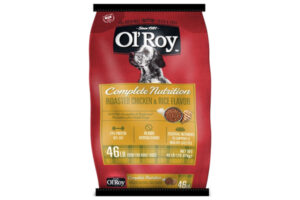
For comparison, Ol’ Roy—Walmart’s budget brand—typically delivers 18–22% protein and 9–12% fat, with higher carbohydrate filler content. The difference in ingredient density and quality is clear: 4health offers more meat-based protein and better nutrient profiles for only a modest price increase.
4health formulas are fortified with essential vitamins and minerals to meet AAFCO standards, including vitamin A, D3, E, B-complex vitamins, calcium, phosphorus, zinc, selenium, and more. The 4health Shreds line emphasizes immune-supporting antioxidants (zinc, selenium, vitamin E), joint-supporting glucosamine and chondroitin, and digestive probiotics, positioning it as a step up from basic maintenance formulas.
Omega-3 and omega-6 fatty acids—sourced from chicken fat, flaxseed, and fish oil—are included at levels that support skin and coat health, though the exact ratios aren’t always disclosed. Anecdotally, many owners report shinier coats and less shedding after switching to 4health, which suggests the fatty acid balance is effective in practice.
Most 4health formulas provide 350–380 kcal per cup, which is moderate and appropriate for average adult dogs. Performance lines like Victor Hi-Pro Plus push higher, around 400–415 kcal per cup, to fuel active or working dogs. This makes portion control fairly straightforward: you’re not dealing with ultra-dense food that requires tiny servings or low-calorie food that demands huge bowls.
All 4health formulas carry an AAFCO nutritional adequacy statement, meaning they’re formulated to meet established nutrient profiles for the relevant life stage (puppy, adult, or all life stages). However, there’s no public evidence that these formulas have undergone AAFCO feeding trials—the gold standard that involves feeding the food to live dogs over time to verify digestibility, palatability, and health outcomes.
This isn’t unusual for mid-tier brands, but it’s worth noting: formulation to meet nutrient profiles is a theoretical guarantee, while feeding trials provide real-world validation. Premium brands like Hill’s Science Diet and Purina Pro Plan invest heavily in feeding trials and publish results; 4health does not, which leaves some uncertainty about long-term performance and digestibility.
Adult dogs with no special health needs: If you have a healthy adult dog—whether small, medium, or large breed—4health’s standard formulas (Chicken & Rice, Beef & Rice, Lamb & Rice) offer solid, balanced nutrition at a reasonable price. The protein and fat levels support energy and muscle maintenance, and the added probiotics and omega fatty acids contribute to digestive and coat health.
Active and working dogs: For dogs that hunt, herd, or otherwise burn significant calories, Victor Hi-Pro Plus or 4health’s performance-oriented formulas deliver the higher protein and fat needed to sustain energy and muscle. The multi-meat sourcing in Victor formulas also provides a broader amino acid profile.
Dogs with mild sensitivities: The 4health Sensitive Stomach line (often featuring salmon and potato or limited ingredient formulas) can help dogs with occasional digestive upset or mild food sensitivities. The probiotics and easily digestible carbs (rice, sweet potato) reduce strain on the gut.
Large breed puppies and seniors: 4health offers life stage-specific formulas with appropriate calcium-to-phosphorus ratios for growing puppies (to support bone development without over-rapid growth) and lower-fat, joint-supporting formulas for seniors. These are practical, affordable options for owners who want to feed appropriately without breaking the bank.
Multi-dog households on a budget: If you’re feeding several dogs and cost per pound matters, Retriever and Paws & Claws offer bulk bags (50 lbs) at rock-bottom prices. The quality is lower than 4health, but it’s still a step up from the absolute cheapest grocery store brands.
Dogs with serious allergies or chronic health issues: While 4health has limited ingredient and sensitive formulas, they’re not prescription-grade veterinary diets. If your dog has diagnosed kidney disease, liver issues, severe food allergies, or chronic pancreatitis, you’re better off with a brand like Hill’s Prescription Diet or Royal Canin Veterinary that’s specifically formulated and clinically tested for therapeutic use.
Dogs prone to DCM or with breed-related heart concerns: If you’re feeding a grain-free 4health formula to a breed at higher risk for dilated cardiomyopathy (Golden Retrievers, Dobermans, Cocker Spaniels, etc.), consider rotating in grain-inclusive options or consulting your vet. The FDA investigation into legume-heavy diets and DCM is ongoing, and while no definitive link has been proven, caution is warranted.
Dogs with extremely picky palates: While most dogs accept 4health readily, some owners report that their dogs refuse the food or lose interest after a few weeks. If your dog is a notoriously difficult eater, you might have better luck with a brand that invests more in palatability testing or offers more novel proteins (like venison, duck, or bison).
Owners seeking maximum transparency and traceability: If knowing the exact farm your chicken came from or having access to third-party lab results is important to you, 4health won’t satisfy that need. Brands like The Farmer’s Dog, Ollie, or Orijen provide significantly more sourcing detail and quality assurance documentation. Not sure whether to choose Tractor Supply or a fresh-food brand? Read our other The Farmer’s Dog review to compare.
One of the most common refrains in customer reviews is simple: “My dog loves it.” Palatability is where 4health—and Tractor Supply’s curated national brands—tend to excel. The real meat first approach, combined with moderate fat content and added chicken fat for flavor, makes the food appealing to most dogs right out of the bag.
The 4health Shreds line, with its mix of crunchy kibble and soft, protein-packed shreds, seems particularly popular with picky eaters. The texture variety adds interest, and the shreds carry a stronger meat aroma that dogs find enticing. Owners report that even dogs who previously turned their noses up at standard kibble will eagerly finish bowls of Shreds.
That said, not every dog is a fan. Some reviews mention dogs refusing the food after a few weeks, or showing less enthusiasm compared to previous brands. This is fairly typical across the industry—individual dogs have individual preferences, and what works for one may not work for another. The key is that the majority of feedback is positive, with acceptance rates that rival or exceed more expensive brands.
Flavor variety is solid: 4health offers chicken, beef, lamb, salmon, and turkey across different lines, plus grain-free and limited ingredient variants. Victor adds multi-protein blends. If your dog gets bored easily, you can rotate flavors without switching brands entirely, which helps maintain interest and provides a broader range of amino acids and nutrients.
From a practical feeding perspective, the kibble size is appropriate for most dogs—medium-sized pieces that small and large breeds can handle. The Shreds are slightly softer and easier to chew, which can be helpful for older dogs or those with dental issues. The food doesn’t produce excessive dust in the bag, and it doesn’t leave a greasy residue on your hands, which are small but appreciated details.
Take the free nutrition check and find out in under 1 minute which food is best tailored to your dog!
In just 60 seconds, find out which food fits your dog best — for free.
Here’s where Tractor Supply shines: value. A 35-pound bag of 4health Shreds costs around $55, which works out to roughly $1.57 per pound. For comparison, a similar-sized bag of Blue Buffalo Life Protection (a mainstream premium brand) runs about $58 for 30 pounds, or $1.93 per pound. Purina Pro Plan, widely regarded as a vet-recommended gold standard, costs around $65 for 34 pounds, or $1.91 per pound.
If you step down to the budget end, Retriever (Tractor Supply’s bulk value brand) costs just $25 for 50 pounds, or $0.50 per pound. That’s cheaper than Ol’ Roy, Walmart’s budget leader, which runs around $0.60–$1.10 per pound depending on the formula. The catch? Retriever’s ingredient list is heavy on corn, soy, and by-products, so you’re sacrificing quality for cost.
For a 60-pound adult dog eating about 3 cups per day, daily feeding cost breaks down roughly as follows:
In other words, feeding 4health costs about $30 per month for a medium-to-large dog, compared to $35–$40 for premium national brands or $10–$15 for rock-bottom budget options. That’s a sweet spot: you’re getting real meat, functional nutrients, and solid quality without paying boutique prices.
At the $1.50–$2.00 per pound range, 4health and Victor deliver:
Compare that to Ol’ Roy at $0.60–$1.10 per pound, where you’re getting:
The difference in ingredient quality and nutritional value is stark. For an extra $20–$30 per month, you’re feeding your dog food that’s significantly more digestible, nutrient-dense, and less likely to cause health issues down the road.
If you’re comparing 4health to premium boutique brands like Orijen or Acana, which can run $3–$4 per pound, the value proposition is less clear. Those brands offer higher meat inclusion (often 70–80% animal ingredients), more exotic proteins, and extensive sourcing transparency. But for most dogs, the practical benefits of those ultra-premium formulas are marginal at best. A healthy adult dog eating 4health will likely show the same energy, coat quality, and stool consistency as one eating Orijen—you’re paying double or triple for incremental improvements that matter more on paper than in practice.
On the other hand, if you’re comparing 4health to budget grocery store brands, the value is undeniable. You’re getting measurably better ingredients, higher protein, and a safer product for a modest price increase. For owners who can’t afford $2+ per pound but want to do better than the absolute cheapest option, 4health is an excellent middle ground.
Tractor Supply does not manufacture its own dog food—it’s a retailer, not a producer. The 4health brand is made by Diamond Pet Foods, one of the largest pet food manufacturers in the United States, with facilities in Missouri, South Carolina, Arkansas, and California. Diamond produces food for dozens of brands, including Kirkland Signature (Costco’s house brand), Taste of the Wild, and Diamond Naturals itself.
This means that 4health’s quality control is dependent on Diamond’s practices, not Tractor Supply’s. Diamond operates under AAFCO regulations, FDA oversight, and industry-standard HACCP protocols, but the company has had recall history in the past—most notably a 2012 Salmonella outbreak that affected multiple brands, though 4health was not yet in production at that time. Since the launch of 4health in 2010, there has been only one minor recall in 2017, with no reported illnesses or injuries. That’s a strong safety record for a mid-tier brand over 15 years.
Ingredient sourcing is not fully transparent. Tractor Supply and Diamond do not publish detailed information about where meat, grains, and other ingredients come from, nor do they offer third-party lab testing results or supply chain audits. This is typical for the category, but it’s a limitation if you’re looking for the level of transparency offered by brands like The Farmer’s Dog or Nom Nom, which publicize supplier relationships and publish nutritional testing data.
Quality control measures are standard but not exceptional. Diamond’s facilities are inspected by the FDA and state regulators, and the company performs routine microbiological and nutritional testing. However, there’s no evidence of advanced traceability systems, blockchain-based supply chain tracking, or independent third-party certifications like SQF or BRC that some premium brands pursue.
For the average dog owner, this level of quality control is adequate and reliable. You’re getting food produced in regulated U.S. facilities with a solid safety record, but you’re not getting the cutting-edge transparency and testing protocols of ultra-premium brands.
Tractor Supply has made some public commitments to sustainability, but they’re focused primarily on store operations—energy efficiency, recycling programs, and reduced emissions in logistics—rather than dog food-specific initiatives. There’s no published data on the carbon footprint of 4health production, the sustainability of ingredient sourcing, or efforts to reduce packaging waste.
The packaging for 4health is standard plastic-lined paper bags, which are technically recyclable but often end up in landfills due to contamination with food residue. Tractor Supply has not announced any moves toward compostable or fully recyclable packaging, which is a missed opportunity given the growing consumer demand for sustainable pet products.
On the ethics front, Tractor Supply does not publish detailed animal welfare standards for its suppliers, nor does it claim certifications like Certified Humane or Global Animal Partnership. This is typical for mid-tier brands, but it’s a gap for owners who prioritize ethical sourcing.
In short, sustainability and ethics are not major selling points for Tractor Supply dog food. If these issues are important to you, you’ll need to look at brands like Open Farm, Orijen, or fresh-food companies that make sustainability and ethical sourcing central to their brand identity.
Take the free nutrition check and find out in under 1 minute which food is best tailored to your dog!
In just 60 seconds, find out which food fits your dog best — for free.
I work at a local dog shelter, where we’re constantly evaluating different foods to see what works best for dogs with varying backgrounds, health needs, and temperaments. When Tractor Supply’s 4health Shreds Chicken & Rice arrived for testing, I decided to try it with Hazel, a four-year-old Beagle mix who’d been with us for about six weeks.
Hazel came to the shelter as a stray, a bit underweight and with a dull, patchy coat that suggested she hadn’t been eating consistently—or eating well—before she arrived. She didn’t have any diagnosed health issues, but she was a picky eater, often leaving half her bowl untouched and showing little enthusiasm at mealtimes. We’d been feeding her a mid-range grocery store brand, and while she tolerated it, she never seemed excited about it.
I transitioned Hazel to 4health Shreds gradually over five days, mixing increasing amounts with her old food. The first thing I noticed was the texture and smell—the shredded pieces mixed with the kibble gave off a stronger, meatier aroma than the previous food, and Hazel sniffed her bowl with noticeably more interest. On day three, when the mix was about 50/50, she finished her entire bowl for the first time in weeks.
By the end of the transition, Hazel was eating the 4health Shreds with genuine enthusiasm. She’d trot over to her bowl as soon as I set it down, tail wagging, and she’d clean it completely within a few minutes. For a dog who’d been indifferent to food, this was a clear win. The shredded texture seemed to make a difference—she’d pick out the shreds first, then circle back to the kibble, which suggested she found the variety appealing.
Over the next three weeks, I noticed visible improvements. Hazel’s coat started to look shinier and fuller, with less of the dull, patchy appearance she’d had when she arrived. Her stools became firmer and more consistent—no more occasional loose bowel movements or digestive upset. She also seemed to have steadier energy throughout the day, more willing to engage during walks and playtime, though this could also have been her adjusting to shelter life in general.
What I didn’t see were dramatic changes in weight or behavior. Hazel gained a little weight, which was expected given she’d been underweight, but it was gradual and healthy. She didn’t suddenly become hyperactive or lethargic; she was just a more consistent, content version of herself.
From a practical standpoint, feeding 4health Shreds was easy. The kibble didn’t produce excessive dust, the shreds didn’t stick together or get greasy, and portion control was straightforward using the feeding guidelines on the bag. Cleanup was simple—firm stools meant less mess on walks, and the food didn’t leave a strong odor in the storage bin.
Hazel didn’t have any adverse reactions—no itching, ear infections, or digestive issues. For a dog with no specific health concerns, 4health Shreds delivered exactly what you’d hope for: good acceptance, visible health benefits, and no problems. It wasn’t a miracle transformation, but it was a solid, reliable feeding experience that made Hazel happier and healthier during her time at the shelter.
Customer reviews for Tractor Supply dog food—particularly 4health—are overwhelmingly positive, with an average rating of around 4.5 out of 5 stars across platforms like TractorSupply.com, Chewy, and Amazon. The most common praise centers on palatability, coat quality, digestive health, and value.
“My dog loves it” appears in 63–75% of positive reviews, making it the single most common comment. Owners of picky eaters frequently mention that their dogs, who previously refused other brands, eagerly finish bowls of 4health. One reviewer wrote: “After switching to 4health, my picky rescue finally eats and her coat is glossy for the first time.”
Coat and skin improvements are noted by 23–32% of reviewers, with comments like “shiny coat,” “softer fur,” and “less shedding.” Most owners report visible changes within 3–5 weeks of switching.
Digestive health is another strong theme. About 16–21% of reviews mention “firm, healthy stools,” and up to 35% of reviews for sensitive diet formulas praise reduced gas, less bloating, and improved stool consistency. One long-term user shared: “Six years on 4health—dogs have never had digestive or allergy problems.”
Value perception is huge: 35–47% of positive reviews mention “good value for money,” with many owners comparing 4health favorably to brands costing 50–100% more. A common sentiment: “We saved hundreds per year switching from a prescription food with no decline—our Lab’s energy and digestion are better than ever.”
Palatability issues affect a minority of dogs. About 7–14% of reviews mention that their dog “won’t eat it” or lost interest after a few weeks. This is more common after formula changes, which some owners cite as a reason for switching brands. One frustrated reviewer wrote: “My dog loved 4health for years, but after the latest formula change, he won’t touch it and developed digestive upset.”
Digestive problems—diarrhea, loose stools, vomiting—are reported by 8–12% of reviewers, often during the transition period or with lower-cost formulas like Retriever. Some owners blame the food, while others acknowledge that their dogs have sensitive stomachs regardless of the brand.
Quality concerns are rare but notable. About 1–3% of reviews mention “strange odor,” “mold in the bag,” or “bugs.” These appear to be isolated batch issues rather than systemic problems, and Tractor Supply typically resolves them quickly with refunds or replacements.
Price complaints are also infrequent (7–10%), usually tied to recent price increases or comparisons to budget brands. One reviewer noted: “Price kept going up but quality didn’t improve—switched to a farm store brand.”
Review sentiment has remained consistently positive over the past few years, with a slight dip following formula changes or batch quality issues. The launch of 4health Shreds in January 2025 has been well-received, with early reviews praising the texture and palatability. Long-term users tend to be the most satisfied, often feeding 4health for 5+ years with no issues.
Tractor Supply’s dog food lineup—anchored by 4health and supplemented by national brands like Victor, Diamond Naturals, and Purina Pro Plan—occupies a competitive middle ground between budget grocery brands and ultra-premium boutique options. Here’s how it stacks up.
Ol’ Roy is Walmart’s budget brand and the best-selling dog food in the U.S. by volume, but it’s widely criticized for low ingredient quality. Corn, wheat, and soy dominate the ingredient list, protein levels hover around 18–22%, and the brand has a history of recalls related to contamination and aflatoxin.
4health, by contrast, lists real meat first, delivers 24–27% protein, and has a clean safety record (one minor recall in 2017). DogFoodAdvisor rates Ol’ Roy 1.5–2 stars out of 5, while 4health earns 3.5–4 stars. Price-wise, Ol’ Roy runs $0.60–$1.10 per pound, while 4health costs $1.20–$2.00 per pound—a modest increase for a significant quality upgrade. For owners who can afford the difference, 4health is the clear winner. If budget is extremely tight, Ol’ Roy may be the only option, but it’s not a choice I’d recommend if you have any flexibility.
Purina Pro Plan is a vet-recommended, science-backed brand with extensive feeding trials, published research, and a reputation for quality and consistency. It’s priced similarly to 4health ($1.91 per pound vs. $1.57 per pound), but it offers more clinical validation and transparency. If your dog has specific health needs or you value the peace of mind that comes with published research, Purina Pro Plan is worth the small premium. For healthy adult dogs with no special concerns, 4health delivers comparable nutrition at a lower cost.
Blue Buffalo is a mainstream premium brand known for limited ingredient formulas and LifeSource Bits (antioxidant-rich kibble pieces). It’s priced at $1.93 per pound, slightly higher than 4health, and offers more flavor variety and specialty formulas. The ingredient quality is roughly comparable, though Blue Buffalo markets itself more aggressively as a natural, wholesome option. For most dogs, the practical difference is minimal—4health offers better value, while Blue Buffalo offers more variety and brand recognition.
Fresh-food brands deliver human-grade, minimally processed meals with full ingredient transparency, personalized portion plans, and visible health benefits. They’re significantly more expensive—$3–$8 per pound or more—and require freezer space and meal planning. If you can afford it and value ingredient traceability, fresh food is a meaningful upgrade. But for most dog owners, the cost difference (3–5x more than 4health) is hard to justify unless your dog has serious health issues or extreme pickiness.
Take the free nutrition check and find out in under 1 minute which food is best tailored to your dog!
In just 60 seconds, find out which food fits your dog best — for free.
Tractor Supply dog food, particularly the 4health line, is best suited for healthy adult dogs of all sizes who don’t have serious medical conditions or extreme dietary sensitivities. The balanced protein and fat levels, added probiotics, and moderate caloric density make it a solid all-around choice for everyday nutrition.
Active and working dogs will do well on the higher-protein formulas like Victor Hi-Pro Plus, which delivers 30% protein and 20% fat to fuel sustained energy and muscle maintenance. If your dog hunts, herds, competes in agility, or otherwise burns significant calories, these performance formulas are designed for exactly that.
Large breed puppies can benefit from the life stage-specific formulas with controlled calcium and phosphorus to support healthy bone growth without over-rapid development. Senior dogs will appreciate the lower-fat, joint-supporting formulas with added glucosamine and chondroitin.
Dogs with mild sensitivities or occasional digestive upset often respond well to the 4health Sensitive Stomach line, which features easily digestible proteins like salmon and carbohydrate sources like sweet potato or rice, plus probiotics to support gut health.
That said, this food is not ideal for dogs with diagnosed medical conditions like kidney disease, liver issues, chronic pancreatitis, or severe food allergies. For those cases, you need prescription veterinary diets that are clinically formulated and tested for therapeutic use. It’s also not the best choice if you’re looking for maximum ingredient transparency, extensive sourcing details, or cutting-edge nutritional research—brands like The Farmer’s Dog, Orijen, or Hill’s Science Diet offer more in those areas, though at a higher price point.
Here’s my honest take: Yes, Tractor Supply dog food—especially 4health—is good, but with some important caveats.
If you’re looking for a reliable, well-balanced, affordable option for a healthy adult dog, 4health delivers. The ingredients are solid—real meat first, digestible carbs, added functional nutrients—and the price is competitive. The safety record is clean, customer reviews are largely positive, and most dogs accept the food readily and show visible health benefits. For the price, it’s hard to find a better combination of quality and value.
Would I feed it to my own dog? Absolutely, if I had a healthy adult dog with no special needs and I wanted to keep costs reasonable without sacrificing quality. I’d probably rotate between 4health and a national brand like Diamond Naturals or Purina Pro Plan to provide variety and a broader nutrient profile, but 4health would be a core part of the rotation.
Would I recommend it to a friend? Yes, with qualifications. If my friend’s dog had serious health issues, I’d steer them toward a prescription diet or a fresh-food brand with more clinical backing. If they valued ingredient transparency and sustainability, I’d suggest looking at premium brands like Orijen or fresh options like The Farmer’s Dog. But for most dog owners—people who want to feed their dogs well without spending $100+ per month—4health is an excellent choice.
The main limitations are transparency and clinical validation. You don’t get detailed sourcing information, third-party lab results, or published feeding trials. You’re trusting that Diamond Pet Foods, the manufacturer, is producing consistent, safe food, and the track record suggests they are—but you don’t have the same level of documentation and oversight that premium brands provide.
There’s also the reality that not every dog will thrive on every food. Some dogs won’t like the taste, some will have digestive issues, and some will develop sensitivities over time. That’s true of any brand, not just Tractor Supply. The key is to monitor your dog’s response—energy, coat, stools, enthusiasm at mealtimes—and be willing to adjust if needed.
In the end, 4health is a smart, practical choice for the vast majority of dog owners. It’s not the fanciest option, it’s not the most transparent, and it’s not backed by the most research. But it’s well-made, affordable, and effective, and for most dogs, that’s exactly what matters. If you’re shopping at Tractor Supply and you see a bag of 4health on the shelf, you can buy it with confidence—you’re getting a good product at a fair price, and your dog will likely do just fine on it.
Take the free nutrition check and find out in under 1 minute which food is best tailored to your dog!
In just 60 seconds, find out which food fits your dog best — for free.
Yes, 4health dog food is manufactured in the United States by Diamond Pet Foods at facilities in Missouri, South Carolina, Arkansas, and California. However, Tractor Supply doesn’t disclose the specific origin of individual ingredients—whether meat is U.S.-raised or grains are domestic or imported—which is fairly typical for mid-tier brands but falls short of the transparency offered by premium brands.
The difference is significant. 4health lists real meat as the first ingredient and delivers 24-27% protein, while Ol’ Roy typically leads with corn or wheat and provides only 18-22% protein. 4health has had just one minor recall in 2017 with no injuries, while Ol’ Roy has a history of contamination and aflatoxin issues. You’re paying about $0.50-$1.00 more per pound for 4health, but getting measurably better ingredient quality and nutritional value.
Yes, 4health offers life stage-specific formulas designed for different needs. Their large breed puppy formulas have controlled calcium-to-phosphorus ratios to support healthy bone growth without over-rapid development. Senior formulas feature lower fat content and added joint-supporting ingredients like glucosamine and chondroitin. These are practical, affordable options for owners who want age-appropriate nutrition without premium pricing.
It’s worth being cautious, especially if you have a breed predisposed to heart issues like Golden Retrievers, Dobermans, or Cocker Spaniels. The FDA is investigating potential links between legume-heavy diets and dilated cardiomyopathy (DCM). While no definitive connection has been proven, consider rotating grain-free formulas with grain-inclusive options or consulting your vet if you’re feeding a high-risk breed.
Both are solid mid-tier brands, but they serve different purposes. 4health is Tractor Supply’s house brand focused on value-driven nutrition for everyday pet owners. Victor is a Texas-based brand that specializes in high-protein formulas (often 30% or higher) designed for active and working dogs. Victor typically costs slightly more but offers higher protein and fat content for dogs that need extra energy.
For a 60-pound adult dog, 4health Shreds costs about $0.96 per day or roughly $30 per month. Compare that to Purina Pro Plan at $1.15/day ($35/month) or Blue Buffalo at $1.20/day ($36/month). You’re saving $60-$72 per year compared to premium national brands while still getting real meat, functional nutrients, and solid quality.
Yes, you can order 4health and other Tractor Supply dog food brands through their website for home delivery or store pickup. They also sell through third-party retailers like Chewy and Amazon, though selection may be more limited. The advantage of ordering directly from Tractor Supply is access to their full range of formulas and bulk sizing options.
While most dogs accept 4health readily, some are pickier eaters. Try transitioning more gradually over 7-10 days instead of the standard 5 days. The 4health Shreds line with its mixed textures tends to be more appealing to picky eaters. If your dog still refuses it after a proper transition, Tractor Supply typically offers satisfaction guarantees—keep your receipt and ask about their return policy.
4health offers a Sensitive Stomach line with easily digestible proteins like salmon and carbohydrate sources like rice or sweet potato, plus added probiotics. This can help dogs with mild sensitivities or occasional digestive upset. However, if your dog has diagnosed severe food allergies or chronic health issues, you’ll need prescription veterinary diets that are clinically formulated for therapeutic use.
4health launched in 2010 and recently celebrated its 15th anniversary. The brand has maintained a solid safety record with only one minor recall in 2017 and no reported injuries or illnesses. This is impressive for a mid-tier brand over 15 years of production, especially compared to budget brands that have had multiple contamination issues during the same period.
Take the free nutrition check and find out in under 1 minute which food is best tailored to your dog!
In just 60 seconds, find out which food fits your dog best — for free.
9 out of 10 dog owners are feeding their dog the wrong food.
Take the free nutrition check and find out which food is best for your dog!
2,847+ dog owners already did