9 out of 10 dog owners are feeding their dog the wrong food

Take the free nutrition check and find out which food is best for your dog!

Shelter manager, certified canine nutritionist, and lifelong dog lover
• Taste of the Wild delivers solid mid-range value at $2.00-$2.30 per pound, offering real meat proteins and probiotics without the premium price tag of ultra-high-end brands.
• Strong palatability across novel protein sources like bison, venison, and salmon, with 72-80% of reviews praising dogs’ enthusiasm for the food and consistent bowl-cleaning.
• The PREY limited-ingredient line excels for sensitive dogs, using only four key ingredients and single protein sources to minimize digestive triggers while meeting nutritional standards.
• Quality control concerns persist despite improvements, including a 2012 Salmonella recall and recent batch inconsistency complaints, though the overall safety record remains acceptable.
• Best suited for healthy, active adult dogs but lacks specialized support for seniors (no glucosamine) and may not be ideal for breeds predisposed to DCM due to grain-free formulations.
Take the free nutrition check and find out in under 1 minute which food is best tailored to your dog!
Taste of the Wild positions itself as a bridge between everyday kibble and ultra-premium brands, offering grain-free and grain-inclusive recipes inspired by what wild canines might eat. It’s widely available, competitively priced, and packed with novel proteins like bison, venison, and salmon. But recent formula changes, past recalls, and the ongoing grain-free debate have left many owners wondering if this brand still deserves their trust.
In this review, I’m covering everything from ingredient quality and nutritional adequacy to real-world feeding experiences and how Taste of the Wild stacks up against the competition. If you’re considering this food for your dog—or questioning whether to stick with it—you’ll have a clear answer by the end.
Taste of the Wild launched in 2007 under Diamond Pet Foods, a family-owned company that’s been in the pet food business since 1970. The brand was created to meet growing demand for high-protein, grain-free diets inspired by ancestral canine nutrition—essentially, what wolves and wild dogs might eat in nature. The founding philosophy centers on real meat as the first ingredient, no artificial additives, and affordable premium nutrition.
Diamond Pet Foods remains privately held by the Schell and Kampeter families, which the company emphasizes as a sign of long-term commitment and consistency. All Taste of the Wild formulas are manufactured in six company-owned facilities across the United States, primarily in Missouri, South Carolina, Arkansas, Kansas, and California. This level of control over production is meant to ensure quality and traceability, though it hasn’t prevented issues in the past.
The brand’s official mission is straightforward: “Packed with nutrition inspired by nature—with the flavors they crave and at a price you can afford.” That value proposition is key. Taste of the Wild isn’t trying to be the most expensive or the most exotic option on the shelf. Instead, it aims to deliver premium ingredients and nutrition at a mid-range price, making it accessible to owners who want better than grocery-store brands but can’t justify ultra-premium costs.
In practice, this means you’ll find novel proteins (bison, venison, wild boar, salmon), grain-free and ancient grain options, added probiotics, and antioxidant-rich fruits and vegetables. The branding leans heavily into the “wild” aesthetic—think rugged packaging with wolves and mountain landscapes—but the formulas themselves are designed for modern domestic dogs, not actual wild canines.
Taste of the Wild has built a strong reputation in the natural pet food segment, consistently ranking among the top-selling brands in specialty pet stores and online retailers. Customer ratings average around 4.5 to 4.7 out of 5 across major platforms, with particular praise for palatability, ingredient quality, and value.
That said, the brand’s history isn’t spotless. There was a significant Salmonella recall in 2012 affecting multiple Diamond Pet Foods brands, including Taste of the Wild, and a smaller vitamin D recall in 2019. Since then, the company has tightened quality controls, earning certifications from NSF International and meeting GFSI standards. But some customers remain wary, especially given occasional complaints about batch inconsistencies and formula changes that weren’t clearly communicated.
The brand has also been named in FDA investigations into potential links between grain-free diets and dilated cardiomyopathy (DCM) in dogs. While no direct causation has been proven, and Taste of the Wild has responded by expanding its grain-inclusive Ancient Grains line, this controversy has affected perception among some veterinarians and owners.
| Price per pound | $2.00 – $3.20 |
| Primary protein | Bison, Venison, Salmon, Lamb, Wild Boar, Duck, Beef, Turkey, Trout |
| By-products | None |
| AAFCO compliance | Yes + feeding trials (PREY line) |
| Formula options | 3 product lines (20+ recipes) |
| Availability | Widely available (pet stores + online) |
| Monthly cost (medium dog) | $18 – $24 |
Take the free nutrition check and find out in under 1 minute which food is best tailored to your dog!
In just 60 seconds, find out which food fits your dog best — for free.
If you’re serious about understanding what you’re feeding your dog, the ingredient list is where the truth lives. Taste of the Wild markets itself on real meat, novel proteins, and no junk, but let’s break down what that actually means in practice.
Across the brand’s main lines—Grain-Free, Ancient Grains, and PREY—the first ingredient is consistently a named animal protein. You’ll see things like buffalo, venison, bison, lamb, salmon, duck, wild boar, or beef listed right at the top. This is a good sign, as it indicates the formula prioritizes animal-based protein over plant fillers.
However, it’s important to note that many recipes also include meat meals (like lamb meal, chicken meal, or fish meal) as secondary protein sources. Meat meals are concentrated forms of protein with moisture removed, so they’re actually more protein-dense than fresh meat. The quality of these meals depends on sourcing and processing, and Taste of the Wild states they use named meals (not generic “meat meal”) from trusted suppliers, though full traceability isn’t publicly available.
In the PREY limited-ingredient line, simplicity is the focus. These recipes feature a single animal protein—Angus beef, turkey, or trout—with no rendered meals or by-products. This makes PREY a strong choice for dogs with sensitivities or suspected food allergies, as it minimizes potential triggers.
Grain-free formulas rely heavily on peas, sweet potatoes, and lentils as carbohydrate sources. These ingredients provide energy and fiber, but they’ve also been implicated in the FDA’s DCM investigation due to their high legume content. While no definitive link has been proven, some veterinarians now recommend rotating between grain-free and grain-inclusive diets or choosing brands with lower legume levels.
The Ancient Grains line swaps out some of those legumes for grains like sorghum, millet, quinoa, and chia seeds. These so-called “ancient grains” are less processed than corn or wheat and offer steady energy, digestive benefits, and a lower glycemic response. For dogs with no grain sensitivities, this is often the safer bet from a long-term health perspective.
Fiber comes from ingredients like dried chicory root (a prebiotic that supports gut health), tomato pomace (in PREY), and various vegetables. These additions help with digestion and stool quality, which many owners report as noticeably firmer and smaller after switching to Taste of the Wild.
Fat content typically ranges from 15% to 18%, which is moderate and appropriate for most adult dogs. Sources include chicken fat (a stable, high-quality option), fish oil, and flaxseed. The omega-6 to omega-3 ratio is roughly 2.4% to 0.3%, which supports skin health, coat shine, and anti-inflammatory benefits.
Some recipes—especially those with salmon—naturally provide higher omega-3 levels, making them a good choice for dogs prone to skin issues or joint inflammation. However, Taste of the Wild doesn’t add glucosamine or chondroitin for joint support, so senior dogs or large breeds with joint concerns may need supplementation.
The brand avoids artificial colors, flavors, and preservatives, relying instead on mixed tocopherols (vitamin E) for shelf stability. This is a natural preservative that’s widely regarded as safe and effective.
Every formula includes proprietary probiotics (K9 Strain) to support digestive health, which is a standout feature at this price point. You’ll also find chelated minerals (more bioavailable than standard forms), vitamins A, D, and E, and antioxidant-rich ingredients like blueberries, raspberries, and dried kelp.
One area of concern: like most pet food brands, Taste of the Wild sources some vitamins and minerals—such as folic acid and taurine—from overseas, including China. This is standard industry practice due to limited domestic suppliers, but it’s worth noting for owners who prioritize 100% U.S.-sourced ingredients.
While Taste of the Wild avoids by-products and generic meals, some ingredients raise questions. Pea protein and potato protein are plant-based proteins that boost the overall protein percentage but don’t provide the complete amino acid profile of animal protein. They’re not harmful, but they can be misleading if you assume all listed protein comes from meat.
The brand also uses canola oil in some recipes, which is a divisive ingredient. While it provides omega-3s, it’s heavily processed and considered lower-quality compared to fish oil or flaxseed by some nutritionists.
Finally, the high legume content in grain-free formulas remains a point of debate. If you’re concerned about DCM risk, the Ancient Grains or PREY lines offer lower-legume alternatives without sacrificing quality.
Understanding the numbers behind the ingredient list is where you separate marketing from real nutrition. Taste of the Wild formulas are designed to meet or exceed AAFCO standards for complete and balanced nutrition, but how do they actually stack up?
Protein content across Taste of the Wild recipes ranges from 25% to 32% on a dry matter basis, depending on the line and flavor. High Prairie (bison and venison) and Ancient Prairie sit at the higher end, while lamb-based formulas like Sierra Mountain trend slightly lower. This is competitive for the premium segment, though it falls short of ultra-high-protein brands like Orijen or Acana, which often exceed 38%.
Fat levels are moderate, typically 15% to 18%, which provides enough energy for active dogs without being overly rich. This makes Taste of the Wild a good middle-ground option—active enough for working or athletic dogs, but not so calorie-dense that it risks weight gain in less active pets.
Carbohydrates aren’t listed on pet food labels, but based on guaranteed analysis and typical ingredient ratios, they likely make up 40% to 45% of the formula. That’s higher than some owners expect from a “high-protein” brand, but it’s not unusual for kibble. The Ancient Grains line, with its inclusion of sorghum and millet, provides more complex carbs and steadier energy release compared to the legume-heavy grain-free options.
Most Taste of the Wild dry formulas deliver around 3,600 to 3,700 kcal per kilogram, which is fairly standard for premium kibble. This means a 30-pound dog with moderate activity needs roughly 1,000 calories per day, or about 270 grams of food. At an average cost of $2.00 to $2.50 per pound, that works out to around $0.60 to $0.80 per day—reasonable for the quality you’re getting.
For comparison, ultra-premium brands like Acana or Orijen can run $1.00 to $1.50 per day for the same dog, while budget options like Purina Pro Plan might cost $0.40 to $0.50. Taste of the Wild sits comfortably in the middle, offering better ingredients than grocery brands without the premium price tag.
The brand uses chelated minerals (zinc, iron, copper, manganese) in most formulas, which are more easily absorbed than standard mineral forms. This is a nice touch at this price point and supports everything from immune function to coat quality.
Vitamins A, D, and E are included at appropriate levels, along with B-complex vitamins for energy metabolism. The addition of dried chicory root provides inulin, a prebiotic fiber that supports gut health and pairs well with the added probiotics.
One gap: Taste of the Wild doesn’t add glucosamine or chondroitin for joint support, which is common in senior or large-breed formulas from competitors. If your dog is older or prone to joint issues, you’ll need to supplement separately.
Yes. All Taste of the Wild formulas meet AAFCO nutrient profiles for the life stages indicated on the label, whether that’s “All Life Stages,” “Adult Maintenance,” or “Growth and Reproduction” (puppy formulas). The PREY line has also undergone AAFCO feeding trials, which provides an extra layer of validation beyond formulation alone.
That said, AAFCO standards are minimum requirements, not aspirational goals. Meeting them means the food won’t cause deficiencies, but it doesn’t necessarily mean it’s optimal. For most healthy dogs, Taste of the Wild delivers solid, balanced nutrition. For dogs with complex medical needs—kidney disease, diabetes, severe allergies—you’ll want a prescription diet formulated with veterinary oversight.
Take the free nutrition check and find out in under 1 minute which food is best tailored to your dog!
In just 60 seconds, find out which food fits your dog best — for free.
Not every dog food works for every dog, and Taste of the Wild is no exception. Here’s a practical breakdown of where this brand shines and where it falls short.
Active adult dogs: The protein and fat levels are well-suited for dogs with moderate to high energy needs. If your dog hikes, runs, or plays hard, formulas like High Prairie or Ancient Prairie provide the fuel they need without being overly rich.
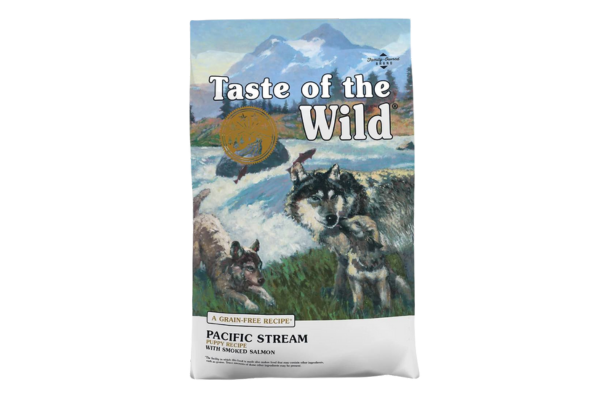
Dogs with chicken or poultry sensitivities: Many recipes—especially Pacific Stream (salmon), Sierra Mountain (lamb), and the PREY line—avoid poultry entirely, making them solid options for dogs with suspected chicken allergies or intolerances.
Owners seeking affordable premium nutrition: If you want better ingredients than grocery-store brands but can’t justify $80+ for a 25-pound bag, Taste of the Wild hits a sweet spot. You’re getting real meat, probiotics, and antioxidants without breaking the bank.
Multi-dog households: The variety of flavors and formulas makes it easy to rotate proteins or feed different dogs different recipes while sticking with one brand. This simplifies shopping and reduces the risk of digestive upset from frequent brand switches.
Dogs with sensitive stomachs: The PREY limited-ingredient line is particularly well-suited for dogs prone to digestive issues or suspected food sensitivities. With only four key ingredients and a single protein source, it minimizes potential triggers while still meeting nutritional needs.
Senior dogs needing joint support: Taste of the Wild doesn’t include glucosamine or chondroitin in its formulas, so older dogs with arthritis or mobility issues will need supplementation. Brands like Hill’s Science Diet or Purina Pro Plan offer senior-specific formulas with built-in joint support.
Dogs with diagnosed DCM or heart conditions: Given the brand’s inclusion in FDA investigations into grain-free diets and DCM, many veterinarians now advise against grain-free formulas for dogs with heart concerns or breeds predisposed to DCM (like Golden Retrievers, Dobermans, or Cocker Spaniels). The Ancient Grains line is a safer bet if you want to stick with Taste of the Wild.
Small breeds with low energy needs: While there are small-breed formulas (like Appalachian Valley), the caloric density and protein levels may be too high for less active toy breeds, leading to unwanted weight gain. You’ll need to measure portions carefully.
Dogs requiring prescription diets: Taste of the Wild doesn’t offer veterinary-exclusive or prescription formulas for conditions like kidney disease, diabetes, or severe food allergies. If your dog has a diagnosed medical condition, consult your vet before switching foods.
Owners prioritizing 100% U.S. sourcing: While manufacturing happens in the U.S., some ingredients—particularly vitamins and minerals—are sourced internationally, including from China. If full domestic sourcing is a dealbreaker, brands like American Journey or Fromm may be better fits.
Even the most nutritionally perfect dog food is useless if your dog won’t eat it. So how do dogs actually respond to Taste of the Wild?
Across thousands of reviews, palatability is one of the brand’s strongest selling points. Roughly 72% to 80% of positive reviews mention that dogs “love” the food or eat it enthusiastically. The novel proteins—bison, venison, salmon, wild boar—seem to be particularly appealing, even to picky eaters who’ve turned their noses up at chicken-based kibbles.
High Prairie (bison and venison) and Pacific Stream (salmon) are the most frequently praised flavors, with owners reporting that even notoriously finicky dogs clean their bowls. Imagine your dog has always picked at their food, leaving half the bowl untouched and forcing you to add toppers or wet food just to get them to eat. That’s frustrating, and it’s expensive. Many owners switching to Taste of the Wild report that mealtime becomes easy again—dogs eat their full portion without hesitation, and the added stress disappears.
That said, not every dog is a fan. About 7% of negative reviews mention refusal to eat, and some owners report that their dog “loved it then refused,” which often correlates with formula changes or batch variations. Ancient Mountain (lamb and ancient grains) and some PREY formulas seem to have slightly lower acceptance rates, possibly due to the simpler ingredient profile or the absence of chicken fat, which many dogs find irresistible.
The kibble itself is fairly standard—small to medium-sized pieces that work for most breeds, though large dogs may eat it too quickly without much chewing. The texture is crunchy and holds up well in bowls, even in humid climates. Some owners mention a slightly oily coating, which is the chicken fat or fish oil used for flavor and nutrition. This isn’t a bad thing—it’s actually a sign of quality fats—but it can leave a residue on your hands or in the bowl.
The canned wet food formulas are well-received for their chunky, stew-like texture. They’re not pâté-style, which some dogs prefer, and they mix well with kibble for dogs transitioning or needing extra moisture in their diet.
From a practical standpoint, Taste of the Wild is easy to feed. The kibble doesn’t crumble excessively, the bags are resealable (though not always airtight, so a storage container is a good idea), and the feeding guidelines on the packaging are clear and easy to follow.
One thing many owners appreciate is the smaller, firmer stools their dogs produce on this food. Higher digestibility means less waste, which makes cleanup easier and indicates that your dog is actually absorbing the nutrients rather than just passing them through. If you’ve ever dealt with large, soft, frequent stools from a low-quality food, this change is noticeable and welcome.
Transitioning to Taste of the Wild is generally smooth if you follow the standard 7-to-10-day gradual switch. Some dogs with sensitive stomachs may experience brief digestive upset during the transition, but this is normal and typically resolves as their system adapts to the new protein sources and ingredient profile.
Value is subjective—what’s worth it for one owner might be overpriced for another. But when you break down the numbers, Taste of the Wild offers a solid middle-ground option that balances quality with affordability.
A 28-pound bag of High Prairie or Ancient Prairie typically costs between $58 and $65, depending on the retailer and any active promotions. That works out to roughly $2.00 to $2.30 per pound. For a 30-pound dog eating about 1,000 calories per day, you’re looking at around $0.60 to $0.80 per day, or $18 to $24 per month.
Compare that to ultra-premium brands like Acana or Orijen, which run $2.80 to $4.00 per pound, and you’re saving 30% to 50% while still getting real meat, probiotics, and no artificial additives. On the flip side, grocery-store brands like Purina One or Pedigree might cost $1.00 to $1.50 per pound, but the ingredient quality and digestibility don’t come close.
The PREY limited-ingredient line is more expensive—around $2.70 to $3.20 per pound—but that’s expected given the simpler, higher-quality ingredient profile. If your dog has allergies or sensitivities, the extra cost is often justified by fewer vet visits and less trial-and-error with elimination diets.
Online retailers like Chewy and Amazon frequently offer subscribe-and-save discounts of 5% to 10%, which can bring the per-pound cost down significantly. Chewy also has excellent customer service and fast shipping, making it a convenient option for most owners.
Big-box pet stores like Petco and PetSmart carry Taste of the Wild, but prices tend to be slightly higher, and promotions are less frequent. If you’re buying in-store, watch for occasional sales or loyalty program discounts.
Smaller, independent pet stores sometimes carry Taste of the Wild at competitive prices, and staff can often provide personalized recommendations if you’re unsure which formula to try.
For most dogs, yes. You’re getting real animal protein, probiotics, antioxidants, and no junk at a price that won’t wreck your budget. The ingredient quality is better than grocery brands, and the nutritional profile is solid for healthy adult dogs.
Where Taste of the Wild falls short is in specialized nutrition. If your dog needs joint support, prescription diets, or ultra-high protein for intense athletic performance, you’ll either need to supplement or choose a different brand. But for the average active, healthy dog, this is a strong value play.
Honestly, I’d recommend this for a friend with a healthy adult dog who wants better than grocery-store kibble but doesn’t want to spend $100 on a single bag. It’s not the absolute best food on the market, but it’s a smart, practical choice that delivers real benefits without the premium price tag.
Take the free nutrition check and find out in under 1 minute which food is best tailored to your dog!
In just 60 seconds, find out which food fits your dog best — for free.
Where and how your dog’s food is made matters. Taste of the Wild manufactures all its formulas in six company-owned facilities across the United States, primarily in Missouri, South Carolina, Arkansas, Kansas, and California. This level of vertical integration—owning the factories rather than outsourcing production—gives Diamond Pet Foods more control over quality and consistency.
All production facilities are audited by NSF International for Good Manufacturing Practices (GMP) and meet GFSI standards (Global Food Safety Initiative), which align with ISO 22000 for food safety management. These certifications aren’t just paperwork—they require regular third-party inspections, batch testing, and documented safety protocols.
Ingredients are tested upon arrival, and finished products undergo additional testing before leaving the facility. The brand uses a “secure closed system” to minimize cross-contamination risks, which is particularly important for limited-ingredient diets like PREY that are designed for dogs with sensitivities.
Taste of the Wild prioritizes U.S. sourcing where possible, but like most pet food brands, some ingredients come from overseas. Lamb and venison are sourced from New Zealand, buffalo from India, and salmon from Norway and South America. These regions are known for high-quality protein production, so this isn’t necessarily a red flag.
However, some vitamins and minerals—including folic acid and taurine—are sourced from China, as they are for most pet food brands. This is due to limited domestic suppliers for these additives, and while it’s a common industry practice, it’s worth noting for owners who prioritize 100% U.S. sourcing.
One area where Taste of the Wild could improve is traceability. The brand doesn’t offer QR codes or lot tracking for consumers to trace specific ingredients back to their source. You can contact customer service with batch codes, but this isn’t as transparent as some competitors.
Taste of the Wild’s recall history is relatively limited, but not spotless. The most significant event was a 2012 Salmonella recall that affected multiple Diamond Pet Foods brands, including Taste of the Wild. This was a large-scale recall that damaged consumer trust, but the company responded by tightening quality controls and earning additional certifications.
In 2019, there was a smaller recall due to excess vitamin D, which affected a limited number of batches. Since then, there have been no major recalls, though occasional customer complaints about batch inconsistencies—strange odors, mold, or digestive upset—suggest that quality control isn’t perfect.
Compared to brands with frequent or ongoing recall issues, Taste of the Wild’s safety record is acceptable, but it’s not as clean as brands like Orijen or Acana, which have minimal recall histories.
Sustainability and corporate responsibility are increasingly important to dog owners, but Taste of the Wild’s transparency in this area is limited. The brand doesn’t publish annual sustainability reports, carbon-neutral pledges, or detailed environmental impact data, which is disappointing for a company of this size.
Taste of the Wild uses plastic-laminated bags for dry food, which are not currently recyclable through curbside programs. Some specialty recycling centers accept them, but most end up in landfills. The canned wet food uses steel cans, which are recyclable, but the brand doesn’t provide clear guidance on disposal or recycling best practices.
There’s no mention of efforts to reduce packaging waste, use recycled materials, or transition to more sustainable packaging options. This is an area where competitors like The Farmer’s Dog are doing better, with insulated, recyclable packaging and transparent sustainability goals.
The brand emphasizes “careful source vetting” and long-term supplier relationships, but there are no third-party certifications for animal welfare, humane sourcing, or sustainable fishing practices. You won’t find labels like Certified Humane, Marine Stewardship Council, or similar third-party validations on Taste of the Wild packaging.
The company states that it doesn’t conduct invasive animal testing and relies on feeding trials and digestibility studies as required by AAFCO and veterinary standards. This is standard practice in the industry and doesn’t raise red flags, but it also doesn’t set Taste of the Wild apart from competitors.
Diamond Pet Foods is a private, family-owned company, which often correlates with long-term thinking and community focus. However, the brand doesn’t publish detailed information about charitable giving, community programs, or social responsibility initiatives. Some competitors actively support animal shelters, rescue organizations, or environmental causes, and Taste of the Wild’s silence in this area is noticeable.
If sustainability and corporate ethics are top priorities for you, brands like Acana, Orijen, or The Farmer’s Dog offer more transparency and measurable commitments. Taste of the Wild isn’t doing anything egregiously wrong, but it’s not leading the pack either.
I work at a local dog shelter, and part of my role involves testing different foods to see how they perform in real-world conditions with a variety of dogs. For this review, I chose to test Taste of the Wild High Prairie with a dog named Maple, a four-year-old mixed-breed (we think she’s part Lab, part Shepherd) who came to us after her previous owner could no longer care for her.
Maple is a sweet, energetic dog with no major health issues, but she’s always been a bit picky about her food. She’d eat eventually, but she’d often sniff her bowl, walk away, and come back later—sometimes leaving half the portion untouched. Her coat was decent but a bit dull, and her stools were on the softer side, which isn’t uncommon for shelter dogs dealing with stress and frequent diet changes.
We transitioned Maple gradually over seven days, mixing Taste of the Wild High Prairie with her previous food (a mid-range grocery brand). The first thing I noticed was that she seemed more interested at mealtime. Instead of her usual hesitation, she’d approach the bowl right away and start eating without much sniffing or circling.
There was no digestive upset during the transition—no vomiting, diarrhea, or excessive gas—which was a relief. Some dogs need a longer adjustment period, but Maple handled it smoothly.
Once we were fully on Taste of the Wild, Maple consistently finished her meals. She wasn’t frantic or overly excited—she’s not that kind of dog—but she ate steadily and didn’t leave food behind. For a dog who used to pick at her meals, this was a noticeable improvement.
I also tested the food with a few other shelter dogs during group feeding times, and the response was generally positive. One dog, a picky Beagle mix, still wasn’t thrilled, but most dogs ate without issue. The kibble size worked well for dogs of various sizes, from small terriers to larger retrievers.
After about three weeks on Taste of the Wild, I started noticing some subtle changes in Maple. Her coat had a bit more shine—not dramatically glossy, but healthier-looking. She also seemed to have steadier energy throughout the day, without the afternoon lulls she’d sometimes experience on her previous food.
The biggest change was in her stool quality. Instead of the softer, larger stools we’d been cleaning up, her stools became firmer, smaller, and more consistent. This is a practical benefit for shelter staff, but it also indicates better digestibility and nutrient absorption, which is important for any dog.
From a shelter perspective, Taste of the Wild was easy to work with. The kibble didn’t crumble excessively, it stored well in airtight containers, and the dogs generally ate it without fuss. The cost per serving was manageable even on a shelter budget, which matters when you’re feeding multiple dogs daily.
For Maple specifically, the switch seemed to make mealtime less of a chore and more of a positive experience. She didn’t transform into a food-obsessed dog overnight, but she ate consistently and seemed satisfied, which is all you can really ask for.
While my experience with Maple was positive, it’s important to look at the broader picture. Across thousands of reviews on platforms like Chewy, Amazon, and specialty pet forums, Taste of the Wild receives consistently high ratings—typically 4.5 to 4.7 out of 5 stars—with strong praise for palatability, coat quality, and digestive health.
The most frequently mentioned benefits include improved coat shine and reduced shedding, with about 28% of positive reviews highlighting this. Many owners report that their dog’s fur becomes softer and shinier within a few weeks of switching, which aligns with the omega fatty acid content in the formulas.
Digestive improvements are another major theme, with 34% of positive reviews mentioning firmer, smaller stools and less gas. For owners dealing with chronic soft stools or frequent bathroom trips, this change is both practical and reassuring.
Energy and vitality are also commonly cited, especially for puppies and senior dogs. One long-term user wrote: “My 5 hounds have been on Taste of the Wild for almost 4 years… healthy with shiny coats, clear eyes, healthy teeth, full of energy and vitality.”
Not all feedback is positive. About 13% of negative reviews mention diarrhea or loose stools, particularly during the transition period or after formula changes. Some dogs simply don’t tolerate the novel proteins or higher legume content, and switching to a different formula or brand resolves the issue.
There are also occasional reports of refusal to eat, particularly with Ancient Mountain and some PREY formulas. About 7% of negative reviews mention that their dog “loved it then refused,” which often correlates with batch changes or formula adjustments.
More concerning are the rare but serious complaints about quality control issues—strange odors, mold in bags, or dogs becoming sick after eating certain batches. These reports are infrequent (less than 1% of total reviews), but they’re worth noting. One owner wrote: “I woke up to vomit all over the floor… convinced something drastic has happened to TOTW quality in the past months.”
Many owners report using Taste of the Wild for 5 to 20 years without major issues, which speaks to its consistency and reliability. These long-term users often mention stable weight, good energy, and minimal health problems, which is exactly what you want from a maintenance diet.
However, some long-term users have expressed frustration with recent formula changes, particularly around 2022 to 2024. Complaints include dogs refusing the new formula, increased digestive issues, or a perceived decline in ingredient quality. The brand hasn’t always communicated these changes clearly, which has led to confusion and negative reviews.
Take the free nutrition check and find out in under 1 minute which food is best tailored to your dog!
In just 60 seconds, find out which food fits your dog best — for free.
To understand where Taste of the Wild fits in the market, it’s helpful to compare it directly to similar brands. I’m focusing on Acana as the primary competitor, since both brands target nutrition-conscious owners and offer grain-free and grain-inclusive options.
Acana is a super-premium brand owned by Champion Petfoods (recently acquired by Mars) that emphasizes “biologically appropriate” nutrition with high meat inclusion and regional sourcing. It’s positioned a step above Taste of the Wild in both price and ingredient quality.
Protein content: Acana formulas typically deliver 36% to 38% protein, compared to Taste of the Wild’s 25% to 32%. This makes Acana a better fit for highly active dogs or those needing maximum muscle support, while Taste of the Wild works well for moderately active pets.
Ingredient quality: Acana uses more fresh and raw meat inclusions, with less reliance on meat meals. Taste of the Wild uses a mix of fresh meat and meals, which is still good but not quite at Acana’s level. Both brands avoid by-products and artificial additives.
Price: This is where Taste of the Wild pulls ahead. At $2.00 to $2.30 per pound, it’s significantly cheaper than Acana’s $2.80 to $4.00 per pound. For a 30-pound dog, that’s a difference of $10 to $20 per month, which adds up over time.
Recall history: Acana has a cleaner safety record, with minimal recalls and strong quality control. Taste of the Wild’s 2012 Salmonella recall and 2019 vitamin D issue are blemishes, though the brand has improved since then.
Verdict: If budget isn’t a concern and your dog is highly active or has specific dietary needs, Acana is the better choice. But for most healthy dogs, Taste of the Wild offers 80% of the quality at 60% of the price, making it a smarter value play. Not sure whether to choose Taste of the Wild or Acana? Read our detailed Acana review here.
Blue Buffalo: Similar price point and market positioning, but Blue Buffalo has a mixed recall history and relies more heavily on marketing than ingredient innovation. Taste of the Wild generally offers better value.
Orijen: Ultra-premium with 38%+ protein and raw-coated kibble, but very expensive ($3.70 to $5.00 per pound). Best for owners who want the absolute highest quality and are willing to pay for it.
Nutro: Mid-range brand with simpler ingredients and lower protein (22% to 28%). Good for dogs with very sensitive stomachs, but Taste of the Wild offers more variety and higher protein at a similar price.
Merrick: Premium brand with U.S. sourcing and grain-free/raw-coated options. Similar quality to Taste of the Wild but slightly more expensive, with a smaller product range.
Taste of the Wild works best for active adult dogs with moderate to high energy needs. The protein and fat levels—typically 25% to 32% protein and 15% to 18% fat—provide enough fuel for dogs who hike, run, play fetch, or participate in dog sports without being so rich that it causes weight gain or digestive upset.
If your dog has chicken or poultry sensitivities, formulas like Pacific Stream (salmon), Sierra Mountain (lamb), or the PREY line offer clean alternatives without poultry by-products or chicken fat. These recipes are also useful for elimination diets when you’re trying to identify food allergies or intolerances.
For dogs with sensitive stomachs, the PREY limited-ingredient line is particularly well-suited. With only four key ingredients and a single protein source, it minimizes potential triggers while still meeting AAFCO standards for complete nutrition. Many owners report that their dogs’ chronic digestive issues—soft stools, gas, occasional vomiting—resolve after switching to PREY.
The brand also works well for multi-dog households, where you’re feeding dogs of different sizes, ages, or activity levels. The variety of formulas and flavors makes it easy to tailor diets without juggling multiple brands, and the moderate price point keeps costs manageable when you’re buying in bulk.
That said, Taste of the Wild is not ideal for senior dogs needing joint support, as it doesn’t include glucosamine or chondroitin. It’s also not suitable for dogs with diagnosed heart conditions or breeds predisposed to DCM, especially if you’re choosing grain-free formulas. The Ancient Grains line is a safer bet for those concerns, or you may want to consider prescription diets formulated specifically for cardiac health.
Finally, if your dog requires a prescription diet for kidney disease, diabetes, or severe allergies, Taste of the Wild doesn’t offer veterinary-exclusive formulas. In those cases, brands like Hill’s Science Diet or Royal Canin are better choices.
So, is Taste of the Wild good? For most healthy, active dogs, yes, it’s a solid choice. You’re getting real meat, probiotics, antioxidants, and no artificial junk at a price that won’t wreck your budget. The palatability is strong, the ingredient quality is above average, and the nutritional profile meets AAFCO standards with room to spare.
What I like most about Taste of the Wild is that it delivers on its core promise: affordable premium nutrition inspired by ancestral diets. The novel proteins—bison, venison, salmon, wild boar—are genuinely appealing to dogs, and the formulas are well-balanced for moderately active pets. The addition of probiotics and omega fatty acids at this price point is a nice touch, and the variety of formulas makes it easy to rotate proteins or find the right fit for your dog’s needs.
That said, it’s not perfect. The recall history—particularly the 2012 Salmonella incident—raises some concerns, and recent formula changes have frustrated long-term users who feel the quality has slipped. The brand could also improve transparency around ingredient sourcing, sustainability, and corporate responsibility. And if your dog has specific medical needs—joint support, cardiac care, prescription diets—you’ll need to look elsewhere.
Would I buy this for my own dog? If I had a healthy, active adult dog with no major health issues, absolutely. It’s a smart, practical choice that balances quality with affordability. I’d probably lean toward the Ancient Grains line to avoid the grain-free DCM debate, or the PREY line if my dog had sensitivities. But for a straightforward maintenance diet, Taste of the Wild ticks most of the boxes without asking you to spend $100 on a single bag.
Would I recommend it to a friend? Yes, with caveats. If they’re looking for better-than-grocery-store quality at a mid-range price, Taste of the Wild is a strong contender. But if their dog is a senior with joint issues, has a diagnosed heart condition, or requires a prescription diet, I’d steer them toward brands with more specialized formulas.
Honestly, Taste of the Wild is a reliable, well-rounded option that works for a lot of dogs. It’s not the absolute best food on the market, but it’s a smart upgrade from grocery brands, and it delivers real value without cutting corners on ingredient quality. For most owners, that’s exactly what they need.
Take the free nutrition check and find out in under 1 minute which food is best tailored to your dog!
In just 60 seconds, find out which food fits your dog best — for free.
No, despite the branding, Taste of the Wild doesn’t use actual wild-caught game. The bison, venison, and wild boar are farm-raised, not hunted. The “wild” aspect refers to the ancestral diet concept—proteins that wild canines might eat in nature—but all ingredients come from conventional agricultural sources. This is actually a good thing from a sustainability and consistency standpoint, as it ensures reliable supply and consistent nutritional profiles.
It’s a legitimate concern. Taste of the Wild was named in FDA investigations into potential links between grain-free diets and dilated cardiomyopathy (DCM) in dogs. While no direct causation has been proven, many veterinarians now recommend rotating between grain-free and grain-inclusive diets or choosing formulas with lower legume content. If you’re concerned, the Ancient Grains line is a safer bet, or consider consulting your vet, especially if your dog is a breed predisposed to heart issues.
For most healthy, active adult dogs, High Prairie or Ancient Prairie are solid starting points. If your dog has chicken sensitivities, try Pacific Stream (salmon) or Sierra Mountain (lamb). For dogs with multiple food sensitivities or chronic digestive issues, the PREY limited-ingredient line is your best bet. Senior dogs might need supplemental joint support since Taste of the Wild doesn’t include glucosamine or chondroitin.
Yes, but choose carefully. Look for formulas labeled “All Life Stages” or specifically for growth and reproduction. The High Prairie Puppy formula is designed for growing dogs and meets AAFCO standards for puppy nutrition. However, large-breed puppies should avoid high-calcium formulas to prevent developmental orthopedic issues—stick to adult maintenance formulas or consult your vet.
This often correlates with formula changes or batch variations that the company hasn’t always communicated clearly. Some long-term users report that recent batches taste or smell different, leading to refusal. It could also indicate quality control issues with specific batches. If your dog suddenly refuses a food they previously loved, contact customer service with the batch number and consider switching to a different formula or brand temporarily.
The company has significantly improved quality controls since the 2012 Salmonella recall, earning NSF International certifications and meeting GFSI standards. There have been no major recalls since a minor 2019 vitamin D issue. While the recall history isn’t spotless, it’s not unusual for large pet food companies, and Diamond Pet Foods has invested heavily in safety improvements. That said, no pet food is 100% risk-free.
Most dogs show initial improvements within 2 to 4 weeks. You might notice firmer, smaller stools within the first week, improved coat shine after 3 to 4 weeks, and steadier energy levels around the same timeframe. Always transition gradually over 7 to 10 days to avoid digestive upset, and give the new food at least 6 to 8 weeks before deciding if it’s working for your dog.
Yes, this is actually a great strategy for protein rotation and preventing food boredom. Since all formulas are nutritionally complete and balanced, you can mix flavors in the same bowl or rotate between bags. Just avoid mixing grain-free and grain-inclusive formulas if your dog has a sensitive stomach—stick within the same product line for consistency.
It’s a mix. Manufacturing happens in the U.S., but lamb and venison come from New Zealand, buffalo from India, and salmon from Norway and South America. Some vitamins and minerals, including folic acid and taurine, are sourced from China due to limited domestic suppliers. This is standard industry practice, but if 100% U.S. sourcing is important to you, look elsewhere.
It depends on the specific allergies. The PREY limited-ingredient line is excellent for dogs with multiple food sensitivities, as it contains only four key ingredients and a single protein source. For chicken allergies, formulas like Pacific Stream or Sierra Mountain avoid poultry entirely. However, if your dog has diagnosed severe allergies or requires an elimination diet, work with your vet rather than guessing with over-the-counter foods.
Take the free nutrition check and find out in under 1 minute which food is best tailored to your dog!
In just 60 seconds, find out which food fits your dog best — for free.
9 out of 10 dog owners are feeding their dog the wrong food.
Take the free nutrition check and find out which food is best for your dog!
2,847+ dog owners already did