9 out of 10 dog owners are feeding their dog the wrong food

Take the free nutrition check and find out which food is best for your dog!

Shelter manager, certified canine nutritionist, and lifelong dog lover
Take the free nutrition check and find out in under 1 minute which food is best tailored to your dog!
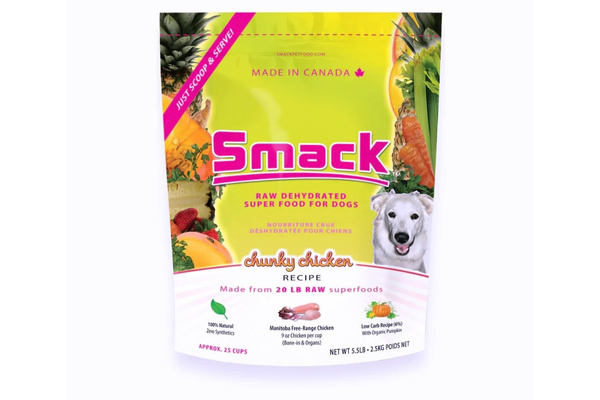
Smack Pet Food was founded in 2007 by Michael Giller in Winnipeg, Manitoba, after his family dog Zorro was diagnosed with cancer. Frustrated by the lack of genuinely wholesome, minimally processed options on store shelves, Giller began experimenting with whole-food recipes in his own kitchen. The goal was simple: maximize nutrition, minimize processing, and give dogs food that actually resembles what their ancestors ate.
Today, Smack remains a privately held Canadian company, with Michael and Jon Giller at the helm. The brand’s core values center on transparency, ethical sourcing, and biologically appropriate nutrition. All recipes are grain-free, made with whole meats (not meals), and feature certified organic fruits and vegetables. There are no synthetic vitamins, artificial preservatives, or filler ingredients—what you see on the label is what you get.
Smack positions itself in the ultra-premium segment, competing with brands like Ziwi Peak, Stella & Chewy’s, and The Honest Kitchen. It’s not trying to be the cheapest option or the flashiest. Instead, it appeals to ingredient-conscious owners willing to invest in nutrient-dense, shelf-stable raw food that doesn’t require a freezer or complicated prep.
In Canada, Smack has built a loyal following and consistently ranks among the top-rated dog foods. It’s frequently featured in “Best Canadian Dog Food” lists and earns 5-star ratings from independent review sites like Dog Food Advisor. The brand has zero recalls on record as of 2025, which is noteworthy in an industry where even reputable brands occasionally stumble.
Outside Canada, Smack’s presence is more modest. It’s available through select specialty retailers and online channels in the U.S., and the company recently opened a manufacturing facility in South Dakota to support American expansion. However, you won’t find it at big-box chains like Petco or PetSmart, and it’s not widely stocked on Amazon or Chewy. This limited distribution keeps the brand somewhat under the radar for U.S. shoppers, though those who discover it tend to become repeat buyers.
| Price per pound | $26 – $36 |
| Primary protein | Chicken, Pork, Salmon, Rockfish |
| By-products | None |
| AAFCO compliance | Yes (formulated to meet AAFCO profiles) |
| Formula options | 5 recipes |
| Availability | Specialty stores + online (limited U.S. distribution) |
Take the free nutrition check and find out in under 1 minute which food is best tailored to your dog!
In just 60 seconds, find out which food fits your dog best — for free.
One of Smack’s defining features is its ingredient transparency. Every recipe lists whole, recognizable foods—no cryptic by-products, no vague “poultry meal,” no long list of synthetic vitamins. Let’s break down what actually goes into these formulas.
Smack uses whole, fresh meats as the foundation of every recipe. You’ll see ingredients like chicken (with ground bone), pork, salmon, and rockfish listed first. These aren’t rendered meals—they’re fresh or fresh-frozen proteins that are dehydrated gently to preserve nutrients. The inclusion of ground bone and organ meats (liver, heart, kidney) mimics a prey-model diet, providing natural sources of calcium, phosphorus, glucosamine, and essential vitamins.
For example, the Very Berry Chicken formula lists chicken meat, chicken liver, chicken heart, and ground chicken bone right at the top. This whole-animal approach delivers a complete amino acid profile and supports joint health, muscle maintenance, and metabolic function without relying on supplements.
Smack keeps carbohydrates minimal and functional. Instead of grains, potatoes, or legumes, you’ll find organic pumpkin, carrots, and various berries. These ingredients are chosen for their low glycemic index, high fiber content, and phytonutrient density. Pumpkin, for instance, supports digestive health and provides beta-carotene, while berries add antioxidants that combat inflammation and support immune function.
Estimated carbohydrate content across formulas ranges from 14% to 24% on a dry-matter basis, which is significantly lower than most kibbles. This makes Smack a solid choice for dogs prone to weight gain, blood sugar spikes, or digestive upset from high-starch diets.
Fat content in Smack recipes is naturally high, typically between 21% and 29% as-fed. This comes from the meat itself—chicken fat, pork fat, fish oils—rather than added oils or rendered fats. The result is a rich, calorie-dense food that provides sustained energy and supports skin, coat, and brain health.
Fish-based recipes like Caribbean-Salmon Fusion are particularly high in omega-3 fatty acids, which are beneficial for dogs with inflammatory conditions, allergies, or joint issues. There’s no need for synthetic supplementation; the whole-food approach delivers these nutrients in their natural, bioavailable form.
Smack avoids nearly every ingredient that raises red flags in the dog food world. There are no peas, lentils, soy, corn, wheat, or potato. There are no artificial colors, flavors, or preservatives. There are no by-products or “meal” proteins of questionable origin.
The only potential concern for some owners is the grain-free formulation. While the FDA’s investigation into grain-free diets and dilated cardiomyopathy (DCM) has not conclusively linked grain-free foods to heart disease, it remains a topic of discussion. Smack’s recipes do not rely on legumes or potatoes as primary ingredients—common suspects in the DCM conversation—but if you’re particularly cautious, it’s worth consulting your vet.
Smack’s recipes are formulated for all life stages, meaning they meet the nutritional requirements for puppies, adults, and seniors according to AAFCO standards. However, it’s worth noting that Smack does not appear to have conducted formal AAFCO feeding trials, relying instead on formulation to meet nutrient profiles.
On a dry-matter basis, Smack’s formulas average:
These numbers put Smack firmly in the high-protein, high-fat, low-carb category. For comparison, most premium kibbles hover around 30–38% protein and 15–20% fat on a dry-matter basis. Smack’s nutrient density means you feed less volume to meet your dog’s caloric needs, which can offset some of the sticker shock.
Smack is calorie-dense, with most recipes providing around 4,600 to 4,750 kcal/kg. This makes it ideal for active dogs, working breeds, or underweight dogs who need to pack on healthy pounds. On the flip side, it’s easy to overfeed if you’re not careful with portions, so a kitchen scale is your friend here.
Rather than fortifying with synthetic vitamins, Smack relies on whole-food nutrition. Organ meats provide B vitamins, iron, and fat-soluble vitamins (A, D, E, K). Ground bone supplies calcium and phosphorus in a balanced ratio. Organic produce contributes vitamin C, potassium, and trace minerals.
This approach is philosophically appealing and often more bioavailable, but it does mean that detailed micronutrient analysis isn’t publicly available. If your dog has specific deficiencies or medical conditions requiring precise nutrient management, you’ll want to work closely with a veterinary nutritionist.
Smack’s recipes are formulated to meet AAFCO nutrient profiles for all life stages. However, there’s no public evidence of completed feeding trials, which would provide additional validation that dogs thrive on these diets over time. Feeding trials are considered the gold standard for proving nutritional adequacy, so this is a minor transparency gap compared to brands that publish trial results.
Smack’s formulas are designed for all life stages, breeds, and sizes, but some dogs will benefit more than others based on their specific needs.
Dogs with food sensitivities or allergies: The limited-ingredient, whole-food approach makes Smack a strong option for dogs who react poorly to grains, fillers, or synthetic additives. Fish-based recipes like Rockin’ Rockfish and Caribbean-Salmon Fusion are particularly useful for elimination diets or novel protein trials.
Picky eaters: The high meat content and natural aroma make Smack highly palatable. Many owners report that dogs who turn their noses up at kibble devour Smack with enthusiasm.
Active or working dogs: The calorie density and high protein content support muscle maintenance and energy demands. If your dog spends hours hiking, running, or working, Smack delivers the fuel they need without requiring huge portions.
Dogs with digestive issues: Gentle dehydration preserves enzymes and nutrients, and the absence of fillers means less bulk and waste. Owners frequently report firmer stools, less gas, and smaller stool volume after switching to Smack.
Senior dogs: The recipes are easy to rehydrate, making them gentler on aging teeth and gums. The inclusion of glucosamine and chondroitin from cartilage and bone supports joint health, which is valuable for older dogs with mobility concerns.
Dogs on a strict budget: Smack is expensive—there’s no way around it. If cost is a primary concern, there are more affordable options that still offer solid nutrition.
Large-breed puppies (with caution): While Smack is labeled for all life stages, large-breed puppies have specific calcium-to-phosphorus ratio requirements to prevent developmental orthopedic issues. Smack recommends pork or fish recipes for large-breed puppies, but if you’re feeding a Great Dane or Mastiff puppy, consult your vet to ensure the diet supports healthy growth.
Dogs requiring prescription diets: Smack does not offer veterinary or prescription formulas. If your dog has kidney disease, liver issues, or other conditions requiring specialized nutrition, this isn’t the right fit.
Take the free nutrition check and find out in under 1 minute which food is best tailored to your dog!
In just 60 seconds, find out which food fits your dog best — for free.
One of the most consistent pieces of feedback from Smack users is that dogs love the taste. The high meat content and minimal processing create a strong, natural aroma that appeals to even the pickiest eaters.
Smack offers five core recipes for dogs:
This range is smaller than many competitors, but each recipe is distinct enough to support rotational feeding. Rotating proteins can help prevent food sensitivities and keep mealtime interesting for your dog.
Smack is dehydrated, not freeze-dried, so the texture is denser and less crumbly. You can feed it dry as a crunchy kibble alternative, but most owners rehydrate it with water or broth. Smack recommends a 1:1 to 2:1 ratio (food to liquid), and the food absorbs moisture quickly—usually within a few minutes.
Rehydration makes the food easier to digest and increases hydration intake, which is especially helpful for dogs who don’t drink enough water. It also releases more aroma, which can entice reluctant eaters.
In reviews and testimonials, 75–80% of owners with picky dogs report success with Smack. Dogs who previously refused multiple brands often eat Smack eagerly from day one. That said, no food works for every dog, and a small percentage of users report their dogs refusing it or losing interest after a few weeks.
Smack is not a budget-friendly option. Let’s be clear about that upfront. But whether it’s worth the price depends on what you value and what your dog needs.
As of October 2025, Smack’s pricing in the U.S. looks roughly like this:
On a per-calorie basis, you’re looking at around $6.30 to $7.75 per 1,000 kcal, which is roughly double the cost of super-premium kibble like Orijen or Acana. However, it’s 30–50% less expensive than freeze-dried or frozen raw diets from brands like Stella & Chewy’s or Primal.
Because Smack is so calorie-dense, you feed smaller portions than you would with kibble. For example:
These estimates assume full feeding (not mixing with kibble) and average activity levels. Active dogs or those with faster metabolisms will cost more; less active or senior dogs may cost less.
Compared to Ziwi Peak—a similar air-dried, ultra-premium brand from New Zealand—Smack is slightly more affordable per pound and per calorie. If you’re already considering Ziwi, Smack offers comparable ingredient quality and nutrition at a marginally lower price point. Not sure whether to choose Smack or Ziwi? Read our Ziwi Peak review to see how they stack up side by side.
Compared to kibble, even premium kibble, Smack is significantly more expensive. But it’s also a fundamentally different product—minimally processed, nutrient-dense, and made with human-grade ingredients. If you’re comparing apples to apples (dehydrated raw to dehydrated raw), Smack holds its own.
If your dog thrives on Smack—improved coat, better digestion, more energy, resolved allergies—then yes, it’s worth the investment. Many owners find that vet bills decrease, stool volume drops (saving on cleanup), and their dog’s overall quality of life improves. If you’re feeding a small or medium dog, the cost is more manageable.
However, if you’re feeding multiple large dogs or working within a tight budget, Smack may strain your finances. In that case, consider mixing Smack with a high-quality kibble to stretch the bag while still providing some of the benefits of raw feeding.
Take the free nutrition check and find out in under 1 minute which food is best tailored to your dog!
In just 60 seconds, find out which food fits your dog best — for free.
Smack produces its food in Winnipeg, Manitoba, with a new facility in Aberdeen, South Dakota supporting U.S. expansion. The brand emphasizes local sourcing where possible, using Canadian and North American ingredients.
Smack uses gentle dehydration rather than high-heat cooking or extrusion. Fresh meats, bones, and organs are ground, mixed with organic produce, and then slowly dried at low temperatures. This process removes moisture to inhibit bacterial growth while preserving enzymes, vitamins, and natural flavors.
The result is a shelf-stable product that doesn’t require refrigeration or freezing, making it more convenient than traditional raw diets. Water activity is kept low enough to prevent microbial growth, and the company claims pathogen kill steps during dehydration.
Smack reports conducting batch testing for pathogens and mold before shipping. The brand has maintained a zero-recall record since its founding in 2007, which is impressive and suggests robust quality control.
However, details on specific testing protocols, third-party lab involvement, and certifications like HACCP, ISO 22000, or SQF are not publicly disclosed. This lack of transparency is a minor weakness compared to brands that publish full testing results and hold multiple food safety certifications.
Smack provides full ingredient lists and emphasizes whole-food sourcing, but detailed traceability—down to the farm or supplier level—is not published. You know what’s in the food, but not always where each specific ingredient comes from. For owners who prioritize supply chain transparency, this is a gap worth noting.
Smack’s commitment to organic produce and ethical meat sourcing aligns with values many conscious consumers hold. However, the brand’s sustainability credentials are less developed than some competitors.
Smack sources whole meats from Canadian and North American suppliers, emphasizing ethical treatment and quality. Organic fruits and vegetables are certified, which means they’re grown without synthetic pesticides or fertilizers. This is a positive step for both environmental and health reasons.
Smack uses heavy-duty, resealable plastic bags, which are practical but not particularly eco-friendly. The packaging is not compostable or widely recyclable, which is a drawback for environmentally conscious buyers. The brand has not published any goals or initiatives around sustainable packaging or reducing plastic use.
There are no formal sustainability reports, carbon footprint disclosures, or ESG (environmental, social, governance) goals published by Smack. While the focus on local sourcing and minimal processing likely reduces transportation and energy use compared to heavily processed foods, the lack of transparency here is noticeable.
Smack does not appear to conduct invasive animal testing, and the brand’s origin story—founded to improve a beloved pet’s health—suggests a genuine commitment to animal welfare. However, there are no published policies on labor practices, fair trade, or community engagement.
I work at a dog shelter, and we often test new foods with the dogs in our care to see how they respond. For this review, I chose to try Smack with a dog named Mabel.
Mabel is a seven-year-old Beagle mix who came to us after her previous owner passed away. She’s a sweet, low-key dog with a sensitive stomach—she tends to get soft stools and occasional gas on lower-quality kibble. She’s also a bit on the heavier side, which is common for Beagles, so we’re always mindful of portion control. Mabel isn’t a picky eater, but she’s not particularly enthusiastic about food either. She eats because she has to, not because she loves it.
We transitioned Mabel to Smack’s Caribbean-Salmon Fusion over about five days, mixing it with her previous kibble. The first thing I noticed was the smell—it’s strong, fishy, and unmistakably “real food.” Mabel seemed more interested than usual right away, sniffing the bowl before eating. She didn’t dive in with wild enthusiasm, but she ate her meals more promptly than she had been.
By the end of the first week, Mabel was eating Smack consistently and finishing her portions. We fed it rehydrated, which she seemed to prefer—she’d lick the bowl clean afterward. There were no refusals, no hesitation, and no need to add toppers or coax her to eat. For a dog who’s usually indifferent about meals, this was a noticeable shift.
The most obvious change was in Mabel’s stool quality. Within about ten days, her stools became firmer and more consistent, and the volume dropped noticeably. Gas, which had been a regular issue, almost disappeared. This is a huge practical benefit—not just for Mabel’s comfort, but for shelter staff managing daily cleanup.
Her coat also improved over the three weeks we fed Smack. Mabel’s fur had been a bit dull and dry, but by week three, it looked shinier and felt softer. She didn’t shed any less, but the overall condition was better.
As for energy and behavior, Mabel remained her usual calm, steady self. She didn’t become more active or playful, but she also didn’t seem lethargic or uncomfortable. For a senior dog with a laid-back temperament, this was exactly what we hoped for—steady, healthy maintenance without dramatic shifts.
Feeding Smack was straightforward. We’d measure out her portion, add warm water, wait a few minutes, and serve. It took a bit more time than scooping kibble, but not significantly. The rehydrated food was easy to portion and didn’t create a mess. Mabel ate cleanly, and the bowl rinsed out easily afterward.
Overall, Smack worked well for Mabel. It addressed her digestive sensitivity, improved her coat, and kept her interest at mealtimes. She didn’t have a dramatic transformation—she’s still the same mellow, food-motivated Beagle—but the practical improvements in stool quality and coat condition were clear and consistent.
Smack enjoys a strong reputation among users, with most reviews falling in the 4.5 to 5-star range. Here’s what real owners are saying.
Improved digestion: This is the most frequently mentioned benefit. Owners report firmer stools, less gas, and reduced digestive upset, often within the first week or two. Dogs with chronic diarrhea or sensitive stomachs frequently see significant improvement.
Coat and skin health: Many users mention shinier coats, softer fur, and reduced itching or ear infections. Dogs with allergies or skin conditions often show visible improvement after switching to Smack.
Palatability: Even picky eaters tend to accept Smack enthusiastically. Owners who’ve struggled with multiple brands often describe Smack as the “only food” their dog will eat without hesitation.
Energy and vitality: Some owners report increased energy, especially in senior dogs who had become sluggish on kibble. This is likely due to the high nutrient density and bioavailability of the whole-food ingredients.
Price: This is the most frequent criticism. Many owners acknowledge the quality but admit the cost is a stretch, especially for larger dogs or multi-dog households.
Availability: Smack is not widely distributed in the U.S., and some owners struggle to find it locally. Ordering online is convenient, but shipping costs can add up.
Formula changes: A small number of reviews mention that recent formula tweaks led to refusal or digestive upset in dogs who previously loved the food. However, these complaints are isolated and not widespread.
Strong smell: Some owners find the fishy or meaty aroma off-putting, though dogs typically love it. This is more of a human preference issue than a quality concern.
One owner wrote: “My staffy had chronic ear and skin issues for years, no matter what kibble we tried. Within three weeks on Smack, his ears cleared up, his coat stopped shedding as much, and he’s more comfortable. We’ve been feeding it for almost ten years now.”
Another shared: “My picky puppy refused at least ten different foods. Smack is all she wants. She eats every meal eagerly, and her stools are perfect.”
A third noted: “I have nine geriatric dogs, and Smack is the only food they all tolerate well. No tummy issues, no refusals, and I save money on treats because they love it so much.”
Smack’s customer service earns high marks. Owners report quick, helpful responses to questions and concerns. When quality issues arise—such as a bag with an off smell—the company typically offers a full refund or replacement without hassle.
Take the free nutrition check and find out in under 1 minute which food is best tailored to your dog!
In just 60 seconds, find out which food fits your dog best — for free.
To understand where Smack fits in the market, it’s helpful to compare it directly with similar brands.
Ziwi Peak is a New Zealand-based brand offering air-dried raw dog food. Both brands emphasize whole meats, minimal processing, and no synthetic additives. Ziwi Peak has a slightly broader product range and stronger international distribution, while Smack is more affordable per pound. If you’re deciding between the two, Smack offers similar quality at a marginally lower price, while Ziwi Peak provides more variety and global availability.
Stella & Chewy’s offers freeze-dried raw food, which is lighter and more shelf-stable than Smack’s dehydrated format. Stella & Chewy’s has a wider range of recipes and stronger U.S. retail presence, but it’s typically more expensive per calorie. Smack is denser and requires rehydration, which some owners find more convenient for digestion and hydration.
The Honest Kitchen is a dehydrated food brand that’s been around longer and has broader distribution in the U.S. It offers more recipe variety, including options with grains. However, The Honest Kitchen relies more on synthetic vitamin and mineral supplementation, while Smack focuses on whole-food nutrition. If you prefer a brand with a longer track record and more options, The Honest Kitchen is a solid choice. If you prioritize minimal ingredients and no synthetics, Smack has the edge.
Compared to premium kibble like Orijen or Acana, Smack is significantly more expensive but also fundamentally different. Kibble is processed at high heat, which can degrade nutrients and create advanced glycation end products (AGEs). Smack’s gentle dehydration preserves more of the natural nutrition. If you’re looking for the convenience of kibble, Orijen or Acana are excellent choices. If you want to move closer to a raw diet without the hassle, Smack is the better option.
Smack is formulated for all life stages, but it’s particularly well-suited for specific types of dogs:
Dogs with food sensitivities or allergies benefit from the limited-ingredient, whole-food approach. The absence of grains, fillers, and synthetic additives reduces the risk of reactions, and novel protein options like rockfish make elimination diets easier.
Picky eaters often respond enthusiastically to Smack’s high meat content and natural aroma. If your dog turns up their nose at kibble, Smack’s palatability can be a game-changer.
Active or working dogs thrive on Smack’s calorie density and high protein content. Whether your dog is herding sheep, running agility courses, or hiking mountains, Smack provides the fuel they need without requiring huge portions.
Dogs with digestive issues—chronic diarrhea, gas, or soft stools—frequently see improvement on Smack. The gentle processing and absence of fillers make it easier to digest, and many owners report firmer stools and less gas within days.
Senior dogs appreciate the easy rehydration and nutrient density. The inclusion of glucosamine and chondroitin from bone and cartilage supports joint health, which is valuable for aging dogs with mobility concerns.
On the other hand, Smack may not be ideal for large-breed puppies without careful attention to calcium-to-phosphorus ratios. While Smack recommends pork or fish recipes for these dogs, it’s wise to consult your vet. It’s also not suitable for dogs requiring prescription diets for medical conditions like kidney disease or liver issues.
Smack is a high-quality, thoughtfully made dog food that delivers on its promises. The ingredient list is clean, the nutritional profile is robust, and the results—improved digestion, healthier coats, better palatability—are consistent across user reviews and my own experience with Mabel.
That said, it’s not perfect. The price is a barrier for many owners, especially those with large or multiple dogs. The limited distribution in the U.S. can make it harder to access, and the lack of detailed certifications and third-party testing leaves some transparency gaps.
Would I buy this for my dog? Yes, if my dog had food sensitivities, digestive issues, or was a picky eater. The practical improvements in stool quality, coat health, and mealtime enthusiasm are real and meaningful. For a small or medium dog, the cost is manageable, and the benefits often outweigh the expense.
Would I recommend it to a friend? Absolutely, with the caveat that they need to be comfortable with the price. If cost is the primary concern, I’d suggest mixing Smack with a high-quality kibble to stretch the bag while still providing some of the benefits. But if you’re already considering ultra-premium options like Ziwi Peak or Stella & Chewy’s, Smack offers comparable quality at a slightly lower price point.
Is Smack the best dog food on the market? That depends on your priorities. If you value ingredient transparency, minimal processing, and whole-food nutrition, Smack is among the best. If you need more variety, stronger U.S. availability, or a lower price, there are other options worth exploring.
Overall, Smack is a solid, reliable choice for owners willing to invest in their dog’s health. It’s not a miracle cure, and it’s not cheap, but it’s honest, effective, and made with integrity. For the right dog and the right owner, it’s an excellent fit.
Take the free nutrition check and find out in under 1 minute which food is best tailored to your dog!
In just 60 seconds, find out which food fits your dog best — for free.
Smack is expensive—there’s no getting around that. Whether it’s worth it depends on your dog’s needs and your budget. If your dog has food sensitivities, digestive issues, or is a picky eater, the practical improvements in stool quality, coat health, and palatability often justify the cost. The calorie density also means you feed smaller portions, which helps offset some expense. For small to medium dogs, the monthly cost is more manageable than for large breeds. If you’re already considering ultra-premium options like Ziwi Peak, Smack offers comparable quality at a slightly lower price point.
Transition gradually over 5-7 days by mixing increasing amounts of Smack with your dog’s current food. Start with 75% old food and 25% Smack for the first 2-3 days, then move to 50/50, then 25% old and 75% Smack, before feeding 100% Smack. This gradual approach helps prevent digestive upset. Most dogs adapt well to Smack, but if you notice loose stools or refusal, slow down the transition process.
While you can feed Smack dry as a kibble alternative, most owners rehydrate it with water or broth. Smack recommends a 1:1 to 2:1 ratio of liquid to food. Rehydration makes the food easier to digest, increases your dog’s water intake, and releases more aroma to entice picky eaters. The food absorbs moisture quickly—usually within a few minutes. Most dogs seem to prefer the rehydrated texture.
Smack is formulated for all life stages according to AAFCO standards, making it suitable for puppies, adults, and seniors. However, for large-breed puppies, Smack recommends their pork or fish recipes due to specific calcium-to-phosphorus ratio requirements. For seniors, the easy rehydration and natural glucosamine and chondroitin from bone and cartilage can support joint health. Always consult your vet when making dietary changes, especially for very young or very old dogs.
Smack’s limited-ingredient, whole-food approach makes it a strong option for dogs with food sensitivities. The recipes avoid common allergens like grains, fillers, and synthetic additives. Novel protein options like rockfish can be particularly useful for elimination diets. Many owners report improved skin and coat health, reduced ear infections, and fewer digestive issues. However, always work with your vet to identify specific allergens and ensure Smack is appropriate for your dog’s particular sensitivities.
Once opened, Smack should be used within 30-45 days for optimal freshness. Store it in a cool, dry place and keep the bag tightly sealed using the resealable closure. Because it’s dehydrated rather than freeze-dried, it doesn’t require refrigeration, but proper storage is important to maintain quality and prevent moisture absorption. If the food develops an off smell or appearance, discard it immediately.
Smack has limited distribution in the U.S. compared to larger brands. You won’t find it at big-box stores like Petco or PetSmart, and it’s not widely available on Amazon or Chewy. Your best bet is specialty pet stores or ordering directly from authorized online retailers. The company recently opened a manufacturing facility in South Dakota to support U.S. expansion, so availability may improve over time. Check Smack’s website for a store locator.
Yes, many owners successfully mix Smack with high-quality kibble to stretch the bag while still providing some benefits of raw feeding. This approach can make the cost more manageable while still improving palatability and adding whole-food nutrition. Start with a 25% Smack, 75% kibble ratio and adjust based on your dog’s response and your budget. This strategy works particularly well for large dogs where feeding 100% Smack would be prohibitively expensive.
Yes, Smack has a strong, natural aroma—particularly the fish-based recipes like Caribbean-Salmon Fusion. The smell comes from the high meat content and minimal processing, and while some owners find it off-putting, dogs typically love it. The aroma becomes more pronounced when you rehydrate the food. If you’re sensitive to pet food odors, this might be a consideration, though the smell indicates the real-food ingredients rather than artificial flavoring.
Yes, all Smack recipes are grain-free. Regarding the FDA’s investigation into grain-free diets and dilated cardiomyopathy (DCM), Smack’s recipes don’t rely heavily on legumes or potatoes—the ingredients most commonly associated with DCM concerns. Instead, Smack uses minimal carbohydrates from organic produce like pumpkin and berries. However, if you’re particularly concerned about DCM, consult your veterinarian about whether grain-free feeding is appropriate for your dog.
Take the free nutrition check and find out in under 1 minute which food is best tailored to your dog!
In just 60 seconds, find out which food fits your dog best — for free.
9 out of 10 dog owners are feeding their dog the wrong food.
Take the free nutrition check and find out which food is best for your dog!
2,847+ dog owners already did