9 out of 10 dog owners are feeding their dog the wrong food

Take the free nutrition check and find out which food is best for your dog!

Shelter manager, certified canine nutritionist, and lifelong dog lover
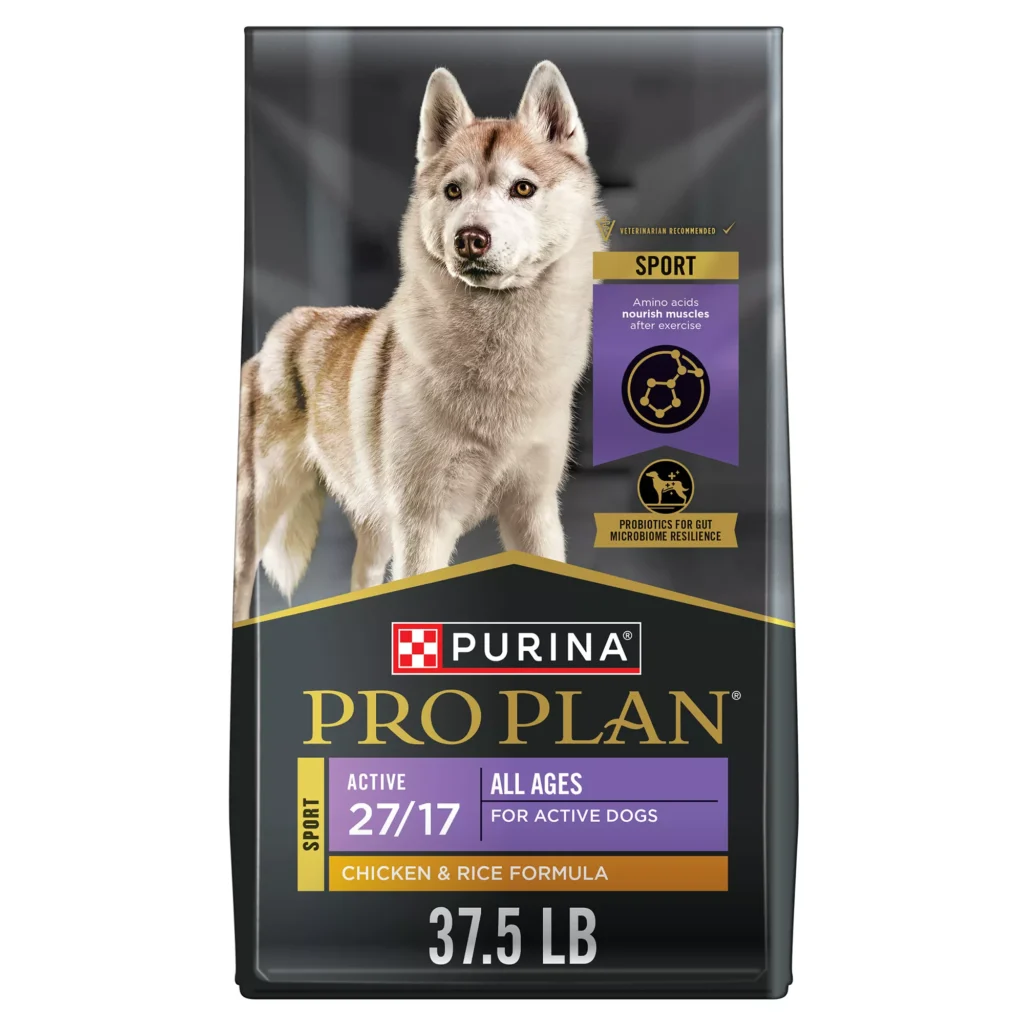
• This formula delivers 30% protein and 20% fat specifically designed for highly active dogs, working breeds, and sporting dogs who need sustained energy and muscle recovery support.
• Real chicken serves as the first ingredient, complemented by EPA, DHA, and glucosamine for joint health, though it includes corn and poultry by-products that some owners prefer to avoid.
• Customer feedback consistently highlights improved energy levels, shinier coats, and better muscle tone, with dogs maintaining stamina throughout intense activity and recovering well afterward.
• At approximately $1.10 per 100 grams, it offers mid-tier pricing between budget options like Kirkland and premium brands like Royal Canin or Victor Performance formulas.
• The formula is unsuitable for sedentary or overweight dogs due to its calorie-dense nature, and may cause issues for dogs with corn sensitivities or grain intolerances.
Take the free nutrition check and find out in under 1 minute which food is best tailored to your dog!
The first ingredient you’ll see is chicken, which is a solid start. Real meat as the number-one ingredient means your dog is getting a quality animal protein source right off the bat. Chicken is highly digestible and provides essential amino acids that active dogs need for muscle repair and energy metabolism.
Following chicken, you’ll find poultry by-product meal and fish meal. Now, by-product meal often gets a bad reputation, but it’s worth noting that it’s a concentrated protein source that includes organs and other nutrient-dense parts of the animal. While it’s not as appealing as whole meat to some owners, it does contribute meaningful protein and minerals. Fish meal adds another layer of animal protein plus omega-3 fatty acids, which support joint health and reduce inflammation.
The formula also includes dried egg product, a highly bioavailable protein that’s easy for dogs to digest and packed with essential nutrients. Between these sources, you’re looking at a protein-rich formula that’s built to sustain high activity levels.
| Price per pound | ~$2.20 |
| Primary protein | Chicken |
| By-products | Yes (poultry by-product meal) |
| AAFCO compliance | Yes (all life stages) |
| Formula options | Performance 30/20 formula |
| Availability | Wide retail + online |
Take the free nutrition check and find out in under 1 minute which food is best tailored to your dog!
In just 60 seconds, find out which food fits your dog best — for free.
Here’s where things get a bit more divisive. The formula includes rice, whole grain corn, corn gluten meal, and corn germ meal. Rice is generally well-tolerated and provides easily digestible energy, which is exactly what you want for a performance formula. However, the multiple corn ingredients—corn gluten meal, whole grain corn, and corn germ meal—are used both as carbohydrate sources and as plant-based protein boosters.
Corn isn’t inherently harmful, and it does provide energy, but it’s less biologically valuable than animal proteins and can be harder for some dogs to digest. If your dog has a known corn sensitivity or tends to have digestive upset with grain-heavy formulas, this could be a consideration. That said, many dogs do just fine with corn, and it helps keep the cost of the formula more accessible compared to all-meat or grain-free options.
What I appreciate is that Purina is transparent about these ingredients—they’re listed clearly on the label, so you know exactly what you’re feeding. The carbohydrate content sits at around 40% on a dry matter basis, which is moderate for kibble and typical for performance formulas that need quick-burning fuel.
The formula includes beef fat preserved with mixed tocopherols and fish oil. Beef fat is a concentrated energy source and also contributes to palatability—most dogs find it highly appealing. Fish oil brings EPA and DHA, omega-3 fatty acids that are fantastic for joint health, brain function, and reducing inflammation in active dogs.
You’ll also find glucosamine hydrochloride, which supports cartilage and joint health over the long term. For dogs who are running, jumping, or working regularly, this is a valuable addition that can help maintain mobility as they age. The formula also includes antioxidants like vitamin E and rosemary extract, which support immune function and help combat oxidative stress from intense activity.
One ingredient that might raise eyebrows is animal digest, a flavor enhancer made from hydrolyzed animal tissues. It’s used to make the kibble more palatable, but it’s a less specific ingredient than named meat sources. It’s not harmful, but if you’re looking for a formula with only whole, named ingredients, this might be a minor downside.
On an as-fed basis, the formula guarantees 30% minimum protein and 20% minimum fat. When you convert that to a dry matter basis (removing the 12% moisture), you’re looking at approximately 34% protein and 23% fat. That’s well above what the average pet dog needs, and it’s exactly what you want for a high-performance formula.
The protein level supports muscle maintenance and recovery, especially important after long days of activity. The fat content provides dense, sustained energy—fat has more than twice the calories per gram compared to protein or carbohydrates, so it’s an efficient fuel source for dogs who burn through energy quickly.
Fiber sits at 3% maximum, which is on the lower side. This is intentional—performance dogs don’t need a lot of fiber, and keeping it low helps maximize calorie density and digestibility. The estimated carbohydrate content is around 40% on a dry matter basis, which provides readily available energy for short bursts of activity and endurance work.
The formula meets AAFCO standards for all life stages, including growth of large breed dogs. AAFCO requires a minimum of 22.5% protein and 8.5% fat for growth and reproduction, and 18% protein and 5.5% fat for adult maintenance. This formula significantly exceeds those minimums, making it suitable not just for active adults but also for growing puppies of sporting breeds and senior dogs who remain highly active.
What I find impressive is that the formula is balanced for large breed growth without being excessive in calcium or phosphorus, which is often a concern for giant breed puppies. While exact calcium and phosphorus levels aren’t published, Purina’s track record with large breed formulas suggests they’ve dialed in the ratios appropriately.
Take the free nutrition check and find out in under 1 minute which food is best tailored to your dog!
In just 60 seconds, find out which food fits your dog best — for free.
This formula shines for highly active dogs—think agility competitors, hunting dogs, working breeds, or any dog who gets serious daily exercise. If your dog is out running trails with you, participating in dog sports, or working on a farm or ranch, this level of protein and fat is going to support their energy needs and muscle recovery beautifully.
It’s also a solid choice for active senior dogs. Not all seniors slow down, and if you’ve got an older dog who’s still going strong on long walks or hikes, the glucosamine and EPA/DHA can help support joint health while the higher protein helps maintain lean muscle mass. Imagine your 8-year-old Labrador who still retrieves for hours—this formula can keep them fueled without the need to switch to a lower-energy senior diet.
Another group that benefits is multi-dog households with varied life stages. Since the formula is AAFCO-approved for all life stages, you can feed it to both your young adult working dog and your senior athlete without needing separate bags. That’s a practical advantage if you’re managing multiple dogs with different ages but similar activity levels.
If your dog is overweight, low-activity, or a couch potato, this formula is going to be too calorie-dense. The high fat and protein content is designed for dogs who burn through energy, and feeding it to a sedentary dog can lead to weight gain quickly. For less active pets, a maintenance formula with lower fat and calories would be a better fit.
Dogs with known corn sensitivities or grain intolerances should probably skip this one. While corn isn’t a common allergen compared to proteins like chicken or beef, some dogs do have digestive upset or skin reactions to corn-based ingredients. If your dog has a history of issues with grains, you’d be better off with a grain-free or limited-ingredient formula.
Similarly, if you’re looking for a 100% whole-meat, human-grade formula, the inclusion of poultry by-product meal, corn gluten meal, and animal digest might not align with your preferences. These ingredients are nutritionally adequate and safe, but they’re not what you’d find in ultra-premium, whole-prey diets.
Customer reviews from Chewy, Amazon, and Purina’s own site are overwhelmingly positive, with average ratings hovering around 4.5 to 4.7 out of 5 stars. The most common praise centers on improved energy, shinier coats, and better muscle tone. Owners of working dogs and sporting breeds frequently mention that their dogs maintain stamina throughout the day and recover well after intense activity.
One recurring theme is palatability—most dogs seem to love the taste, and even picky eaters transition to it without much fuss. That’s likely due to the combination of real chicken, beef fat, and animal digest, which makes the kibble highly appealing. Many owners also report smaller, firmer stools, which is a sign of good digestibility and nutrient absorption. That’s a practical benefit, especially if you’re doing a lot of outdoor activities or travel with your dog.
On the flip side, the most common complaints are about corn content and by-products. Some owners simply prefer formulas without these ingredients, even if their dog does fine on them. A smaller number of reviews mention digestive upset, usually during the transition period. This is fairly typical when switching foods, and most issues resolve once the dog fully adjusts. A few owners also note that the kibble can have a strong smell, which seems to vary by batch but doesn’t affect palatability for the dogs.
Price is another point of discussion. At around $1.10 per 100 grams, it’s more expensive than budget brands like Kirkland but less than ultra-premium options like Royal Canin or Victor. For the nutrient density and quality of ingredients, most owners feel the price is fair, though budget-conscious households might find it stretches their pet food budget.
Purina as a whole has had a handful of recalls over the past decade, but none have involved the Pro Plan Sport dry food line through November 2025. The most recent recalls were for specific veterinary diet formulas—one in early 2023 for elevated vitamin D levels in an elemental diet, and another in late 2022 for mislabeling on a wet food product. These were caught through Purina’s internal quality checks and handled proactively, which speaks to their monitoring systems.
Purina operates its own manufacturing facilities in the United States and employs over 400 scientists, including veterinarians and PhD nutritionists, in their research and development programs. While they don’t publish third-party audit results or certifications like GFSI or HACCP for individual formulas, the company’s scale and resources suggest robust quality control processes are in place.
All batches are traceable via lot codes, and customer service can provide detailed information if you ever have concerns about a specific bag. That level of transparency is reassuring, especially compared to smaller brands that may not have the same infrastructure.
When you compare Purina Pro Plan Sport to similar formulas, it holds its own in terms of protein and fat content while coming in at a more accessible price point than many premium brands. Victor Performance, for example, offers a similar macronutrient profile but costs around $1.35 per 100 grams—about 23% more expensive. Royal Canin Sport is even pricier at $1.60 per 100 grams, though it does offer slightly higher calorie density.
On the budget end, Kirkland Signature Nature’s Domain is significantly cheaper at $0.85 per 100 grams, but it delivers lower protein (28% DMB) and fat (16% DMB), making it less suitable for truly high-energy dogs. If your dog needs that extra fuel, the additional cost of Pro Plan Sport is justified by the higher nutrient density.
Ingredient-wise, Pro Plan Sport uses a mix of animal proteins and grains, whereas brands like Victor lean more heavily on whole grains and named meat meals, and Kirkland uses more novel proteins like salmon. If you’re looking for a grain-inclusive formula with solid animal protein content at a mid-tier price, Pro Plan Sport is a strong contender.
Not sure whether to choose this formula or another option for joint support? Read our other review on Purina Pro Plan Joint Mobility to see how the specialized joint formula compares.
Because caloric density isn’t officially published, estimating portion sizes requires some guesswork, but based on similar formulas, you’re likely looking at around 400 kcal per 100 grams. For a moderately active 30 kg (66 lb) dog, that might translate to roughly 350-400 grams per day, split into two meals. Highly active dogs may need 10-20% more, while less active dogs should get less to avoid weight gain.
The kibble size is designed to be manageable for most breeds, though very small dogs or toy breeds might find it a bit large. If you’re feeding a smaller active breed, you might need to break up the kibble or mix it with wet food to make it easier to chew.
One practical tip: because this formula is calorie-dense, it’s easy to overfeed if you’re eyeballing portions. I’d recommend using a measuring cup or kitchen scale to ensure you’re feeding the right amount, especially if your dog’s activity level varies day to day. Adjust portions based on body condition—if you’re seeing weight gain, dial it back a bit; if your dog seems to be losing muscle or energy, increase the portion slightly.
This is one area where Purina Pro Plan Sport doesn’t stand out. The formula doesn’t carry any organic, MSC, ASC, or animal welfare certifications, and there’s no specific information about sustainable sourcing for the chicken, fish, or other animal ingredients. Nestlé, Purina’s parent company, has general corporate sustainability commitments, but these aren’t translated into product-level claims for this formula.
Packaging is standard plastic bags with no mention of recycled content or compostable materials. If environmental impact and ethical sourcing are high priorities for you, brands like Orijen or Acana may offer more transparency and third-party certifications, though they come at a significantly higher price point.
That said, Purina’s scale does allow for efficient manufacturing and distribution, which can reduce the overall carbon footprint compared to smaller brands with less optimized logistics. It’s a trade-off between direct sustainability credentials and operational efficiency.
Purina Pro Plan Sport Performance 30/20 is a well-formulated, nutrient-dense option for highly active dogs who need more than a standard maintenance diet can provide. The high protein and fat content, combined with EPA, DHA, and glucosamine, make it a solid choice for working dogs, sporting breeds, and active seniors who still have plenty of energy to burn.
The inclusion of corn and poultry by-products won’t appeal to everyone, but these ingredients are used transparently and contribute to a formula that’s both nutritionally adequate and more affordable than many premium alternatives. If your dog tolerates grains and you’re focused on performance and joint support rather than ultra-premium sourcing, this formula delivers real value.
It’s not the right fit for sedentary dogs, those with grain sensitivities, or owners seeking certified sustainable or human-grade ingredients. But for the right dog—one who’s out there running, working, or playing hard every day—this formula provides the fuel and support they need to keep going strong.
Take the free nutrition check and find out in under 1 minute which food is best tailored to your dog!
In just 60 seconds, find out which food fits your dog best — for free.
Feeding amounts depend on your dog’s weight, activity level, and metabolism. As a rough guide, a moderately active 30 kg (66 lb) dog typically needs around 350-400 grams per day, split into two meals. However, because this is a high-calorie formula, I strongly recommend using a measuring cup or kitchen scale rather than eyeballing portions. Highly active dogs may need 10-20% more, while dogs with lower activity levels should get less to prevent weight gain. Monitor your dog’s body condition and adjust portions accordingly.
Yes, this formula is AAFCO-approved for all life stages, including growth of large breed dogs. This makes it practical for multi-dog households where you have both puppies and adults with high activity levels. However, keep in mind that this is designed for active dogs—if you have a couch potato adult paired with an active puppy, the sedentary dog might gain weight on this calorie-dense formula.
Most dogs tolerate corn just fine, and it’s not a common allergen compared to proteins like chicken or beef. However, if your dog has a known corn sensitivity or tends to have digestive upset with grain-heavy formulas, this might not be the best choice. The formula includes whole grain corn, corn gluten meal, and corn germ meal. If you’re unsure, try a small bag first or consult with your vet about whether corn-inclusive formulas are appropriate for your dog.
At around $1.10 per 100 grams, Pro Plan Sport sits in the mid-tier price range. It’s more expensive than budget options like Kirkland ($0.85 per 100g) but less costly than premium brands like Victor Performance ($1.35 per 100g) or Royal Canin Sport ($1.60 per 100g). For the protein and fat content you’re getting, plus the added joint support ingredients, most owners find the price point reasonable for a performance formula.
The key differences are the higher protein (30% vs. typically 25-28%) and fat content (20% vs. typically 12-16%) in the Sport formula. It also includes specific performance ingredients like EPA and DHA from fish oil, plus glucosamine for joint support. Regular Pro Plan formulas are designed for average pet dogs, while Sport is specifically formulated for high-energy, active dogs who need extra fuel and recovery support.
It depends on the individual dog. This formula works well for active senior dogs who are still running, hiking, or working regularly. The glucosamine and omega-3 fatty acids actually benefit aging joints, and the higher protein helps maintain muscle mass. However, if your senior dog has slowed down significantly or has weight management issues, this calorie-dense formula would be too much. Consider your dog’s actual activity level rather than just age when deciding.
Based on customer feedback, palatability is one of the strengths of this formula. The combination of real chicken as the first ingredient, beef fat, and animal digest makes it highly appealing to most dogs. Many owners report that even picky eaters transition to it without much fuss. The strong smell that some owners notice in the kibble is actually what makes it attractive to dogs, even if it’s less pleasant for humans.
This formula is designed for maintaining energy and muscle mass in active dogs, not for weight loss. If your dog is overweight, even if they’re active, this high-fat, calorie-dense formula would likely work against weight management goals. You’d be better off with a weight management formula that provides adequate protein for muscle maintenance but lower calories overall. Once your dog reaches their ideal weight, you could potentially transition to this formula if their activity level warrants it.
Most owners report seeing improvements in energy levels within 2-3 weeks of consistent feeding, assuming the dog was previously underfueled for their activity level. Coat improvements from the omega-3 fatty acids typically take longer—around 6-8 weeks—since hair grows slowly and needs time to reflect nutritional changes. If you’re not seeing any positive changes after a month, the formula might not be the right fit for your dog’s individual needs.
Poultry by-product meal often gets a bad reputation, but it’s actually a concentrated protein source that includes nutrient-dense organs and other animal parts. It’s not as appealing-sounding as “deboned chicken,” but it provides meaningful protein and minerals. If you prefer formulas with only whole, named meat sources, you might want to look at premium alternatives, but from a nutritional standpoint, by-product meal is perfectly adequate and safe for dogs.
9 out of 10 dog owners are feeding their dog the wrong food.
Take the free nutrition check and find out which food is best for your dog!
2,847+ dog owners already did