9 out of 10 dog owners are feeding their dog the wrong food

Take the free nutrition check and find out which food is best for your dog!

Shelter manager, certified canine nutritionist, and lifelong dog lover
• Solid nutritional foundation with salmon or lamb as first ingredient, prebiotic fiber for gut health, and omega fatty acids delivering 29.5% protein and 18% fat on dry matter basis.
• Exceptional customer satisfaction with 4.8-star average rating and 96% recommendation rate, particularly for digestive improvements and reduced skin irritation within weeks of feeding.
• Outstanding value proposition at $14 per 1000 kcal compared to Hill’s Science Diet at $19.70 and Royal Canin at $40, offering comparable quality at significantly lower cost.
• Targeted for mild sensitivities only – not suitable for dogs with diagnosed gastrointestinal diseases, severe allergies, or those requiring prescription diets for medical management.
• Limited transparency concerns with vague “natural flavor” ingredients and lack of published digestibility studies, though maintains clean safety record with no recalls for this formula.
Take the free nutrition check and find out in under 1 minute which food is best tailored to your dog!
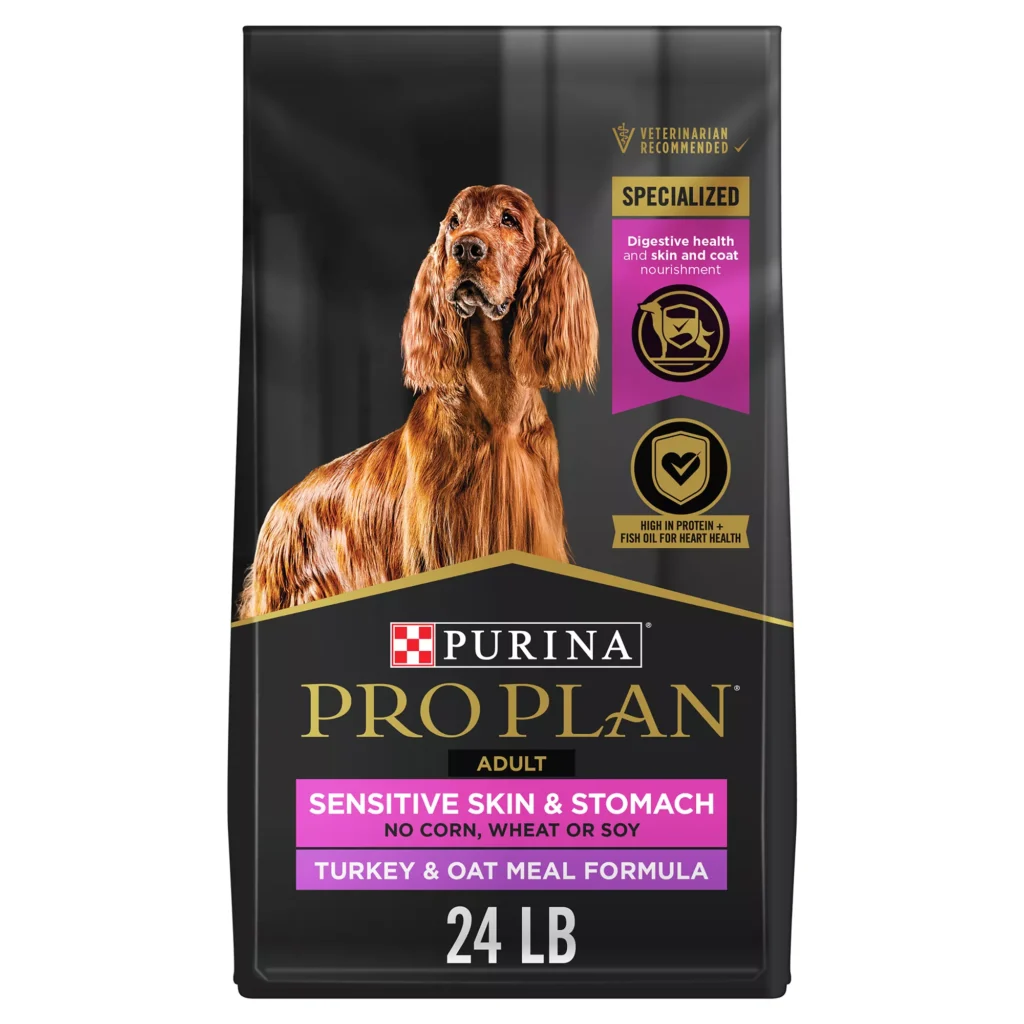
The first ingredient in Purina Pro Plan Sensitive Skin and Stomach is either salmon or lamb, depending on which variant you choose. That’s a strong start. Named whole-protein sources like these provide high biological value, meaning your dog’s body can efficiently use the amino acids for muscle maintenance, immune function, and tissue repair. You won’t find vague terms like “meat meal” or “poultry by-product meal” here, which is reassuring if you’ve been burned by lower-quality brands in the past.
The salmon variant also includes fish meal and salmon meal further down the ingredient list. These are concentrated protein sources that boost the overall protein content while adding natural omega-3 fatty acids. Fish meal can be a bit generic—it doesn’t specify the fish species—but it’s standard practice in the industry and not necessarily a red flag. The lamb variant similarly relies on lamb as the cornerstone, though the exact secondary protein sources aren’t fully detailed in available materials.
For dogs with sensitive stomachs, carbohydrate digestibility is just as important as protein quality. Purina uses rice in the salmon formula and oatmeal in the lamb formula—both easily digestible grains that are gentle on the GI tract. Rice is often recommended by veterinarians for dogs recovering from digestive upset because it’s low in fiber and unlikely to trigger irritation. Oatmeal offers similar benefits while adding a touch more soluble fiber, which can help regulate bowel movements.
The formula also includes barley and canola meal. Barley is a wholesome grain that provides B vitamins and additional fiber. Canola meal is more controversial—it’s a by-product of canola oil production and is sometimes criticized for being a “filler.” However, it does contribute plant-based protein and fiber. I’d prefer to see more transparency about whether the canola is GMO or conventionally sourced, but Purina doesn’t disclose that information.
One standout feature is the inclusion of prebiotic fiber, which Purina highlights as supporting beneficial intestinal bacteria. Prebiotics like chicory root (listed in the ingredients) feed the good bacteria in your dog’s gut, promoting a balanced microbiome. This can translate to firmer stools, better nutrient absorption, and reduced gas—all things you’ll appreciate if your dog has been dealing with loose stools or bloating.
Fat sources are where this formula really shines for skin and coat health. The salmon variant includes fish oil, sunflower oil, and beef fat. Fish oil is rich in EPA and DHA—omega-3 fatty acids with well-documented anti-inflammatory properties. These can help soothe itchy skin, support joint health, and even contribute to cardiovascular function. Sunflower oil provides omega-6 fatty acids (linoleic acid), which are essential for maintaining the skin’s moisture barrier and promoting a shiny coat.
Beef fat, while generic in name, is a calorie-dense energy source and enhances palatability. It’s preserved with mixed tocopherols (a natural form of vitamin E), which is a better choice than synthetic preservatives like BHA or BHT. The lamb variant similarly includes fish oil, ensuring that even dogs who can’t tolerate salmon still get those beneficial omega-3s.
The guaranteed analysis lists a minimum of 1.5% omega-6 and 0.75% omega-3 fatty acids, with at least 0.1% each of EPA and DHA. Those ratios are solid for a non-prescription formula and should be sufficient for most dogs with mild skin sensitivities.
Purina explicitly excludes corn, wheat, soy, and poultry by-product meal—all common allergens or lower-quality ingredients that many pet owners try to avoid. That’s a win. However, the formula does include natural flavor, which is a vague term. Natural flavor can be derived from animal or plant sources, and without more specificity, it’s hard to know exactly what your dog is consuming. This isn’t necessarily harmful, but it does ding the transparency score.
Another ingredient that raises eyebrows is menadione sodium bisulfite complex, a synthetic form of vitamin K. This compound is banned in European pet food due to potential toxicity concerns, though it’s still permitted in the US. Purina uses it in small amounts, and there’s no evidence of harm at these levels, but it’s worth noting if you’re particularly cautious about synthetic additives.
| Price per pound | $0.45 – $0.65 |
| Primary protein | Salmon, Lamb |
| By-products | None |
| AAFCO compliance | Yes (formulation only) |
| Formula options | 2 variants (salmon, lamb) |
| Availability | Widely available (some stock issues) |
Take the free nutrition check and find out in under 1 minute which food is best tailored to your dog!
In just 60 seconds, find out which food fits your dog best — for free.
On an as-fed basis, the salmon formula delivers 26% crude protein and 16% crude fat. When you convert that to dry matter basis (removing moisture), you’re looking at roughly 29.5% protein and 18% fat. That’s comfortably above AAFCO’s adult maintenance minimums of 18% protein and 8.5% fat, but it’s not what I’d call a high-protein formula. Brands like Orijen or Acana push protein levels into the 35-40% range on a dry matter basis.
For dogs with sensitive stomachs, though, moderate protein is often better. High-protein diets can increase the workload on the digestive system, potentially worsening symptoms in dogs with GI sensitivities. The 29.5% protein here strikes a balance—enough to support muscle maintenance and overall health without overwhelming a delicate gut.
The fat content at 18% dry matter is moderate to high, which is appropriate for skin and coat support. Fat is calorie-dense, so this formula clocks in at about 390 kcal per 100 grams. That’s middle-of-the-road for kibble and suitable for moderately active adult dogs. If your dog is a couch potato, you might need to watch portion sizes to avoid weight gain.
Carbohydrates aren’t listed on the guaranteed analysis, but you can estimate them by subtracting protein, fat, fiber, moisture, and ash from 100%. Without a confirmed ash percentage, I’m estimating carbs at around 40-47% on a dry matter basis. That’s fairly typical for a grain-inclusive kibble. Some owners prefer lower-carb diets for their dogs, but for sensitive stomachs, easily digestible carbs like rice and oatmeal can actually be beneficial. They provide quick energy without taxing the digestive system.
The formula contains a maximum of 4% crude fiber as-fed, which translates to about 4.5% on a dry matter basis. That’s moderate—not super low like some prescription GI diets, but not high enough to cause issues for most dogs. The inclusion of prebiotic fiber from chicory root is a thoughtful touch. Prebiotics have been shown in research to promote beneficial bacteria like Lactobacillus and Bifidobacterium, which can improve stool quality and reduce inflammation in the gut.
Digestibility is where this formula is supposed to excel, though Purina doesn’t publish specific digestibility coefficients. The choice of rice, oatmeal, and whole-protein sources suggests this food should be easy to digest, but without published data, I can’t quantify that claim.
The formula is fortified with a comprehensive vitamin and mineral premix, including vitamin E (460 IU/kg), vitamin A (15,000 IU/kg), and vitamin C (70 mg/kg). These antioxidants support immune function and help combat oxidative stress, which can contribute to skin inflammation. Selenium, zinc, and copper are also included, all of which play roles in skin health and immune response.
One pleasant surprise is the inclusion of 350 ppm glucosamine. While this formula isn’t marketed as a joint-support diet, glucosamine can help maintain cartilage health, especially in larger or aging dogs. It’s not a therapeutic dose, but it’s a nice bonus.
Hill’s is often considered the gold standard for science-backed pet nutrition. Their Sensitive Stomach & Skin formula features chicken as the primary protein, which is great if your dog tolerates poultry but not ideal for dogs with chicken sensitivities. Nutritionally, Hill’s and Purina are very similar—both hover around 27-29% protein and 14-17% fat on a dry matter basis. Hill’s has a slightly lower calorie density at about 380 kcal per 100 grams.
Where Hill’s pulls ahead is in research transparency. The brand publishes feeding trials and digestibility studies, which Purina doesn’t do for this specific formula. However, Hill’s also costs about 30% more per pound. If you’re on a budget and your dog doesn’t have severe GI issues, Purina offers comparable quality at a better price point.
Royal Canin’s Gastrointestinal formula is a prescription diet intended for dogs with diagnosed digestive diseases like inflammatory bowel disease or pancreatitis. It’s more expensive—often $1.20 to $1.80 per 100 grams compared to Purina’s $0.45 to $0.65. Royal Canin uses highly digestible proteins and a controlled fiber blend, and it’s formulated under veterinary oversight.
If your dog has been diagnosed with a serious GI condition, Royal Canin is the better choice. But for mild sensitivities—occasional loose stools, minor bloating, or itchy skin without a medical diagnosis—Purina Pro Plan is a more cost-effective option that still delivers solid results.
Both Natural Balance Limited Ingredient Diet and Blue Buffalo Basics are marketed as limited-ingredient formulas, which can be helpful for dogs with multiple food sensitivities. They typically feature a single animal protein (like turkey or salmon) and a single carbohydrate source (like sweet potato). Purina Pro Plan isn’t a true limited-ingredient diet—it includes multiple proteins (salmon, fish meal, salmon meal) and multiple carbs (rice, barley, oatmeal).
If your dog has complex allergies or you’re doing an elimination diet, Natural Balance or Blue Buffalo might be better choices. But if your dog just needs a gentler formula without full-blown allergies, Purina’s broader ingredient list isn’t a dealbreaker and may even provide better nutritional balance. Price-wise, Purina is competitive with both brands, usually coming in a few cents cheaper per 100 grams.
If you’re curious about how Purina’s broader product line compares, check out our Purina Pro Plan Complete Essentials review for a look at their standard adult maintenance formula.
Take the free nutrition check and find out in under 1 minute which food is best tailored to your dog!
In just 60 seconds, find out which food fits your dog best — for free.
Customer feedback for Purina Pro Plan Sensitive Skin and Stomach is overwhelmingly positive. Across platforms like Chewy, PetSmart, and Purina’s own website, the formula holds an average rating of 4.8 out of 5 stars, with 96% of reviewers saying they’d recommend it. That’s impressive consistency.
The most common praise centers on digestive improvements. One owner on 1800PetMeds wrote, “This is the only food that doesn’t upset my Pomeranian’s stomach. She has reflux issues, and this has been a lifesaver.” Another Chewy reviewer noted, “My Rottweiler loves it, and his stools are finally firm.” These anecdotes align with the formula’s stated goal of supporting GI health through easily digestible ingredients and prebiotic fiber.
Skin and coat improvements are also frequently mentioned. Several reviewers reported noticeable changes within a few weeks—less scratching, shinier coats, and reduced flakiness. One owner said, “My dog’s itching has decreased significantly, and her coat looks healthier than it has in months.” While anecdotal, these reports suggest the omega fatty acids and vitamin E are doing their job.
Negative reviews are rare, but they do exist. A handful of owners reported that their dogs didn’t like the taste or refused to eat it after the first few days. Palatability can be hit-or-miss with any food, and this seems to affect a small minority. If your dog is a picky eater, you might want to buy a smaller bag first to test acceptance.
Another recurring complaint is availability. One PetSmart reviewer mentioned, “This food is hard to find, even for auto-ship orders.” Supply chain hiccups can be frustrating, especially if your dog is doing well on the formula and you suddenly can’t find it in stock. That’s not a product quality issue, but it’s worth considering if you live in a more remote area with limited retail options.
There’s also one oddly specific complaint on Chewy about a subscription discount being “only one penny.” While that’s more of a retailer pricing quirk than a reflection on the food itself, it did annoy the reviewer enough to dock a star. I wouldn’t let that sway your decision.
As of November 2025, no recalls have been issued for Purina Pro Plan Sensitive Skin and Stomach. That’s a clean record, which is reassuring. Purina’s broader product line has had recalls in the past—most notably, a 2023 recall of Purina Pro Plan Veterinary Diets EL Elemental due to elevated vitamin D levels from a supplier error. That recall affected specific lots of a prescription formula and didn’t extend to the Sensitive Skin and Stomach line.
In early 2024, there was some social media buzz about alleged heavy metal contamination in Sensitive Skin and Stomach. However, independent testing by Kansas State University and Iowa State University found no evidence of harmful levels—only trace amounts that occur naturally in ingredients like fish. The FDA also investigated consumer complaints about Purina products in 2024 and concluded there were no public health concerns. While no brand is immune to misinformation, the official record here is solid.
Purina manufactures this formula in-house at US facilities, which gives them direct control over quality assurance. As a subsidiary of Nestlé, Purina has access to significant resources for testing and oversight. However, the brand doesn’t publish detailed information about third-party audits, contamination testing protocols, or ingredient sourcing. That lack of transparency is a common criticism leveled at large pet food manufacturers.
For what it’s worth, Purina does employ veterinary nutritionists and claims to follow AAFCO and WSAVA guidelines. The formula meets AAFCO’s adult maintenance standards via formulation (not feeding trials), which is acceptable but not as rigorous as brands that conduct feeding trials. If maximum transparency is a priority for you, smaller brands like The Honest Kitchen or Open Farm might be more to your liking, though you’ll pay a premium for that openness.
This formula is a strong fit for adult dogs with mild-to-moderate digestive sensitivities. If your dog occasionally has loose stools, mild bloating, or gas—but doesn’t have a diagnosed GI disease—this food is worth a shot. The easily digestible carbs, prebiotic fiber, and whole-protein sources should help stabilize digestion without requiring a prescription diet.
It’s also a good choice for dogs with mild skin sensitivities. If your dog scratches a bit more than usual, has dry patches, or a dull coat, the omega-3 and omega-6 fatty acids here can make a noticeable difference over time. Just keep in mind that severe allergic dermatitis or chronic skin infections require veterinary diagnosis and treatment—this food isn’t a substitute for medical care.
If your dog has a chicken or poultry intolerance, the salmon or lamb variants provide solid alternative protein sources. Many sensitive-stomach formulas still rely on chicken, so having fish or lamb as an option is helpful. And if you’re working with a tighter budget but still want a premium-quality food, Purina’s price point is hard to beat. At around $14 per 1000 kcal, it’s about 30% cheaper than Hill’s Science Diet and significantly more affordable than Royal Canin.
If your dog has been diagnosed with a severe gastrointestinal condition like inflammatory bowel disease, exocrine pancreatic insufficiency, or chronic diarrhea unresponsive to dietary changes, you’ll likely need a prescription diet like Royal Canin Gastrointestinal or Hill’s Prescription Diet i/d. Those formulas are specifically designed for medical management and offer controlled nutrient profiles that Purina Pro Plan can’t match.
This food also isn’t suitable for dogs with diagnosed food allergies. While it avoids common allergens like corn, wheat, and soy, it still contains multiple protein and carbohydrate sources. If your dog has confirmed allergies, you’ll need a true limited-ingredient diet or a hydrolyzed protein formula. Similarly, if your dog has a fish or fish oil intolerance, the salmon variant is off the table—though the lamb variant might still work.
High-performance or working dogs may find the protein content insufficient for their needs. At 29.5% protein on a dry matter basis, this formula is adequate for maintenance but not optimized for sustained athletic activity. Purina’s Sport or Performance lines would be better choices for very active dogs.
A 30-pound bag of Purina Pro Plan Sensitive Skin and Stomach typically retails for $13.50 to $19.50, with a mid-point around $16.50. That works out to about $0.55 per 100 grams or roughly $14 per 1000 kcal. If you sign up for a subscription through Chewy or Amazon, you can usually knock off another 5-10%, bringing the effective cost down to around $12.60 per 1000 kcal.
To put that in perspective, Hill’s Science Diet Sensitive Stomach & Skin costs about $19.70 per 1000 kcal, and Royal Canin Gastrointestinal runs closer to $40 per 1000 kcal. Purina offers comparable ingredient quality and customer satisfaction at a fraction of the price of prescription diets and a noticeable savings compared to Hill’s.
For a 50-pound adult dog eating about 1,000 kcal per day, you’d go through a 30-pound bag in roughly 3 to 4 weeks. At $16.50 per bag, that’s about $60 to $80 per year, or $5 to $7 per month. Compare that to Hill’s at around $75 to $100 per month or Royal Canin at $150+, and the savings add up quickly. If you have multiple dogs or a large breed, those differences become even more significant.
Purina also offers a rewards program where you earn 10 points per dollar spent, which can be redeemed for discounts on future purchases. It’s not a game-changer, but every little bit helps if you’re feeding this food long-term.
If you’re switching from another food, take it slow. A sudden diet change can trigger the very digestive upset you’re trying to avoid. Start by mixing 10% of the new food with 90% of the old food for the first two days. Gradually increase the proportion of new food every couple of days—20%, then 30%, and so on—until you’re feeding 100% Purina Pro Plan by day 10 or 12. If your dog shows signs of stomach upset at any point, slow down the transition.
Purina’s feeding guidelines are based on your dog’s weight and activity level, but they’re just a starting point. A 50-pound moderately active dog might need around 3 to 3.5 cups per day, but individual metabolism varies. Monitor your dog’s body condition—you should be able to feel their ribs easily without seeing them prominently. If your dog is gaining weight, cut back slightly. If they’re losing weight or seem hungry all the time, increase portions by about 10%.
Most owners report noticeable improvements in stool quality within one to two weeks. If your dog’s stools were loose or inconsistent before, they should firm up fairly quickly as the digestive system adjusts to the easily digestible ingredients and prebiotic fiber. Skin and coat changes take longer—expect to wait at least 8 to 12 weeks before you see significant reductions in itching or improvements in coat shine. That’s because it takes time for new, healthier skin cells to replace old ones.
If you don’t see any improvement after 8 to 12 weeks, it’s time to consult your vet. Your dog might have an underlying medical issue—like hypothyroidism, allergies, or a parasitic infection—that requires diagnosis and treatment beyond dietary management.
Purina Pro Plan Sensitive Skin and Stomach is a solid, well-rounded formula for dogs with mild-to-moderate digestive and skin sensitivities. It delivers on the basics—whole-protein sources, easily digestible carbs, beneficial omega fatty acids, and prebiotic fiber—without breaking the bank. Customer feedback is overwhelmingly positive, with a 4.8-star average and 96% recommendation rate, and the brand has a clean safety record for this specific product.
That said, it’s not a miracle cure. If your dog has severe GI disease or diagnosed food allergies, you’ll need a prescription diet or a true limited-ingredient formula. And if transparency is a top priority for you, Purina’s lack of published sourcing details and digestibility data might leave you wanting more. But for the average dog owner dealing with occasional tummy trouble or itchy skin, this food offers excellent value and real-world results. It’s one of the best options in the premium-accessible category, and for many dogs, it’ll be all they need to feel comfortable and healthy again.
For more insights into Purina’s broader product line and how their formulas compare, visit our comprehensive Purina Pro Plan review.
Take the free nutrition check and find out in under 1 minute which food is best tailored to your dog!
In just 60 seconds, find out which food fits your dog best — for free.
For digestive improvements, most owners report firmer stools and reduced gas within 1-2 weeks of switching. However, skin and coat changes take much longer—you should wait at least 8-12 weeks before expecting significant reductions in itching or improvements in coat shine. This is because it takes time for new, healthier skin cells to replace old ones. If you don’t see any improvement after 12 weeks, consult your veterinarian as there may be an underlying medical issue.
This formula is specifically designed for adult dogs and meets AAFCO’s adult maintenance standards. It’s not formulated for the higher protein and calorie requirements of growing puppies. If your puppy has sensitive skin or stomach issues, consult your veterinarian for appropriate puppy-specific formulas or consider Purina Pro Plan’s puppy lines that address sensitivities.
Yes, both the salmon and lamb variants avoid chicken as a primary protein source. However, this isn’t a true limited-ingredient diet—it contains multiple proteins and carbohydrate sources. If your dog has confirmed chicken allergies, the salmon or lamb options should work well. But if your dog has multiple food allergies or you’re doing an elimination diet, you might need a more restrictive limited-ingredient formula.
Purina Pro Plan Sensitive Skin and Stomach is designed for mild-to-moderate sensitivities, while prescription diets like Royal Canin Gastrointestinal are formulated for diagnosed medical conditions like inflammatory bowel disease or pancreatitis. Royal Canin costs about three times more ($40 vs $14 per 1000 kcal) and requires veterinary oversight. If your dog just has occasional loose stools or mild itching, Purina offers comparable results at a much better price point.
Menadione sodium bisulfite complex is a synthetic form of vitamin K that’s banned in European pet food but still permitted in the US. Purina uses it in small amounts, and there’s no evidence of harm at these levels in American pet food regulations. However, if you prefer to avoid synthetic additives entirely, you might want to consider brands that use natural vitamin K sources instead.
Yes, you can mix this kibble with wet food or other toppers, but be cautious about maintaining the sensitive stomach benefits. If your dog has digestive sensitivities, introduce any new additions slowly and choose simple, easily digestible options. Purina makes complementary wet formulas in their Sensitive Skin and Stomach line that would pair well. Avoid rich or fatty toppers that could trigger digestive upset.
No, this formula is not grain-free. It contains rice, oatmeal, and barley—all easily digestible grains that are gentle on sensitive stomachs. For dogs with digestive sensitivities, these grains can actually be beneficial as they provide quick energy without taxing the digestive system. The formula avoids more problematic grains like corn and wheat, but it’s not suitable if you specifically need a grain-free diet.
Take the transition slowly over 10-12 days to avoid triggering digestive upset. Start by mixing 10% of the new food with 90% of your current food for the first two days. Gradually increase the proportion every couple of days—20%, then 30%, and so on—until you’re feeding 100% Purina Pro Plan. If your dog shows any signs of stomach upset during the transition, slow down the process and extend the timeline.
At approximately $14 per 1000 kcal, Purina Pro Plan Sensitive Skin and Stomach is about 30% cheaper than Hill’s Science Diet Sensitive Stomach & Skin ($19.70 per 1000 kcal) and significantly less expensive than prescription diets. For a 50-pound dog, you’re looking at about $5-7 per month in food costs, compared to $75-100 for Hill’s or $150+ for Royal Canin Gastrointestinal.
This formula can help with mild skin sensitivities through its omega-3 and omega-6 fatty acids, which have anti-inflammatory properties. However, true seasonal allergies (environmental allergies to pollen, dust mites, etc.) typically require veterinary treatment with antihistamines, medicated shampoos, or allergy shots. While better nutrition can support overall skin health, don’t expect this food alone to resolve significant seasonal allergy symptoms.
9 out of 10 dog owners are feeding their dog the wrong food.
Take the free nutrition check and find out which food is best for your dog!
2,847+ dog owners already did