9 out of 10 dog owners are feeding their dog the wrong food

Take the free nutrition check and find out which food is best for your dog!

Shelter manager, certified canine nutritionist, and lifelong dog lover
• Corn-first ingredient formula: Ground whole grain corn is the primary ingredient, with meat and bone meal second, creating a carbohydrate-heavy profile that exceeds 50% of the recipe.
• Budget-friendly but basic nutrition: At $0.68 per pound, Pedigree meets AAFCO standards with 21% protein and 10% fat, significantly lower than premium brands offering 28-35% protein.
• Ambiguous ingredient sourcing: Terms like “animal fat” and “meat by-products” lack transparency, making it unsuitable for dogs with allergies or owners seeking ingredient clarity.
• Mixed digestive tolerance: Many dogs experience loose stools, gas, or digestive upset, particularly with dry formulas, while others adapt well to the food long-term.
• Mass-market positioning over premium quality: Owned by Mars Inc., Pedigree prioritizes affordability and wide availability over ingredient quality, using artificial colors and synthetic preservatives like BHA.
Take the free nutrition check and find out in under 1 minute which food is best tailored to your dog!
Pedigree has been around since 1957, making it one of the longest-standing dog food brands in the world. It’s owned by Mars, Inc., the same company behind Royal Canin, Nutro, and Iams. Mars is a massive, privately held corporation with deep roots in both human and pet food, and that scale brings both advantages and limitations.
The brand positions itself as accessible, reliable, and family-friendly—dog food for everyday life, not niche diets or premium positioning. Pedigree’s marketing emphasizes “Good Health and Wagging Tails,” and the company supports animal welfare through initiatives like the Pedigree Adoption Drive and the Pedigree Foundation, which has donated millions to shelters across the U.S.
That said, Pedigree doesn’t aim to compete with premium or specialty brands. It’s built for mass-market appeal: wide availability, low price, and formulas that meet minimum nutritional standards without unnecessary complexity. The brand’s reputation is solid among budget-conscious owners, but it faces consistent criticism from pet food analysts and health-focused consumers who prioritize ingredient transparency and higher protein content.
When you flip over a bag of Pedigree, the first ingredient you’ll see is almost always ground whole grain corn. That’s a red flag for many reviewers, because it signals that the primary component of the food isn’t animal protein—it’s a plant-based carbohydrate. The second ingredient is typically meat and bone meal, which is a rendered product made from animal tissue and bones. It’s a concentrated protein source, but it’s not as digestible or transparent as named meats like “chicken” or “beef.”
Other common ingredients include animal fat (preserved with BHA, a synthetic antioxidant), soybean meal, corn gluten meal, and whole grains like wheat and rice. The problem with ingredients like “animal fat” and “meat by-products” is that they don’t specify the source—it could be chicken, beef, pork, or a mix, and that ambiguity makes it difficult for owners to manage food allergies or sensitivities.
Pedigree’s formulas are carbohydrate-heavy, with corn, wheat, and rice making up a significant portion of the recipe. By estimation, over half of the formula is carbohydrates, which is much higher than what you’d find in premium or high-protein brands. While grains aren’t inherently bad for dogs, the reliance on them as primary ingredients—rather than as supplementary energy sources—raises questions about the overall nutritional balance.
Pedigree uses artificial colors in some of its formulas, including Red 40, Yellow 5, and Blue 2. These serve no nutritional purpose for dogs—they’re purely cosmetic, designed to make the food look appealing to humans. Some pet owners and veterinarians prefer to avoid artificial dyes due to concerns about potential sensitivities or long-term health effects.
The brand also uses BHA (butylated hydroxyanisole) as a preservative. BHA is approved by the FDA for use in pet food, but it’s a synthetic antioxidant that some consumers prefer to avoid in favor of natural preservatives like mixed tocopherols (vitamin E).
| Price per pound | $0.68 |
| Primary protein | Meat and bone meal |
| By-products | Yes (meat by-products) |
| AAFCO compliance | Yes (feeding trials and formulation) |
| Formula options | Multiple lines (puppies, adults, seniors, size-specific) |
| Availability | Grocery stores, big-box retailers, online |
Take the free nutrition check and find out in under 1 minute which food is best tailored to your dog!
In just 60 seconds, find out which food fits your dog best — for free.
Pedigree Complete Nutrition, one of the brand’s flagship lines, contains approximately 21% protein and 10% fat on an as-fed basis. When you convert to a dry-matter basis (removing moisture), those numbers rise slightly, but they’re still on the lower end compared to many competitors. For context, premium brands often deliver 28–35% protein and 15–18% fat.
The brand’s High Protein line bumps protein up to around 27%, which is better, but still moderate by today’s standards. Active dogs, working breeds, and puppies often benefit from higher protein and fat levels to support energy, muscle development, and overall vitality.
Pedigree dry formulas typically provide around 3,300–3,600 kcal/kg, which is average for kibble. Wet formulas are much lower, at roughly 900–1,100 kcal/kg, which is standard for canned food. This means wet feeding is more expensive per calorie and requires larger volumes to meet daily energy needs.
Pedigree includes a range of vitamins and minerals—36 in total, according to the brand’s marketing—to meet AAFCO standards. You’ll find vitamin E, vitamin A, B vitamins, zinc, and calcium, among others. The brand also adds omega-6 fatty acids (at least 1.5%) to support coat health.
However, Pedigree doesn’t include trendy or functional additives like probiotics, glucosamine, or chondroitin in most formulas. If your dog needs joint support or digestive help, you’ll likely need to supplement separately.
Pedigree formulas meet AAFCO nutritional standards, either through feeding trials or by formulation. This means the food provides complete and balanced nutrition for the life stages indicated on the label. That’s the baseline for any commercial dog food, and Pedigree clears it—but “meeting minimum standards” isn’t the same as “optimized for health.”
Pedigree works well for healthy adult dogs without special dietary needs. If your dog has no food sensitivities, maintains a healthy weight easily, and does fine on a grain-inclusive diet, Pedigree can be a practical, affordable choice. It’s especially popular in multi-dog households where feeding costs add up quickly.
The brand offers formulas for puppies, adults, and seniors, as well as size-specific options for small and large breeds. The puppy formula includes DHA for brain and vision development, plus extra calcium for growing bones, which is appropriate for young dogs.
Pedigree is not a good fit for dogs with food allergies or sensitivities. The ambiguous ingredient labels—like “animal fat” and “meat by-products”—make it nearly impossible to identify and avoid specific triggers. If your dog has a known allergy to chicken, beef, or grains, you won’t be able to confidently rule out those ingredients in Pedigree formulas.
It’s also not ideal for highly active dogs, working breeds, or performance dogs who need higher protein and fat to fuel their energy levels. The moderate protein and fat content may leave these dogs feeling less satisfied or require larger portions to meet their caloric needs.
Dogs with sensitive stomachs or digestive issues may struggle with Pedigree’s ingredient profile, particularly the high grain content and the use of by-products. Many owners report digestive upset—loose stools, gas, or vomiting—when switching to or continuing with Pedigree, especially in the dry formulas.
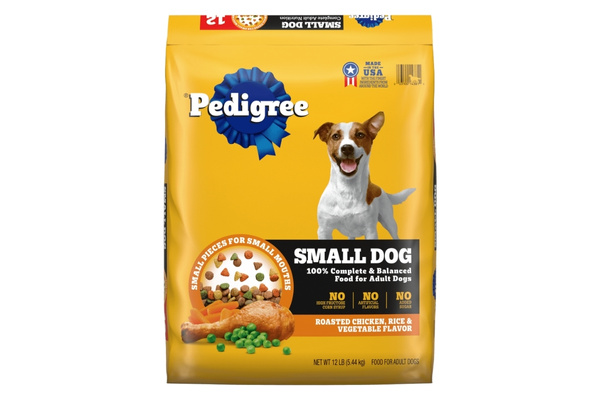
One thing Pedigree does well is palatability. Many dogs eat it enthusiastically, and the brand offers a range of flavors—Roasted Chicken, Grilled Steak, Beef & Lamb, and more. The wet food line, in particular, gets positive feedback for taste. Picky eaters often respond well to the Chopped Ground Dinner or Choice Cuts in Gravy formulas.
That said, palatability can vary. Some dogs refuse to eat Pedigree, especially after a formula change. The brand has made recipe adjustments in recent years, and some owners report their dogs suddenly rejecting food they previously loved.
Pedigree offers size-specific kibble for small and large breeds, which is helpful for dogs with smaller mouths or those who tend to gulp their food. The kibble is medium-density and crunchy, which some dogs prefer over softer or denser options.
Pedigree’s wet food tends to be more popular than the dry among reviewers. It smells more appealing, has a softer texture, and dogs seem to find it more enticing. Many owners use the wet food as a topper or mix it with kibble to boost palatability without switching entirely to canned feeding.
Take the free nutrition check and find out in under 1 minute which food is best tailored to your dog!
In just 60 seconds, find out which food fits your dog best — for free.
Pedigree is one of the most affordable dog food brands on the market. A 44-pound bag of Complete Nutrition typically costs around $30, which works out to roughly $0.68 per pound or about $0.20 per 1,000 kcal. Compare that to premium brands like Blue Buffalo or Hill’s Science Diet, which can run $2–$4 per pound, and the savings are substantial.
Wet food is more expensive per calorie—around $1.60 per pound for cans—but still cheaper than many competitors. If you’re feeding multiple large dogs, Pedigree’s pricing can make a real difference in your monthly budget.
The question is whether you’re getting good value for that low price. Pedigree meets AAFCO standards, so it’s nutritionally complete, but the ingredient quality is a trade-off. You’re paying for convenience and affordability, not for transparency, high protein, or premium sourcing.
For healthy dogs without special needs, Pedigree can be a reasonable choice. But if your dog develops health issues—skin problems, digestive upset, weight gain—you may end up spending more on vet visits, supplements, or switching to a higher-quality food down the line.
Brands like Purina Dog Chow and Kibbles ‘n Bits compete in the same budget segment, with similar ingredient profiles and pricing. If you’re looking for a step up in quality without breaking the bank, options like Purina Pro Plan or Diamond Naturals offer higher protein and better ingredient transparency at a moderate price increase.
If you’re considering a premium alternative, dog food from Nulo offers grain-free, high-protein formulas with named meats as the first ingredient—but expect to pay roughly double or more per pound.
Pedigree is produced in multiple facilities across the U.S., Australia, and Europe. In the U.K., production is centered in Melton Mowbray and Birstall. Mars, as a global corporation, operates dozens of pet food plants, but the company doesn’t publish a full list of production sites or sourcing details for Pedigree specifically.
Mars facilities typically hold ISO and HACCP certifications, which are industry standards for food safety and quality management. However, Pedigree doesn’t publish detailed quality control protocols or third-party testing results, so transparency is limited.
Pedigree has had a relatively stable recall history compared to some competitors. A voluntary recall was issued for a small batch of Adult Complete Nutrition due to possible foreign material, but the brand hasn’t experienced widespread or frequent recalls in recent years.
One concern that surfaced in 2023 was the discovery of elevated vitamin D levels in Pedigree Complete Nutrition Adult Roasted Chicken, Rice, and Vegetable—averaging 14,283 IUs per kg, which exceeded recommended levels. The FDA was notified, but no formal recall was initiated. Pedigree stated the product met their safety standards, but the incident raised questions about quality control and testing rigor.
Mars, as a corporation, has published sustainability goals around carbon reduction, responsible sourcing, and packaging, but Pedigree-specific initiatives aren’t detailed. The brand doesn’t provide transparency on ingredient sourcing by country, farm practices, or environmental impact per product line.
Pedigree uses plastic bags for dry food and aluminum cans for wet food. Some materials are recyclable, but the brand doesn’t publish data on recycled content or packaging waste reduction efforts specific to Pedigree products.
Pedigree supports animal welfare through the Pedigree Foundation, which has donated over $4 million to dog shelters and adoption programs in the U.S. The brand also runs the Pedigree Adoption Drive in the U.K. These initiatives are genuine and impactful, and they reflect a commitment to helping dogs beyond just selling food.
That said, the brand doesn’t publish detailed information about animal testing, supplier audits, or ethical sourcing standards for ingredients like meat meals and by-products.
Take the free nutrition check and find out in under 1 minute which food is best tailored to your dog!
In just 60 seconds, find out which food fits your dog best — for free.
I work at a dog shelter, and we tested Pedigree with a dog named Buster, a seven-year-old mixed-breed (likely Lab and Shepherd) who came to us after his owner passed away. Buster is a calm, easygoing dog with no known health issues, but he’d been eating a generic store-brand kibble before arriving at the shelter, so we wanted to see how he’d do on a more widely available option like Pedigree.
We transitioned Buster to Pedigree Complete Nutrition (Roasted Chicken) over about five days, mixing it gradually with his old food. He didn’t hesitate at all—he ate the new kibble without fuss from the start. No signs of reluctance, no picking around the new pieces. That was a good sign, especially since we’ve had dogs who are pickier about texture or smell.
Buster ate his meals enthusiastically throughout the test. He finished his bowl every time, and his eating pace was steady—not frantic, but clearly interested in the food. He didn’t seem to find it bland or boring, which can happen with some budget brands. The kibble size was appropriate for him, and he didn’t have any trouble chewing or swallowing.
Over the three weeks we fed him Pedigree, Buster’s energy level stayed consistent. He was alert and engaged during walks and playtime, and he didn’t seem sluggish or overly hyper. His coat didn’t change noticeably—it was already in decent shape—but it didn’t deteriorate either.
His stools were firm and normal for the first week and a half, but toward the end of the test, we noticed they became slightly softer and more frequent. Not diarrhea, but not as solid as they’d been on his previous food. It wasn’t severe enough to stop feeding, but it was noticeable. That could be individual sensitivity to the corn or the by-products in the formula—it’s hard to say for sure.
From a practical standpoint, Pedigree was easy to work with. The bag was widely available at our local grocery store, and the price made it feasible for a shelter budget. Buster didn’t have any major issues, and for a dog without special dietary needs, it did the job.
That said, the slight digestive shift was enough to make me wonder how he’d do on a higher-quality protein source or a formula with fewer grains. Buster is a healthy, adaptable dog, so he managed fine—but if he’d had a sensitive stomach or a history of allergies, I’m not sure Pedigree would have been the best fit.
Many owners appreciate Pedigree’s affordability and availability. For families with multiple dogs or large breeds, the low cost per pound makes a real difference. Dogs often eat it willingly, and some owners report their picky eaters actually prefer Pedigree over more expensive brands.
Several reviews mention shinier coats and firmer stools after switching to Pedigree, particularly from even lower-quality store brands. Long-term users often say their dogs have stayed healthy on the food for years without issues.
Digestive complaints are common. Owners report loose stools, gas, and vomiting, especially with the dry formulas. Some dogs develop itching, scratching, or ear infections, which owners attribute to ingredients like corn, wheat, or artificial dyes.
Formula changes have caused frustration. Several reviewers mention their dogs refused to eat after Pedigree updated recipes in early 2024, and some report their dogs became sick after the switch.
Quality concerns pop up occasionally—reports of strange odors, mold, or expired products in bulk bags from big-box retailers. These are rare, but they raise questions about quality control and storage conditions.
Dog food reviewers and analysts consistently rate Pedigree low—often 1 to 2.5 stars out of 5. The main criticisms are ingredient quality, high carbohydrate content, and lack of transparency. Sites like DogFoodAdvisor emphasize that the food meets AAFCO standards but falls short of modern expectations for protein-rich, whole-food-based diets.
Both are budget brands with similar pricing and ingredient profiles. Purina Dog Chow has slightly higher protein in some formulas and uses chicken by-product meal rather than generic meat and bone meal, which offers a bit more transparency. Palatability is comparable, and both have loyal followings among cost-conscious owners.
Blue Buffalo is a premium brand with real meat as the first ingredient, no by-products, and no artificial colors. Protein levels are higher (28–34%), and the brand emphasizes natural ingredients and antioxidants. The trade-off is cost—Blue Buffalo is roughly double the price per pound. If ingredient quality is a priority, Blue Buffalo is the better choice. If budget is the main concern, Pedigree wins.
Hill’s Science Diet is positioned as a veterinary-recommended brand with science-backed formulas and higher-quality ingredients. Protein and fat levels are more balanced, and the brand offers specialized diets for health conditions. Hill’s costs significantly more than Pedigree, but it’s a step up in both ingredient transparency and nutritional optimization.
Nulo is a high-protein, grain-free brand with named meats as the first ingredient, no by-products, and added probiotics. Protein levels range from 30–34%, and the brand targets active, health-conscious pet owners. Nulo costs roughly $3–$4 per pound, making it about three times the price of Pedigree. If you’re looking for a modern, premium alternative, Nulo delivers—but the price difference is substantial.
Curious about how Nulo compares in more detail? Check out our Nulo dog food review for a full breakdown.
Take the free nutrition check and find out in under 1 minute which food is best tailored to your dog!
In just 60 seconds, find out which food fits your dog best — for free.
Pedigree introduced Drizzlers, a mealtime sauce for dogs, in 2024. It’s designed to be drizzled over kibble to boost palatability and add variety. Available in four flavors—Natural Chicken, Turkey, Beef, and Lamb—it’s a creative addition for picky eaters or owners who want to make mealtime more interesting without switching foods entirely.
Pedigree entered the supplements category with soft chew multivitamins targeting joint care, digestion, and immunity. These are formulated with input from veterinarians and nutritionists at the Waltham Petcare Science Institute, and they’re designed to be safe for all breeds and sizes. At around $6.50 for a 180g pack, they’re an affordable way to add functional nutrition without prescription products.
Pedigree is best suited for healthy adult dogs without food sensitivities or special dietary needs. If your dog has a robust digestive system, maintains a healthy weight easily, and does well on grain-inclusive diets, Pedigree can be a practical, budget-friendly option. It’s especially popular in multi-dog households where feeding costs add up quickly.
The brand offers formulas for puppies, adults, and seniors, as well as size-specific options for small and large breeds. The puppy line includes DHA and extra calcium, which are appropriate for growing dogs. The senior formulas are essentially the adult formulas with adjusted feeding guidelines, so they’re not heavily specialized for aging dogs.
Pedigree is not ideal for dogs with food allergies, sensitivities, or digestive issues. The ambiguous ingredient labels make it difficult to identify and avoid specific triggers. It’s also not the best choice for highly active dogs, working breeds, or performance dogs who need higher protein and fat to fuel their energy levels.
Pedigree is a functional, affordable dog food that meets AAFCO standards and works fine for many dogs—but it’s not a brand I’d recommend if you have other options.
The biggest issue is ingredient quality. Ground corn as the first ingredient, ambiguous meat sources, artificial colors, and synthetic preservatives all add up to a formula that prioritizes cost over transparency and nutrition. The protein and fat levels are moderate at best, and the high carbohydrate content doesn’t align with what most modern pet nutritionists consider optimal for dogs.
That said, Pedigree has two strong points: it’s widely available, and it’s cheap. For families on a tight budget, or for shelters and rescues feeding dozens of dogs at a time, Pedigree makes feeding manageable. Many dogs eat it without issue, and some even thrive on it—especially if they’re coming from an even lower-quality food.
But if you can afford to spend a bit more—even just $10–$20 extra per month—I’d encourage you to look at brands like Purina Pro Plan, Diamond Naturals, or even fresh options like The Farmer’s Dog if you want to make a real upgrade. These brands offer higher protein, better ingredient transparency, and formulas that align more closely with what dogs actually need.
Would I feed Pedigree to my own dog? Honestly, no—not as a long-term choice. If I were in a pinch or on a very tight budget, I’d use it temporarily, but I’d prioritize switching to something with clearer ingredient sourcing and higher protein as soon as I could.
Would I recommend it to a friend? Only if they’re in a situation where cost is the primary concern and their dog has no sensitivities or health issues. For healthy, adaptable dogs, Pedigree can work—but it’s not a brand I’d call “good” in the context of what we know about canine nutrition today.
Bottom line: Pedigree does the job for some dogs, but there are better options at every price point if you’re willing to look. It’s not terrible, but it’s not great either—it’s just… adequate. And when it comes to your dog’s health, adequate shouldn’t be the goal.
Take the free nutrition check and find out in under 1 minute which food is best tailored to your dog!
In just 60 seconds, find out which food fits your dog best — for free.
Pedigree isn’t “bad” in the sense that it’s unsafe or harmful—it meets AAFCO nutritional standards and many dogs eat it without issues. However, it’s not optimal either. The main concerns are ingredient quality (corn as the first ingredient, ambiguous meat sources), high carbohydrate content, and the use of artificial colors and synthetic preservatives. For healthy dogs without sensitivities, it can work as a budget option, but there are better choices available at nearly every price point.
Corn is cheap, readily available, and provides carbohydrates for energy. Using ground whole grain corn as the primary ingredient helps keep costs low, which is essential for Pedigree’s mass-market positioning. However, this means dogs are getting more plant-based carbohydrates than animal protein, which doesn’t align with their natural dietary needs. Most nutrition experts prefer to see a named meat source as the first ingredient.
Yes, some dogs experience digestive upset on Pedigree, including loose stools, gas, and occasional vomiting. This is often attributed to the high grain content, meat by-products, or individual sensitivities to ingredients like corn and wheat. Dogs with sensitive stomachs or existing digestive issues are more likely to have problems with Pedigree than with higher-quality, more digestible formulas.
Pedigree offers a puppy-specific formula that includes DHA for brain and vision development, plus extra calcium for growing bones. It meets AAFCO standards for growth, so it’s nutritionally adequate. However, the moderate protein content (around 27%) may not be ideal for all puppies, especially large breeds or highly active young dogs who benefit from higher protein levels for proper development.
The difference is significant. Premium brands like Blue Buffalo use real meat as the first ingredient, avoid by-products and artificial colors, and typically provide 28-34% protein compared to Pedigree’s 21%. However, premium brands cost roughly double per pound. If ingredient quality and higher protein are priorities, the upgrade is worth it. If budget is the main concern, Pedigree offers basic nutrition at a much lower cost.
Pedigree has made recipe adjustments in recent years, and dogs can be sensitive to changes in taste, texture, or ingredients. When manufacturers alter formulas—even slightly—some dogs will reject the “new” food even if the packaging looks the same. This is particularly common with dogs who are creatures of habit or have discerning palates.
No, Pedigree is not recommended for dogs with food allergies or sensitivities. The ingredient labels use ambiguous terms like “animal fat,” “meat and bone meal,” and “meat by-products” without specifying the source. This makes it impossible to identify and avoid specific allergens like chicken, beef, or particular grains. Dogs with allergies need foods with clearly identified, limited ingredients.
Yes, Pedigree contains artificial colors (Red 40, Yellow 5, Blue 2) and uses BHA as a preservative. The artificial colors serve no nutritional purpose—they’re purely cosmetic to make the food look appealing to humans. BHA is FDA-approved but is a synthetic preservative that some pet owners prefer to avoid in favor of natural alternatives like mixed tocopherols (vitamin E).
Pedigree is popular in multi-dog households precisely because of its low cost per pound—around $0.68 compared to $2-4 for premium brands. If you have several healthy dogs without special dietary needs, Pedigree can make feeding manageable financially. However, if any of your dogs develop health issues, digestive problems, or allergies, you may end up spending more on vet visits or needing to feed different foods to different dogs.
Pedigree’s wet food is generally better received than the dry kibble. It’s more palatable, smells more appealing to dogs, and has fewer of the controversial ingredients found in the dry formulas. However, wet food is more expensive per calorie and requires larger volumes to meet daily energy needs. Many owners use wet food as a topper or mix it with kibble rather than feeding it exclusively.
Take the free nutrition check and find out in under 1 minute which food is best tailored to your dog!
In just 60 seconds, find out which food fits your dog best — for free.
9 out of 10 dog owners are feeding their dog the wrong food.
Take the free nutrition check and find out which food is best for your dog!
2,847+ dog owners already did