9 out of 10 dog owners are feeding their dog the wrong food

Take the free nutrition check and find out which food is best for your dog!

Shelter manager, certified canine nutritionist, and lifelong dog lover
• Exceptional palatability consistently earns praise from dog owners, with even picky eaters showing enthusiasm at mealtimes due to fresh meat content and natural flavors.
• Plant protein inflation undermines the “biologically appropriate” marketing—pea protein boosts overall protein percentages while providing less nutritional value than animal sources.
• Zero major recalls from 2016-2025 demonstrates strong quality control, giving the brand a significant safety advantage over competitors with recall histories.
• Premium pricing at $3-4.50 per pound makes it expensive for large dogs, though high calorie density means smaller feeding portions partially offset costs.
• Visible health improvements frequently reported by users include shinier coats, firmer stools, and increased energy levels within 2-4 weeks of switching.
Take the free nutrition check and find out in under 1 minute which food is best tailored to your dog!
Acana entered the pet food world in 1985 when Reinhard Muhlenfeld launched the brand through Champion Petfoods in Alberta, Canada. The company’s original mission centered on producing high-quality feed for local farms and ranches, but it quickly pivoted to premium pet nutrition. Over the decades, Acana carved out a niche by promoting what it calls “biologically appropriate” diets—formulas built around high animal protein, fresh regional ingredients, and minimal processing.
In 2016, the brand expanded production to the United States with the opening of DogStar Kitchens in Kentucky, aiming to supply American markets more directly. Then in 2023, Mars Incorporated acquired Champion Petfoods, bringing both Acana and its sister brand Orijen under the Mars umbrella. This shift from family ownership to a global conglomerate raised eyebrows among longtime customers, though the company maintains that its core philosophy remains intact.
Acana’s stated purpose is “To Earn Pet Lover Trust Every Day so Pets Thrive for a Lifetime,” and its vision is “To Be the Global Leader in Advancing Premium Foods for Pets.” The brand positions itself in the premium segment, targeting health-conscious dog owners willing to pay more for ingredient transparency and nutritional density. It competes with brands like Blue Buffalo, Wellness, and Taste of the Wild, while its sister brand Orijen occupies an even higher price tier.
One of Acana’s key selling points is its emphasis on regional ingredient sourcing. The Canadian facility highlights Alberta-raised chicken, prairie-caught fish, and local eggs, while the Kentucky plant sources proteins and produce from American farms. This “fresh regional ingredients” messaging appeals to buyers who prioritize traceability and want to know where their dog’s food comes from.
The brand also touts its manufacturing control. Unlike many competitors that outsource production to co-packers, Champion Petfoods owns and operates its facilities, which theoretically allows tighter quality oversight. Acana has maintained a clean safety record with zero major recalls from 2016 through 2025, which is a meaningful trust signal in an industry where recalls can tank consumer confidence overnight.
That said, the transition to Mars ownership and the expansion into US manufacturing sparked some debate. A segment of the customer base worries that corporate ownership could dilute quality or shift priorities toward profit over product. Additionally, some users reported perceived formula changes after the Kentucky facility came online, though the company states most adjustments have been minor and focused on ingredient availability and regulatory compliance.
Acana’s recipes lead with named animal proteins—think chicken, turkey, fish, beef, lamb, or pork—rather than generic “meat meal.” In the recently enhanced Classics line, for example, the first ingredient is now fresh or raw meat or fish, which is a step up from earlier formulations that sometimes relied more heavily on meat meals. Meat meals aren’t inherently bad—they’re concentrated protein sources with moisture removed—but fresh meat signals higher ingredient quality and better digestibility for many dogs.
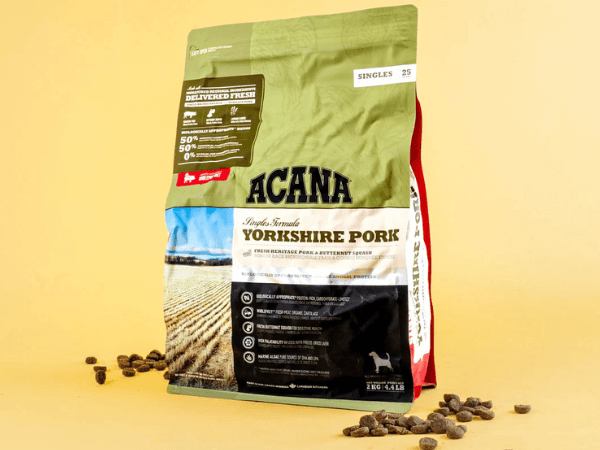
Across the product range, you’ll see a mix of fresh, raw, and dried animal ingredients. The Regionals line, for instance, typically includes 70% animal ingredients by weight, while the Highest Protein formulas push that even higher. The Singles Limited Ingredient line focuses on a single animal protein (like duck or pork) to simplify the ingredient panel for dogs with sensitivities, though these recipes still include pea protein, which I’ll address shortly.
The brand also incorporates organ meats and cartilage in many formulas, following a “whole prey” philosophy. You’ll find chicken liver, turkey heart, and cartilage listed, which provide natural sources of vitamins, minerals, and glucosamine. This approach mimics what a wild canine might consume and adds nutritional density beyond just muscle meat.
Historically, Acana leaned heavily into grain-free formulations, using peas, lentils, chickpeas, and potatoes as the primary carbohydrate sources. This positioned the brand well during the grain-free boom, but it also put Acana in the crosshairs when the FDA began investigating a potential link between grain-free diets and dilated cardiomyopathy (DCM) in dogs. The investigation remains ongoing as of 2025, with no definitive conclusions, but the controversy rattled consumer confidence.
In response, Acana introduced Wholesome Grains formulas in 2019 and expanded that line in 2024 with the Classics series. These recipes incorporate barley, oats, and other gluten-free grains, giving owners a grain-inclusive option without sacrificing protein levels. The Classics line, for example, features pearled barley, peas, oats, lentils, and fish oil alongside animal proteins, targeting buyers who want grains back in the bowl but still expect premium quality.
The shift to grain-inclusive options is smart. While many dogs do fine on grain-free diets, grains aren’t the enemy for most pets, and they can provide valuable fiber, vitamins, and energy. For owners spooked by the DCM headlines, the Wholesome Grains line offers peace of mind without forcing a brand switch.
One ingredient that draws criticism across Acana’s lineup is pea protein. Peas themselves are fine—they’re a legume that provides fiber and some protein. But pea protein isolate is a concentrated plant-based protein used to boost the overall protein percentage on the guaranteed analysis. This practice, common in premium grain-free foods, allows brands to advertise impressive protein numbers without using as much expensive meat.
The problem? Plant-based proteins aren’t as biologically valuable for dogs as animal proteins. Dogs are facultative carnivores, meaning they’re built to derive most of their nutrition from meat. While they can digest and use plant proteins, these don’t provide the same amino acid profile or digestibility as chicken, beef, or fish. Expert reviewers at Dog Food Advisor note that Acana’s reliance on legume-based protein is “unfortunate” and prevents the brand from earning their highest ratings.
For the Singles Limited Ingredient line, which markets itself for dogs with food sensitivities, the inclusion of pea protein is particularly frustrating. If your dog is sensitive to plant proteins or legumes, these “limited ingredient” formulas won’t be as limited as you’d hope.
Another point of discussion is the carbohydrate percentage. While Acana’s protein and fat levels are above average, the carb content—estimated around 28-37% depending on the formula—is higher than some ultra-premium competitors. This isn’t necessarily a dealbreaker, but it does mean you’re paying premium prices for a food that isn’t as low-carb as you might expect from a “biologically appropriate” brand.
On the positive side, Acana avoids artificial preservatives, colors, and flavors. The brand uses mixed tocopherols (a form of vitamin E) as a natural preservative, which is standard practice in premium foods and works well for shelf stability without chemical additives.
Most formulas also include chelated minerals, which are minerals bound to amino acids for better absorption. This is a quality touch that improves nutrient bioavailability compared to cheaper mineral forms. You’ll also find live probiotics added to support digestive health, though the specific strains and colony-forming unit (CFU) counts aren’t always detailed on the packaging.
Senior and joint-focused formulas include glucosamine and chondroitin, typically around 1,200 mg/kg, which can help support cartilage and joint health in aging or large-breed dogs. Omega-3 and omega-6 fatty acids are present across the board, sourced from fish oil and animal fats, contributing to skin, coat, and anti-inflammatory benefits.
| Price per pound | $3.00 – $4.50 |
| Primary protein | Fresh chicken, turkey, fish, beef, lamb, pork, duck |
| By-products | None (includes organ meats) |
| AAFCO compliance | Yes + feeding trials on select formulas |
| Formula options | 6 product lines (Regionals, Singles, Classics, Highest Protein, Puppy, Senior) |
| Availability | Specialty pet stores + online retailers |
| Monthly cost (medium dog) | $90 – $150 |
Take the free nutrition check and find out in under 1 minute which food is best tailored to your dog!
In just 60 seconds, find out which food fits your dog best — for free.
Acana’s protein content ranges from 27% to 35% across most formulas, with the Highest Protein line pushing into the 38-40% range. This is well above the industry average for dry dog food, which typically hovers around 22-26%. For active dogs, working breeds, or those who thrive on meat-heavy diets, this protein density is a major selling point.
Fat levels sit between 15% and 19% in most recipes, providing ample energy and supporting coat health. The calorie density ranges from about 3,350 to 3,950 kcal/kg, meaning you’ll feed less volume compared to lower-quality foods. This can partially offset the higher per-pound cost, since your dog needs fewer cups per meal to meet their caloric needs.
However, as mentioned earlier, a meaningful chunk of that protein comes from plant sources like pea protein. The guaranteed analysis doesn’t distinguish between animal and plant protein, so the 33% protein figure on a bag of Regionals includes both the chicken and the peas. For dogs with no sensitivities, this is fine—they’ll still get plenty of nutrition. But for buyers who assume they’re paying for maximum animal protein, it’s worth understanding that the numbers are slightly inflated by legumes.
All Acana formulas meet AAFCO standards for complete and balanced nutrition. Five of the six core recipes are approved for all life stages, meaning they’re suitable for puppies, adults, and seniors. The Light & Fit formula is specifically designated for adult maintenance, reflecting its lower fat and calorie content.
Meeting AAFCO standards is the baseline for any commercial dog food, but Acana goes a step further by conducting feeding trials on lead formulas. Feeding trials involve actually feeding the food to dogs over a period of time and monitoring their health, which is more rigorous than simply calculating that a recipe meets nutrient profiles on paper. This adds a layer of credibility, though not all Acana recipes have undergone feeding trials—only select flagship products.
The brand also emphasizes digestibility and nutrient absorption, though specific digestibility coefficients aren’t published. The use of fresh meat, whole ingredients, and probiotics theoretically supports better digestion, and many user reviews report smaller, firmer stools, which is a practical indicator that the food is being well-utilized.
Acana includes a broad spectrum of vitamins and minerals, many in chelated forms for better absorption. You’ll find vitamin A, D3, E, and B-complex vitamins, along with minerals like zinc, copper, and selenium. The inclusion of organ meats naturally boosts micronutrient levels, providing vitamins like B12 and folate in bioavailable forms.
Omega-3 fatty acids, primarily from fish oil, range from 0.7% to 1.0%, which is solid for supporting skin, coat, and joint health. Omega-6 levels are higher, around 2.0-2.6%, which is typical and necessary for cell membrane function and overall health. The balance between omega-3 and omega-6 is reasonable, though not as optimized as in some prescription or therapeutic diets.
Acana is a strong fit for active, healthy adult dogs who can handle high-protein, high-fat diets without digestive upset. If you have a working dog, an athletic breed, or just a high-energy pet who burns through calories quickly, the nutrient density and protein levels will serve them well. Breeds like Border Collies, Australian Shepherds, Labrador Retrievers, and German Shepherds often thrive on this type of formula.
The brand also works well for dogs with coat or skin issues linked to nutrition. Multiple user testimonials report shinier coats, less shedding, and reduced itching after switching to Acana, likely due to the combination of quality animal fats, omega fatty acids, and bioavailable nutrients from fresh ingredients.
For picky eaters, Acana’s palatability is a major advantage. The food consistently earns high marks for taste, with professional reviewers noting it’s “probably one of the tastiest dog foods we’ve reviewed.” The inclusion of fresh meat, organs, and natural fats makes it appealing even to dogs who turn their noses up at other premium brands.
If you’re looking to rotate proteins for variety, Acana’s diverse recipe lineup—Meadowland, Appalachian Ranch, Freshwater Fish, Duck & Pear, Pork & Squash—makes it easy to switch flavors within the same brand without disrupting digestion or nutrient balance.
Acana’s rich formulations aren’t ideal for every dog. If your pet has a sensitive stomach or a history of pancreatitis, the high fat content (15-19%) may trigger digestive upset or even a flare-up. Several user reviews mention loose stools during the transition period, and one owner reported their dog became lethargic and unwell even after a gradual switch, concluding the food was “too rich” for their pet.
Dogs with kidney disease or other conditions requiring protein restriction should avoid Acana’s high-protein formulas. These recipes are designed for healthy dogs and can place unnecessary strain on compromised kidneys. Always consult your vet before feeding a high-protein diet to a dog with underlying health issues.
If your dog has a confirmed allergy or sensitivity to legumes—peas, lentils, chickpeas—Acana’s grain-free lines won’t be suitable, since these ingredients feature prominently. Even the Singles Limited Ingredient line includes pea protein, which limits its usefulness for dogs with plant-based protein sensitivities. In that case, you’d be better off with a truly limited-ingredient hydrolyzed protein diet from a veterinary line like Hill’s or Royal Canin.
Finally, Acana doesn’t offer prescription or therapeutic diets. If your dog needs a specialized formula for renal support, urinary health, or gastrointestinal issues, you’ll need to look elsewhere. The brand’s focus is on premium nutrition for healthy dogs, not medical management.
Acana offers dedicated puppy formulas with adjusted calcium levels and added DHA/EPA for brain and eye development. These are AAFCO-approved for growth and are a solid choice for large-breed puppies who need controlled calcium to prevent skeletal issues. The high protein and fat support rapid growth, though you’ll want to monitor portions carefully to avoid overfeeding.
For adult dogs, the Regionals, Singles, and Wholesome Grains lines all work well. The variety lets you match the formula to your dog’s activity level—Highest Protein for athletes, Light & Fit for couch potatoes, Wholesome Grains for those who do better with grains.
Senior dogs can benefit from Acana’s Senior formula, which includes glucosamine and chondroitin for joint support and slightly lower fat (around 15%) to accommodate reduced activity. However, the protein level remains robust at 29%, which is great for maintaining muscle mass but may not suit seniors with kidney concerns.
Palatability is where Acana truly shines. Professional reviews and user testimonials consistently highlight that dogs love the taste. One reviewer noted their dog “can’t wait to chow down at meal times—always takes it as a sign of good food,” while another mentioned their picky eater finally showed enthusiasm after switching to Acana.
The high meat content and inclusion of fresh ingredients likely drive this appeal. Dogs are drawn to the smell and flavor of real meat, and Acana’s recipes deliver on that front. The brand even warns on its packaging about the risk of overeating, since the food is so palatable that some dogs will try to scarf down more than they need.
Acana offers multiple flavor varieties within each product line, making it easy to rotate proteins and keep meals interesting. The Regionals line includes options like Meadowland (poultry and eggs), Appalachian Ranch (red meats), and Freshwater Fish, while the Singles line offers Duck & Pear, Pork & Squash, and Lamb & Apple. This variety is a practical advantage for owners who want to prevent food boredom without switching brands.
That said, a few users noted their dogs experienced temporary digestive adjustments during the transition, with loose stools in the first week or two. This is common when switching to a richer, higher-protein food, and it typically resolves as the dog’s system adapts. The standard advice applies: transition gradually over 7-10 days by mixing increasing amounts of Acana with the old food.
One minor complaint from some owners is kibble size. Depending on the formula, the kibble can be on the larger side, which may be challenging for small dogs or those who gulp their food without chewing. It’s not a widespread issue, but worth noting if you have a toy breed or a dog prone to choking.
Take the free nutrition check and find out in under 1 minute which food is best tailored to your dog!
In just 60 seconds, find out which food fits your dog best — for free.
Acana sits firmly in the premium price tier, typically ranging from $3.00 to $4.50 per pound depending on the formula and package size. For a 25-pound bag of Regionals, you’re looking at around $98, which translates to roughly $4.50 per pound. The Singles Limited Ingredient line runs even higher, around $5.14 per pound, while the Wholesome Grains formulas are slightly more affordable at $4.18 per pound.
On a per-1,000-kcal basis, Acana averages $6.20 to $7.20, which is competitive with other premium brands like Blue Buffalo Wilderness and Wellness CORE, but notably less expensive than its sister brand Orijen, which can run $7.50 to $10.50 per 1,000 kcal. This positions Acana as a middle-ground option—you’re getting high-quality ingredients and protein levels without paying super-premium prices.
The calorie density works in your favor here. Because Acana packs 3,600-3,850 kcal/kg, you’ll feed smaller portions than you would with a lower-calorie food. For a 50-pound dog, you might feed 2 to 2.5 cups per day, compared to 3 or more cups of a mainstream brand. Over time, this reduces the effective cost per day, though you’re still looking at roughly $3 to $5 daily for a medium-sized dog, depending on the formula.
Is it worth the price? If you prioritize ingredient transparency, high animal protein, and fresh regional sourcing, then yes, Acana delivers value for the cost. You’re paying for named meat sources, minimal processing, and a brand with a clean safety record. The visible improvements in coat quality, energy, and stool consistency reported by many users suggest the food is doing its job nutritionally.
However, if you’re budget-conscious or feeding a large dog, the cost adds up quickly. A 70-pound Labrador might go through a 25-pound bag in three weeks, meaning you’re spending $130 to $150 per month on food alone. That’s a significant commitment, and there are cheaper options that still offer decent quality—brands like Purina Pro Plan or Taste of the Wild come in 20-40% lower while maintaining respectable ingredient profiles.
One frustration mentioned by users is that Acana rarely goes on sale. The brand maintains price stability, which signals confidence in its positioning but also means you won’t find deep discounts to ease the financial burden. Some online retailers like Chewy and Amazon offer 5-10% off through autoship subscriptions, which helps, but it’s not the 20-30% promotions you’ll see on other premium brands.
Compared to fresh food services like The Farmer’s Dog or Nom Nom, Acana is a bargain—those brands can run $5 to $10+ per day for a medium dog. But compared to mid-premium kibble, Acana is a noticeable step up in cost. You’ll need to decide whether the ingredient quality and nutritional density justify the expense for your household.
Acana is manufactured in two facilities: the original Acheson plant in Alberta, Canada, and the DogStar Kitchens in Auburn, Kentucky, which opened in 2016 to supply US markets. Champion Petfoods owns and operates both facilities, which gives the company direct oversight of production rather than relying on third-party co-packers. This is a meaningful advantage in terms of quality control and supply chain transparency.
The Canadian facility emphasizes locally sourced ingredients—chicken from Alberta farms, fish from regional waters, eggs from nearby producers. The Kentucky plant follows a similar model, sourcing proteins and produce from American suppliers. This regional approach reduces transportation time and theoretically ensures fresher ingredients, though it also means formulas can vary slightly depending on where they’re produced.
Acana highlights its state-of-the-art kitchens with advanced ingredient storage, custom blending machinery, and on-site testing through the company’s BAFRI Innovation Centre. The brand claims to conduct nutrient testing, sensory evaluation, and safety checks on both raw ingredients and finished products, though detailed audit results aren’t published for public review.
The company meets AAFCO standards and complies with FDA and state-level feed regulations in the US. While specific ISO, HACCP, or other international certifications aren’t listed with certificate numbers, the facilities are described as exceeding standard industry safety protocols. Acana’s goal is to produce food “as safe as the food we eat ourselves,” which is a nice sentiment, though without third-party audit transparency, it’s hard to verify independently.
One of Acana’s strongest selling points is its recall history—or lack thereof. The brand has had zero major recalls from 2016 through 2025, which is impressive in an industry where contamination incidents and formula errors can lead to costly, trust-damaging recalls. This clean record suggests that the quality control measures in place are effective, and it’s a big reason why many owners feel confident feeding Acana long-term.
That said, the transition to US manufacturing in 2016 sparked some consumer concern. A segment of longtime customers reported perceived changes in formula quality or consistency after the Kentucky facility came online, with anecdotal complaints about digestive issues or coat changes. The company maintains that formulations remained largely the same, with only minor adjustments for ingredient availability and regulatory compliance. It’s difficult to assess whether these concerns reflect actual changes or simply heightened scrutiny after the ownership and production shifts.
The 2023 acquisition by Mars Incorporated also raised questions. Mars is a global pet food giant with extensive resources, but corporate ownership can sometimes lead to cost-cutting or formula adjustments that prioritize profit over quality. So far, there’s no concrete evidence that Mars has altered Acana’s core approach, and the brand continues to market itself with the same “biologically appropriate” messaging. Still, some enthusiasts worry that the family-owned, quality-first ethos could erode over time under conglomerate control.
Acana emphasizes regional ingredient sourcing as a sustainability advantage. By sourcing chicken, fish, and produce from farms and fisheries near its manufacturing facilities, the brand reduces transportation distances, which theoretically lowers the carbon footprint. The company also highlights partnerships with trusted suppliers who follow humane and sustainable practices, though specific certifications or third-party audits aren’t detailed.
The brand’s focus on fresh, whole ingredients means less processing and fewer synthetic additives, which aligns with a more natural, less industrial approach to pet food. However, Acana doesn’t publish concrete sustainability metrics—no carbon footprint data, no water usage reports, no waste reduction goals. For a brand that positions itself as premium and transparent, this is a missed opportunity.
Packaging is another area where Acana could improve. The bags are made from high-barrier plastic laminate, which is durable and protects the food from moisture and oxidation but isn’t widely recyclable. The company has begun introducing some recycled-content bags, but as of 2025, most packaging still ends up in landfills. Compared to brands exploring compostable or fully recyclable packaging, Acana lags behind on this front.
On animal welfare, Acana states it sources proteins from farms and fisheries with humane standards, but the specifics depend on the supplier and location. There’s no public record of the brand conducting animal testing on finished products, which is a positive. However, without third-party certifications like Certified Humane or Global Animal Partnership ratings, it’s hard to verify the welfare claims independently.
The brand’s commitment to supporting local economies is worth noting. By partnering with regional farmers and fisheries, Acana contributes to local agriculture and reduces reliance on global supply chains. This is both a sustainability and an economic benefit, though again, the lack of published data makes it difficult to quantify the impact.
I work at a shelter where we’re always evaluating different foods to see what works best for the dogs in our care. We recently tested Acana’s Regionals Meadowland formula with a dog named Cooper, a four-year-old mixed breed—probably some Cattle Dog and Terrier in there—who came to us after his previous owner could no longer care for him. Cooper’s a medium-energy guy, around 45 pounds, with a wiry coat that always looked a bit dull and a tendency to scratch more than seemed normal. He’d been eating a mid-range grocery store brand before arriving, and while he was healthy overall, his coat and energy levels suggested he wasn’t getting optimal nutrition.
We transitioned Cooper to Acana gradually over about ten days, mixing increasing amounts with his old food. The first thing I noticed was his enthusiasm at mealtimes. Cooper had always been a decent eater, but he wasn’t particularly excited about food. With Acana, he’d hear the kibble hit the bowl and trot over immediately, tail wagging. He cleaned his bowl every time, which was a nice change from the occasional half-finished meals we’d seen before.
About two weeks in, his stools firmed up noticeably. They were smaller and more consistent, which made cleanup easier and suggested he was digesting the food efficiently. There was a brief period during the transition where things got a little loose—nothing alarming, just the typical adjustment you’d expect when switching to a richer food—but that resolved within a few days.
The most visible change came around the three-week mark: Cooper’s coat started to look healthier. It wasn’t a dramatic transformation, but the dullness faded, and he had a bit more shine. His scratching also decreased, though it didn’t disappear entirely. I wouldn’t say Acana cured a skin issue, but it seemed to help, possibly due to the omega fatty acids and quality protein sources.
Energy-wise, Cooper seemed a bit more lively and engaged. He’d always been playful, but he had more stamina during playtime and seemed more alert overall. Whether that was directly due to the food or just him settling into shelter life is hard to say, but the timing lined up.
One thing I did notice was that Cooper seemed satisfied with smaller portions. The feeding guidelines on Acana call for less volume than his previous food because of the calorie density, and he didn’t seem to miss the extra bulk. He wasn’t begging between meals or acting hungry, which suggested the food was keeping him full.
Overall, Cooper responded well to Acana. It wasn’t a miracle cure for anything, but the improvements in coat quality, stool consistency, and mealtime enthusiasm were clear. For a shelter dog who needed a nutritional boost without any dramatic health issues, it worked as intended. If Cooper were my own dog, I’d feel good about feeding him Acana long-term, though I’d probably rotate in some variety to keep things interesting.
Take the free nutrition check and find out in under 1 minute which food is best tailored to your dog!
In just 60 seconds, find out which food fits your dog best — for free.
Acana enjoys a solid reputation among dog owners who’ve made the switch, with most reviews landing in the 4.0 to 4.5-star range across platforms. The most common praise centers on coat improvements, energy levels, and palatability, while the most frequent complaints involve price and occasional digestive adjustments.
One Golden Retriever owner who initially hesitated due to cost ultimately concluded the food was “absolutely worth every penny” after seeing improvements in coat shine and energy. A Labrador owner noted, “His coat’s gotten more shiny and definitely feels healthier to touch” after six months on Acana, and added that their dog’s energy picked up to the point where they struggled to keep up on walks.
Several users highlighted success with picky eaters. One owner with a dog who had been refusing other brands reported, “She’s a finicky eater and was having some stomach issues with her previous food, but we’ve seen a big change since the swap. Her coat is glossier, she seems to have more energy, and above all, no more tummy troubles.” Another mentioned their dog, previously on Science Diet, “now eats all his food at once rather than waiting till he is so hungry he has to eat,” suggesting a clear preference for Acana’s taste.
The most dramatic success story came from a Maltese Terrier owner dealing with severe allergies for two years. After trying multiple hypoallergenic brands without success, they switched to Acana and reported, “We have had no more itching, no biting of his paws—so worth the money.” This kind of result isn’t universal, but it highlights Acana’s potential for dogs with skin or allergy issues linked to diet.
On the flip side, price remains the most consistent complaint. Users repeatedly describe Acana as “pricier than most brands” and “definitely on the pricier side,” though most frame this as a trade-off for quality rather than poor value. One owner noted, “Better safe than sorry when it comes to what our pups are ingesting, right?”—a sentiment echoed across reviews.
Digestive issues during transition pop up in several testimonials. One user reported their dog “did have some loose stool the first week or two when we switched from his old food to Acana,” though this resolved with time. Another mentioned their dog “had a bit of a rumbling tummy at first but adjusted over time.” These experiences underscore the importance of a gradual transition, especially when moving to a richer, higher-protein formula.
A more critical review came from an owner whose dog with a sensitive stomach never adjusted. Despite a slow transition, their dog experienced persistent digestive upset and became “very quiet and not himself at all.” They concluded Acana was “a bit too rich” for their pet and switched back to a gentler formula. This is a reminder that no food works for every dog, and Acana’s nutrient density can be too much for sensitive systems.
Availability issues surfaced occasionally. One owner noted, “The only downside I can think of is availability—sometimes my local pet store runs out since it’s quite popular. So I’ve started buying it online just to make sure I always have a bag at hand.” This suggests strong demand but also highlights a potential inconvenience for those who prefer in-store shopping.
Overall, the user feedback paints Acana as a high-quality, well-tolerated food that delivers visible benefits for most dogs, particularly in coat health and energy. The main barriers are cost and the need for careful transition, but for owners willing to invest in premium nutrition, the results generally justify the expense.
Blue Buffalo is one of Acana’s closest competitors in the premium segment, though it’s positioned slightly lower in price. Blue Buffalo’s Wilderness line offers grain-free, high-protein formulas similar to Acana’s Regionals, but at around $2.50 to $3.50 per pound—about 15-25% less expensive. Blue Buffalo also has a broader product range, including wet food, treats, and a prescription diet line, giving it more versatility.
Where Acana pulls ahead is in protein density and fresh ingredient emphasis. Acana’s Regionals average 33-35% protein compared to Blue Buffalo’s 30-34%, and Acana leads with fresh meat rather than meat meal. However, Blue Buffalo’s “LifeSource Bits”—cold-formed nutrient-rich kibble pieces—offer a unique functional advantage that Acana doesn’t match.
For buyers prioritizing maximum protein and fresh ingredients, Acana is the better choice. For those who want more product variety (wet food, different price tiers) and slightly lower cost, Blue Buffalo is a solid alternative.
Taste of the Wild competes directly with Acana in the grain-free, high-protein space but at a significantly lower price—around $1.75 to $2.50 per pound. This makes it an attractive option for budget-conscious buyers who still want quality ingredients. Taste of the Wild offers solid protein levels (28-32%) and uses named meat sources, though the protein density is lower than Acana’s.
The trade-off is past recalls. Taste of the Wild’s manufacturer, Diamond Pet Foods, experienced recall incidents in 2012 and 2013, which tarnished its reputation among some consumers. Acana’s zero-recall record from 2016 onward gives it a clear safety advantage.
If cost is a major concern and you’re comfortable with Taste of the Wild’s improved post-recall protocols, it’s a viable alternative. If you want the peace of mind that comes with a cleaner safety record and higher protein levels, Acana is worth the premium.
Orijen is Acana’s sister brand, also made by Champion Petfoods, and positioned as the super-premium option. Orijen’s protein levels run 38-44%, compared to Acana’s 27-35%, and Orijen formulas include more diverse protein sources per recipe—often 8 to 10 different meats, fish, and organs. The ingredient panels are more complex, with even less reliance on plant-based proteins.
The cost reflects this: Orijen runs $4.50 to $6.00+ per pound, making it 30-50% more expensive than Acana. For many dogs, this extra protein and ingredient diversity is overkill. Unless you have a highly active working dog or a breed that thrives on maximum protein, Acana offers better value without sacrificing core quality.
That said, if you’re willing to pay top dollar and want the absolute highest protein and most diverse ingredient list, Orijen is the premium choice. If you want excellent quality without the luxury price tag, Acana is the smarter pick.
Purina Pro Plan occupies the mid-premium tier, priced around $1.75 to $2.75 per pound—significantly less than Acana. Pro Plan benefits from massive corporate backing (Nestlé Purina), extensive research, and strong veterinary endorsement. It’s widely available in grocery stores and big-box retailers, making it convenient and accessible.
However, Pro Plan’s protein levels (26-30% in most formulas) are lower than Acana’s, and the ingredient panels lean more on grain-inclusive recipes with less emphasis on fresh meat. Pro Plan uses real meat as the first ingredient, but the overall meat content is lower, and you’ll see more by-products and fillers.
For owners prioritizing affordability, convenience, and veterinary backing, Pro Plan is a solid choice. For those who want higher protein, fresher ingredients, and a more premium positioning, Acana is worth the extra cost.
The Farmer’s Dog represents a different category entirely—fresh, human-grade food delivered frozen via subscription. It’s the fastest-growing segment in premium pet food, appealing to owners who want maximum freshness and convenience. The cost, however, is substantially higher: $5 to $10+ per day for a medium dog, compared to Acana’s $3 to $5 per day.
The Farmer’s Dog offers customization, fresh ingredients, and no preservatives, but it requires freezer space and advance planning to thaw meals. Acana, as a kibble, offers shelf stability, convenience, and lower cost while still delivering high-quality nutrition.
If you’re willing to invest in fresh food and can handle the logistics, The Farmer’s Dog is a premium upgrade. If you want premium nutrition without the hassle or cost of fresh food, Acana is the practical choice. Not sure whether to choose Acana or The Farmer’s Dog? Read our detailed The Farmer’s Dog review to see how fresh food stacks up against premium kibble.
Take the free nutrition check and find out in under 1 minute which food is best tailored to your dog!
In just 60 seconds, find out which food fits your dog best — for free.
Acana is best suited for active, healthy dogs who can handle high protein and fat without digestive issues. If you have a working dog, an athletic breed, or just a high-energy pet who needs calorie-dense nutrition, Acana will serve them well. Breeds like Border Collies, Australian Shepherds, German Shepherds, and Labrador Retrievers tend to thrive on these formulas.
It’s also a good fit for dogs with coat or skin issues linked to nutrition. The high-quality animal fats, omega fatty acids, and fresh ingredients often lead to visible improvements in coat shine, texture, and overall skin health. If your dog struggles with dullness, shedding, or mild itching, Acana is worth trying.
For picky eaters, Acana’s exceptional palatability makes it a strong candidate. The food consistently earns praise for taste, and many owners report that dogs who refused other brands suddenly show enthusiasm at mealtimes.
Acana offers puppy formulas with appropriate calcium levels and DHA/EPA for development, making it suitable for growing dogs. The high protein and fat support rapid growth, though you’ll want to monitor portions to avoid overfeeding.
For senior dogs, the Senior formula includes glucosamine and chondroitin for joint support and slightly lower fat to accommodate reduced activity. However, the protein level remains high, which is great for maintaining muscle mass but may not suit seniors with kidney concerns—consult your vet if your older dog has any underlying health issues.
Acana is not ideal for dogs with sensitive stomachs or a history of pancreatitis, as the high fat content can trigger digestive upset. It’s also not suitable for dogs requiring protein restriction due to kidney disease or other medical conditions. And if your dog has a confirmed allergy to legumes, the grain-free formulas won’t work due to the inclusion of peas, lentils, and chickpeas.
Acana is a solid premium dog food that delivers on most of its promises—high protein, quality ingredients, and strong palatability. The emphasis on fresh, regional meat sources sets it apart from mass-market brands, and the zero-recall record through 2025 gives me confidence in the company’s quality control. For active, healthy dogs who thrive on meat-heavy diets, Acana is a smart choice that often produces visible benefits in coat quality, energy, and digestion.
That said, it’s not without trade-offs. The inclusion of pea protein to boost overall protein numbers is a compromise I’d prefer not to see in a brand that markets itself as “biologically appropriate.” You’re paying premium prices, and I’d expect maximum animal protein without relying on legumes to inflate the guaranteed analysis. This doesn’t make Acana a bad food—it’s still well above average—but it prevents it from being a top-tier standout in my book.
The price is another consideration. At $3 to $4.50 per pound, Acana isn’t cheap, and for large dogs or multi-dog households, the cost adds up quickly. The calorie density helps offset this somewhat, since you feed smaller portions, but you’re still looking at $100+ per month for a medium-sized dog. If you’re on a tight budget, there are good mid-premium options like Purina Pro Plan or Taste of the Wild that offer respectable quality at 30-40% lower cost.
I also have mixed feelings about the Mars acquisition. So far, there’s no evidence that quality has declined, but corporate ownership often leads to gradual cost-cutting or formula adjustments over time. I’ll be watching to see whether Acana maintains its standards under Mars or whether the brand slowly drifts toward more profit-driven decisions.
Would I feed Acana to my own dog? Yes, especially if I had an active, healthy adult dog who needed high-quality nutrition and thrived on protein-rich diets. I’d probably rotate between the Regionals and Wholesome Grains lines to provide variety and hedge against the grain-free DCM concerns. For a senior dog or one with a sensitive stomach, I’d look elsewhere—maybe a gentler formula from Wellness or a veterinary diet if medical issues were in play.
Would I recommend it to a friend? Absolutely, with a few caveats. If they’re willing to invest in premium nutrition and their dog fits the active, healthy profile, Acana is a strong option that often delivers noticeable results. If they’re budget-conscious or have a dog with special dietary needs, I’d point them toward alternatives that better match their situation.
Overall, Acana earns a recommendation with reservations. It’s a well-made, thoughtfully sourced food that works well for the right dogs, but it’s not a universal solution, and the price demands that you’re getting clear value. For most active, healthy dogs, you will—just make sure it’s the right fit for your specific pet and your budget.
Take the free nutrition check and find out in under 1 minute which food is best tailored to your dog!
In just 60 seconds, find out which food fits your dog best — for free.
Acana’s premium pricing ($3-$4.50 per pound) reflects its high-quality ingredients, fresh regional sourcing, and high protein content. The calorie density means you feed smaller portions, which partially offsets the cost. For active, healthy dogs who benefit from the improved coat quality, energy levels, and digestibility that many owners report, the price is often justified. However, if you’re budget-conscious or feeding large dogs, the monthly cost can be substantial—$100+ for a medium-sized dog.
The FDA investigated a potential link between grain-free diets and DCM, which included some Acana formulas. However, no definitive conclusions have been reached as of 2025, and the investigation remains ongoing. In response to these concerns, Acana introduced Wholesome Grains formulas that include barley, oats, and other grains, giving owners a grain-inclusive option if they prefer to avoid grain-free diets.
Pea protein is used to boost overall protein percentages without adding more expensive meat. While this practice is common in premium grain-free foods, it’s unfortunate because plant-based proteins aren’t as biologically valuable for dogs as animal proteins. The guaranteed analysis doesn’t distinguish between animal and plant protein, so the high protein numbers include both sources. It’s a compromise that prevents Acana from earning top ratings from some expert reviewers.
It depends on your dog’s needs: Regionals work well for active adult dogs, Wholesome Grains are good for those wanting grain-inclusive options, Singles target dogs with some sensitivities (though they still contain pea protein), Highest Protein suits very active or working dogs, and Light & Fit is designed for less active or overweight dogs. Puppies should use the dedicated puppy formulas, while seniors benefit from the Senior formula with added joint support.
Transition gradually over 7-10 days by mixing increasing amounts of Acana with your dog’s current food. Start with 25% Acana for 2-3 days, then 50% for 2-3 days, then 75% for 2-3 days, before switching completely. This is especially important with Acana because it’s a richer, higher-protein food that can cause temporary digestive upset if introduced too quickly. Some dogs experience loose stools initially, which typically resolves as their system adapts.
Generally no. Acana’s rich formulations with high fat content (15-19%) can be too much for dogs with sensitive stomachs or a history of pancreatitis. Several users report digestive upset even after gradual transitions. If your dog has a sensitive stomach, consider gentler formulas from brands like Hill’s or Royal Canin, or consult your vet for recommendations.
Mars Incorporated acquired Champion Petfoods (Acana’s parent company) in 2023. So far, there’s no concrete evidence of quality decline, and the brand continues marketing with the same “biologically appropriate” messaging. However, some longtime customers worry that corporate ownership could eventually lead to cost-cutting or formula changes that prioritize profit over quality. It’s worth monitoring, but current formulas appear unchanged.
Acana maintains price stability as part of its premium positioning strategy. The brand rarely offers deep discounts, which signals confidence in its value proposition but can be frustrating for budget-conscious buyers. Some online retailers like Chewy offer 5-10% off through autoship subscriptions, but you won’t find the 20-30% promotions common with other premium brands.
Yes, but choose the appropriate formula. Acana offers dedicated puppy formulas with adjusted calcium levels and added DHA/EPA for development. The Senior formula includes glucosamine and chondroitin for joint support with slightly lower fat content. However, senior dogs with kidney issues should avoid high-protein foods like Acana—consult your vet first if your older dog has underlying health conditions.
Orijen is Acana’s sister brand and the more premium option. Orijen offers higher protein levels (38-44% vs. 27-35%), more diverse protein sources per recipe, and less reliance on plant proteins. However, it costs 30-50% more than Acana ($4.50-$6.00+ per pound). For most dogs, Acana offers better value without sacrificing core quality unless you have a highly active working dog that truly needs maximum protein.
Take the free nutrition check and find out in under 1 minute which food is best tailored to your dog!
In just 60 seconds, find out which food fits your dog best — for free.
9 out of 10 dog owners are feeding their dog the wrong food.
Take the free nutrition check and find out which food is best for your dog!
2,847+ dog owners already did