9 out of 10 dog owners are feeding their dog the wrong food

Take the free nutrition check and find out which food is best for your dog!


Shelter manager, certified canine nutritionist, and lifelong dog lover
• Rock-bottom pricing at serious quality cost: At $0.28 per pound, Ol’ Roy is among America’s cheapest dog foods, but relies on meat by-products, corn fillers, and non-specific proteins that offer poor digestibility and nutritional value.
• Alarming safety record with pentobarbital contamination: The 2018 recall involving lethal euthanasia drug contamination in canned formulas reveals systemic quality control failures and suggests rendered tissue from euthanized animals entered the supply chain.
• Surprisingly good palatability despite ingredient concerns: About 80% of dogs accept the food enthusiastically, with flavors like Roasted Chicken & Rice proving popular even among picky eaters, though formula inconsistencies cause some dogs to refuse it over time.
• Meets legal minimums but lacks functional nutrition: AAFCO-compliant on paper with 21% protein, but offers no probiotics, omega-3s, or joint support—just bare-bones nutrition with synthetic vitamins and controversial preservatives like BHA.
• Only suitable for healthy adult dogs short-term: Not recommended for puppies, seniors, active dogs, or those with sensitivities due to high carbohydrate content (57% dry matter) and common allergens like corn and soy.
Take the free nutrition check and find out in under 1 minute which food is best tailored to your dog!
Ol’ Roy was launched by Walmart in 1981 and named after founder Sam Walton’s English Springer Spaniel. The brand was originally manufactured by Doane Pet Care in Joplin, Missouri, and after Mars, Inc. acquired Doane in 2006, Ol’ Roy became part of the Mars Petcare portfolio. Despite this corporate backing, the brand has remained firmly positioned as a budget, no-frills option for cost-conscious dog owners.
The core promise is simple: affordable, complete nutrition that meets AAFCO standards without the premium price tag. Walmart markets Ol’ Roy as offering “premium quality, top nutrition, excellent pet care, and great value”—language that sounds reassuring but doesn’t hold up well under scrutiny. In reality, Ol’ Roy is designed to deliver minimum viable nutrition at the lowest possible cost, relying heavily on plant-based proteins, meat by-products, and inexpensive fillers.
The brand’s reputation is mixed at best. Among Walmart shoppers on a tight budget, Ol’ Roy is a familiar and trusted name. But among veterinarians, pet nutritionists, and independent reviewers, it’s consistently rated as one of the lowest-quality dog foods on the market. Dog Food Advisor gives most Ol’ Roy formulas a 1-star rating, citing poor ingredient quality, lack of transparency, and a troubling recall history.
Transparency is another weak point. Neither Mars Petcare nor Walmart publishes detailed information about ingredient sourcing, manufacturing practices, or quality control measures specific to Ol’ Roy. The brand operates multiple production facilities across the U.S., but batch traceability and supplier audits are not publicly disclosed. For a brand selling millions of bags a year, that lack of openness is concerning.
Ol’ Roy relies on meat and bone meal and poultry by-product meal as its main animal protein sources. These are rendered products made from animal tissues that have been cooked down to remove moisture and fat, then ground into a meal. The term “by-product” refers to parts of the animal not typically consumed by humans—organs, feet, beaks, and in some cases, feathers or other less digestible material.
While by-products aren’t inherently toxic, they are lower in biological value compared to named meat meals like chicken meal or beef meal. The amino acid profile is less complete, and digestibility is often reduced. For a dog with no sensitivities and a strong digestive system, this might not cause immediate problems. But for dogs with sensitive stomachs or higher nutritional needs, these ingredients fall short.
The bigger issue is the lack of specificity. Labels like “meat and bone meal” don’t tell you which animal the protein came from, making it nearly impossible to identify allergens or assess quality. This vagueness is a red flag for anyone trying to manage food sensitivities or allergies in their dog.
The primary carbohydrate in Ol’ Roy formulas is ground yellow corn, often listed as the first or second ingredient. Corn is cheap, calorie-dense, and helps bind kibble together, but it offers limited nutritional value for dogs. It’s also a common allergen and can contribute to digestive upset, especially in dogs with grain sensitivities.
Other carbohydrate sources include soybean meal and corn gluten meal, both plant-based proteins used to boost the overall protein percentage on the label without adding more expensive animal protein. The problem? Plant proteins are less bioavailable for dogs, meaning your dog’s body can’t use them as efficiently as meat-based proteins.
Estimated carbohydrate content in Ol’ Roy Complete Nutrition Adult hovers around 57% on a dry matter basis—far higher than what most dogs need and well above what you’d find in premium brands. High carb content can lead to weight gain, blood sugar spikes, and increased stool volume.
Fat is provided mainly through animal fat, preserved with BHA and citric acid. Again, “animal fat” is a non-specific term that doesn’t tell you whether it came from chicken, beef, pork, or a mix. The lack of transparency makes it harder to track down potential allergens or assess the quality of the fat source.
BHA (butylated hydroxyanisole) is a synthetic preservative that has been flagged in some studies as a potential carcinogen, though it’s still approved for use in pet food at low levels. Many premium brands have moved away from BHA in favor of natural preservatives like mixed tocopherols (vitamin E), but Ol’ Roy hasn’t made that shift.
Ol’ Roy formulas include a standard blend of synthetic vitamins and minerals to meet AAFCO requirements. However, the brand also uses menadione sodium bisulfite complex, a synthetic form of vitamin K that has raised concerns among pet nutritionists due to potential toxicity at high doses. While the amounts used are within legal limits, it’s another example of Ol’ Roy choosing the cheapest option rather than the safest or most bioavailable one.
There are no added probiotics, omega-3 fatty acids from named sources like fish oil, or functional ingredients like glucosamine or chondroitin. You’re getting the bare minimum to meet nutritional standards—nothing more.
Looking at Ol’ Roy Complete Nutrition Adult, the guaranteed analysis shows:
On paper, these numbers meet AAFCO’s minimum requirements for adult dog maintenance. But meeting the minimum doesn’t mean the food is optimal. The protein-to-fat ratio is skewed toward carbohydrates, which isn’t ideal for most dogs. Active dogs, puppies, and working breeds need higher protein and fat to support muscle development and energy needs.
Estimated caloric density is around 3,300 kcal/kg, which is moderate. For a 50-pound dog with average activity, you’d feed roughly 3 cups per day. That might sound reasonable, but because the protein is lower quality and digestibility is reduced, your dog may not absorb all those calories efficiently—leading to larger, more frequent stools.
Ol’ Roy includes synthetic vitamins and minerals to round out the formula, but many are provided in non-chelated forms, which are harder for dogs to absorb. For example, ferrous sulfate and zinc sulfate are common but not as bioavailable as chelated minerals like zinc proteinate.
There’s no added omega-3 from fish oil, no glucosamine for joint support, and no probiotics for gut health. If you’re looking for functional nutrition that goes beyond the basics, Ol’ Roy isn’t going to deliver.
Ol’ Roy formulas state that they are “formulated to meet the nutritional levels established by the AAFCO Dog Food Nutrient Profiles.” That’s important language: it means the food was calculated to meet standards on paper, not tested through feeding trials. Feeding trials are a more reliable way to confirm that dogs can actually digest and thrive on a formula, but they’re also more expensive—so budget brands like Ol’ Roy skip them.
Ol’ Roy works best for adult dogs with no known health issues, sensitivities, or special dietary needs. If your dog has a strong digestive system, isn’t picky, and you’re working with a very tight budget, Ol’ Roy can provide basic nutrition that meets legal standards.
It’s also a reasonable option for short-term feeding—for example, if you’re fostering a dog temporarily or need an emergency backup when your usual food is out of stock. In those situations, the low price and wide availability at Walmart make it a practical choice.
I wouldn’t recommend Ol’ Roy for puppies, seniors, or dogs with any kind of health concern. Puppies need higher-quality protein and more fat to support growth, and while Ol’ Roy does offer a puppy formula, it still relies on the same low-grade ingredients. Seniors often benefit from joint support, easier-to-digest proteins, and lower carb content—none of which Ol’ Roy provides.
If your dog has food sensitivities, allergies, or digestive issues, Ol’ Roy is a poor fit. The non-specific protein sources and heavy reliance on corn and soy make it nearly impossible to identify or avoid allergens. Dogs prone to itching, ear infections, or loose stools often do better on limited-ingredient or higher-quality formulas.
Active or working dogs also deserve better. The low protein and fat content, combined with poor bioavailability, means your dog may not get the sustained energy and muscle support they need to perform at their best.
| Price per pound | $0.28 |
| Primary protein | Meat and bone meal, Poultry by-product meal |
| By-products | Yes (primary protein sources) |
| AAFCO compliance | Yes (formulated to meet profiles, no feeding trials) |
| Formula options | Multiple recipes including Complete Nutrition, Puppy, wet food varieties |
| Availability | Walmart stores nationwide |
Take the free nutrition check and find out in under 1 minute which food is best tailored to your dog!
In just 60 seconds, find out which food fits your dog best — for free.
Palatability is one area where Ol’ Roy performs surprisingly well. Around 80% of positive reviews mention that their dogs “love” the food and eat it enthusiastically. Flavors like Roasted Chicken & Rice and T-Bone & Bacon seem to be the most popular, and even picky eaters often accept Ol’ Roy after a short transition period.
That said, about 11% of negative reviews mention dogs refusing to eat the food or loving it initially and then refusing it after a formula change. Some owners report that their dogs seemed to lose interest over time, possibly due to batch inconsistencies or changes in the recipe that weren’t announced.
The wet food varieties—like Ribeye & NY Strip Flavor Cuts in Gravy—tend to get better marks for palatability than the dry kibble. If you have a dog that’s hesitant about dry food, mixing in some of the wet options can help with acceptance. Just keep in mind that wet food is more expensive per calorie and won’t do much for dental health.
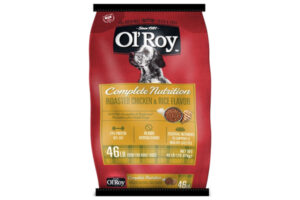
Ol’ Roy is one of the cheapest dog foods you can buy. A 50-pound bag of Complete Nutrition Roasted Chicken & Rice typically costs around $13.99 at Walmart, which works out to roughly $0.28 per pound. For a 50-pound dog eating about 3 cups a day, that’s around $0.50 per day—or $15 per month.
Compare that to a mid-tier brand like Purina ONE, which runs closer to $1.00 per pound, or a premium brand like Blue Buffalo at $1.50 to $2.50 per pound. The savings are undeniable, especially if you’re feeding multiple dogs or working with a limited budget.
But cost per pound doesn’t tell the whole story. Because Ol’ Roy is less digestible, your dog may need to eat more of it to get the same nutritional benefit, and you’ll likely see larger stool volume and more frequent bathroom breaks. Over time, that can offset some of the savings in terms of convenience and cleanup.
Is Ol’ Roy good value? That depends on how you define value. If your only concern is keeping costs as low as possible and your dog has no health issues, then yes—Ol’ Roy delivers the absolute lowest price per pound for a nationally available brand.
But if you’re looking at value in terms of ingredient quality, digestibility, and long-term health, Ol’ Roy falls short. You’re getting what you pay for: minimum nutrition with cheap fillers, non-specific proteins, and synthetic additives. Spending even $10 more per month on a better brand could mean fewer vet visits, better energy levels, and a healthier coat.
Not sure whether to choose Ol’ Roy or a more mainstream option? Read our Dog Chow review to see how another budget brand stacks up.
Ol’ Roy is produced at multiple facilities across the United States, including plants in Miami, Oklahoma; Allentown, Pennsylvania; and Manassas, Virginia. Some wet food varieties are manufactured by Menu Foods, a Canadian third-party contractor. This decentralized production model can lead to inconsistencies in quality and makes it harder to trace ingredients back to their source.
Neither Mars Petcare nor Walmart publishes a complete, up-to-date list of manufacturing sites or provides batch-level traceability. That lack of transparency is a concern, especially given the brand’s recall history.
Ol’ Roy has been involved in multiple recalls over the past two decades, including some serious incidents. The most alarming was in 2018, when certain canned formulas were recalled for contamination with pentobarbital, a lethal euthanasia drug. The FDA confirmed the presence of pentobarbital in the food, and Walmart removed the affected products from 4,700 stores nationwide.
Pentobarbital contamination suggests that rendered animal tissue from euthanized animals may have entered the supply chain—a grave failure of quality control. While the FDA stated that the risk to pets was low based on the levels detected, the fact that it happened at all is deeply troubling.
Earlier recalls included incidents involving salmonella contamination and melamine (linked to the 2007 Menu Foods recall that affected dozens of brands). These events point to systemic issues with ingredient sourcing and testing, not just isolated mistakes.
There’s no public information about the frequency or scope of quality testing for Ol’ Roy products. The brand does not appear to hold HACCP, ISO 22000, or other third-party food safety certifications, and there are no published audit results or transparency reports.
For a brand that sells this much volume, the lack of disclosure is a red flag. Premium brands routinely publish testing protocols, supplier standards, and batch traceability information—Ol’ Roy does none of that.
Take the free nutrition check and find out in under 1 minute which food is best tailored to your dog!
In just 60 seconds, find out which food fits your dog best — for free.
Ol’ Roy does not publish any sustainability reports or environmental initiatives specific to the brand. While Mars Petcare has broader corporate sustainability goals under its “Sustainable in a Generation” plan, there’s no evidence that these efforts extend meaningfully to Ol’ Roy’s production or sourcing.
Packaging is basic and not recyclable in most municipal programs. The bags are standard multi-layer plastic, and the wet food cans are steel but often lined with coatings that complicate recycling. There’s no indication of efforts to reduce packaging waste or move toward more sustainable materials.
Ingredient sourcing is similarly opaque. There’s no information about whether suppliers follow humane animal welfare standards, use sustainable farming practices, or avoid environmentally harmful inputs. For a brand this large, that lack of accountability is disappointing.
I work at a local shelter, where we regularly test different foods to see how they perform with dogs who have varied backgrounds and needs. For this review, I tried Ol’ Roy Complete Nutrition Adult with a three-year-old mixed breed named Ziggy—a 45-pound bundle of energy who came to us as a stray about six months ago.
Ziggy doesn’t have any known health issues, but he’s been through a lot of changes in a short time, and we’ve noticed he can be a bit picky about food. Some days he’d wolf down his meals; other days he’d sniff the bowl and walk away. We’d been feeding him a mid-tier brand with decent results, so I was curious to see how he’d respond to a budget option like Ol’ Roy.
The transition went smoothly—no digestive upset or refusal. Ziggy seemed genuinely interested in the new food right from the start. He ate his meals without hesitation and finished his bowl each time, which was a pleasant surprise given his pickiness.
Over the course of two weeks, Ziggy continued to eat Ol’ Roy enthusiastically. There were no days where he turned his nose up at it, and he didn’t seem to lose interest over time. The Roasted Chicken & Rice flavor we used seemed to hit the right notes for him.
Honestly, I didn’t notice much change in Ziggy’s overall health or behavior. His energy level stayed the same—he was still bouncy and playful during walks and playtime. His coat didn’t look noticeably shinier or duller than before, and there were no signs of itching or skin irritation.
The one thing I did notice was that his stools were slightly larger and softer than they had been on his previous food. They were still formed and normal, but there was definitely more volume. That’s consistent with what you’d expect from a food with lower digestibility and higher carb content. It wasn’t a dealbreaker, but it did mean a bit more cleanup.
From a practical standpoint, feeding Ziggy Ol’ Roy was easy. He ate it willingly, didn’t have any adverse reactions, and seemed perfectly content. For a dog like him—young, healthy, and adaptable—it worked fine as a short-term option.
That said, I wouldn’t choose Ol’ Roy as a long-term solution for Ziggy or for most of the dogs we care for at the shelter. The ingredient quality just isn’t where I’d want it to be, and the lack of transparency around sourcing and recalls makes me uneasy. For a dog with no issues and an owner on a very tight budget, it’s a functional choice. But if I had the flexibility to spend even a little more, I’d go with something better.
Consumer reviews for Ol’ Roy are deeply polarized. On Walmart.com, the brand averages around 4.5 stars, with the majority of reviewers praising the low price and their dogs’ enthusiasm for the food. Common positive comments include “my dog loves it,” “great value,” “shiny coat,” and “no issues.”
But the negative reviews are hard to ignore. Roughly 25% of feedback mentions digestive problems—diarrhea, vomiting, excessive gas—often appearing shortly after switching to Ol’ Roy. Some owners report that their dogs developed skin issues, ear infections, or increased itching after starting the food.
There are also troubling reports of more serious health problems. A small but vocal group of reviewers claim their dogs became severely ill or even died after eating Ol’ Roy, though it’s difficult to confirm causality without veterinary investigation. One review stated: “Fed my 3 dogs a Ol Roy treat from a new box, all 3 got sick, 3 days later one of my dogs died.”
Another recurring complaint involves formula changes. Multiple users mention that their dogs loved Ol’ Roy for years, then suddenly refused to eat it or became ill after the recipe changed. Some report finding mold, strange odors, or inconsistent kibble quality in recent batches.
On independent review sites like Dog Food Advisor and ConsumerAffairs, the sentiment is even more negative. Dog Food Advisor gives Ol’ Roy a 1-star rating, citing poor ingredient quality and safety concerns. ConsumerAffairs reviews are dominated by complaints about adverse health effects and frustration with the brand’s lack of transparency.
The bottom line? If your dog is healthy and tolerates Ol’ Roy well, you’ll likely be satisfied with the low cost and availability. But if your dog has any sensitivities or health issues, the risk of problems goes up significantly.
Take the free nutrition check and find out in under 1 minute which food is best tailored to your dog!
In just 60 seconds, find out which food fits your dog best — for free.
Purina Dog Chow is the closest competitor to Ol’ Roy in terms of price and positioning. Both are budget brands that rely on corn, meat by-products, and synthetic additives. Dog Chow costs about $0.10 to $0.20 more per pound than Ol’ Roy, but it’s also more widely available and benefits from Purina’s stronger reputation and quality control.
Nutritionally, the two are very similar. Dog Chow offers slightly higher protein (21% vs. 18-21% for Ol’ Roy) and a bit more fat, but the difference is marginal. Both score poorly with independent reviewers—Dog Food Advisor gives Dog Chow a 1-star rating as well.
The main advantage of Dog Chow is better consistency and fewer recalls. While neither brand is a standout for quality, Dog Chow has a cleaner safety record and more transparent manufacturing practices. If you’re choosing between the two, I’d lean toward Dog Chow unless the price difference is a dealbreaker.
Blue Buffalo is a premium brand that costs roughly $1.50 to $2.50 per pound—more than double the price of Ol’ Roy. But that extra cost buys you named meat proteins (like deboned chicken or salmon), whole grains or grain-free carbs, no by-products, and added functional ingredients like glucosamine and omega-3s.
Blue Buffalo also has better transparency, with detailed information about ingredient sourcing and quality control. The brand has had recalls in the past, but they’ve been handled more transparently than Ol’ Roy’s.
For dogs with sensitivities, higher activity levels, or owners who prioritize ingredient quality, Blue Buffalo is worth the extra cost. But if your dog is healthy and you’re on a tight budget, the jump from Ol’ Roy to Blue Buffalo might feel too steep. In that case, consider a mid-tier option like Purina ONE or Iams as a compromise.
If you’re curious about fresh, human-grade options, brands like The Farmer’s Dog offer a completely different approach. Fresh dog food is gently cooked, made with whole ingredients you can recognize, and delivered frozen in pre-portioned packs. It’s significantly more expensive—often $4 to $10 per day depending on your dog’s size—but many owners report dramatic improvements in energy, coat quality, and digestive health.
For dogs with chronic issues that haven’t responded to kibble, fresh food can be a game-changer. But it’s not realistic for everyone’s budget, and it requires freezer space and some planning. If you’re considering a switch, starting with a mixed feeding plan (part fresh, part kibble) can help you see results without breaking the bank.
Ol’ Roy is best suited for healthy adult dogs with no known sensitivities, allergies, or special dietary needs. If your dog has a strong stomach, isn’t picky, and you’re working within a very tight budget, Ol’ Roy can provide basic, AAFCO-compliant nutrition at the lowest possible cost.
It’s also a reasonable short-term option for temporary situations—fostering, emergency backup, or transitioning a new rescue dog before switching to a better food. The wide availability at Walmart makes it easy to find in a pinch.
However, I would not recommend Ol’ Roy for puppies, seniors, active or working dogs, or any dog with health concerns. Puppies need higher-quality protein and fat to support growth. Seniors benefit from joint support and easier-to-digest ingredients. Active dogs need sustained energy from better protein sources. And dogs with sensitivities or allergies will struggle with the non-specific proteins and common allergens like corn and soy.
If your dog falls into any of those categories, it’s worth spending a bit more on a mid-tier or premium brand that can better support their specific needs.
Take the free nutrition check and find out in under 1 minute which food is best tailored to your dog!
In just 60 seconds, find out which food fits your dog best — for free.
Let me be direct: Ol’ Roy is not a good dog food. It’s a functional food that meets legal minimums, but it’s built on low-quality ingredients, lacks transparency, and has a troubling safety record. If your only concern is keeping costs as low as possible and your dog has no health issues, Ol’ Roy can work in the short term. But I wouldn’t recommend it as a long-term solution for any dog I care about.
The reliance on meat by-products, corn, and soy means your dog is getting less digestible protein and more filler than they would with a mid-tier or premium brand. The lack of functional ingredients—no probiotics, no omega-3s, no joint support—means you’re missing out on the extras that can make a real difference in your dog’s health over time.
The recall history is what really concerns me. The 2018 pentobarbital contamination was a serious failure that suggests systemic problems with ingredient sourcing and quality control. The fact that neither Mars Petcare nor Walmart has addressed these issues publicly or improved transparency since then tells me that cost-cutting is still the top priority.
Would I buy Ol’ Roy for my own dog? No. Would I recommend it to a friend? Only if they were in a genuinely tough financial spot and their dog was young, healthy, and adaptable. Even then, I’d encourage them to look at mid-tier options like Purina ONE or Iams, which cost only slightly more but offer meaningfully better ingredients and fewer red flags.
If you’re feeding Ol’ Roy now and your dog is doing fine, you don’t need to panic. But if you can afford to spend even $10 or $20 more per month, I’d strongly suggest making the switch. Your dog deserves better than the bare minimum, and in most cases, a small increase in cost can lead to noticeable improvements in energy, coat quality, and overall health.
Honestly, there are better options at almost every price point. Ol’ Roy is cheap, and that’s about the only thing it has going for it.
Take the free nutrition check and find out in under 1 minute which food is best tailored to your dog!
In just 60 seconds, find out which food fits your dog best — for free.
While Ol’ Roy meets AAFCO minimum standards, it has a concerning recall history, including a serious 2018 incident involving pentobarbital contamination. The food is technically safe for most healthy adult dogs, but the lack of transparency around quality control and multiple past recalls make it a risky choice compared to brands with cleaner safety records.
Ol’ Roy keeps costs low by using cheaper ingredients like meat and bone meal, poultry by-product meal, corn, and soy instead of named meat proteins. They also skip expensive extras like probiotics, omega-3s, or joint support ingredients. You’re getting minimum viable nutrition at the lowest possible cost, but the trade-off is lower ingredient quality and digestibility.
Ol’ Roy provides basic nutrition that meets AAFCO standards, but just barely. The heavy reliance on plant-based proteins and fillers means your dog may need to eat more to get the same nutritional benefit as a higher-quality food. It’s adequate for short-term feeding but not optimal for long-term health.
I wouldn’t recommend it. Puppies need higher-quality protein and more fat to support proper growth and development. While Ol’ Roy does offer a puppy formula, it still relies on the same low-grade ingredients and by-products that aren’t ideal for growing dogs. Invest in a better puppy food during this critical development stage.
Stop feeding the food immediately and contact your veterinarian. About 25% of negative reviews mention digestive problems like diarrhea, vomiting, or excessive gas after switching to Ol’ Roy. If symptoms persist or worsen, seek veterinary care and consider switching to a higher-quality brand with better digestibility.
No, Ol’ Roy is a poor choice for sensitive dogs. The non-specific protein sources like “meat and bone meal” make it impossible to identify potential allergens, and the heavy use of corn and soy—common allergens—increases the risk of reactions. Dogs with sensitivities need limited-ingredient or hypoallergenic formulas with clearly identified protein sources.
Both are budget options with similar nutritional profiles, but Purina Dog Chow has a cleaner safety record and more consistent quality control. Dog Chow costs only about $0.10 to $0.20 more per pound than Ol’ Roy, and that small price difference buys you better manufacturing oversight and fewer recall incidents.
Yes, like any food change, you should transition gradually over 7-10 days by mixing increasing amounts of Ol’ Roy with decreasing amounts of the old food. This helps prevent digestive upset. However, given the food’s lower digestibility, watch closely for signs of stomach issues during the transition.
It’s not ideal. Senior dogs often benefit from easier-to-digest proteins, joint support ingredients, and lower carbohydrate content—none of which Ol’ Roy provides. The high carb content (around 57%) and lower-quality proteins can be harder for older dogs to process efficiently. A senior-specific formula from a better brand would be a wiser choice.
The main positives are low cost and wide availability. At roughly $0.28 per pound, it’s one of the cheapest dog foods you can buy, and it’s available at virtually every Walmart. Most dogs also find it palatable—about 80% of positive reviews mention good acceptance. For healthy adult dogs and very tight budgets, it can work as a short-term solution, but that’s about where the benefits end.
Take the free nutrition check and find out in under 1 minute which food is best tailored to your dog!
In just 60 seconds, find out which food fits your dog best — for free.
9 out of 10 dog owners are feeding their dog the wrong food.
Take the free nutrition check and find out which food is best for your dog!
2,847+ dog owners already did