9 out of 10 dog owners are feeding their dog the wrong food

Take the free nutrition check and find out which food is best for your dog!

Shelter manager, certified canine nutritionist, and lifelong dog lover
• Limited Ingredient Diet line excels at managing food allergies – Single-protein formulas effectively address sensitivities at lower cost than prescription alternatives, making elimination diets straightforward for owners.
• Mid-tier nutrition at mid-premium pricing – Protein levels (23-26%) and scientific backing lag behind similarly-priced competitors like Purina Pro Plan, though ingredient quality surpasses mass-market brands.
• Recent formula changes have frustrated longtime customers – Unexplained red kibble coating and reformulations caused dogs to refuse previously accepted food, with poor company communication about changes.
• Best suited for dogs with normal activity levels and sensitivities – Inadequate protein density for working dogs or athletes, but appropriate for suburban pets needing gentle, digestible nutrition.
• Quality control inconsistencies raise reliability concerns – 2019 vitamin D recall, grain-free DCM investigation involvement, and variable batch quality suggest manufacturing oversight issues compared to premium competitors.
Take the free nutrition check and find out in under 1 minute which food is best tailored to your dog!
If you’ve spent any time researching premium dog food brands, you’ve likely come across Natural Balance. Founded back in 1989 by actor Dick Van Patten and entrepreneur Joey Herrick, this California-based company was among the first to champion what we now call “natural” pet food—formulas built without corn, wheat, soy, or by-products. The brand’s philosophy has always centered on balance: quality ingredients meeting science-backed nutrition at a price point that doesn’t require a second mortgage.
Over three decades later, Natural Balance has evolved through multiple ownership changes—most recently merging with Canidae in 2023 to form Ethos Pet Brands—but the core mission remains. They’ve expanded from a handful of recipes to more than 200 products spanning dry kibble, wet food, treats, and even specialized zoo animal formulas. Their Limited Ingredient Diet line, launched to address food sensitivities, became something of an industry standard and remains one of their signature offerings.
What strikes me about Natural Balance is their transparency journey. Back in 2007, co-founder Joey Herrick established the first publicly accessible pet food safety testing lab, posting results online before it was trendy or required. That move set a precedent for accountability. Today, the brand operates manufacturing facilities in California and Texas, maintains nationwide distribution through major retailers like Petco and Chewy, and continues to position itself as a mid-premium option for health-conscious owners who want quality without ultra-premium sticker shock.
Their reputation sits somewhere in the middle of the premium pet food spectrum—not a veterinary heavyweight like Hill’s or Royal Canin, but respected for addressing specific dietary needs, particularly allergies and sensitivities. The 2019 recall involving elevated vitamin D levels did ding their standing, but they’ve worked to rebuild trust through improved quality control and clearer communication. In my view, Natural Balance represents a solid, if not spectacular, choice for owners navigating the crowded mid-premium market.
Natural Balance leads with named animal proteins across most formulas—chicken, lamb, salmon, beef, duck, venison, and bison appear as first or second ingredients. In their Original Ultra line, you’ll typically see chicken or chicken meal up top, followed by barley and brown rice. The Limited Ingredient Diet formulas take this further, often featuring a single protein source like lamb meal or salmon meal to minimize potential allergens.
Here’s what I find worth noting: they use both whole meats and meals. Chicken meal, for example, is chicken with moisture removed, making it a concentrated protein source. While some owners prefer whole meat for the “real food” factor, meals actually deliver more protein per pound once you account for water content. Natural Balance strikes a reasonable balance between the two, which helps keep protein levels steady without relying solely on one form.
The quality appears consistent—no anonymous “poultry meal” or “meat by-products” show up in ingredient lists. For their grain-free lines, proteins remain the foundation, though you’ll notice more peas and potatoes filling the carbohydrate role. The newer Health Protection line, launched in late 2023, emphasizes “real meat first” alongside brown rice and pumpkin, clearly targeting the digestive health trend.
Grain-inclusive formulas rely heavily on brown rice, barley, and oat groats—whole grains that provide steady energy and dietary fiber. Their Fat Dogs weight management line uses barley prominently for its fiber content, which helps dogs feel full without excess calories. The Original Ultra recipes blend multiple grains with vegetables like carrots and spinach, adding both nutrition and visual appeal to the kibble.
Grain-free options swap in sweet potato, regular potato, and peas as primary carb sources. While these ingredients work fine for dogs with genuine grain sensitivities, it’s worth remembering the FDA’s ongoing investigation into potential links between grain-free diets and canine dilated cardiomyopathy. Natural Balance grain-free formulas appeared in those reports, though no definitive causation has been established. I’d recommend grain-free only if your dog has a diagnosed intolerance—not just as a lifestyle choice.
Fiber levels typically range from 3% to 6% crude fiber, which is moderate and appropriate for most adult dogs. The addition of prebiotic fiber sources like chicory root in some formulas supports digestive health, though the actual amounts aren’t disclosed on packaging.
Chicken fat appears frequently as the primary fat source, preserved with mixed tocopherols (vitamin E) rather than synthetic preservatives. This is standard practice in quality pet foods and provides essential omega-6 fatty acids for skin and coat health. Fish oil or salmon oil show up in several recipes, adding omega-3s that support joint function, brain health, and anti-inflammatory benefits.
Fat content varies by formula—typically 12-15% in standard adult recipes, dropping to 7-8% in their weight management line, and climbing to 15-17% in their Specialized Nutrition formulas for active dogs. These levels align well with AAFCO recommendations and provide adequate energy density without pushing into ultra-rich territory that might trigger pancreatitis in sensitive dogs.
What you won’t find: generic “animal fat” or unspecified oil sources. The transparency here is reassuring, especially for owners tracking down allergens or managing dogs with fat-sensitive conditions.
Natural Balance includes a standard vitamin and mineral premix to meet AAFCO nutritional profiles—nothing unusual there. Their newer Health Protection line adds probiotics (specific strains aren’t detailed on packaging) and prebiotic fiber, which theoretically support gut health. Whether the amounts are therapeutic or just marketing pixie dust is hard to verify without published dosing data.
Some formulas include glucosamine and chondroitin for joint support, particularly in recipes marketed toward seniors or large breeds. Again, concentrations aren’t disclosed, which makes it difficult to assess whether these additions meaningfully benefit dogs or simply check a marketing box.
One ingredient that raises eyebrows in some online reviews: brewers rice. This is essentially a by-product of rice processing—broken rice kernels that are less expensive and less nutrient-dense than whole brown rice. It appears in some formulas as a filler to bulk out kibble at lower cost. While not harmful, it’s a signal that not every recipe prioritizes premium carbohydrate sources.
Another point of discussion: some customers noticed a red coating on kibble in recent batches, particularly after the 2022-2023 reformulations. Natural Balance hasn’t clearly explained this change, leading to speculation about added colorants or processing adjustments. For dogs with sensitivities, unexplained formula tweaks can trigger reactions, so this lack of transparency is frustrating.
On the positive side, Natural Balance commits to no artificial colors, flavors, or preservatives in their marketing, and ingredient lists support that claim. They also avoid corn, wheat, and soy in most lines—a legacy of their founding philosophy that still resonates with allergy-prone dogs.
| Price per pound | $2.00 – $3.10 |
| Primary protein | Chicken, Lamb, Salmon, Beef, Duck, Venison, Bison |
| By-products | None |
| AAFCO compliance | Yes (formulation based) |
| Formula options | 200+ products across multiple lines |
| Availability | Nationwide (Petco, Chewy, PetSmart) |
| Monthly cost (medium dog) | $35 – $65 |
Take the free nutrition check and find out in under 1 minute which food is best tailored to your dog!
In just 60 seconds, find out which food fits your dog best — for free.
Protein levels in Natural Balance formulas range from about 20% to 28% on a dry matter basis, depending on the line. Their Original Ultra Adult formula sits around 23-26% protein, which is adequate for maintenance but not exceptionally high. The Limited Ingredient Diet grain-free options tend toward the lower end—20-24%—because single-protein formulas often sacrifice some nutrient density for simplicity.
By contrast, their newer Specialized Nutrition line pushes protein up to 27-28%, targeting active dogs or those needing muscle support. Fat follows a similar pattern: 10-16% across most recipes, with weight management formulas dropping to 7-8% and performance-oriented options climbing toward 17%.
Carbohydrate content, calculated by subtraction, typically lands between 40-54%. That’s on the higher side compared to ultra-premium brands like Orijen or Acana, which keep carbs under 35%. If you’re looking for a low-carb, high-protein approach, Natural Balance won’t be your first choice. But for dogs with normal activity levels and no metabolic concerns, these ratios work fine.
All Natural Balance formulas meet or exceed AAFCO nutrient profiles for their stated life stages. This means they’ve either passed feeding trials (less common) or been formulated to match established nutrient minimums (more typical for this brand). The practical difference: feeding trials involve actual dogs eating the food over time to verify adequacy, while formulation relies on ingredient analysis and calculation. Both approaches can produce quality food, but trials offer real-world validation.
Calcium and phosphorus ratios appear balanced for skeletal health, typically around 1.2:1 to 1.5:1, which is appropriate for adult dogs. Puppy formulas adjust these levels upward to support growth. Omega-6 to omega-3 ratios vary but generally fall within acceptable ranges, though exact numbers aren’t always disclosed on packaging.
The addition of antioxidants—blueberries, spinach, and vitamin E—supports immune function, at least in theory. Probiotics in the Health Protection line are a nice touch, though again, without strain identification and CFU counts, it’s hard to assess clinical relevance. These additions don’t hurt, but I wouldn’t buy the food solely for them.
Most Natural Balance dry foods deliver between 3,300 and 3,600 kcal/kg, or roughly 350-380 kcal per cup. This is moderate—not as calorically dense as some performance or puppy formulas, but sufficient for most adult dogs. Their Fat Dogs line drops to around 2,900-3,050 kcal/kg, making portion control easier for overweight pets.
Feeding guidelines printed on bags are reasonable starting points but should always be adjusted based on your dog’s body condition. A 50-pound moderately active adult might need 2 to 2.5 cups daily of a standard formula, translating to roughly $1.20-$1.50 per day depending on the specific product line. That’s affordable compared to fresh food services but pricier than budget kibble.
Natural Balance shines for dogs with food sensitivities or diagnosed allergies. The Limited Ingredient Diet line, with its single-protein, simplified recipes, makes elimination diets straightforward. If your dog breaks out in hot spots every time chicken appears in the bowl, switching to their lamb and brown rice or salmon and sweet potato formulas can genuinely help. I’ve seen this work well for dogs with chronic ear infections or itchy skin that clear up once common allergens are removed.
Dogs with sensitive stomachs or mild digestive issues also tend to do well on Natural Balance, particularly the Health Protection line with added probiotics and prebiotic fiber. The moderate fat content and digestible carbohydrate sources—brown rice and pumpkin—are gentle on GI tracts without being as restrictive as prescription digestive diets.
For adult dogs with normal activity levels, the Original Ultra or Health Protection formulas provide balanced, everyday nutrition. These aren’t performance foods, but they don’t need to be. A suburban family dog who gets daily walks and weekend hikes will thrive on these recipes without excess calories or nutrients they can’t use.
Owners seeking a vegetarian option will appreciate Natural Balance’s meatless formula, which is rare in the dog food market. While I generally prefer animal-based proteins for dogs, this recipe works for families with ethical concerns or dogs with severe protein allergies, provided it’s carefully monitored by a veterinarian.
If you own a highly active working dog, sporting breed, or performance athlete, Natural Balance likely won’t provide enough protein or caloric density. A Belgian Malinois training for bite work or a Border Collie competing in agility needs 30-40% protein and 18-22% fat—numbers Natural Balance doesn’t consistently hit outside their Specialized Nutrition line, which is still only 27-28% protein.
Dogs with dilated cardiomyopathy risk factors—particularly Golden Retrievers, Dobermans, or other predisposed breeds—should approach grain-free formulas cautiously. Natural Balance grain-free options appeared in FDA reports investigating potential diet-associated DCM. While causation isn’t proven, it’s prudent to stick with grain-inclusive formulas or consult a veterinary cardiologist before choosing grain-free.
Puppies of large or giant breeds need carefully calibrated calcium and phosphorus to prevent developmental orthopedic disease. While Natural Balance offers puppy formulas, they don’t have large-breed-specific puppy recipes with the precise nutrient adjustments these dogs require. If you’re raising a Great Dane or Mastiff, consider brands with dedicated large-breed puppy lines.
Finally, if your dog has a diagnosed medical condition requiring prescription nutrition—chronic kidney disease, urinary stones, severe pancreatitis—Natural Balance doesn’t manufacture therapeutic diets. You’ll need veterinary-exclusive brands like Hill’s Prescription Diet or Royal Canin Veterinary for those situations.
Take the free nutrition check and find out in under 1 minute which food is best tailored to your dog!
In just 60 seconds, find out which food fits your dog best — for free.
Palatability with Natural Balance is a mixed bag based on customer feedback and my own observations. Many dogs eat it enthusiastically, particularly the Limited Ingredient stews and the salmon-based dry formulas. The wet food options—pâtés and chunks in gravy—tend to be crowd-pleasers, probably due to higher moisture and fat content enhancing aroma and flavor.
That said, some dogs turn their noses up at certain formulas, especially after recent reformulations. The addition of that unexplained red coating on some kibble batches coincided with reports of dogs refusing food they’d previously eaten happily. Whether this is due to a flavor change, texture shift, or just the visual difference is unclear, but it’s a real concern for owners who suddenly find themselves with a picky eater.
Kibble size varies by product line. The “Small Breed Bites” are appropriately tiny for toy and small dogs, while standard kibble works fine for medium to large breeds. The texture is moderately crunchy—not rock-hard, but firm enough to provide some dental benefit through mechanical abrasion. Dogs with dental disease or missing teeth might struggle with it unless softened with water or mixed with wet food.
Feeding logistics are straightforward. Bags range from 4 to 30 pounds, with resealable closures on most. The packaging doesn’t scream “premium” the way some boutique brands do, but it’s functional. Wet food comes in standard 13-ounce cans and 3-ounce pouches, easy to store and portion.
One practical advantage: Natural Balance’s widespread retail availability means you can grab a bag at PetSmart or Petco on short notice rather than waiting for online orders. For owners who travel frequently or forget to reorder, this convenience matters.
Natural Balance sits squarely in the mid-premium range. Their Original Ultra line runs about $2.00-$2.70 per pound, depending on bag size and retailer. Health Protection formulas cost slightly more—$2.10-$2.60 per pound—while the Limited Ingredient Diet grain-free options push toward $2.30-$3.10 per pound. The Fat Dogs weight management line is among their most affordable at $2.10-$2.40 per pound.
For a 30-pound dog eating about 1.5 cups daily, you’re looking at roughly $35-$45 per month for standard formulas, or $50-$65 for Limited Ingredient or Specialized Nutrition lines. That’s noticeably cheaper than ultra-premium brands like Orijen ($4-$5/lb) but more expensive than mass-market options like Purina Pro Plan ($1.50-$2.00/lb).
Wet food adds cost quickly. At $2.30-$2.60 per 13-ounce can, feeding exclusively wet would run $120-$180 monthly for a medium dog. Most owners use wet as a topper or occasional meal rather than a complete diet, which keeps costs manageable.
Here’s where things get nuanced. If you’re comparing Natural Balance to true premium brands with higher protein, better ingredient sourcing, and published feeding trials—think Orijen, Acana, or even Wysong—Natural Balance doesn’t quite measure up nutritionally, yet it’s not dramatically cheaper. The protein content is lower, carbohydrate levels are higher, and scientific backing is thinner.
However, if you’re stepping up from mainstream brands like Purina, Iams, or Pedigree, Natural Balance offers tangible improvements: no by-products, no corn-wheat-soy, named meat proteins, and options for sensitivities. The price premium over mass-market brands—maybe $15-$20 more per month—feels justified for those upgrades.
The real value sweet spot is their Limited Ingredient Diet line for dogs with allergies. Prescription hypoallergenic diets from Hill’s or Royal Canin cost $3.50-$5.00 per pound and require a vet’s approval. Natural Balance L.I.D. delivers similar allergen management at $2.30-$3.10 per pound without a prescription. For owners managing food sensitivities, that’s meaningful savings.
Where Natural Balance stumbles on value: their standard formulas don’t offer enough protein or functional ingredients to compete with similarly priced brands. Purina Pro Plan, for example, costs about the same or less while delivering 28-30% protein and extensive feeding trial research. If you’re not specifically addressing allergies or sensitivities, you might find better nutritional bang for your buck elsewhere.
Natural Balance operates manufacturing facilities in California and Texas, with additional capacity through their parent company Ethos Pet Brands following the 2023 merger with Canidae. They claim to follow HACCP and GMP standards, which are baseline food safety protocols, but specific certifications like ISO 22000 or SQF aren’t publicly documented.
The brand conducts microbiological screening, nutritional analysis, and contaminant testing through accredited third-party laboratories. This is standard practice, not exceptional, but it’s reassuring that they’re not relying solely on in-house testing. Ingredient traceability exists, allowing them to track batches back to suppliers—important for swift recall responses.
Natural Balance has had several recalls over the past decade, most notably in 2019 when elevated vitamin D levels were detected in certain formulas. Vitamin D toxicity can cause serious health issues—vomiting, loss of appetite, kidney damage—so this wasn’t a minor concern. The company issued voluntary recalls, offered refunds, and implemented additional quality checks.
Earlier recalls involved salmonella contamination and occasional foreign object notifications. The frequency of recalls is moderate—more than ultra-premium brands with pristine records, but fewer than some mass-market competitors. What matters most is how they respond: Natural Balance has generally acted quickly, communicated clearly, and compensated affected customers.
The grain-free DCM investigation is another safety consideration. Natural Balance grain-free formulas appeared in FDA reports of dogs developing dilated cardiomyopathy potentially linked to diet. The investigation remains ongoing, with no definitive conclusions, but it’s raised enough concern that many veterinarians now advise against grain-free diets unless medically necessary. If you’re feeding Natural Balance grain-free, regular veterinary cardiac screenings are prudent.
Natural Balance’s early commitment to transparency—posting safety test results online in 2007—was groundbreaking. Today, that practice is less unique, but they still maintain consumer-focused recall pages and customer service responsiveness. However, recent formula changes, particularly the unexplained red kibble coating and ingredient adjustments, have been poorly communicated. Customers discovered changes after purchase rather than through proactive announcements, which erodes trust.
Ingredient sourcing details are vague. The brand emphasizes “quality ingredients” and “real meat first,” but doesn’t specify whether chicken comes from the U.S., South America, or elsewhere. For owners prioritizing domestic sourcing or ethical farming, this lack of detail is frustrating.
Natural Balance’s sustainability efforts are largely unquantified. They don’t publish environmental impact reports, carbon footprint data, or specific sourcing commitments around animal welfare. Packaging is standard multilayer plastic for kibble and steel cans for wet food—functional but not innovative in terms of recyclability or environmental footprint.
The brand’s charitable history is more concrete. Since 1989, Natural Balance has donated portions of profits to animal charities and provided food to shelters. Dick Van Patten, the co-founder, launched National Guide Dog Month in 2008 to raise awareness and funds for guide dog training, which can cost over $40,000 per dog. Joey Herrick, the other co-founder, established The Lucy Pet Foundation in 2013, performing over 30,000 free spay and neuter procedures. These initiatives demonstrate genuine commitment to animal welfare beyond profit.
Ethically, the brand’s founding philosophy—avoiding by-products, fillers, and artificial additives—aligns with humane, quality-focused pet nutrition. However, without transparent sourcing or third-party welfare certifications, it’s difficult to verify how animals are raised or treated before becoming ingredients.
Take the free nutrition check and find out in under 1 minute which food is best tailored to your dog!
In just 60 seconds, find out which food fits your dog best — for free.
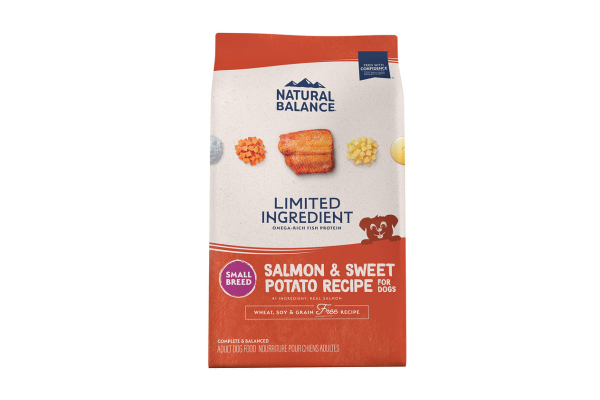
I work at a local shelter, and we recently tested Natural Balance Limited Ingredient Diet Salmon and Sweet Potato with one of our longer-term residents, a seven-year-old mixed-breed named Clover. She’s about 45 pounds, medium energy, and came to us with a history of chronic ear infections and mild skin irritation—classic signs of potential food sensitivities, though we couldn’t pin down the exact trigger.
Clover had been eating a mainstream brand without obvious distress, but her ears stayed slightly inflamed and she scratched more than seemed normal. We decided to trial Natural Balance’s salmon formula since fish-based proteins are less common allergens and the limited ingredient approach reduces variables.
We transitioned Clover gradually over seven days, mixing increasing amounts of Natural Balance with her old food. She didn’t hesitate when the new kibble appeared—ate it right alongside the old without fuss. The kibble itself is medium-sized, slightly oily to the touch, and smells mildly fishy but not unpleasant. Clover’s a reliable eater, so we weren’t worried about pickiness, but it was good to see her enthusiasm didn’t drop.
After about two weeks, we noticed her stools firmed up slightly and became a bit smaller. Nothing dramatic, but consistent and easier to clean up during yard time. Her energy level stayed steady—she’s always been moderately active, and that didn’t change. What did shift, subtly, was the scratching. She still had moments of itchiness, but the frequency seemed to decrease, and her ears looked less red during weekly health checks.
By week four, her coat had a touch more shine. Again, not a transformation, but enough that one of our volunteers commented without prompting. Clover’s a short-haired dog, so coat changes show up quickly. We didn’t see any weight fluctuation, which was good since she was already at a healthy body condition.
Clover did fine on Natural Balance. It didn’t solve all her issues—she still has occasional ear flare-ups that likely need deeper investigation—but the food seemed to help more than her previous diet. She ate it willingly every day, never had digestive upset, and showed modest improvements in skin and coat quality. For a shelter dog with a murky history and no clear diagnosis, that’s a practical win.
Would I say Natural Balance was magic for her? No. But it was solid, affordable for our shelter budget, and gentle enough to trial without risk. If Clover gets adopted, I’d suggest her new family continue it or choose something similar in the limited ingredient category, especially if her ear issues persist.
Customer reviews for Natural Balance cluster around 4.2 to 4.5 stars across platforms like Chewy, Amazon, and Petco. That’s respectable—not elite, but solidly above average. About 75% of reviews are positive, 15% neutral, and 10% negative, with the most common praise focusing on digestive improvements and allergy management.
Owners frequently mention that their dogs’ skin and ear issues improved after switching to Natural Balance, particularly the Limited Ingredient formulas. One reviewer noted their Golden Retriever’s chronic hot spots cleared up within a month on the lamb and brown rice recipe. Another shared that their dog’s recurring ear infections stopped after eliminating chicken-based foods and switching to salmon.
Digestive improvements are another recurring benefit. Dogs with sensitive stomachs—frequent loose stools, gas, or vomiting—often stabilize on Natural Balance. The moderate fat content and easily digestible carbohydrates seem to agree with many dogs who struggle on richer or grain-free formulas.
Palatability gets mixed but generally positive feedback. Many dogs eat Natural Balance enthusiastically, especially the wet food options and salmon-based dry formulas. Picky eaters sometimes surprise their owners by digging in, which is always a relief.
The most frequent complaint centers on recent formula changes. Longtime customers report that their dogs suddenly refused food they’d eaten for years, or developed digestive upset after a formula tweak. The red kibble coating mentioned earlier pops up repeatedly in negative reviews, with owners expressing frustration over unexplained changes.
Some users feel the quality has declined following ownership changes, particularly the 2023 merger with Canidae. Whether this is perception or reality is hard to verify, but the sentiment is real. Owners who’ve fed Natural Balance for a decade or more sometimes say it’s “not what it used to be.”
Price complaints are less common but still present. A few reviewers feel Natural Balance is overpriced for the nutritional profile, comparing it unfavorably to brands like Purina Pro Plan that offer similar or better protein levels at comparable or lower cost.
Finally, there are occasional reports of quality control issues—strange odors, oily residue on kibble, or inconsistent batch quality. These aren’t widespread, but they happen often enough to suggest manufacturing variability.
Purina Pro Plan costs about the same as Natural Balance—sometimes less—while delivering higher protein (28-30% vs. 23-26%) and extensive feeding trial research. Pro Plan also offers specialized formulas for specific health needs backed by veterinary science. Where Natural Balance wins: cleaner ingredient lists without by-products, and better options for food sensitivities through their L.I.D. line. If you’re managing allergies, Natural Balance has the edge. If you want maximum protein and scientific validation, Pro Plan is the better call.
Blue Buffalo operates in a similar price range but leans harder into marketing around “LifeSource Bits” and antioxidant blends. Protein levels are comparable, though Blue Buffalo tends slightly higher. Both brands target the health-conscious mainstream market, but Blue Buffalo has stronger brand recognition and retail presence. Natural Balance counters with simpler ingredient lists—Blue Buffalo formulas can be complex, which isn’t ideal for elimination diets. For straightforward allergen management, Natural Balance is easier to work with.
These ultra-premium brands blow Natural Balance out of the water nutritionally. Orijen delivers 38-42% protein with meat-first formulas and minimal carbohydrates. Acana follows a similar philosophy at a slightly lower price. Natural Balance can’t compete on macronutrient density or ingredient quality. However, Orijen and Acana cost $4-$5 per pound—40-80% more than Natural Balance. If budget is a factor, Natural Balance offers a reasonable compromise. If you can afford it and your dog needs high protein, Orijen and Acana are superior.
Wysong is a veterinary-formulated brand emphasizing species-appropriate nutrition with higher protein (30-42%) and lower carbohydrates than Natural Balance. Wysong also has a cleaner recall record and stronger scientific credibility. The trade-off: Wysong costs 40-60% more and has limited retail availability, requiring online orders. Natural Balance is more accessible and affordable, making it practical for owners who want quality without ultra-premium investment. If you’re deciding between the two, budget and convenience favor Natural Balance, while nutritional superiority and science lean toward Wysong. Not sure whether Natural Balance or Wysong is right for your dog? Read our Wysong review for a detailed comparison.
Brands like The Farmer’s Dog, Ollie, and Nom Nom deliver human-grade, gently cooked fresh food with visible ingredients and personalized plans. The nutritional quality and digestibility of these options far exceed kibble, including Natural Balance. However, fresh food costs $5-$10 per day for a medium dog—triple or quadruple the cost of Natural Balance. Fresh services also require freezer space and thaw-ahead planning. Natural Balance is the pragmatic choice for owners who want quality improvement over mass-market brands without the logistical and financial commitment of fresh food.
Take the free nutrition check and find out in under 1 minute which food is best tailored to your dog!
In just 60 seconds, find out which food fits your dog best — for free.
Natural Balance works best for adult dogs with food sensitivities, mild digestive issues, or diagnosed allergies to common proteins like chicken or beef. The Limited Ingredient Diet line is genuinely helpful for elimination diets and long-term allergen management. If your dog has chronic ear infections, itchy skin, or digestive upset that improves when you simplify ingredients, Natural Balance is a solid, affordable option.
It’s also appropriate for dogs with normal activity levels—suburban pets, senior dogs with moderate exercise needs, or dogs recovering from illness who need gentle, digestible nutrition. The moderate protein and fat levels won’t overwhelm sedentary dogs or those prone to weight gain.
Owners seeking a mid-premium brand at a reasonable price will find Natural Balance hits that sweet spot. It’s better than mass-market brands without demanding ultra-premium investment, making it practical for multi-dog households or budget-conscious families who still want quality ingredients.
However, Natural Balance isn’t ideal for highly active working dogs, sporting breeds, or puppies of large breeds. The protein and caloric density are too low for dogs with intense energy demands or specific growth requirements. It’s also not the right choice for dogs with diagnosed medical conditions requiring therapeutic nutrition, or for owners prioritizing maximum protein and minimal carbohydrates.
Natural Balance is a competent, middle-of-the-road dog food that excels in one specific area: managing food sensitivities and allergies through limited ingredient formulas. If that’s your primary concern, Natural Balance delivers real value. The L.I.D. line is straightforward, affordable compared to prescription hypoallergenic diets, and genuinely helps many dogs with chronic skin or digestive issues. I’d recommend it without hesitation for those situations.
For general nutrition, though, Natural Balance is just okay. The protein levels are adequate but not impressive. Carbohydrate content is higher than I’d prefer. The scientific backing is thin—no published feeding trials, no veterinary advisory board, and limited transparency around ingredient sourcing. You’re paying mid-premium prices for mid-tier nutrition, which feels fair but not exciting.
The recent formula changes and quality control inconsistencies concern me. When longtime customers report their dogs suddenly refusing food or developing issues after unexplained tweaks, that’s a red flag. The 2019 recall and grain-free DCM concerns add to a picture of a brand that’s solid but not rock-solid.
Would I feed Natural Balance to my own dog? If she had food allergies, yes—I’d start with the salmon and sweet potato L.I.D. formula and monitor results. For everyday feeding without specific health concerns, I’d probably look at Purina Pro Plan for better protein at similar cost, or invest a bit more in Orijen if budget allowed. Natural Balance isn’t bad, but it’s not exceptional either. It’s a practical compromise, and sometimes that’s exactly what you need.
If you’re stepping up from Pedigree or Kibbles ‘n Bits, Natural Balance is a meaningful improvement. If you’re comparing it to true premium brands, it falls short nutritionally while still commanding premium pricing. Know what you’re paying for, and set expectations accordingly. For dogs with sensitivities, it’s a genuine solution. For everyone else, it’s a decent option in a crowded field.
Take the free nutrition check and find out in under 1 minute which food is best tailored to your dog!
In just 60 seconds, find out which food fits your dog best — for free.
Yes, Natural Balance excels at managing food sensitivities and allergies, particularly through their Limited Ingredient Diet (L.I.D.) line. These formulas feature single protein sources like lamb, salmon, or venison paired with minimal ingredients to reduce potential allergens. Many dogs with chronic ear infections, hot spots, or digestive issues show improvement when switched to Natural Balance L.I.D. formulas. It’s significantly more affordable than prescription hypoallergenic diets while offering similar allergen management benefits.
I’d recommend caution with grain-free options. Natural Balance grain-free formulas appeared in FDA reports investigating potential links between grain-free diets and dilated cardiomyopathy (DCM) in dogs. While no definitive causation has been established, many veterinarians now advise against grain-free unless medically necessary. If your dog doesn’t have a diagnosed grain sensitivity, stick with grain-inclusive formulas like their Original Ultra or Health Protection lines.
Purina Pro Plan offers higher protein content (28-30% vs. 23-26%) at similar or lower cost, plus extensive feeding trial research backing their formulas. However, Natural Balance has cleaner ingredient lists without by-products and better options for food sensitivities. Choose Pro Plan if you want maximum protein and scientific validation; choose Natural Balance if you’re managing allergies or prefer simpler ingredients.
Some customers noticed unexplained red coating on kibble in recent batches, particularly after 2022-2023 reformulations. Natural Balance hasn’t clearly explained this change, which is frustrating for owners of sensitive dogs. This lack of transparency about formula modifications has led to some dogs refusing food they previously ate happily. If your dog suddenly stops eating Natural Balance, this coating change might be the reason.
If you’re stepping up from mass-market brands like Pedigree or Kibbles ‘n Bits, Natural Balance offers meaningful improvements: no by-products, no corn-wheat-soy, named meat proteins, and allergy-friendly options. The $15-20 monthly price increase feels justified for those upgrades. However, if you’re comparing to other mid-premium brands, the value proposition is less clear since protein levels are moderate and scientific backing is limited.
Natural Balance offers puppy formulas that meet AAFCO requirements, but they don’t have large-breed-specific puppy recipes with precisely calibrated calcium and phosphorus. If you’re raising a Great Dane, Mastiff, or other giant breed puppy, look for brands with dedicated large-breed puppy lines to prevent developmental orthopedic disease. For small to medium breed puppies, their standard puppy formulas work fine.
Yes, Natural Balance has had several recalls, most notably in 2019 for elevated vitamin D levels that could cause serious health issues. They’ve also had recalls for salmonella contamination and foreign objects. The recall frequency is moderate—more than ultra-premium brands but fewer than some mass-market competitors. They generally respond quickly and compensate affected customers, but the recalls are worth considering when evaluating the brand.
Natural Balance works well for many senior dogs, especially those with moderate activity levels or mild digestive sensitivities. The moderate fat content (12-15%) and digestible carbohydrates are gentle on aging digestive systems. Some formulas include glucosamine and chondroitin for joint support, though concentrations aren’t disclosed. However, senior dogs with diagnosed medical conditions may need therapeutic diets that Natural Balance doesn’t manufacture.
Natural Balance has excellent retail availability through major chains like Petco, PetSmart, and Chewy, plus many independent pet stores. This widespread distribution is a practical advantage—you can grab a bag on short notice rather than waiting for online orders. This convenience matters for owners who travel frequently or forget to reorder food.
Both options have merit depending on your needs. The wet food (pâtés and chunks in gravy) tends to be more palatable and is great for hydration or as a kibble topper, but costs significantly more as a complete diet—potentially $120-180 monthly for a medium dog. Dry kibble is more economical at roughly $35-65 monthly depending on the formula. Most owners use wet as an occasional treat or topper rather than the primary diet.
Take the free nutrition check and find out in under 1 minute which food is best tailored to your dog!
In just 60 seconds, find out which food fits your dog best — for free.
9 out of 10 dog owners are feeding their dog the wrong food.
Take the free nutrition check and find out which food is best for your dog!
2,847+ dog owners already did