9 out of 10 dog owners are feeding their dog the wrong food

Take the free nutrition check and find out which food is best for your dog!

Shelter manager, certified canine nutritionist, and lifelong dog lover
• High-quality ingredients with limitations: Blue Wilderness delivers real meat as the first ingredient and avoids by-products, corn, and wheat, but lacks detailed sourcing transparency and uses some nutritionally empty fillers like tapioca starch.
• Strong nutrition for active dogs: With 30-38% protein content and moderate fat levels, the food excels for energetic, healthy adult dogs but may cause weight gain in less active or senior dogs due to its calorie density.
• Concerning quality control history: Multiple recalls over the past decade, including recent lead contamination allegations, raise serious questions about consistency and safety despite the brand’s premium positioning and pricing.
• Middle-premium value proposition: At $3 per pound, Blue Wilderness costs more than mid-range brands like Purina One but offers better ingredients, though competitors like Wellness CORE provide similar quality with fewer safety concerns.
• Positive real-world results with caveats: Most dogs show improved coat quality, better digestion, and enthusiastic eating, but formula changes have caused problems for some long-time users, highlighting consistency issues.
Take the free nutrition check and find out in under 1 minute which food is best tailored to your dog!
Blue Wilderness launched in 2007 as Blue Buffalo’s answer to the growing demand for grain-free, high-protein dog food. The brand built its identity around mimicking the diet of wild wolves, emphasizing real meat as the first ingredient and excluding common fillers like corn, wheat, and soy. It’s marketed as premium nutrition for dogs of all life stages, with recipes designed to satisfy what Blue Buffalo calls “the wolf within.”
Since General Mills acquired Blue Buffalo in 2018 for $8 billion, the brand has remained a major player in the specialty pet food market. Blue Wilderness continues to hold strong shelf space at PetSmart, Petco, Chewy, and even mainstream retailers like Walmart. The brand’s reputation is mixed—loyal customers praise the ingredient quality and their dogs’ response, while critics point to past recalls and concerns about transparency.
What sets Blue Wilderness apart on paper is its commitment to high animal protein content and the exclusion of poultry by-products in most formulas. The brand offers both grain-free and grain-inclusive options now, a shift that came in response to market feedback and ongoing discussions about grain-free diets and heart health in dogs. This evolution shows the brand is listening, but it also raises questions about consistency and whether the original grain-free identity still holds.
Blue Buffalo was founded in 2003 by the Bishop family after their Airedale Terrier, Blue, was diagnosed with cancer. The experience drove them to create what they saw as healthier, more natural pet food. Blue Wilderness followed four years later as the brand’s grain-free, protein-forward line, designed to appeal to owners who wanted to feed their dogs closer to a carnivorous diet.
The brand’s core values center on natural ingredients, transparency, and quality. Blue Buffalo promotes its “True BLUE Promise,” which means no chicken or poultry by-product meals, no corn, wheat, or soy, and no artificial flavors or preservatives. The company also supports pet cancer research through the Blue Buffalo Foundation, which aligns with its origin story and adds a layer of emotional connection for many customers.
In terms of market positioning, Blue Wilderness sits in the premium segment. It’s more expensive than mass-market brands like Pedigree or even mid-range options like Purina One, but it’s not quite in the ultra-premium tier occupied by brands like Orijen or Acana. This middle-premium space makes it accessible to a broad audience of health-conscious dog owners who want quality without the highest price tag.
The brand’s reputation took hits over the years due to recalls and a 2014 lawsuit involving misleading advertising about by-product meals. Blue Buffalo settled that case for $32 million, admitting a supplier had deceived them. Since then, the company has made efforts to improve transparency and quality control, but trust remains a sticking point for some consumers. On the flip side, many dog owners report excellent results with the food, and the brand maintains strong ratings on major retail platforms.
| Price per pound | $2.50 – $3.00 |
| Primary protein | Deboned chicken, beef, salmon, venison, lamb |
| By-products | No poultry by-product meals |
| AAFCO compliance | Yes (formulated to meet AAFCO standards) |
| Formula options | Grain-free and grain-inclusive options, multiple protein sources |
| Availability | Widely available (PetSmart, Petco, Chewy, Walmart) |
Take the free nutrition check and find out in under 1 minute which food is best tailored to your dog!
In just 60 seconds, find out which food fits your dog best — for free.
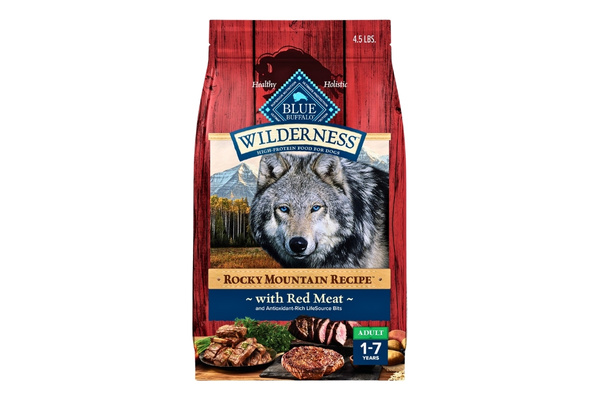
Blue Wilderness consistently lists real meat as the first ingredient across its product lines. Depending on the recipe, this could be deboned chicken, deboned beef, deboned salmon, or other animal proteins. The Rocky Mountain Recipe, for example, features deboned beef, venison, and lamb—a red meat blend that appeals to dogs with poultry sensitivities.
After the primary protein, you’ll typically find chicken meal or fish meal listed. Meals are concentrated protein sources with moisture removed, which means they provide more protein per pound than fresh meat. This is a positive from a nutritional standpoint, as it boosts the overall protein content without relying solely on fresh meat, which is mostly water by weight.
What I find reassuring about Blue Wilderness is that it avoids poultry by-product meals in most formulas. By-product meals can include less desirable parts of the animal, and while they’re not inherently harmful, their exclusion signals a focus on higher-quality protein sources. The brand also includes supplemental proteins like egg product, which is highly digestible and adds essential amino acids.
Originally, Blue Wilderness was entirely grain-free, relying on peas, potatoes, and sweet potatoes for carbohydrates. These ingredients provide energy and fiber, but they also contributed to the brand’s association with grain-free diets—a category that came under scrutiny due to potential links to dilated cardiomyopathy (DCM) in dogs.
In response, Blue Wilderness introduced grain-inclusive formulas that incorporate barley, oatmeal, and brown rice. These whole grains offer digestible carbohydrates, B vitamins, and minerals. The grain-inclusive recipes are clearly labeled, so you can choose based on your dog’s needs and your own preferences. Importantly, even the grain-inclusive versions still avoid corn and wheat, which are common allergens.
The shift to offering both grain-free and grain-inclusive options is smart. It gives owners flexibility and addresses the DCM concerns without abandoning the grain-free customers who’ve had success with those formulas. That said, some long-time users felt the grain addition diluted the brand’s original identity, and online forums reflect that frustration.
Blue Wilderness uses chicken fat and fish oil as primary fat sources. Chicken fat is a high-quality animal fat that’s rich in omega-6 fatty acids, which support skin and coat health. It’s also preserved with mixed tocopherols, a natural form of vitamin E, rather than synthetic preservatives like BHA or BHT.
Fish oil provides omega-3 fatty acids, particularly EPA and DHA, which have anti-inflammatory properties and support brain, eye, and joint health. The inclusion of fish oil is a strong point, especially for senior dogs or breeds prone to joint issues. The balance between omega-6 and omega-3 is important for overall health, and Blue Wilderness appears to address this reasonably well.
Blue Wilderness formulas include a range of vitamins, minerals, and functional ingredients. You’ll see things like taurine (an amino acid important for heart health), glucosamine and chondroitin (for joint support), and chelated minerals (which are more easily absorbed by the body). There’s also dried chicory root, a source of prebiotic fiber that supports digestive health.
The brand incorporates what it calls LifeSource Bits—a blend of antioxidants, vitamins, and minerals in a cold-formed kibble that’s mixed with the regular kibble. This is marketed as providing a boost of nutrients, though the actual impact depends on the quantities included. It’s a nice touch, but I’d caution against seeing it as a game-changer—most quality dog foods already include comprehensive vitamin and mineral premixes.
One thing I appreciate is the absence of artificial colors, flavors, and preservatives. Blue Wilderness relies on natural preservation methods and doesn’t use unnecessary additives. This aligns with the brand’s natural positioning and is a genuine positive for dogs with sensitivities to synthetic ingredients.
The use of peas and legumes in grain-free formulas has been a point of contention. These ingredients are often used as protein boosters and carbohydrate sources in grain-free diets, but they’ve been implicated in the FDA’s investigation into a possible link between grain-free diets and DCM. The science isn’t settled, and the investigation hasn’t concluded with definitive recommendations, but it’s something to be aware of if you’re considering a grain-free formula.
Another consideration is tapioca starch, which appears in some recipes. Tapioca is a binding agent and carbohydrate source, but it’s nutritionally empty—it provides calories without much else. While it’s not harmful, its presence does mean you’re getting filler rather than nutrient-dense ingredients in those spots.
Finally, while Blue Wilderness avoids by-product meals, the brand doesn’t provide detailed sourcing information for its ingredients. You know the food is made in the U.S., but you don’t get farm-level traceability or specifics on where the chicken or beef comes from. For a premium brand, greater transparency here would strengthen trust.
Blue Wilderness dry formulas typically deliver around 30-38% protein on a dry matter basis, which is higher than many mainstream brands. For example, the Rocky Mountain Recipe lists protein at a robust level, supporting muscle maintenance and energy for active dogs. This high protein content is one of the brand’s main selling points and aligns with its ancestral diet positioning.
Fat content generally falls in the 15-17% range on a dry matter basis, which is moderate to moderately high. This provides concentrated energy and supports skin and coat health. The fat-to-protein ratio is appropriate for most adult dogs, though extremely active or working dogs might benefit from even higher fat levels found in performance-focused brands.
Carbohydrate content varies by formula. Grain-free recipes tend to be lower in carbs, while grain-inclusive versions provide more digestible carbohydrates from barley, oats, and brown rice. Blue Wilderness doesn’t publish exact carbohydrate percentages, but based on ingredient lists and guaranteed analysis, you can estimate carbs make up roughly 25-35% of the formula on a dry matter basis, which is reasonable for a high-protein dog food.
The formulas meet AAFCO standards for complete and balanced nutrition for the intended life stages. This means they include appropriate levels of essential vitamins (A, D, E, B vitamins) and minerals (calcium, phosphorus, zinc, selenium). The chelated minerals are a plus, as they’re bound to amino acids for better absorption.
Functional ingredients like glucosamine and chondroitin are included for joint support, though the exact amounts aren’t disclosed. This is a common issue in the industry—these ingredients are listed, but without knowing the dosage, it’s hard to assess whether they’re at therapeutic levels or just marketing additions. For a senior dog with arthritis, you might still need a separate joint supplement.
The addition of taurine is noteworthy. Taurine is an amino acid that’s essential for heart and eye health, and it’s been a focus of attention in the DCM discussion. Including it proactively is a smart move, especially in grain-free formulas where taurine deficiency has been a concern.
Blue Wilderness formulas are moderately calorie-dense, typically ranging from 350-400 kcal per cup depending on the recipe. This is on the higher end compared to lower-protein, lower-fat brands, which means you’ll feed less per meal to maintain your dog’s weight. For active dogs, this is convenient—they get concentrated nutrition without having to eat huge volumes. For less active or senior dogs, portion control becomes more important to avoid weight gain.
Yes, Blue Wilderness formulas are formulated to meet AAFCO nutritional profiles for the appropriate life stages—puppy, adult, or senior. Some lines, like the veterinary diets under the broader Blue Buffalo brand, have undergone AAFCO feeding trials, but it’s unclear whether all Blue Wilderness products have been tested this way. Formulation based on nutrient profiles is the industry standard and is generally reliable, but feeding trials provide an extra layer of validation.
Blue Wilderness is a strong choice for active adult dogs who need high protein and fat to support their energy levels. The concentrated nutrition and quality protein sources make it ideal for dogs with demanding lifestyles—think working dogs, agility competitors, or just naturally high-energy breeds like Border Collies or Australian Shepherds.
It’s also well-suited for dogs with poultry sensitivities, particularly if you choose the Rocky Mountain Recipe with red meat proteins. The absence of chicken by-products and the inclusion of alternative proteins like beef, venison, and lamb give you options if your dog reacts poorly to chicken-based foods.
For owners who prioritize ingredient quality and want to avoid fillers, Blue Wilderness delivers. The real meat first, no corn or wheat, and no artificial additives align with a natural feeding philosophy. If you’re the type who reads labels carefully and values transparency in what goes into your dog’s bowl, this brand checks a lot of boxes.
Blue Wilderness may not be the best fit for less active or overweight dogs. The calorie density and fat content can lead to weight gain if portions aren’t carefully managed. If your dog is a couch potato or already carrying extra pounds, you’d need to measure food precisely and possibly look for a lower-calorie formula or a weight management-specific product.
Dogs with chronic kidney disease or other conditions requiring protein restriction should avoid high-protein foods like Blue Wilderness. The robust protein levels, while great for healthy dogs, can put extra strain on compromised kidneys. In these cases, a veterinary prescription diet is more appropriate.
If you’re dealing with a dog who has multiple or severe food allergies, Blue Wilderness might not be your first choice. While it offers some variety in protein sources, it’s not a limited-ingredient diet. Brands that focus on novel proteins and minimal ingredients, like Canidae PURE or Natural Balance L.I.D., would be better starting points for elimination diets.
Finally, if budget is a primary concern, Blue Wilderness is on the pricier side. At around $3 per pound for dry food, feeding a large dog can get expensive quickly. There are more affordable options that still offer decent nutrition, and for some households, the premium price just doesn’t fit the budget.
Take the free nutrition check and find out in under 1 minute which food is best tailored to your dog!
In just 60 seconds, find out which food fits your dog best — for free.
Palatability is one area where Blue Wilderness generally performs well. The high meat content and fat levels make it appealing to most dogs, and online reviews frequently mention dogs eating enthusiastically. The brand offers multiple flavors—chicken, salmon, beef, venison, duck—which gives you options if your dog is picky or gets bored with the same taste.
That said, not every dog is a fan. Some owners report their dogs refusing the food or showing less interest after an initial period. This can happen with any brand, and it’s often related to individual taste preferences or texture sensitivities. The grain-free formulas, which rely more on legumes and potatoes, sometimes have a different texture than grain-inclusive kibble, and that can affect acceptance.
Interestingly, some users noted that when Blue Wilderness introduced grain-inclusive versions or made formula adjustments, their dogs reacted differently. A few dogs who loved the original grain-free recipes were less enthusiastic about the grain-inclusive versions, or vice versa. This highlights the importance of transitioning slowly and paying attention to your dog’s response when trying a new formula—even within the same brand.
The kibble size and texture vary by product line. The LifeSource Bits are smaller and darker, mixed in with the regular kibble, and some dogs pick around them. This isn’t necessarily a problem, but it’s worth noting if your dog is a selective eater. The regular kibble is generally medium-sized, which works for most breeds, though very small dogs or those with dental issues might find it a bit large.
Blue Wilderness is priced as a premium dog food, and you’ll pay accordingly. A 28-pound bag of the Rocky Mountain Recipe typically costs around $60-$70, putting it at roughly $2.50-$3.00 per pound. For comparison, Purina One SmartBlend runs about $2.24 per pound, while ultra-premium brands like Orijen can hit $4-$5 per pound.
So, is it worth it? That depends on what you’re comparing it to and what you value. Compared to mid-range brands like Purina One, Blue Wilderness offers higher-quality protein sources, no by-products, and no corn or wheat. You’re paying for better ingredients and a cleaner label. Compared to ultra-premium brands like Orijen or Acana, Blue Wilderness is less expensive but also uses slightly lower meat inclusion and more carbohydrate fillers like peas and tapioca.
One way to think about value is cost per day. For a 50-pound adult dog eating about 3 cups per day, a 28-pound bag lasts roughly three weeks, putting your monthly cost around $90-$100. That’s manageable for many households, but it’s definitely more than budget kibble. If you’re feeding a large or giant breed, or multiple dogs, costs scale up quickly.
The nutritional density does help offset some of the cost. Because Blue Wilderness is calorie-dense, you feed less per meal compared to lower-quality foods. This means a bag lasts longer than it would with a less concentrated formula. Still, the upfront price per bag is high, and that sticker shock can be a barrier for some buyers.
In terms of quality for the price, I’d say Blue Wilderness offers good but not exceptional value. You’re getting solid nutrition, quality ingredients, and a brand that’s widely available and convenient to purchase. However, if you’re willing to shop around or consider direct-to-consumer brands, you can find comparable or better nutrition at similar or lower prices. For example, brands like Wellness CORE offer similar high-protein, natural formulas and are often priced competitively, sometimes with better company reputations. If you’re interested in exploring fresh food options that provide even greater transparency and ingredient quality, check out our Farmer’s Dog review for a detailed look at that alternative.
Blue Wilderness is manufactured in the United States, with key facilities in Joplin, Missouri, and Richmond, Indiana. The company shifted to in-house production after early recalls, which was a move to improve oversight and quality control. This is a positive step, as it gives Blue Buffalo more direct control over the manufacturing process.
That said, the brand’s recall history is something you should know about. Blue Buffalo has had several recalls over the past decade, including a 2010 incident involving aflatoxin contamination (a mold toxin), a 2015 recall for propylene glycol (not approved for dog food), and a 2017 recall for quality control issues with foil seals. More recently, a 2023 class-action lawsuit alleged elevated lead levels in some Blue Wilderness dry food products, with lead concentrations far exceeding safe levels.
These incidents raise questions about quality control consistency. While no brand is immune to recalls, the frequency and severity of Blue Buffalo’s issues are notable. The company has made improvements since the earlier recalls, and there haven’t been any major safety events reported in the past couple of years. Still, the lead contamination allegations are concerning, and they underscore the importance of third-party testing and transparency.
Blue Buffalo claims to follow HACCP and GMP standards, which are industry best practices for food safety. However, the company doesn’t publish detailed audit results, third-party certifications, or batch testing data. For a premium brand, greater transparency here would go a long way toward rebuilding trust with consumers who’ve been burned by past issues.
On the positive side, the brand does offer batch traceability, meaning you can contact customer service with your bag’s lot number and get information about that specific production run. This is standard practice, but it’s still reassuring to know the system is in place.
Blue Buffalo’s approach to sustainability and ethics is somewhat opaque. As part of General Mills, the brand benefits from the parent company’s broader corporate social responsibility initiatives, which include goals for sustainable ingredient sourcing, waste reduction, and environmental stewardship. However, Blue Buffalo itself doesn’t publish standalone sustainability reports or detailed environmental metrics.
The brand emphasizes natural ingredients and no artificial additives, which aligns with a more environmentally conscious approach to pet food. The absence of synthetic preservatives and fillers means fewer chemical inputs in production. That said, high-meat diets inherently have a larger environmental footprint due to the resource intensity of animal agriculture, and Blue Wilderness doesn’t offset this with carbon-neutral programs or regenerative agriculture partnerships that some newer brands are exploring.
In terms of animal welfare, Blue Buffalo states it doesn’t conduct animal testing on finished products for nutritional or palatability claims, which is standard in the industry. The company supports pet cancer research through the Blue Buffalo Foundation, which is a meaningful ethical commitment tied to the brand’s origin story. However, there’s limited information about the welfare standards for the animals used in the food itself—whether chickens, cattle, or fish are sourced from farms with higher welfare practices.
Packaging is mostly plastic bags, which aren’t ideal from a sustainability standpoint. Some competitors have moved toward recyclable or compostable packaging, and this is an area where Blue Wilderness could improve. The brand does use mixed tocopherols (natural vitamin E) as preservatives rather than synthetic options, which is a small but positive environmental choice.
Overall, Blue Wilderness isn’t a leader in sustainability, but it’s not a laggard either. If environmental impact is a top priority for you, brands like Open Farm or The Honest Kitchen might be better fits. If you’re looking for a balance of quality ingredients and mainstream availability, Blue Wilderness is acceptable, but don’t expect cutting-edge sustainability practices.
Take the free nutrition check and find out in under 1 minute which food is best tailored to your dog!
In just 60 seconds, find out which food fits your dog best — for free.
At the shelter where I work, we’re always testing different foods to see how our dogs respond, especially since we deal with a wide range of breeds, ages, and health backgrounds. For this review, I decided to try Blue Wilderness with a dog named Hazel, a four-year-old mixed breed—probably some Labrador and maybe Shepherd or Hound. She came to us after being surrendered by an owner who couldn’t keep up with her energy. Hazel doesn’t have any major health issues, but she does have a sensitive stomach that acts up with certain foods, and she’s one of those dogs who can be a bit picky if the food doesn’t smell interesting enough.
We transitioned Hazel onto Blue Wilderness Rocky Mountain Recipe over about a week, mixing it gradually with her previous food, which was a mid-range chicken-based kibble. Right away, I noticed she was more interested at mealtime. She’d sniff the bowl and start eating without hesitation, which isn’t always the case with her. The smell of the food is definitely stronger and meatier than her old kibble, and that seemed to appeal to her.
After about ten days on the food, Hazel’s stools firmed up noticeably. She’d been having occasional soft stools on her previous food, not diarrhea but just looser than ideal, and that cleared up completely on Blue Wilderness. The volume was also smaller, which makes sense given the higher digestibility and protein content. From a practical standpoint, cleanup in the yard was easier, and that’s always a win for shelter staff.
Her energy level stayed consistent—she’s always been a high-energy dog, and that didn’t change. I didn’t see a dramatic increase or decrease, which is actually what you want. She seemed satisfied after meals and maintained her usual enthusiasm for walks and playtime. Her coat, which was already in decent shape, maybe looked a bit shinier after a few weeks, though that could also be due to regular grooming and less stress now that she’s in a stable environment.
One thing I did notice was that Hazel occasionally left a few pieces of the darker LifeSource Bits in her bowl. She wasn’t refusing them outright, but she’d eat around them sometimes. It didn’t seem to bother her much, and she’d usually go back and finish them later, but it was a small quirk worth mentioning. Some dogs are more particular about texture and flavor variations in their kibble.
Overall, Hazel did well on Blue Wilderness. She ate it consistently, her digestion improved, and she maintained a healthy weight and energy level. It wasn’t a dramatic transformation—she was already a healthy dog—but the food clearly worked for her. The main takeaway is that it’s a solid option for an active, medium-sized dog without major sensitivities, and the higher meat content seemed to make a difference in both palatability and stool quality.
Across major retail platforms like Chewy, Amazon, and Petco, Blue Wilderness generally earns 4.4 to 4.5 stars out of 5. This is a strong rating, reflecting broad satisfaction among users. The most common positive feedback centers on improved coat quality, increased energy, and better digestion. Many owners report their dogs love the taste and eat enthusiastically, with some noting success in picky eaters who refused other brands.
One recurring theme in positive reviews is visible health improvements. Owners mention shinier, softer coats within a few weeks of switching, reduced shedding, and firmer stools. For dogs with sensitive stomachs, the transition to Blue Wilderness often resolves issues like loose stools or gas. These consistent reports suggest the food’s digestibility and nutrient profile deliver real benefits for many dogs.
On the flip side, negative reviews—while less common—tend to focus on a few key issues. Digestive upset is mentioned by some users, particularly when switching too quickly or with dogs who have pre-existing sensitivities. A small percentage of dogs reportedly refused the food or showed less interest after an initial period, which speaks to individual taste preferences.
The price is a frequent complaint. Many reviewers acknowledge the quality but express frustration at the cost, especially for larger dogs or multi-dog households. Some feel the premium price doesn’t justify the results, particularly when comparing to slightly cheaper alternatives like Wellness CORE or Taste of the Wild that offer similar nutrition.
There are also mentions of formula changes causing problems. Some long-time users noticed their dogs reacted differently after Blue Wilderness introduced grain-inclusive versions or adjusted recipes. In a few cases, dogs who thrived on the original formula developed skin issues, itchiness, or digestive problems after the change. This inconsistency is a red flag for owners who value predictability in their dog’s food.
Another concern that surfaces in reviews and forums is the brand’s recall history and the lead contamination lawsuit. While most day-to-day users don’t bring this up, ingredient-savvy owners and those active in online pet communities express skepticism about Blue Buffalo’s quality control. The sentiment is that while the ingredients look good on paper, past issues erode confidence in the brand’s reliability.
Customer service experiences are mixed. Some users praise Blue Buffalo’s responsiveness and willingness to offer refunds or replacements when issues arise. Others report difficulty getting through or feeling dismissed when raising concerns. This inconsistency in customer support can amplify frustration, especially when dealing with a premium-priced product.
Blue Wilderness occupies a middle-premium space in the dog food market, and understanding how it stacks up against competitors helps clarify whether it’s the right choice for your dog. Let’s look at a few key comparisons.
Purina One SmartBlend is a direct competitor in terms of availability and market presence, though it’s positioned as more of a mid-range option. Purina One costs about $2.24 per pound compared to Blue Wilderness’s $3.42, making it significantly cheaper. Purina One includes some by-products and grains like corn, which Blue Wilderness avoids, but Purina One also has extensive AAFCO feeding trials and strong veterinary endorsements. For budget-conscious owners who want proven nutrition, Purina One offers solid value. For those prioritizing cleaner ingredients and higher meat content, Blue Wilderness is the better pick, though you’ll pay more for it. If you’re weighing these two options, our detailed Purina One review can help you decide which fits your priorities.
Taste of the Wild is another grain-free, high-protein brand that competes directly with Blue Wilderness. Both emphasize natural ingredients and ancestral diets, and they’re priced similarly. Taste of the Wild tends to include more novel proteins like bison, venison, and wild boar across its line, which can be appealing for dogs with sensitivities. However, Taste of the Wild has also faced DCM-related scrutiny due to its grain-free formulations. In terms of ingredient quality and nutrition, they’re comparable, so the choice often comes down to which specific protein sources and formulas your dog prefers.
Wellness CORE is frequently mentioned as an alternative to Blue Wilderness. It offers high-protein, grain-free nutrition with a similar ingredient philosophy—real meat first, no by-products, no fillers. Wellness CORE is often priced slightly lower than Blue Wilderness and has a reputation for consistency and fewer recalls. Many dog owners who lost trust in Blue Buffalo after past issues switched to Wellness CORE and reported similar or better results. If you’re considering Blue Wilderness but have concerns about the brand’s history, Wellness CORE is a strong alternative.
Orijen and Acana represent the ultra-premium tier. These brands include significantly higher meat content—often 75-85% animal ingredients—and source from regional farms with transparent supply chains. They’re also more expensive, typically $4-$5 per pound or more. If you want the absolute highest quality and can afford it, Orijen or Acana outperform Blue Wilderness. However, for many dogs, the difference in results doesn’t justify the extra cost, and Blue Wilderness provides a more accessible premium option.
In the fresh food category, brands like The Farmer’s Dog, Ollie, and Nom Nom offer human-grade, gently cooked meals with full ingredient transparency and personalized portions. These are significantly more expensive than any kibble, including Blue Wilderness, but they provide a level of quality and freshness that dry food can’t match. If you’re intrigued by the idea of fresh, whole-food nutrition for your dog, it’s worth exploring those options, though they require freezer space and a bigger budget.
Blue Wilderness is best suited for active, healthy adult dogs who can benefit from high-protein, calorie-dense nutrition. If your dog is a working breed, participates in agility or other dog sports, or just has naturally high energy, this food provides the fuel they need. The concentrated protein and fat support muscle maintenance and sustained energy without requiring large meal volumes.
It’s also a good fit for dogs with poultry sensitivities, especially if you choose the red meat formulas like Rocky Mountain Recipe. The variety of protein sources—beef, venison, lamb, salmon—gives you options to work around common allergens. However, it’s not a limited-ingredient diet, so if your dog has multiple or severe allergies, you’d need to be careful about which formula you choose.
For puppies, Blue Wilderness offers specific puppy formulas with appropriate calcium and phosphorus levels for growth. The high protein supports development, and many owners report their puppies thrive on it. Just be mindful of portion control, as the calorie density can lead to rapid weight gain if you overfeed.
Blue Wilderness is less ideal for less active or overweight dogs. The calorie density and fat content can contribute to weight gain if your dog isn’t burning off that energy. Senior dogs with reduced activity levels might also struggle with weight management on this food unless portions are carefully measured.
Dogs with chronic kidney disease or other conditions requiring protein restriction should avoid Blue Wilderness. The high protein content, while beneficial for healthy dogs, can strain compromised kidneys. In these cases, a veterinary prescription diet is more appropriate.
If you’re dealing with a dog with severe food allergies or sensitivities, Blue Wilderness might not be the best starting point. While it offers some variety, it’s not designed as a hypoallergenic or limited-ingredient diet. Brands that focus on novel proteins and minimal ingredients would be better for elimination diets.
Finally, budget is a real consideration. If you’re feeding a large or giant breed, or multiple dogs, the cost of Blue Wilderness adds up quickly. There are more affordable options that still offer decent nutrition, and for some households, the premium price just isn’t sustainable long-term.
Take the free nutrition check and find out in under 1 minute which food is best tailored to your dog!
In just 60 seconds, find out which food fits your dog best — for free.
So, is Blue Wilderness good dog food? My honest assessment is that it’s a solid mid-to-upper-tier option with some important caveats. On the ingredient and nutrition side, it delivers. Real meat as the first ingredient, no by-products, no corn or wheat, and high protein levels are all genuine positives. For healthy, active dogs, the formulas provide quality nutrition that supports energy, muscle maintenance, and overall health.
The brand’s recall history and quality control concerns are harder to overlook. Multiple recalls over the past decade, including the recent lead contamination lawsuit, raise questions about consistency and safety. For a premium-priced product, you’d expect better. While the company has made improvements since the earlier incidents, the pattern of issues erodes trust. If you’re someone who prioritizes brand reliability and transparency, this history is a significant strike against Blue Wilderness.
In terms of value, Blue Wilderness sits in an awkward spot. It’s more expensive than mid-range brands like Purina One but doesn’t quite reach the ingredient quality or transparency of ultra-premium brands like Orijen or Acana. You’re paying a premium, but you’re not getting the absolute best. That said, it’s more affordable than the ultra-premium tier, and for many owners, it hits a sweet spot of quality and accessibility.
The real-world results are generally positive. Most dogs do well on Blue Wilderness, with owners reporting improved coat quality, better digestion, and enthusiastic eating. The high meat content and calorie density work well for active dogs, and the variety of protein sources gives you flexibility if your dog has sensitivities. However, formula changes have caused problems for some dogs, and the brand’s inconsistency is a legitimate concern.
Would I buy this for my dog? If I had an active, healthy adult dog without major sensitivities and no history of issues with Blue Buffalo products, yes, I’d consider it. The nutrition is strong, and the convenience of buying it at any major pet retailer is a real advantage. However, I’d also keep an eye on my dog’s response and be ready to switch if I noticed any problems. I’d probably also look at alternatives like Wellness CORE to compare value and consistency.
Would I recommend it to a friend? That depends on the friend and their dog. For someone who wants a high-protein, natural food and values the convenience of mainstream availability, Blue Wilderness is a reasonable choice. For someone who’s more risk-averse or budget-conscious, I’d suggest exploring other options first. And for anyone with a dog who has chronic health issues or severe allergies, I’d steer them toward more specialized brands or fresh food options.
The bottom line is that Blue Wilderness is good but not great. It’s a step up from mass-market kibble, and it works well for many dogs. But the brand’s past issues, the premium price, and the existence of comparable or better alternatives mean it’s not an automatic top recommendation. If you’re considering it, do your homework, monitor your dog closely during the transition, and be prepared to pivot if it doesn’t work out. That’s the honest, practical take on Blue Wilderness dog food.
Take the free nutrition check and find out in under 1 minute which food is best tailored to your dog!
In just 60 seconds, find out which food fits your dog best — for free.
Blue Wilderness can work well for some dogs with sensitive stomachs, particularly because it avoids common irritants like corn, wheat, and artificial additives. The high-quality protein sources and absence of by-products may help reduce digestive issues. However, the rich, high-fat content might be too intense for dogs with severe sensitivities. If your dog has a sensitive stomach, transition slowly over 7-10 days and monitor their response closely. For dogs with multiple food sensitivities, a limited-ingredient diet might be a better starting point.
Blue Wilderness costs more because it uses real meat as the first ingredient, avoids by-products and fillers, and includes premium ingredients like fish oil and chelated minerals. You’re paying for higher-quality protein sources, no corn or wheat, and natural preservation methods. At around $3 per pound, it’s positioned as a premium food. While it’s more expensive than mass-market brands, the calorie density means you feed less per meal, which helps offset some of the cost. That said, if budget is tight, there are more affordable options that still offer decent nutrition.
Yes, Blue Buffalo has had several recalls over the past decade, including issues with aflatoxin contamination, propylene glycol, and quality control problems. More recently, there’s been a lawsuit alleging elevated lead levels in some products. While the company has made improvements to quality control since moving to in-house production, this history is concerning for a premium brand. The food meets current safety standards, but the pattern of issues is something to consider when evaluating the brand’s reliability.
This depends on your dog’s needs and your comfort level with grain-free diets. The grain-free formulas rely on peas and potatoes for carbohydrates and have been implicated in discussions about DCM (heart disease) in dogs, though the science isn’t settled. The grain-inclusive versions use barley, oats, and brown rice for more traditional carbohydrate sources. If your dog has no grain allergies and you want to err on the side of caution regarding the DCM concerns, the grain-inclusive formulas are probably the safer choice.
Blue Wilderness is calorie-dense, so you’ll typically feed less than you would with lower-quality foods. The feeding guidelines on the bag are a starting point, but every dog is different. A 50-pound active adult dog might need about 3 cups per day, but a less active dog of the same size might only need 2.5 cups. Start with the recommended amount, monitor your dog’s weight and body condition, and adjust portions accordingly. Because of the high calorie content, it’s easy to overfeed and cause weight gain.
Blue Wilderness offers specific puppy formulas with appropriate calcium and phosphorus levels for growth, and the high protein supports development well. For seniors, it depends on their activity level and health status. Active senior dogs can benefit from the high-quality protein for muscle maintenance. However, less active seniors might gain weight on the calorie-dense formula, and dogs with kidney issues should avoid the high protein content. Senior dogs with health concerns should stick to foods specifically formulated for their life stage or veterinary prescription diets.
Blue Wilderness is Blue Buffalo’s high-protein, meat-focused line designed to mimic ancestral diets. It has higher meat content, more protein and fat, and was originally entirely grain-free (though grain-inclusive options are now available). Regular Blue Buffalo lines like Life Protection Formula have moderate protein levels and include grains like barley and oats. Blue Wilderness is positioned as the premium option for active dogs, while regular Blue Buffalo targets everyday nutrition for typical house pets.
No, you should always transition gradually when switching dog foods. Blue Wilderness is rich and high in protein, so a sudden switch can cause digestive upset. Mix increasing amounts of Blue Wilderness with decreasing amounts of your current food over 7-10 days. Start with 75% old food and 25% Blue Wilderness for the first few days, then move to 50/50, then 25% old and 75% new, before switching completely. This slow transition helps your dog’s digestive system adjust to the new formula.
That depends on your priorities and budget. Blue Wilderness offers higher-quality protein sources, no by-products, no corn or wheat, and higher meat content than Purina One. If you value cleaner ingredients and are willing to pay extra for them, Blue Wilderness is the better choice. However, Purina One has extensive feeding trials, strong veterinary backing, and costs significantly less at around $2.24 per pound versus Blue Wilderness at $3.00+ per pound. For budget-conscious owners who want proven nutrition, Purina One offers solid value, but Blue Wilderness provides premium ingredients if that’s important to you.
If your dog refuses the food or shows less interest, first make sure you’re transitioning slowly—sometimes dogs reject food when the change is too abrupt. Try mixing it with a small amount of warm water or low-sodium broth to enhance the smell. You can also try a different protein flavor within the Blue Wilderness line. If your dog consistently refuses it after a proper transition period, don’t force it. Most retailers have satisfaction guarantees, so you can return unused portions. Consider trying alternatives like Wellness CORE or Taste of the Wild that offer similar nutrition profiles.
Take the free nutrition check and find out in under 1 minute which food is best tailored to your dog!
In just 60 seconds, find out which food fits your dog best — for free.
9 out of 10 dog owners are feeding their dog the wrong food.
Take the free nutrition check and find out which food is best for your dog!
2,847+ dog owners already did