9 out of 10 dog owners are feeding their dog the wrong food

Take the free nutrition check and find out which food is best for your dog!

Shelter manager, certified canine nutritionist, and lifelong dog lover
• Exceptional palatability – Dogs consistently prefer Bil-Jac over competitors, making it ideal for picky eaters who refuse other brands.
• Controversial preservative use – Contains BHA, a suspected carcinogen that most premium brands have abandoned for natural alternatives.
• Clean safety record – No major recalls in recent history, indicating consistent quality control and safe manufacturing practices.
• Moderate nutritional profile – Protein levels (26-30%) and ingredient quality fall short of expectations for the $2-2.50 per pound price point.
• Limited versatility – Chicken-based, grain-inclusive formulas exclude dogs with common allergies and those needing high-protein, low-carb diets.
Take the free nutrition check and find out in under 1 minute which food is best tailored to your dog!
Bil-Jac was founded in 1947 by Bill and Jack Kelly in Medina, Ohio, making it one of the oldest independent dog food companies still operating under family ownership. That’s a rare thing in an industry dominated by multinational conglomerates. The Kellys started with frozen dog food—fresh chicken preserved by freezing—and later pioneered a gentle cooking process for dry kibble that became the brand’s signature. Today, Bob, Ray, and Jim Kelly (Bill’s sons) still lead the company, and they’ve held onto that small-batch, ingredient-focused philosophy even as they’ve grown.
The brand’s core values center on nutrition, palatability, and family legacy. Bil-Jac emphasizes using fresh chicken as the primary ingredient across nearly all its formulas, and they’ve built their reputation on dogs actually wanting to eat the food—hence the “Two Bowl Challenge” marketing claim. The company operates two U.S. facilities (Medina, Ohio and Berlin, Maryland) and sources most of its poultry and ingredients locally, within about 30 miles of the Maryland plant. Wet food is made in Thailand, which is less transparent but not unusual for the industry.
In terms of market positioning, Bil-Jac sits in the mid-to-premium tier. It’s not as expensive as ultra-premium brands like Orijen, but it costs more than mass-market options like Purina Pro Plan or Iams. The brand targets quality-conscious dog owners who want something better than grocery-store kibble but aren’t necessarily looking for grain-free, exotic proteins, or raw diets. Bil-Jac’s reputation is solid among breeders, trainers, and long-time customers, though it doesn’t have the mainstream visibility of brands backed by billion-dollar marketing budgets.
One thing that stands out: Bil-Jac has had no major recalls or scandals in recent history. That’s a meaningful signal of consistency and quality control, especially in an industry where contamination and formulation errors are more common than most people realize. The company’s independence and family leadership have likely contributed to that stability—they’re not chasing quarterly earnings or cost-cutting mandates from a parent corporation.
The foundation of nearly every Bil-Jac dry formula is fresh chicken. Not chicken meal, not poultry by-product meal, but actual fresh chicken as the first ingredient. That’s a strong start. Fresh meat contains more moisture than meal, so it shrinks during cooking, but it’s still a high-quality protein source that’s easier for dogs to digest than heavily processed alternatives.
However, the second ingredient in most formulas is chicken by-products. This is where things get a bit murky. Chicken by-products are defined by AAFCO as the parts of a slaughtered chicken left after the choice cuts are removed—organs, feet, beaks, and undeveloped eggs are all fair game. Bil-Jac claims on its website that it uses only organ meats (liver, heart, gizzards), which are actually nutrient-dense and valuable. But without independent verification, there’s no way to confirm that claim. Organ meats are great; feet and beaks, not so much.
Protein levels in Bil-Jac dry formulas average around 26-30%, which is respectable but not exceptional. Premium brands like Orijen or Acana often hit 35-40%. The frozen formulas come in at about 33%, which is actually on the lower end for frozen food. So while the brand emphasizes fresh chicken, the overall protein content doesn’t reflect that as strongly as you might expect.
Bil-Jac is grain-inclusive across most of its dry formulas, using ingredients like corn, wheat, and oatmeal. This is a deliberate choice—grains are digestible for most dogs and provide energy at a lower cost than meat. The brand does offer some grain-free wet foods and treats, but the core dry lineup is built around traditional carbohydrates.
For dogs without grain sensitivities, this isn’t a problem. Corn and wheat get a bad rap in marketing, but they’re not inherently harmful. That said, carbohydrate levels in some formulas are high. The frozen food, for example, clocks in at around 45% carbohydrates—unusually high for a product marketed as fresh and minimally processed. That’s partly because Bil-Jac adds dextrose, a sweetener, which serves no nutritional purpose and can affect gut health and calorie density.
Fat content averages 15-18% in the dry formulas, which is moderate. Chicken fat is the primary source, and some formulas include fish oil for omega-3 fatty acids. The brand does add omega-6 and omega-3s, but the ratios aren’t always clearly disclosed. AAFCO allows a wide range for omega-6 to omega-3 ratios, and Bil-Jac lists only minimum levels, which means the actual balance could vary significantly from batch to batch.
Here’s the big one: BHA (butylated hydroxyanisole). Bil-Jac uses BHA as a preservative across its dry formulas. BHA is a synthetic antioxidant that’s been classified as a suspected carcinogen by some health organizations. It’s legal and widely used in the pet food industry, but it’s also the kind of ingredient that makes ingredient-conscious buyers look elsewhere. Many premium brands have moved to natural preservatives like mixed tocopherols (vitamin E), so Bil-Jac’s continued use of BHA feels outdated.
Another issue: sodium selenite, a controversial form of selenium. Selenium yeast is considered a more bioavailable and safer alternative, and most high-end brands have made the switch. Bil-Jac hasn’t.
The brand also uses dried beet pulp, brewer’s yeast, and cellulose gum—all considered “waste products of the human food industry” by some critics. These are cheap sources of fiber, and while they’re not harmful, they’re not what you’d expect in a food that emphasizes fresh, whole ingredients.
Bil-Jac added canine-specific probiotics to all its dry formulas in 2023, which is a positive update. Probiotics support digestion and immune health, and the strains Bil-Jac uses are tailored for dogs. That said, the dosages and specific strains aren’t disclosed, so it’s hard to assess how effective they are in practice.
Large-breed and senior formulas include glucosamine and chondroitin for joint support, which is standard for those categories. The Sensitive Solutions line adds omega-3 and omega-6 fatty acids, though again, the ratios aren’t clearly specified.
Bil-Jac formulas are AAFCO-compliant, meaning they’re formulated to meet the nutritional levels established by the AAFCO Dog Food Nutrient Profiles. However, there’s a critical distinction here: AAFCO compliance can mean either that a food has passed feeding trials (the gold standard) or that it’s simply formulated to meet nutrient profiles on paper. Bil-Jac doesn’t clearly specify which formulas have undergone feeding trials, and industry experts note that most companies skip the trials because they’re expensive and time-consuming.
The protein-to-fat ratio in most Bil-Jac formulas is around 64%, which is acceptable but not outstanding. The fat-to-protein ratio is more important for active or high-energy dogs, and Bil-Jac’s Performance line (30% protein, 20% fat) is better suited for that purpose. For average adult dogs, the standard formulas should provide adequate nutrition, but they’re not optimized for peak performance or muscle maintenance the way some premium brands are.
One concern: carbohydrate levels are higher than ideal in some formulas, especially the frozen food. Dogs are facultative carnivores—they can digest carbs, but they thrive on a diet that’s higher in protein and fat. A 45% carbohydrate load, as seen in the frozen line, is on the high end and may contribute to weight gain or blood sugar fluctuations in some dogs.
The caloric density of Bil-Jac dry food is around 3,850 kcal/kg, or roughly 411 kcal per cup. That’s fairly energy-dense, which means you’ll feed less per meal compared to lower-calorie foods. For a 60-pound dog, you’re looking at about 2.5 cups per day, which works out to roughly $1.83 per day based on an average retail price of $2 per pound. That’s competitive with other mid-to-premium brands.
| Price per pound | $2.00 – $2.50 |
| Primary protein | Fresh chicken |
| By-products | Yes (chicken by-products) |
| AAFCO compliance | Yes (formulated to meet profiles) |
| Formula options | Multiple lines (dry, frozen, wet) |
| Availability | Pet stores + online retailers |
Take the free nutrition check and find out in under 1 minute which food is best tailored to your dog!
In just 60 seconds, find out which food fits your dog best — for free.
Bil-Jac shines for picky eaters. This is the single most consistent piece of feedback across consumer reviews—dogs who turn their noses up at other foods tend to eat Bil-Jac enthusiastically. If you’ve been cycling through brands trying to find something your dog will actually finish, Bil-Jac is worth a shot. The high palatability comes from the fresh chicken, the gentle cooking process, and possibly the higher fat content compared to some competitors.
It’s also a solid choice for small and medium-sized dogs with average activity levels. The breed-specific formulas (Small Breed Puppy, Large Breed Adult, etc.) offer tailored kibble sizes and nutrient profiles, which is helpful if you’re looking for something more targeted than a one-size-fits-all formula.
Senior dogs do well on Bil-Jac’s Senior Select line, which includes reduced fat, added glucosamine, and a softer kibble that’s easier to chew. Multiple reviewers have noted that their older dogs, who had become disinterested in food, started eating regularly again after switching to Bil-Jac.
If your dog has mild digestive sensitivities, the Sensitive Solutions line may be worth trying. It’s not a true limited-ingredient diet—chicken is still the base—but it does include probiotics and omega fatty acids, and some owners report improvements in stool quality and skin issues.
If your dog has a grain allergy or sensitivity, Bil-Jac’s dry formulas aren’t the right fit. Corn and wheat are primary ingredients, and while most dogs tolerate grains just fine, those with confirmed sensitivities need to look elsewhere. The brand’s grain-free wet foods are an option, but they’re more expensive and less convenient for daily feeding.
Dogs with chicken allergies should avoid Bil-Jac entirely. Chicken is the foundation of nearly every formula, and there are no alternative protein lines (no lamb, fish, or venison options in the dry lineup).
For highly active or working dogs, the standard formulas may not provide enough protein. The Performance line (30/20) is better suited for high-energy dogs, but even that is on the lower end compared to brands like Orijen or Acana, which offer 38-42% protein.
If you’re an ingredient purist who avoids synthetic preservatives, Bil-Jac isn’t going to work for you. The presence of BHA is a dealbreaker for many health-conscious buyers, and the brand hasn’t shown any indication of moving toward natural preservatives.
This is where Bil-Jac consistently over-delivers. Dogs love this food. It’s the most common positive feedback across every platform—Chewy, Amazon, independent reviews, breeder forums. The brand’s “Two Bowl Challenge” isn’t just marketing hype; there’s real evidence that dogs prefer Bil-Jac over many competitors when given a choice.
The palatability likely comes from a combination of factors: the fresh chicken, the gentle cooking process (which preserves more flavor and aroma than high-heat extrusion), and the higher fat content. Fat carries flavor, and Bil-Jac’s formulas are on the richer side compared to many mid-tier brands.
For owners struggling with picky eaters, this is a huge practical advantage. Imagine your dog has been picking at meals for weeks, and you’re worried about weight loss or nutrient deficiency. Switching to Bil-Jac and seeing your dog clean the bowl in two minutes is a relief. That real-world outcome matters more to most owners than whether the omega-6 to omega-3 ratio is optimized.
The kibble size is generally small to medium, which works well for most dogs. A few reviewers with large breeds noted that the kibble is a bit small for their dogs’ mouths, but that’s a minor issue. The texture is slightly softer than some ultra-hard kibbles, which makes it easier to chew for seniors or dogs with dental issues.
Bil-Jac offers limited flavor variety compared to brands with rotating protein sources. The dry line is almost exclusively chicken-based, with some formulas adding chicken liver for extra palatability (like the Picky No More line). The wet foods offer more variety—beef, duck, lamb, turkey—but they’re not a primary feeding option for most owners due to cost and convenience.
Bil-Jac sits in the $2 to $2.50 per pound range for dry food, depending on the formula and where you buy it. That’s more expensive than Purina Pro Plan or Iams, but cheaper than Orijen, Acana, or most boutique brands. For a 60-pound dog eating about 2.5 cups per day, you’re looking at roughly $1.80 to $2 per day, or about $55 to $60 per month. That’s manageable for most households, but it’s not cheap.
The frozen food is significantly more expensive—around $3 per pound—and the wet food is even pricier at roughly $3.10 per pound (or about $2.50 per 13 oz can). These are best used as toppers or occasional treats rather than primary feeding options unless you have a very small dog or a generous budget.
Is it good value? That depends on what you’re prioritizing. If palatability is the issue—your dog won’t eat anything else—then yes, Bil-Jac is worth the money. The cost of a food your dog refuses to eat is infinite. If you’re comparing ingredient quality and nutritional optimization, Bil-Jac falls short of brands in the same price range. For example, Whole Earth Farms offers grain-free options with comparable protein levels at a lower price point, though with less emphasis on fresh ingredients.
The brand does offer bulk discounts (30-pound bags are the most economical), and online retailers like Chewy and Amazon frequently run promotions. Auto-ship subscriptions can save you another 5-10%. If you’re buying the standard Adult Select formula in bulk, the per-pound cost drops closer to $1.80, which makes it more competitive.
Take the free nutrition check and find out in under 1 minute which food is best tailored to your dog!
In just 60 seconds, find out which food fits your dog best — for free.
Bil-Jac operates two U.S. production facilities: one in Medina, Ohio (the original location), and one in Berlin, Maryland. The dry and frozen foods are made in these plants, while the wet food is produced in Thailand. That outsourcing to Thailand is a transparency gap—the brand doesn’t disclose much about ingredient sourcing or quality controls for the wet line, which is a concern for buyers who prioritize supply chain visibility.
The brand emphasizes its gentle cooking process, which uses lower temperatures (around 160°C) compared to the typical high-heat extrusion used by most kibble manufacturers (280°C). Lower temperatures preserve more nutrients and flavor, which is a legitimate advantage. Bil-Jac also uses a “Nutri-Lock” method to seal in freshness, though the specifics of that process aren’t publicly detailed.
One major positive: Bil-Jac has had no recalls in the past decade. That’s a strong indicator of consistent quality control and safe manufacturing practices. In an industry where salmonella contamination, aflatoxin, and formulation errors lead to regular recalls, a clean track record matters.
However, the brand lacks third-party certifications like ISO 22000, HACCP, or SQF. Most premium brands publish audit results or hold certifications from independent food safety organizations. Bil-Jac doesn’t, which is a transparency gap. It’s not a red flag—plenty of reputable brands don’t publicize certifications—but it’s something to note if you’re comparing options.
There’s also no batch-level traceability or supply chain transparency tool for consumers. You can’t enter a lot number and see where the ingredients came from or when the bag was produced. Brands like The Farmer’s Dog or Ollie offer that level of detail; Bil-Jac doesn’t.
Bil-Jac doesn’t publish a sustainability report or environmental impact statement, which is increasingly common among premium brands. There’s no information on carbon footprint, water usage, renewable energy in production, or waste reduction goals. The brand sources poultry locally (within 30 miles of the Berlin plant), which reduces transportation emissions, but that’s about the extent of the publicly available sustainability story.
Packaging is standard for the industry—plastic-lined bags for dry and frozen food, metal cans for wet. There’s no mention of recyclable or biodegradable packaging initiatives, and the frozen food requires insulated shipping with dry ice, which has its own environmental cost.
On the ethics side, Bil-Jac is a family-owned company with no history of labor disputes, animal welfare controversies, or regulatory violations. The founder, Bill Kelly, was involved in community charity work, but there’s no formal corporate social responsibility (CSR) program or animal welfare certification (like Certified Humane or Global Animal Partnership).
The brand doesn’t disclose an animal testing policy. Most premium brands have moved away from invasive feeding trials or clearly state their approach to animal research. Bil-Jac is silent on this, which is a concern for buyers who prioritize ethical sourcing and production.
I tested Bil-Jac’s Adult Select formula with a dog named Jasper, a four-year-old mixed-breed (likely Lab and Shepherd) we had at the shelter. Jasper came to us as a stray, underweight and dealing with some digestive issues—loose stools, occasional vomiting, and a dull coat that suggested poor nutrition in his previous situation. He’s a medium-energy dog, not overly active but not a couch potato either, and he’d been eating a budget kibble since arriving at the shelter with decent but not great results.
Switching Jasper to Bil-Jac was straightforward. We did a gradual transition over five days, mixing increasing amounts of Bil-Jac with his old food. He didn’t hesitate—he ate the Bil-Jac eagerly from day one, which was a noticeable difference from his usual pick-and-poke approach to meals. By the end of the first week, he was finishing his bowl in under two minutes, which is always a good sign.
Within about 10 days, we started seeing firmer, smaller stools. That’s a practical win when you’re cleaning kennels twice a day. His coat also started to look shinier and feel softer, though it’s hard to say how much of that was the food versus just getting regular meals and care. Energy-wise, Jasper seemed steadier—less of the afternoon slump we’d noticed before, and more consistent enthusiasm for walks and playtime.
One thing we didn’t see was any dramatic transformation. Jasper didn’t suddenly become a different dog. He was still Jasper—friendly, a little goofy, prone to stealing socks if you left them on the floor. But he seemed more comfortable, and that’s what matters. His digestion settled, his coat improved, and he was clearly enjoying his meals. For a shelter dog who’d been through a rough patch, that’s exactly what we were hoping for.
The only minor issue: the kibble is on the smaller side, and Jasper is a big dog with a big mouth. He didn’t seem to mind, but I noticed he wasn’t crunching the kibble as much as he had with his previous food. That’s more of an observation than a complaint—some dogs benefit from the mechanical action of chewing larger kibble for dental health, but it didn’t seem to affect Jasper negatively.
Consumer feedback on Bil-Jac is overwhelmingly positive when it comes to palatability. Across Chewy, Amazon, and PetSmart, the brand consistently scores 4 to 4.5 stars, with the most common praise being “my dog loves it” or “finally found something my picky eater will finish.” That’s not marketing spin—it’s a real, repeatable pattern.
Long-term users report improvements in coat quality, energy, and stool consistency. One Chewy reviewer noted that their senior dog, who had become disinterested in food, started eating regularly again after switching to Bil-Jac Senior Select. Another mentioned that their dog’s itching and hot spots improved after a few weeks on the Sensitive Solutions line, though it’s worth noting that skin issues are multifactorial and food is just one piece of the puzzle.
On the negative side, some owners have reported digestive upset during the transition period—loose stools or occasional vomiting. That’s not unusual when switching foods, and most resolved it by slowing down the transition. A few reviewers mentioned that the Reduced Fat formula crumbles easily and turns to dust, which is more of a texture issue than a health concern but can be annoying.
The treats have mixed reviews. Some batches of Bil-Jac treats in 2024 were reported to be unusually hard, causing digestive upset and diarrhea in some dogs. That’s not a widespread issue with the main food lines, but it’s worth noting if you’re considering the treats.
Expert reviewers are more critical. DogFoodAdvisor gives Bil-Jac a 3-star rating, citing the use of BHA and chicken by-products as concerns. Dogs Naturally Magazine rates the dry food 4.4 out of 10, classifying it as “high risk” due to lower protein levels, high carbohydrates, and synthetic additives. The wet stews score slightly better at 4 stars, but the frozen food is also rated 4.5/10 for high carbohydrate content and excessive additives.
There’s a clear gap between consumer satisfaction and expert evaluation. Consumers prioritize immediate, observable results—does my dog eat it, does their coat look better, are their stools normal? Experts focus on ingredient quality, nutritional optimization, and long-term health implications. Both perspectives are valid, but they lead to different conclusions.
Take the free nutrition check and find out in under 1 minute which food is best tailored to your dog!
In just 60 seconds, find out which food fits your dog best — for free.
Bil-Jac occupies a middle ground: more expensive than mass-market brands like Purina Pro Plan, but cheaper than ultra-premium options like Orijen. It’s closest in positioning to brands like Blue Buffalo or Merrick—premium but not boutique, with a focus on quality ingredients without going all-in on trends like grain-free or exotic proteins.
Compared to Whole Earth Farms, Bil-Jac is more expensive but offers higher palatability and a longer track record. Whole Earth Farms is grain-free and slightly cheaper, but it doesn’t have the same emphasis on fresh ingredients or the no-recall history. If your dog isn’t a picky eater and you’re looking for grain-free at a lower price, Whole Earth Farms is a solid alternative. If palatability is the priority, Bil-Jac wins.
Against Purina Pro Plan, Bil-Jac is pricier but uses fresher ingredients and avoids the heavily processed feel of Pro Plan’s formulas. Pro Plan has more scientific backing—AAFCO feeding trials, veterinary endorsements, published research—but Bil-Jac feels more like “real food” to many owners. It’s a trade-off between science-driven formulation and ingredient quality.
Compared to Orijen or Acana, Bil-Jac is significantly cheaper but also lower in protein and higher in carbohydrates. Orijen’s formulas hit 38-42% protein with minimal carbs; Bil-Jac is closer to 26-30% protein with moderate to high carbs. If you’re looking for a biologically appropriate, high-protein diet, Orijen is the better choice. If you want something that’s easier on the wallet and still a step up from grocery-store kibble, Bil-Jac makes sense.
One area where Bil-Jac falls behind is scientific validation. Brands like Hill’s Science Diet and Purina Pro Plan publish peer-reviewed research and conduct AAFCO feeding trials. Bil-Jac doesn’t, and it doesn’t have partnerships with veterinary schools or nutritionists that are publicly disclosed. For buyers who prioritize evidence-based nutrition, that’s a meaningful gap.
Bil-Jac works best for picky eaters, small to medium-sized dogs, and seniors. If your dog is selective about food, Bil-Jac’s high palatability is a game-changer. The breed-specific formulas (Small Breed Puppy, Large Breed Adult, etc.) offer tailored nutrition for different sizes and life stages, which is helpful if you’re looking for something more targeted than a generic all-life-stages formula.
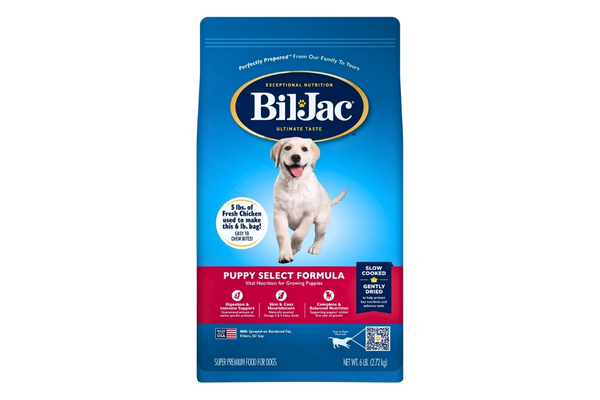
For puppies, the Puppy Select and breed-specific puppy formulas provide adequate nutrition for growth, with AAFCO compliance and added DHA for brain development. The high palatability means puppies are more likely to eat consistently, which is important during rapid growth phases.
Adult dogs with average activity levels do well on the standard Adult Select or breed-specific adult formulas. The caloric density is appropriate for maintenance, and the protein and fat levels support muscle and energy without being excessive. For highly active or working dogs, the Performance line (30/20) is a better fit, though it’s still not as protein-dense as brands designed for elite athletes.
Senior dogs benefit from the Senior Select line, which includes reduced fat, added glucosamine, and a softer kibble. Multiple owners have reported that their older dogs, who had lost interest in food, started eating regularly again after switching to Bil-Jac. That’s a meaningful quality-of-life improvement for aging dogs.
Dogs with mild sensitivities may do well on the Sensitive Solutions line, which includes probiotics and omega fatty acids. It’s not a true limited-ingredient diet, but it’s a step up from the standard formulas for dogs with occasional digestive or skin issues.
Bil-Jac is not suitable for dogs with grain allergies, chicken allergies, or those needing a high-protein, low-carb diet. The grain-inclusive formulas and chicken-based recipes are non-negotiable, and the protein levels are moderate rather than high.
Here’s my honest take: Bil-Jac is a solid mid-tier option, but it’s not exceptional. If your dog is a picky eater, it’s one of the best choices out there—the palatability is real, and it consistently gets dogs to eat when other brands fail. For owners dealing with that frustration, Bil-Jac is worth the money. The no-recall track record, family ownership, and emphasis on fresh chicken are also meaningful positives.
But if you’re comparing ingredient quality and nutritional optimization, Bil-Jac falls short of what you’d expect at its price point. The use of BHA as a preservative is a dealbreaker for me—it’s a suspected carcinogen, and plenty of brands have moved to natural alternatives. The protein levels are moderate, the carbohydrate content is higher than ideal, and the lack of third-party certifications or published research is a transparency gap.
Would I feed Bil-Jac to my own dog? If she were a picky eater and I’d tried everything else, yes. If I were looking for the best nutritional value at this price point, no—I’d probably go with something like The Farmer’s Dog or a higher-protein kibble like Acana. Bil-Jac is good enough for most dogs, and it solves a real problem (picky eating), but it’s not the best food you can buy.
For budget-conscious owners who want something better than grocery-store brands but can’t justify ultra-premium prices, Bil-Jac is a reasonable compromise. For owners who prioritize ingredient purity, high protein, and cutting-edge nutrition, there are better options. It’s a dependable, middle-of-the-road choice that delivers on palatability and consistency, but doesn’t push the boundaries of what premium dog food can be.
Take the free nutrition check and find out in under 1 minute which food is best tailored to your dog!
In just 60 seconds, find out which food fits your dog best — for free.
Take the free nutrition check and find out in under 1 minute which food is best tailored to your dog!
In just 60 seconds, find out which food fits your dog best — for free.
Yes, this is where Bil-Jac consistently delivers. The brand’s emphasis on fresh chicken and gentle cooking process preserves more flavor and aroma than high-heat processed kibbles. The higher fat content also carries more flavor, making it more appealing to selective dogs. If you’ve been cycling through brands trying to find something your dog will actually finish, Bil-Jac’s palatability track record is strong enough to warrant a try.
That’s a valid concern and honestly, one of the biggest strikes against the brand. BHA is a synthetic preservative that’s been classified as a suspected carcinogen by some health organizations. While it’s still legal and widely used in the pet food industry, many premium brands have moved to natural alternatives like mixed tocopherols. Bil-Jac hasn’t made that switch, and they haven’t publicly explained why. For ingredient-conscious buyers, this is often a dealbreaker.
It depends on which parts are included. Bil-Jac claims they use only organ meats like liver, heart, and gizzards—which are actually nutrient-dense and valuable protein sources. The problem is that AAFCO’s definition of chicken by-products allows for less desirable parts like feet, beaks, and undeveloped eggs. Without independent verification, there’s no way to confirm what’s actually in there. Organ meats are great; feet and beaks, not so much.
Bil-Jac is more expensive—roughly $2 to $2.50 per pound compared to Pro Plan’s $1.50 to $2 per pound. Pro Plan has more scientific backing with AAFCO feeding trials and veterinary endorsements, but Bil-Jac uses fresher ingredients and has higher palatability. It’s a trade-off between evidence-based formulation and ingredient quality. If your dog eats Pro Plan happily and is thriving, there’s no compelling reason to switch. If they’re picky or you prefer fresher ingredients, Bil-Jac may be worth the extra cost.
No, Bil-Jac’s dry formulas are grain-inclusive, using corn, wheat, and oatmeal as primary ingredients. If your dog has confirmed grain sensitivities, you’ll need to look elsewhere. The brand does offer some grain-free wet foods, but they’re more expensive and less convenient for daily feeding. For grain-sensitive dogs, consider brands like Whole Earth Farms or Acana that offer grain-free dry options.
The frozen food is significantly more expensive at around $3 per pound, and surprisingly, it has higher carbohydrate content than the dry food—around 45%, which is unusually high for a product marketed as fresh and minimally processed. Unless you have a very small dog or aren’t concerned about cost, the frozen line doesn’t offer enough nutritional advantage to justify the price premium. The dry food delivers most of the same benefits at a more reasonable cost.
There’s a clear gap between what consumers and experts prioritize. Consumers focus on immediate, observable results—does my dog eat it, does their coat look better, are their stools normal? Experts focus on ingredient quality, nutritional optimization, and long-term health implications. Bil-Jac excels at palatability and practical outcomes, but falls short on ingredient purity and nutritional density compared to ultra-premium brands. Both perspectives are valid, but they lead to different conclusions.
No, Bil-Jac has had no major recalls or scandals in recent history. That’s actually a significant positive in an industry where contamination and formulation errors are more common than most people realize. The company’s independence and family leadership have likely contributed to that consistency and quality control stability.
The standard formulas probably aren’t optimal for high-energy dogs. The Performance line offers 30% protein and 20% fat, which is better suited for active dogs, but even that’s on the lower end compared to brands designed for working dogs. If you have a highly active dog, you might want to consider higher-protein options like Orijen or Acana, which offer 38-42% protein with minimal carbohydrates.
Dextrose is a sweetener that serves no nutritional purpose and can affect gut health and calorie density. It’s particularly noticeable in the frozen food, where it contributes to the unusually high carbohydrate content. While it might make the food more palatable, it’s not an ingredient you’d expect in a premium food that emphasizes fresh, whole ingredients. It’s not harmful in small amounts, but it’s unnecessary.
Take the free nutrition check and find out in under 1 minute which food is best tailored to your dog!
In just 60 seconds, find out which food fits your dog best — for free.
9 out of 10 dog owners are feeding their dog the wrong food.
Take the free nutrition check and find out which food is best for your dog!
2,847+ dog owners already did