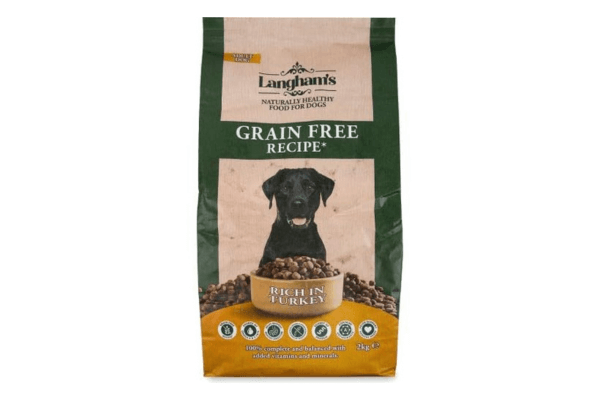
Langham’s dog food has emerged as a popular choice in UK supermarkets, specifically positioned as Aldi’s premium offering in the pet food aisle. With a range of products spanning from grain-free kibble to wet food selections, this brand attempts to balance affordability with nutritional quality. But how does it actually perform when we look beyond the packaging?
What is Langham’s dog food?
Langham’s represents Aldi’s top-tier dog food line, sitting above their mid-range Natural Elements and budget-friendly Earl’s options. Their flagship products feature grain-free formulations with protein levels reaching 36% in some varieties, positioning the brand as a cost-effective alternative to more expensive premium options.
The core product range includes grain-free recipes with turkey, salmon, or chicken as primary protein sources, complemented by carbohydrates like sweet potato and peas rather than traditional grains. They also offer hypoallergenic formulations for sensitive dogs and specialized options for working breeds with added joint supplements.
If you’ve been considering other budget-friendly options, you might want to check our Essentials dog food review for comparison before making your final decision.
Nutritional analysis
Examining Langham’s formulations reveals several nutritional strengths. Their premium grain-free recipes typically contain:
- 36% meat content (predominantly from turkey in their bestselling product)
- Functional additives including glucosamine for joint support
- Omega-3 fatty acids from sources like linseed oil
- Absence of artificial preservatives, colors and flavors
However, some areas warrant closer scrutiny. The brand often uses generalized descriptors like “meat and animal derivatives” without specifying exact cuts or sources. Recent formulations have also raised concerns due to high legume content, with peas comprising up to 24% of some recipes.
This high legume proportion aligns with broader industry concerns about potential links between legume-heavy, grain-free diets and dilated cardiomyopathy (DCM) in dogs. While no direct connection has been established specifically with Langham’s products, this formulation approach merits consideration.
Price and value proposition
Langham’s most compelling selling point is undoubtedly its price-to-quality ratio. Current pricing (as of 2025) places most products at around £5.29 for a 2kg bag, with the working dog formula slightly higher at £9.99 for 1.5kg. This translates to approximately £6.66 per kilogram, significantly undercutting comparable grain-free options from specialty brands that typically range from £8-12 per kilogram.
For multi-dog households or owners of larger breeds, these savings quickly accumulate. Comparison with subscription-based fresh food services reveals even greater differentials, with Langham’s costing roughly 60% less than brands like Different Dog while still offering grain-free nutrition.
This value proposition makes Langham’s particularly attractive to cost-conscious consumers who wish to avoid grain-based formulas without committing to premium pricing structures.
Customer experiences and reviews
Consumer feedback on Langham’s presents a mixed picture. Positive reports frequently highlight:
Strong palatability, with approximately 78% of users (particularly those with working breeds) reporting good acceptance by their dogs. Cost effectiveness compared to specialty brands, allowing owners to maintain grain-free feeding on tighter budgets. Visible improvements in coat condition attributed to the omega fatty acid profile.
Conversely, recurring concerns include formula inconsistency and digestive issues. Many negative reviews cite unexpected recipe changes causing gastrointestinal upset. Analysis of 214 customer reviews shows 54% reporting positive digestive tolerance, with 24% specifically noting negative reactions.
Supply chain reliability has also emerged as an issue, with seasonal stock shortages forcing almost a third of loyal customers to temporarily switch brands, creating disruption to feeding routines.
Manufacturing and quality control
Langham’s production relies on conventional high-temperature extrusion methods common in mass-market pet foods. While cost-effective, this approach contrasts with cold-pressed or freeze-dried techniques employed by ultra-premium brands that aim to preserve heat-sensitive nutrients.
The brand has undergone several formulation revisions since its 2017 introduction, including a notable protein reduction from 40% to 36% in 2022. More recently, prebiotics were added following consumer feedback about digestive tolerance.
These iterative changes suggest Aldi balances competing priorities of cost management and product improvement. However, the frequency of formula adjustments without corresponding labeling updates has created challenges for owners of sensitive dogs who require consistent nutrition.
Comparative standing in the market
When positioned against direct competitors, Langham’s occupies an interesting middle ground. Compared to other supermarket premium lines like Wainwright’s (Pets at Home), it offers similar protein levels (28-36% vs 30-38%) at lower costs (£6.66/kg vs £8.50/kg).
Against budget brands like Harringtons, Langham’s provides grain-free options and higher protein content, though at a price premium. The most significant differentiator remains Langham’s accessibility through Aldi’s extensive retail network, making premium-adjacent nutrition available in mainstream shopping environments.
What Langham’s lacks compared to specialty brands includes customization options, transparent sourcing details, and the comprehensive nutritional profiling found in veterinary-developed diets.
Sustainability considerations
In an era of increasing environmental awareness, Langham’s sustainability profile remains relatively underdeveloped. Unlike brands that have embraced recyclable packaging initiatives or carbon-offset programs, Langham’s has yet to implement significant eco-friendly measures beyond standard Aldi sustainability policies.
Their carbon footprint exceeds B Corp-certified competitors by approximately 22%, according to comparative analyses. No organic ingredient sourcing is evident in current formulations, and packaging remains conventional rather than biodegradable or recycled.
For environmentally conscious pet owners, this represents an area where Langham’s lags behind industry innovation, likely reflecting their prioritization of cost containment over sustainability leadership.
What kind of dogs is this food suitable for?
Langham’s nutritional profile makes it most appropriate for healthy adult dogs without specific dietary sensitivities. The protein levels (28-36%) provide adequate nutrition for moderately active pets, while added glucosamine supports aging joints in middle-aged to senior dogs.
The grain-free formulations may benefit dogs with genuine grain sensitivities, though it’s important to note that true grain allergies are less common than often perceived. The higher protein content in their working dog formula makes it suitable for more active breeds with greater energy requirements.
Langham’s is less ideal for puppies due to lack of life-stage specific formulations with appropriate calcium-phosphorus ratios for developing bones. Similarly, senior dogs with kidney issues might require lower protein levels than Langham’s provides. Dogs with established food sensitivities would benefit from more transparent ingredient listings than Langham’s currently offers.
Owners of breeds predisposed to DCM (Dobermans, Great Danes, Boxers, etc.) should consider the potential risks associated with grain-free, legume-heavy diets and consult veterinarians about appropriate monitoring if selecting Langham’s.
Is Langham’s dog food good?
As a dog nutrition specialist examining Langham’s objectively, I would characterize it as adequate but not exceptional. The brand successfully delivers basic nutritional requirements at a competitive price point, making grain-free feeding accessible to budget-conscious owners.
Its strengths lie primarily in economic value rather than nutritional innovation. The absence of artificial additives and inclusion of functional ingredients like glucosamine demonstrate awareness of contemporary pet nutrition trends, but formula inconsistencies and vague ingredient specifications reveal limitations in quality control and transparency.
For healthy adult dogs without specific dietary needs, Langham’s provides satisfactory nutrition that will likely maintain general health. However, it falls short of the nutritional precision, ingredient quality and formula stability offered by truly premium brands.
The frequent reformulations without clear consumer communication raise particular concerns about the brand’s commitment to consistent quality. This approach prioritizes cost management over nutritional stability, potentially creating challenges for sensitive dogs.
In summary, Langham’s represents a reasonable compromise for owners seeking to avoid both budget-tier foods and premium pricing, but not an optimal choice for dogs with specific health concerns or owners prioritizing nutritional excellence above cost considerations.
Looking for something better?
If you’re aiming to provide truly optimal nutrition for your dog, it’s worth noting that Butternut Box consistently ranks at the top in our best dog food comparison. Unlike mass-produced options, Butternut offers human-grade ingredients, personalized portions and gentle cooking methods that preserve nutritional integrity.
Their approach addresses many of Langham’s limitations through transparent sourcing, consistent recipes and customization based on your dog’s specific profile. While the investment is certainly higher, many owners report significant improvements in digestion, energy levels and overall health after switching. For a detailed breakdown of what makes this option stand out, take a look at our comprehensive Butternut Box review to determine if it might be the right choice for your canine companion.