

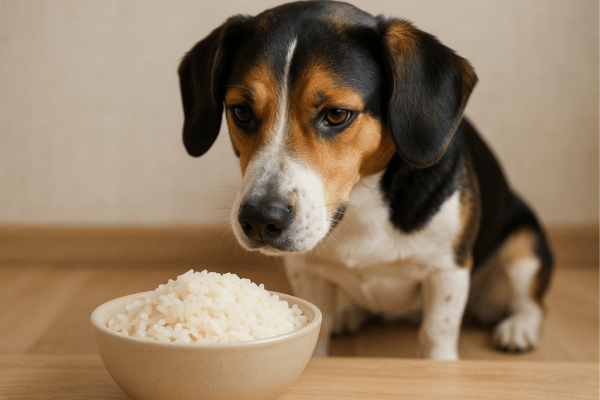
Yes, your dog can definitely eat rice! It’s not only safe but can also be a valuable addition to your furry friend’s diet. Many dog owners actually discover this by chance when their dog has stomach issues and the vet recommends rice with chicken.
Rice is easily digestible and gluten-free, making it suitable for dogs with food allergies. But as with all human foods, how you serve it and the amount make all the difference.
Which rice is best for your dog
White rice is the variety most commonly prescribed by vets, especially for digestive problems. It’s easily digestible and helps calm an irritated stomach. I see this recommended frequently in cases where dogs have diarrhoea.
Brown rice contains more nutrients and fibre but is harder to digest. For healthy dogs, this is actually the better choice because it contains more vitamins B and E, iron and calcium. The extra fibre also helps maintain healthy bowel function.
Just like with strawberries, it’s wise to introduce rice in small amounts to see how your dog responds.
How to prepare rice for your dog
The preparation is actually very simple, but there are a few important rules. Always cook the rice without salt, spices, butter or oil. Just rice and water, nothing else.
Let the rice cool properly before serving. Hot rice can burn your dog’s mouth, and you certainly want to avoid that. I always mix it with their regular food – this makes it much easier for them to accept.
Step-by-step approach
Start with small amounts, about one to two tablespoons for a medium-sized dog. Observe how your dog reacts during the first 24 hours. No tummy troubles? Then you can gradually increase the amount.
How much rice can you give
Here’s where it gets interesting: rice should make up no more than 10 to 20 percent of your dog’s daily food intake. If your dog gets 200 grams of food per day, then you can add 20 to 40 grams of rice.
Rice is not a replacement for their main food – it remains a supplement. Meat should always form the basis of your dog’s diet. I sometimes see owners who think rice is cheaper and give too much of it, but this leads to deficiencies in essential nutrients.
When rice is particularly useful
For stomach issues, rice with boiled chicken is a classic remedy. It calms the stomach and provides easily digestible energy. Many vets recommend this after vomiting or diarrhoea.
Rice can also be helpful for weight management. It provides a feeling of fullness with relatively few calories, keeping your dog satisfied without consuming too many extras. In my experience, this works particularly well for older dogs with a slower metabolism.
After surgery or illness, rice can aid recovery. It’s gentle on the digestive system and provides steady energy without taxing the stomach.
Things to watch out for
Always consult your vet if you want to make significant changes to your dog’s diet, especially for dogs with diabetes or other conditions. Rice contains carbohydrates that can affect blood sugar levels.
Never give raw rice – it’s indigestible and can cause stomach problems. And although rice is generally well-tolerated, allergic reactions can occur, though they’re rare.
For puppies, rice is usually unnecessary. Their growing bodies need specific nutrients that are better sourced from special puppy food.