

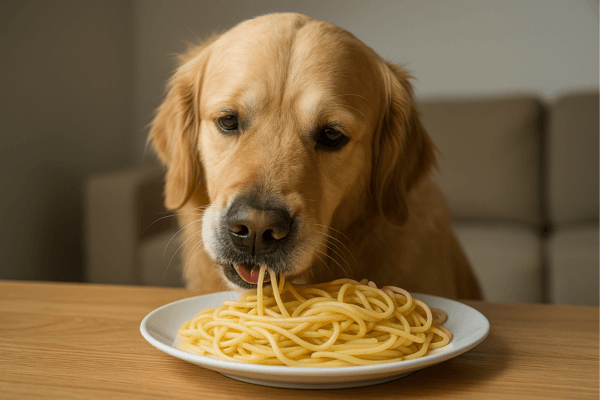
When you’re heating up a plate of pasta and your dog gives you those pleading puppy eyes, you might wonder if it’s safe to share a bite. The short answer is: yes, dogs can eat pasta, but there are important caveats to consider.
In my experience as a dog nutrition specialist, I often see owners assuming that anything we can eat is automatically safe for our four-legged friends. With pasta, that’s partially true, but how you serve it makes the difference between a safe treat and a potential problem.
When pasta is safe for your dog
The golden rule for pasta: plain and well-cooked only. That means pasta without salt, herbs, butter or any additions whatsoever. Simply boiling water and pasta, nothing more.
I often recommend choosing gluten-free or wholegrain pasta if you’re intentionally preparing something for your dog. These varieties are easier to digest, especially for dogs sensitive to gluten. Raw pasta, by the way, is an absolute no-go – it’s far too hard and can cause digestive problems.
Just as with cheese for dogs, the principle applies here too: less is more. Your dog doesn’t need large portions of human food.
The right amount of pasta
This is where it gets interesting. Pasta should make up no more than 10-15% of your dog’s total diet. In practical terms, this means:
For small dogs: a teaspoon of cooked pasta at a time is more than enough. For medium to large dogs, you might go up to one tablespoon. I’ve seen too many owners being overly generous with portions, which can lead to weight gain.
Pasta is rich in carbohydrates but lacks the proteins and fats your dog truly needs. It’s rather like sweets for humans – nice as a treat, but not as a main meal.
Why pasta sauce is dangerous
I cannot emphasise this enough: no sauces, seasonings or additions. Many pasta sauces contain onions, garlic or large amounts of salt – all toxic to dogs.
Even seemingly innocent butter or olive oil can cause diarrhoea in sensitive dogs. I understand that plain, white pasta doesn’t seem very appetising, but your dog really doesn’t mind. They’re already excited enough to be getting something from your plate.
Which dogs should avoid pasta
Not all dogs are equal when it comes to pasta. Dogs with liver disease should steer clear of pasta altogether due to the extra strain on their digestion.
I’d also be particularly careful with certain breeds, such as Labradors and Beagles that are naturally prone to weight gain. Older dogs and those with diabetes would also benefit from avoiding these extra carbohydrates.
For puppies: very limited amounts only. Their growing bodies need specific nutrients, and pasta adds little nutritional value.
Better alternatives to pasta
Honestly, there are better options if you want to give your dog a carbohydrate-rich treat. Well-cooked rice is often more digestible and less taxing on the digestive system.
There are also special dog pastas available in pet shops. These are adapted to dogs’ needs and contain no unnecessary additives. In my opinion, these are the safest option if you’re determined to give pasta.
If your dog is active and you occasionally want to provide an extra energy source, there are many more suitable options in the form of high-quality dog treats that actually add nutritional value.
What to watch for after giving pasta
The first time you give your dog pasta, keep a close eye on how they react. Some dogs might experience slightly loose stools, while others show no side effects whatsoever.
If you notice your dog becoming restless, drinking excessively or refusing to eat after having pasta, their digestive system probably isn’t happy with it. In that case, it’s better to remove pasta from the menu entirely.
My advice? Pasta can be an innocent treat, but it adds little to a balanced canine diet. If you want to occasionally treat your dog to something special, there are better options available that do have nutritional value.