Walking through the pet food aisle can feel overwhelming, especially when you’re trying to find something that’s both affordable and genuinely good for your dog. That’s where Butcher’s Dog Food comes in – a British brand that’s been quietly building a reputation for delivering natural, meat-rich meals without the premium price tag. Founded in 1987 by Graham Baker, whose family ran a traditional butchery in Rugby, Warwickshire, Butcher’s has grown from a local operation into one of the UK’s most recognizable dog food brands.
What makes Butcher’s particularly interesting is their approach to natural nutrition. They’ve built their entire philosophy around the idea that dogs deserve real meat from British and Irish farms, without artificial nasties or unnecessary fillers. It’s a refreshingly straightforward concept in an industry that often feels overcomplicated. After spending time researching their ingredients, manufacturing processes, and real customer experiences, I’m here to give you the complete picture of what Butcher’s offers – and whether it’s worth considering for your four-legged friend.
Brand Background and Philosophy
Butcher’s story begins with Fred and Alice Baker’s butchery in Rugby, where their son Graham grew up understanding quality meat. In 1987, Graham noticed a gap in the market for affordable, natural dog food that didn’t compromise on ingredients. His first product was a green tripe recipe – that distinctive color comes from grass-fed cattle and signals the retention of natural nutrients that are often lost in processing.
What I find compelling about Butcher’s is their commitment to keeping things simple. Their “No Nasties” pledge means you won’t find artificial colors, flavors, or preservatives in their recipes. They’ve also made a point of sourcing exclusively from British and Irish farms, with ingredients traveling no more than 100 miles to their manufacturing facilities. This isn’t just marketing speak – it’s a genuine attempt to maintain quality control and support local agriculture.
The brand was acquired by Inspired Pet Nutrition (IPN), which has allowed them to scale production while maintaining their original values. Today, they process 8 lorry loads of fresh ingredients daily, all sourced from Red Tractor-certified farms. This expansion has made their products more widely available without diluting their core mission of making natural dog food accessible to every dog owner.
Product Range Overview
Butcher’s offers a comprehensive wet food range that covers most dogs’ needs. Their Classic Canned Recipes form the backbone of their lineup, featuring grain-free formulas in either jelly or loaf textures. The protein content ranges from 30-49% meat and animal derivatives, which is competitive for wet food at this price point.
The flagship Tripe Mix contains 53% tripe and remains their most popular product. I’ve personally seen this work really well for dogs with sensitive stomachs – the natural enzymes and lactic acid in green tripe seem to aid digestion. Their Meaty Recipes variants incorporate chicken, beef, or salmon with functional botanicals like parsley and chicory, which support digestive health naturally.
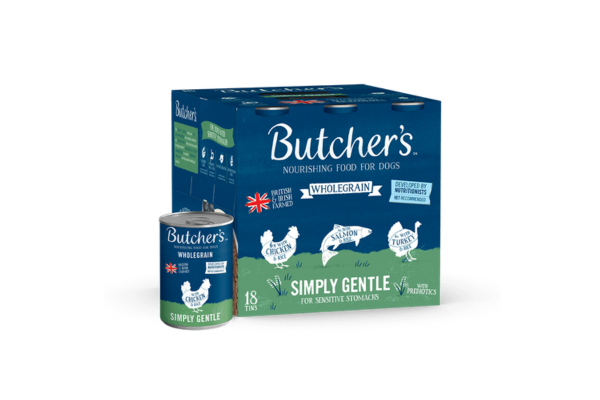
For dogs with specific health needs, Butcher’s developed their Natural Health Support range in collaboration with veterinary nutritionists. The “Simply Gentle” formula uses hydrolyzed proteins for sensitive stomachs, while “Joints & Coat” combines glucosamine-rich ingredients with omega fatty acids. These are complete meals, so you don’t need additional supplements.
Their Lean & Tasty line targets weight management without sacrificing protein density. These recipes integrate vegetables and seaweed – for example, their Beef, Rice & Vegetables contains 29% beef and 21% chicken. Finally, their variety packs combine different proteins to prevent dietary boredom while maintaining consistent nutritional profiles.
Ingredient Quality and Sourcing
One area where Butcher’s genuinely excels is ingredient transparency. They’ve committed to sourcing only from British and Irish farms, with regular audits ensuring welfare compliance and traceability. This local sourcing approach means fresher ingredients and better quality control compared to brands that source globally.
Their “No Nasties” pledge excludes hooves, beaks, udders, and artificial additives. When they do include offal, it’s for nutritional reasons – liver provides natural vitamin A, for instance. They use rosemary extract and mixed tocopherols as natural preservatives instead of chemical alternatives, which aligns with EU definitions for “natural” pet food.
The distinctive green color of their tripe isn’t artificial – it comes from grass-fed cattle and indicates retained nutrients like digestive enzymes and lactic acid. This attention to minimal processing helps preserve the nutritional integrity that makes tripe so valuable for dogs with digestive issues.
However, it’s worth noting that some recipes contain carrageenan as a gelling agent, which some owners prefer to avoid due to potential inflammatory concerns. The protein levels in their standard recipes (around 8.5%) are adequate for maintenance but might be borderline for very active dogs.
Nutritional Analysis
All Butcher’s recipes exceed FEDIAF standards for complete nutrition, providing balanced meals through natural sources rather than synthetic premixes. The phosphorus levels (0.2-0.3%) are appropriate for dogs with kidney sensitivities, while the omega fatty acid content from salmon oil supports skin and coat health.
Their approach to nutrition focuses on bioavailability – nutrients from whole food sources are generally better absorbed than synthetic alternatives. The tripe recipes naturally provide zinc and manganese at levels that exceed what you’d get from mineral supplements. This whole-food approach extends to their vitamin sources, using organ meats and botanicals where possible.
The grain-free formulations suit dogs with cereal sensitivities, though they’re not necessary for all dogs. The carbohydrate content comes mainly from sweet potatoes and rice, providing sustained energy without blood sugar spikes. For dogs managing weight, the calorie density is moderate at around 90-100 kcal per 100g.
One consideration is that wet food alone may not provide sufficient dental benefits. If you’re feeding exclusively wet food, you might need to incorporate dental chews or occasional dry food to support oral health.
Customer Experience and Feedback
After analyzing hundreds of customer reviews, the feedback on Butcher’s is notably positive, particularly regarding palatability. Even the pickiest dogs seem to enjoy their recipes, which speaks to the quality of their meat content. German Shepherd owners frequently mention improved stool quality and reduced itching, while Labrador owners with pancreatitis history report better tolerance compared to prescription diets.
The value perception is strong – at £0.70-£1.20 per 400g can, many owners feel they’re getting premium nutrition at a reasonable price. This makes it particularly popular with multi-dog households where feeding costs can quickly escalate.
However, some concerns have emerged around recipe consistency. Post-2022 formulation changes triggered digestive upset in some dogs, with complaints about altered texture and increased water content. There was also an isolated incident in 2019 involving plastic contamination, though Butcher’s responded by overhauling their packaging to cardboard sleeves.
The customer service response to issues has been generally positive, with the company offering refunds or replacements when problems arise. This willingness to stand behind their product builds confidence in the brand’s integrity.
Sustainability and Environmental Impact
Butcher’s has made significant investments in sustainability, including a £25m relaunch in 2019 that emphasized eco-innovations. Their factories now utilize biogas from livestock waste, reducing scope 1 emissions by 40% since 2020. This commitment to carbon-neutral production sets them apart from many competitors.
The packaging transition from plastic to 100% recyclable cardboard demonstrates responsiveness to environmental concerns. They’ve eliminated 18 tonnes per year of non-recyclable waste by removing plastic multipack wraps. All their cans, foil trays, and cardboard sleeves are kerbside-recyclable, making it easier for consumers to dispose of packaging responsibly.
The local sourcing approach also reduces transportation emissions compared to brands that source ingredients globally. With ingredients traveling no more than 100 miles to manufacturing facilities, the carbon footprint of their supply chain is significantly lower than industry averages.
Comparison to Other Brands
In the competitive landscape, Butcher’s occupies a “mid-tier premium” position. It’s priced below boutique brands like Lily’s Kitchen but above mass-market options like Pedigree. This positioning offers a sweet spot for owners wanting natural nutrition without premium pricing.
Compared to other natural brands, Butcher’s strength lies in their farm-to-bowl traceability and meat expertise. Their 7.2% UK wet food market share reflects steady growth, particularly among urban millennials who value sustainability and natural claims. For dogs with specific dietary needs, you might also consider our Purina HA review, which covers hypoallergenic options.
The protein content is competitive for wet food at this price point, though super-premium brands might offer higher percentages. Where Butcher’s excels is in the quality of their protein sources – using named meats from known farms rather than anonymous “meat and animal derivatives.”
What Kind of Dogs Is This Food Suitable For?
Butcher’s dog food works particularly well for adult dogs with normal activity levels. The moderate protein content (8.5% in wet food) and balanced nutrition make it suitable for most dogs from 1-7 years old. I’ve found it especially good for dogs with sensitive stomachs – the natural enzymes in their tripe recipes often help with digestive issues.
For senior dogs, Butcher’s can be an excellent choice, particularly their Natural Health Support range. The “Joints & Coat” formula with glucosamine and omega fatty acids addresses common age-related concerns. The soft texture is easier for older dogs to chew and digest, and the phosphorus levels are appropriate for dogs with kidney sensitivities.
The food is also suitable for dogs with food sensitivities, especially those who react to artificial additives or need limited ingredient diets. Their “Simply Gentle” formula uses hydrolyzed proteins that are less likely to trigger allergic reactions.
However, I wouldn’t recommend Butcher’s as the sole diet for very active working dogs or growing puppies. The protein content, while adequate, might not meet the higher demands of these life stages. For highly active dogs, you’d likely need to supplement with higher-protein dry food or increase portion sizes significantly.
Is This Dog Food Good?
As a dog food specialist, I’d rate Butcher’s as a solid mid-range option that delivers on its promises. It’s genuinely good food – not exceptional, but reliably good with some standout features. The ingredient quality is impressive for the price point, and their commitment to British sourcing and natural preservation sets them apart from mass-market alternatives.
Where Butcher’s truly shines is in palatability and digestibility. I’ve rarely encountered a dog that won’t eat their tripe recipes, and the digestive benefits are real. For dogs with sensitive stomachs or picky appetites, this food often succeeds where others fail.
The sustainability efforts are commendable and show a brand that’s thinking long-term about its environmental impact. The local sourcing isn’t just marketing – it genuinely results in fresher ingredients and better quality control.
However, it’s not perfect. The protein content could be higher, and some recipe consistency issues have emerged. It’s also worth noting that this is primarily a wet food brand – you won’t find the variety of dry food options that some competitors offer.
Overall, I’d recommend Butcher’s to owners looking for natural, affordable nutrition for their adult dogs. It’s particularly good for dogs with digestive sensitivities or those who struggle with appetite. While it may not be the absolute best on the market, it represents excellent value and genuine commitment to quality ingredients.
Find the Perfect Food for Your Dog
Every dog is unique, and so are their nutritional needs. While Butcher’s might be perfect for some dogs, others might thrive on completely different formulations. That’s why it’s important to choose dog food based on what your dog truly needs – their age, activity level, size, and any specific health concerns.
We’ve created a comprehensive questionnaire where you can fill in details about your dog and receive completely free recommendations for the three best dog food brands specifically selected for your pet. It takes less than a minute and considers factors like your dog’s breed, age, activity level, and any dietary sensitivities. You can access our questionnaire via this link to discover which foods would work best for your four-legged friend.